
Nicholas Tracy
Author of Nelson's Battles: The Art of Victory in the Age of Sail
About the Author
Nicholas Tracy, adjunct professor of history at the University of New Brunswick and member of the International Institute for Strategic Studies, is the author of fifteen books, including Britannia's Palette: The Arts of Naval Victory.
Image credit: via Historical Naval Fiction
Works by Nicholas Tracy
The Naval Chronicle: The Contemporary Record of the Royal Navy at War, 1793-1798 (The Naval Chronicle , No 1) (1998) 24 copies
The Naval Chronicle: Contemporary Reports of the War at Sea, Vol. 2, 1798-1804: From Copenhagen to the Eve of Trafalgar (1999) 21 copies
Naval Chronicles: Naval Chronicle: Vol.5, The Contemporary Record of the Royal Navy at War (1999) 20 copies
The Naval Chronicle: The Contemporary Record of the Royal Navy at War, Vol. 4, 1807-1809: The War of Attrition (1999) 17 copies, 1 review
The Naval Chronicle: The Contemporary Record of the Royal Navy at War, Vol. 3, 1804-1806: The Campaign of Trafalgar and Its Aftermath (1999) 16 copies
The Age of Sail: The International Annual of the Historic Sailing Ship, Vol. 2 (Age of Sail Annual) (2003) 13 copies
The Battle of Quiberon Bay, 1759: Hawke and the Defeat of the French Invasion (2010) 10 copies, 1 review
Sea Power and the Control of Trade: Belligerent Rights from the Russian War to the Beira Patrol, 1854-1970 (2005) 5 copies
Navies, Deterrence and American Independence: Britain and Sea Power in the 1760s and 1770s (1988) 4 copies
Associated Works
Naval Warfare in the Age of Sail: The Evolution of Fighting Tactics, 1650-1815 (1990) — Editor, some editions — 79 copies
Tagged
Common Knowledge
- Gender
- male
- Organizations
- University of New Brunswick, History Dept.
- Nationality
- Canada
- Associated Place (for map)
- Canada
Members
Reviews
The Naval Chronicle the Contemporary Record of the royal Navy at War Volume IV 1807 - 1810 by Nicholas Tracy
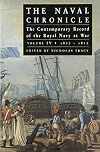
This is a consolidated edition, organized chronologically by Nicholas Tracy. The material is engrossing to anyone who is either a professional, or the kind of fiction fan who loves to see the source. There are a good number of period illustrations, and the major operations in a given year also have strict chronology violated in order to present a coherent picture. One flaw is that the index is saved up until Volume V for all the previous volumes, but since less naval activity occurred after show more 1810, compared to the earlier times, so the size of the volumes could appear more uniform. The overall effect is improved by the provision of period maps as well. The Chronicle was in publication from 1799 to 1819. show less
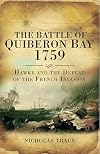
Hawke and the Defeat of the French Invasion
This history chronicles the Royal Navy’s victory over the French during the Seven Years’ War. In the mid-18th century, with no regular troops at home, Britain was especially vulnerable to the immanent threat of French invasion. Illustrated with maps.
When the British fleet under Admiral Hawke fell upon them, the French ships of the line under Admiral Conflans were actually on their way to rendezvous with the invasion troopships gathered at the show more mouth of the Loire. The battle was fought in bad weather, the French attempting to exploit their local knowledge by heading for Quiberon Bay, assuming the British would not follow them among its treacherous shoals in such conditions. Hawke, however, pursued them under full sail and many French ships were destroyed, captured, run aground or scattered for the loss of only two British ships which ran aground. The invasion was thwarted. Professor Nicholas Tracy studies the battle and its strategic consequences, particularly upon the war for North America. (Adapted from Casemate Publisher) show less
This history chronicles the Royal Navy’s victory over the French during the Seven Years’ War. In the mid-18th century, with no regular troops at home, Britain was especially vulnerable to the immanent threat of French invasion. Illustrated with maps.
When the British fleet under Admiral Hawke fell upon them, the French ships of the line under Admiral Conflans were actually on their way to rendezvous with the invasion troopships gathered at the show more mouth of the Loire. The battle was fought in bad weather, the French attempting to exploit their local knowledge by heading for Quiberon Bay, assuming the British would not follow them among its treacherous shoals in such conditions. Hawke, however, pursued them under full sail and many French ships were destroyed, captured, run aground or scattered for the loss of only two British ships which ran aground. The invasion was thwarted. Professor Nicholas Tracy studies the battle and its strategic consequences, particularly upon the war for North America. (Adapted from Casemate Publisher) show less
Awards


You May Also Like


Associated Authors
Statistics
- Works
- 24
- Also by
- 2
- Members
- 269
- Popularity
- #85,898
- Rating
- 3.7
- Reviews
- 2
- ISBNs
- 52
- Languages
- 1