
Roxane Orgill
Author of Skit-Scat Raggedy Cat: Ella Fitzgerald
Works by Roxane Orgill
Siege: How General Washington Kicked the British Out of Boston and Launched a Revolution (2018) 84 copies, 16 reviews
Dream Lucky: When FDR was in the White House, Count Basie was on the radio, and everyone wore a hat... (2008) 70 copies, 29 reviews
Tagged
Common Knowledge
- Canonical name
- Orgill, Roxane
- Birthdate
- 1953
- Gender
- female
- Education
- University of Illinois
King's College, University of London (MA) - Occupations
- music critic
- Awards and honors
- ASCAP-Deems Taylor Award
- Nationality
- USA
- Birthplace
- Mount Vernon, New York, USA
- Places of residence
- Franklin, Michigan, USA
Northbrook, Illinois, USA
Milwaukee, Wisconsin, USA
Paris, France
London, England, UK
Hoboken, New Jersey, USA - Associated Place (for map)
- USA
Members
Reviews
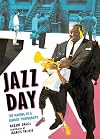
Marvelous. About half is the poems (mostly free verse, like improv.) and about half is all the notes that many of us always wish for. Iow, very useful in an educational setting!
But also beautifully illustrated, and engaging. Not for tots, really more for those children old enough to do research reports. But the poems and pictures certainly can be shared with jazzy little ones if you have a family of different ages. Don't forget to play some jazz before and after reading, too!
I'd actually show more never seen the photo before and appreciate that it was reproduced in a fold-out. This is a book you want in paper, not on an e-reader, if at all possible. Do hunt it down from your library, and if you're interested in American music (or black history) do consider buying it if your library doesn't have it.
I'm so pleased to be able to report that my little library in semi-rural Missouri did buy it. I think it was because of a grant for this past summer reading program which was focused on music, but for whatever reason, they did choose it, and yay! show less
But also beautifully illustrated, and engaging. Not for tots, really more for those children old enough to do research reports. But the poems and pictures certainly can be shared with jazzy little ones if you have a family of different ages. Don't forget to play some jazz before and after reading, too!
I'd actually show more never seen the photo before and appreciate that it was reproduced in a fold-out. This is a book you want in paper, not on an e-reader, if at all possible. Do hunt it down from your library, and if you're interested in American music (or black history) do consider buying it if your library doesn't have it.
I'm so pleased to be able to report that my little library in semi-rural Missouri did buy it. I think it was because of a grant for this past summer reading program which was focused on music, but for whatever reason, they did choose it, and yay! show less
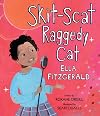
There are other picture book bios of Ella Fitzgerald, but this is the best one I've seen. An unvarnished look at her tattered upbringing that manages to be honest but uplifting at the same time. Rich, emotion-filled illustrations take center stage and offer a feeling for the era, the music and the woman, while remaining accessible to children. An extensive bibliography is included. Makes you want to queue up a record and dance!
http://www.shelf-employed.blogspot.com
http://www.shelf-employed.blogspot.com
Siege : how General Washington kicked the British out of Boston and launched a revolution by Roxane Orgill
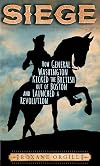
I won an ARC of this from LibraryThing's Early Reviewer giveaway. 3.5/5 stars
This series of short poems pieces together a lesser known part of the Revolution. Told from multiple perspectives, both known and unknown (as well as fictional), the poems will definitely give students a good impression of the atmosphere of the time. My knock is on the style of the poems themselves. They are free verse, but they lack a steady rhythm and an emotional punch I'd hoped for. Still, I'd definitely show more recommend this to middle grade students, especially though with an interest in the American Revolution. show less
This series of short poems pieces together a lesser known part of the Revolution. Told from multiple perspectives, both known and unknown (as well as fictional), the poems will definitely give students a good impression of the atmosphere of the time. My knock is on the style of the poems themselves. They are free verse, but they lack a steady rhythm and an emotional punch I'd hoped for. Still, I'd definitely show more recommend this to middle grade students, especially though with an interest in the American Revolution. show less
 This review was written for LibraryThing Early Reviewers.
Dream Lucky: When FDR was in the White House, Count Basie was on the radio, and everyone wore a hat... by Roxane Orgill

Like a jazz theme effortlessly rolling from Count Basie's own keyboard, Roxane Orgill's prolouge provides the basic notes upon which she will improvise and expand with each passing chapter, adding new facts or more background, like subtle changes in key.
Capturing the feel, look, and sound of an era is difficult, especially one seventy years gone. Often the result is sentimental and saccharine. Not so here. Orgill is not only able to transport the reader to Yankee Stadium for the Brown show more Bomber's devasting loss and eventual redeeming re-match, but also to a multitude of other unknown corners of the country to examine the everyday struggles to overcome economic depression and racial hatred.
Count Basie, the main character of this barnstorming tour of 1937 and 1938, is described in full here. The book never shortcuts Basie, or any of the people of the time, by focusing only on the most well-known aspect of their lives. It would be easy to zero in on Basie's music and his struggle to succeed but to do so would leave out his humble beginnings, his fear of failure, or hiseven fear of wooden bridges. In one chapter, Orgill even imagines Basie's realization that he has transformed himself from a regional attraction to a national band leader. Though the description of the epiphany is not based on any specific source, Orgill's knowledge of Basie is so complete, the passage reads as if she is merely transcribing Basie's own recollections. Orgill focuses the same expert eye on the other subjects of the book, narrating with ease the lives and private thoughts of FDR, Eleanor Roosevelt, Adam Clayton Powell, Jr., and Amelia Earhart.
The surprise of the book is Orgill's focus on the radio and its ever present place in the American experience of the time. Basie longs for national radio broadcasts, as that is a true measure of success. And, indeed, Basie's big break comes when he is heard by a music writer on a local broadcast out of Kansas City. FDR, Jack Benny, Charlie McCarthy all became national icons with radio broadcasts. The explosive amount and variety of music, news, and entertainment available on the radio echos the current explosive internet culture.
I knew about Count Basie, and most of Orgill's subjects, before reading this book, but I feel like I know them in a much more personal now. As I write this, I am re-visiting Count Basie, listening to an ablum from his late life, recorded from shows in Munich and the south of France in the 1970's. Even at 70, the Count and his band could swing. The revelation, for me, is listening to this music, with a better understanding of the era which shaped Basie's swing. show less
Capturing the feel, look, and sound of an era is difficult, especially one seventy years gone. Often the result is sentimental and saccharine. Not so here. Orgill is not only able to transport the reader to Yankee Stadium for the Brown show more Bomber's devasting loss and eventual redeeming re-match, but also to a multitude of other unknown corners of the country to examine the everyday struggles to overcome economic depression and racial hatred.
Count Basie, the main character of this barnstorming tour of 1937 and 1938, is described in full here. The book never shortcuts Basie, or any of the people of the time, by focusing only on the most well-known aspect of their lives. It would be easy to zero in on Basie's music and his struggle to succeed but to do so would leave out his humble beginnings, his fear of failure, or hiseven fear of wooden bridges. In one chapter, Orgill even imagines Basie's realization that he has transformed himself from a regional attraction to a national band leader. Though the description of the epiphany is not based on any specific source, Orgill's knowledge of Basie is so complete, the passage reads as if she is merely transcribing Basie's own recollections. Orgill focuses the same expert eye on the other subjects of the book, narrating with ease the lives and private thoughts of FDR, Eleanor Roosevelt, Adam Clayton Powell, Jr., and Amelia Earhart.
The surprise of the book is Orgill's focus on the radio and its ever present place in the American experience of the time. Basie longs for national radio broadcasts, as that is a true measure of success. And, indeed, Basie's big break comes when he is heard by a music writer on a local broadcast out of Kansas City. FDR, Jack Benny, Charlie McCarthy all became national icons with radio broadcasts. The explosive amount and variety of music, news, and entertainment available on the radio echos the current explosive internet culture.
I knew about Count Basie, and most of Orgill's subjects, before reading this book, but I feel like I know them in a much more personal now. As I write this, I am re-visiting Count Basie, listening to an ablum from his late life, recorded from shows in Munich and the south of France in the 1970's. Even at 70, the Count and his band could swing. The revelation, for me, is listening to this music, with a better understanding of the era which shaped Basie's swing. show less
This review was written for LibraryThing Early Reviewers.Lists
Youth: Music (1)
Awards


You May Also Like


Associated Authors
Statistics
- Works
- 9
- Members
- 899
- Popularity
- #28,500
- Rating
- 3.8
- Reviews
- 98
- ISBNs
- 30
