
Christopher De Hamel
Author of Meetings with Remarkable Manuscripts: Twelve Journeys into the Medieval World
About the Author
Christopher De Hamel is the Fellow Librarian of Corpus Christi College, Cambridge. For 25 years he was responsible for all sales of medieval and illuminated manuscripts at Sotheby's in London. He has a doctorate from Oxford University and an honorary doctorate from St John's University, show more Collegeville, Minnesota. He is a Fellow of the Society of Antiquaries show less
Works by Christopher De Hamel
Meetings with Remarkable Manuscripts: Twelve Journeys into the Medieval World (2016) 1,231 copies, 17 reviews
The Manuscripts Club: The People Behind a Thousand Years of Medieval Manuscripts (2022) 423 copies, 6 reviews
The British Library Guide to Manuscript Illumination: History and Techniques (British Library Guides) (2001) 125 copies, 1 review
Associated Works
Meesterlijke Middeleeuwen miniaturen van Karel de Grote tot Karel de Stoute 800-1475 (2002) — Author, some editions — 30 copies
Property of a Gentleman: The Formation, Organisation and Dispersal of the Private Library, 1620-1920 (1991) — Contributor — 22 copies
Tagged
Common Knowledge
- Canonical name
- De Hamel, Christopher
- Legal name
- de Hamel, Christopher Francis Rivers
- Birthdate
- 1950-11-20
- Gender
- male
- Education
- University of Oxford (D.Phil ∙ 1979)
University of Otago (BA|1971) - Occupations
- scholar of medieval manuscripts
university professor
paleographer
librarian
manager
Director of medieval manuscript sales - Organizations
- Sotheby's
Cambridge University (Corpus Christi College | Parker librarian)
Association international e de Bibliophilie
Les Enluminures
Roxburghe Club (2001)
Comité international de Paléographie latine (show all 7)
Athenaeum Club - Awards and honors
- St. John's University [Minnesota] (LittD ∙ Hon ∙ 1994)
University of Otago (LittD ∙ Hon)
Fellow, Corpus Christi College, Cambridge University
Society of Antiquaries of London (Fellow, 1981)
Royal Historical Society (Fellow)
Wolfson History Prize (2017) - Agent
- Caroline Dawnay (United Agents)
- Nationality
- UK
- Birthplace
- London, England, UK
- Places of residence
- Cambridge, Cambridgeshire, England, UK
Otago, New Zealand
Oxford, Oxfordshire, England, UK - Associated Place (for map)
- England, UK
Members
Discussions
OT-Book of potential interest in Folio Society Devotees (October 2022)
Reviews
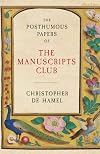
Very much the counterpart of Meetings with Remarkable Manuscripts, and just as good. Here the focus is on twelve people who had some sort of connection to manuscripts, whether writing them or collecting them etc. These aren’t just potted biographies. Each essay has that little bit extra. He’s researched properly, gone to where they lived, studied their books. I think the secret here is imagination. He can conjure up a scene from the past from some jotting on a scrap of paper. show more Particularly nice are his imagined conversations with these people. In the one on St. Anselm he’s taken his side of the conversation of various places in his works and cobbled it together.
This is a particularly nicely made book, as it would have to be for £40 (I borrowed it from the library). Good quality paper and beautifully illustrated. Lots of the illustrations run to the edge of the page so you can see their strata if you look at the edges when the book is closed. So I wouldn’t want you to think I’m unappreciative of a beautiful book. There’s an illumination by Simon Bening on page 134 that at first glance I thought was some sort of 3D embroidery. I’ve seen a few Medieval manuscripts under glass. I’m not the kind of person who would ever be allowed to handle them – and rightly so. I like to go to churches with fragile medieval wall paintings and chat up the vicar until she trusts me. Then, when no-ones looking I like to climb up on the pews and poke the paintings all over. But I’ve handled some modern manuscripts and there’s a real thrill to know that what you hold in your hands is a totally unique object and no-one else can be reading another copy at the same time. However, if you put a Books of Hours in front of me I’d be bored in five minutes. There’s a particularly interesting bit in the essay on Theodor Mommsen where de Hamel is obviously nonplussed by his interest in manuscripts because of the text. Really I’m with Mommsen on this one. De Hamel is interested in manuscripts as art. One thing this book does is give a history of the place of manuscripts over time – from working tools in monasteries to over-priced status symbols for the wealthy. show less
This is a particularly nicely made book, as it would have to be for £40 (I borrowed it from the library). Good quality paper and beautifully illustrated. Lots of the illustrations run to the edge of the page so you can see their strata if you look at the edges when the book is closed. So I wouldn’t want you to think I’m unappreciative of a beautiful book. There’s an illumination by Simon Bening on page 134 that at first glance I thought was some sort of 3D embroidery. I’ve seen a few Medieval manuscripts under glass. I’m not the kind of person who would ever be allowed to handle them – and rightly so. I like to go to churches with fragile medieval wall paintings and chat up the vicar until she trusts me. Then, when no-ones looking I like to climb up on the pews and poke the paintings all over. But I’ve handled some modern manuscripts and there’s a real thrill to know that what you hold in your hands is a totally unique object and no-one else can be reading another copy at the same time. However, if you put a Books of Hours in front of me I’d be bored in five minutes. There’s a particularly interesting bit in the essay on Theodor Mommsen where de Hamel is obviously nonplussed by his interest in manuscripts because of the text. Really I’m with Mommsen on this one. De Hamel is interested in manuscripts as art. One thing this book does is give a history of the place of manuscripts over time – from working tools in monasteries to over-priced status symbols for the wealthy. show less
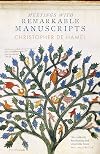
A handsomely produced brick of a book, Meetings with Remarkable Manuscripts is an engaging introduction to twelve significant illuminated manuscripts produced in medieval Europe. Given the number of illuminated manuscripts that survive, there's no way that any such selection could claim to be definitive or truly represenative, and Christopher de Hamel makes no claim to that. These are merely twelve manuscripts—books of hours, psalters, an anthology of song lyrics, a Chaucer show more manuscript—that have artistic merit and historical significance and that appeal to de Hamel. He is an amiable and knowledgeable guide, who knows how to make collations and bindings interesting to a lay audience—I think, at least. (He's certainly a better hand at it than I am any time I try to do the same, though admittedly the manuscripts I work on are not the pretty, illuminated sort. I would never have thought to compare the weight of a manuscript to that of an average Great Dane!)
There are times when his rather Anglocentric viewpoint and privileged (privately educated, his past employers are Sotheby's and Cambridge University) background do interfere somewhat with the text. De Hamel declares the art of the Book of Kells "weird" and "grotesque" (rarely do my nationalist hackles raise except when in the presence of a patronising Englishman), and in the epilogue urges book readers to become students of medieval manuscripts themselves, to visit libraries and look at digital copies online. I think he may perhaps have forgotten that skills medievalists think commonplace (a knowledge of Latin and medieval vernaculars, palaeography, codicology, etc) are in fact rather rarefied.
Those quibbles aside, there's no denying that this is an absorbing read—and a testament to the enduring power of books. show less
There are times when his rather Anglocentric viewpoint and privileged (privately educated, his past employers are Sotheby's and Cambridge University) background do interfere somewhat with the text. De Hamel declares the art of the Book of Kells "weird" and "grotesque" (rarely do my nationalist hackles raise except when in the presence of a patronising Englishman), and in the epilogue urges book readers to become students of medieval manuscripts themselves, to visit libraries and look at digital copies online. I think he may perhaps have forgotten that skills medievalists think commonplace (a knowledge of Latin and medieval vernaculars, palaeography, codicology, etc) are in fact rather rarefied.
Those quibbles aside, there's no denying that this is an absorbing read—and a testament to the enduring power of books. show less
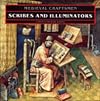
Part of a series on medieval craftsmen. Lots of pretty illustrations of illuminated manuscripts – as there should be – but also adequately illuminating text. (One of the illuminating things was that, originally, a manuscript was only considered “illuminated” if it had gold or silver leaf applied to illustrations; if it had colored illustrations with no precious metal, it was merely “decorated”. However the term “illuminated” was quickly extended to any manuscript with colored show more illustrations). We’re taken through the whole process, starting with the preparation of parchment from animal skins (paper was known, as was papyrus; but both tended to fail and tear under repeated use). “Uterine parchment”, supposedly from a fetal calf, was supposed to be the highest quality, but it seems like the term merely meant parchment of extremely good quality.
The prepared pages were ruled; since the pencil hadn’t been invented yet, this could be done with metalpoint (a rod with a lead or silver tip), by impressing lines into slightly damp parchment with a wire frame, or by pricking with a point. An artist would sketch the places where the illuminations would go, then the scribe would ink the text, then the illuminations would be colored (didn’t always have to go in that order). The sketch artist would sometimes do the equivalent of “paint by number”, with tiny letters – “r” for “rubus”, “v” for “vert”, etc – to indicate colors. The scribe had an “exemplar” to copy, and there were various ingenious writing desks that allowed the exemplar and the copy to be positioned side by side.
If the original parchment sheet was folded once, the resulting book was a “folio”; if twice, “quarto”, if three times “octavo”. Scribes would work on the pages before they were bound and cut; thus the writing would be upside-down on some parts compared to others. The folded pages were collected into “gatherings” (I always called them “signatures”, but I learned bookbinding a lot later), and the gatherings were sewn together on tapes or cords (that’s why the backs of old books have that ridged appearance; it’s the cords showing through). Sometimes gatherings were left unbound; this was often the case with textbooks, loaned to impoverished students one gathering at a time. When bound, the covers were often relatively heavy; parchment tends to curl with time and the weight of the covers helped to keep the book tidy (large books sometimes had metal clasps, for the same reason). Production of a full book for a private individual would require locating and furnishing an exemplar and contracting with a parchment maker, a scribe, an illustrator, and a binder; even after printing came in binding was often a separate process – you picked up the gatherings at the printer or bookseller and took them to a binder.
Useful and informative. As mentioned, lots of illustrations; the index and reference list seem a little sparse, though. I can’t close without a mention of my advisor, John Cisne, who showed the inevitable errors introduced by manuscript copyists could be treated exactly the same as evolutionary changes in organisms. show less
The prepared pages were ruled; since the pencil hadn’t been invented yet, this could be done with metalpoint (a rod with a lead or silver tip), by impressing lines into slightly damp parchment with a wire frame, or by pricking with a point. An artist would sketch the places where the illuminations would go, then the scribe would ink the text, then the illuminations would be colored (didn’t always have to go in that order). The sketch artist would sometimes do the equivalent of “paint by number”, with tiny letters – “r” for “rubus”, “v” for “vert”, etc – to indicate colors. The scribe had an “exemplar” to copy, and there were various ingenious writing desks that allowed the exemplar and the copy to be positioned side by side.
If the original parchment sheet was folded once, the resulting book was a “folio”; if twice, “quarto”, if three times “octavo”. Scribes would work on the pages before they were bound and cut; thus the writing would be upside-down on some parts compared to others. The folded pages were collected into “gatherings” (I always called them “signatures”, but I learned bookbinding a lot later), and the gatherings were sewn together on tapes or cords (that’s why the backs of old books have that ridged appearance; it’s the cords showing through). Sometimes gatherings were left unbound; this was often the case with textbooks, loaned to impoverished students one gathering at a time. When bound, the covers were often relatively heavy; parchment tends to curl with time and the weight of the covers helped to keep the book tidy (large books sometimes had metal clasps, for the same reason). Production of a full book for a private individual would require locating and furnishing an exemplar and contracting with a parchment maker, a scribe, an illustrator, and a binder; even after printing came in binding was often a separate process – you picked up the gatherings at the printer or bookseller and took them to a binder.
Useful and informative. As mentioned, lots of illustrations; the index and reference list seem a little sparse, though. I can’t close without a mention of my advisor, John Cisne, who showed the inevitable errors introduced by manuscript copyists could be treated exactly the same as evolutionary changes in organisms. show less
“This is a book about visiting important medieval manuscripts and what they tell us and why they matter.”
Job done.
Twelve chapters. Twelve manuscripts. Each chapter follows the same formula. De Hamel gives you the history of how the book came to be in its current library and describes his visit. Very interesting to see the different library cultures at play. I bet there are a few red faces at the Pierpont Morgan Library. He’s kind enough not to name names but they must know who they show more are. They he describes each manuscript and pulls out some of its more interesting features. Finally there’s some sort of detective work that might shine a light on the manuscript itself, but also into an obscure, or not so obscure, corner of history. There are lots of little discoveries along the way. Did you know that the Roman’s were aware that Venus and Mercury orbited the sun? Neither did I.
An incredibly interesting and readable book. The first night I looked up from it and realised it was four in the morning. The second night I knew what was going to happen so I napped before starting to read. The sun was up by the time I went to bed. This book has charm. I should think de Hamel does too. He managed to talk his way into examining each and every one of these books. The Codex Amiatinus. The Book of Kells. Obviously he has the credentials and knows the right people, but still... do you think they’d ever let me in to see the Hengwrt Chaucer? They’d take one look at me and think of that scene in Red Dragon where he eats the Blake. And quite right too. There’s a church near me with priceless medieval wall paintings. I went to see them and talked to the vicar for a while about the cost of insuring thatch (the church is thatched). I don’t know if I charmed her or bored her, but after a while she went off to do something, iron her cassock or something, and as soon as I was left alone with the paintings I climbed up on the pews and poked them all over.
One of the most interesting chapters for me was the Carmina Burana. I’m a fan of Orff’s musical number but mad never really thought about the source of the lyrics. It is of course a unique manuscript. All other copies are later printings edited from it. De Hamel’s analysis of its format as a kind of secular Breviary was particularly enlightening.
This is to say nothing of the illustrations in Remarkable Manuscripts. On its edge the book looks like geological strata. And those are just the illustrations that run to the edge of the page. The list of illustrations runs to seven pages of close type. Shame about the type face, but the paper is beautiful. Has a glow to it in the right light. Physically a well made book and all for thirty quid. That’s only three packets of fags. I borrowed my copy from the library. show less
Job done.
Twelve chapters. Twelve manuscripts. Each chapter follows the same formula. De Hamel gives you the history of how the book came to be in its current library and describes his visit. Very interesting to see the different library cultures at play. I bet there are a few red faces at the Pierpont Morgan Library. He’s kind enough not to name names but they must know who they show more are. They he describes each manuscript and pulls out some of its more interesting features. Finally there’s some sort of detective work that might shine a light on the manuscript itself, but also into an obscure, or not so obscure, corner of history. There are lots of little discoveries along the way. Did you know that the Roman’s were aware that Venus and Mercury orbited the sun? Neither did I.
An incredibly interesting and readable book. The first night I looked up from it and realised it was four in the morning. The second night I knew what was going to happen so I napped before starting to read. The sun was up by the time I went to bed. This book has charm. I should think de Hamel does too. He managed to talk his way into examining each and every one of these books. The Codex Amiatinus. The Book of Kells. Obviously he has the credentials and knows the right people, but still... do you think they’d ever let me in to see the Hengwrt Chaucer? They’d take one look at me and think of that scene in Red Dragon where he eats the Blake. And quite right too. There’s a church near me with priceless medieval wall paintings. I went to see them and talked to the vicar for a while about the cost of insuring thatch (the church is thatched). I don’t know if I charmed her or bored her, but after a while she went off to do something, iron her cassock or something, and as soon as I was left alone with the paintings I climbed up on the pews and poked them all over.
One of the most interesting chapters for me was the Carmina Burana. I’m a fan of Orff’s musical number but mad never really thought about the source of the lyrics. It is of course a unique manuscript. All other copies are later printings edited from it. De Hamel’s analysis of its format as a kind of secular Breviary was particularly enlightening.
This is to say nothing of the illustrations in Remarkable Manuscripts. On its edge the book looks like geological strata. And those are just the illustrations that run to the edge of the page. The list of illustrations runs to seven pages of close type. Shame about the type face, but the paper is beautiful. Has a glow to it in the right light. Physically a well made book and all for thirty quid. That’s only three packets of fags. I borrowed my copy from the library. show less
Lists
Awards


You May Also Like


Associated Authors
Statistics
- Works
- 33
- Also by
- 8
- Members
- 3,612
- Popularity
- #7,013
- Rating
- 4.1
- Reviews
- 42
- ISBNs
- 57
- Languages
- 6
- Favorited
- 2