
Annie Heloise Abel (1873–1947)
Author of The American Indian in the Civil War, 1862-1865
About the Author
Born in England and educated in Kansas, Annie Heloise Abel (1873-1947) was a historical editor and writer of books dealing mainly with the trans-Mississippi West
Series
Works by Annie Heloise Abel
The Slaveholding Indians: As Slaveholder and Secessionist / As Participants in the Civil War / Under Reconstruction (3 volumes) (2021) 2 copies
The American Indian as Slaveholder and Secessionist an Omitted Chapter in the Diplomatic History of the Southern Confederacy Vol. 2 (2024) 2 copies
Native Americans the American Indian Under Reconstruction: The Slaveholding Indians (2012) 1 copy, 1 review
Tagged
Common Knowledge
- Other names
- Abel-Henderson, Annie Heloise
Henderson, Annie Abel - Birthdate
- 1873-02-18
- Date of death
- 1947-03-14
- Gender
- female
- Education
- Yale University (PhD|History|1905)
University of Kansas (AM)
University of Kansas (AB) - Occupations
- historian
professor
suffragist - Organizations
- Goucher College
- Awards and honors
- Justin Winsor Prize, American Historical Association (1906)
- Relationships
- Bourne, Edward Gaylord (teacher)
- Short biography
- Annie Heloise Abel was born in Sussex, England and at age 12, followed her family to emigrate to the USA. They settled in Salina, Kansas, where she graduated from high school in 1893 and began teaching in public schools. A couple of years later, she enrolled in the University of Kansas and graduated Phi Beta Kappa and earned an M.A. in history. After again teaching for a few years in order to make money for her graduate studies, Abel began a doctoral degree at Cornell University and completed it at Yale. Annie was among the first cohort of women to earn doctorates in history in the USA. She soon became well-known for her scholarship on Native American history.
Several of her books were published by the University of Nebraska Press.
In 1906, she took a position as an instructor at Goucher College in Baltimore, Maryland, rising to full professor and head of the history department in six years. It was at Goucher that she became involved with the women's suffrage movement.
As president of the Maryland branch of the College Suffrage League, one of the groups associated with the National American Woman’s Suffrage Association (NAWSA), she encouraged student understanding and participation in the suffrage movement at area colleges. She vigorously debated opponents of the suffrage movement in public and held parlor talks on the topic.
In 1913, she organized the Goucher contingent of 100 students who marched in the National Woman’s Party parade in Washington, D.C., the first major suffrage spectacle organized by the NAWSA.
Annie left Goucher in 1916 and took a position at Smith College in Massachusetts. Subsequently, she accepted a fellowship in Australia in order to study indigenous groups there. She was briefly married to George Henderson, a professor of English at Adelaide University. When she returned to the USA, she taught at several colleges and universities before retiring to the family home in Aberdeen, Washington. - Nationality
- UK
- Birthplace
- Fernhurst, England, UK
- Places of residence
- Salina, Kansas, USA
Lawrence, Kansas, USA
New Haven, Connecticut, USA
Adelaide, South Australia, Australia
Aberdeen, Washington, USA - Place of death
- Aberdeen, Washington, USA
- Burial location
- Wynooche Cemetery, Montesano, Washington, USA
- Associated Place (for map)
- USA
Members
Reviews
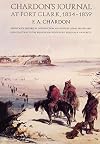
To be honest, I’ve put off reading this one for a while because of its author’s reputation as a drunken murderer and misanthrope.
That reputation springs from an incident, famous in fur trade history and mentioned by Charles Larpenteur, in 1843 at Fort McKenzie when Chardon and another trader, Alexander Harvey, ambushed a group of Blackfeet Indians using a hidden cannon. After killing at least six, they scalped them and allegedly did a scalp dance. The ambush was retaliation for the show more stealing of their horses by the Indians and the killing of Chardon’s black slave. The incident led to the loss of trade with the Blackfeet which had taken decades for American traders to negotiate.
But that’s not the Chardon we’re dealing with here. Abel has her doubts as to how much of the ambush was Chardon’s doing rather than Harvey’s or that Chardon was a heavy drinker. His employer, the American Fur Company, still employed him after the incident.
Chardon’s journal differs from the other primary sources of the Upper Missouri fur trade I’ve covered. It was not an ethnographic discussion of Indians like Edwin Thompson Denig’s Five Indian Tribes of the Upper Missouri. Unlike Larpenteur, Chardon was not a professional failure but a highly paid employee.
Nor did he ever intend this private journal to be published. It seems to have been loaned out to French scientist Joseph N. Nicollet and never returned. It was discovered in the archives of the U.S. Department of War in 1921 where Abel took an interest in it.
Abel was a thorough scholar. Besides a very lengthy introduction, her annotations and notes probably exceed Chardon’s text in word count. She was not a fur trade scholar but, rather, the author of a respected series of volumes, The Slaveholding Indians, about the Five Civilized Tribes in the nineteenth century.
William R. Swagerty’s introduction to the volume notes Abel’s own prejudices. She negatively compares the Mandan tribe to the focus of her own scholarship. Indeed, she regards them as a depraved tribe in comparison to almost any other, an opinion, she notes, shared by many traders who had dealings with them as opposed to the romantic portrayal of them by explorers and artists. And, as a suffragette, she harshly criticizes the casual “marriages” between Indians and traders. The whole enterprise of the American Fur Company is judged as corrupting Indians with no attempt to civilize them. (Though she does note the Mandan seem to be more temperate in regard to liquor than other tribes.)
We don’t know much about Francis Chardon’s early life. It’s thought he fought under Andrew Jackson at the Battle of New Orleans. There are certainly many references to commemorating Jackson in the journal, and Chardon named one of his sons after the President. (Another was named Francis Bolivar.)
Fort Clark was one of the three main trading sites on the Upper Missouri, near what is now the Knife River Historic Site in North Dakota though nothing exists of it now. It was built on a terrace above the Missouri River, a site occupied by Indians for centuries until it was abandoned in 1861.
Much of the journal covers material you would expect Clark, as the bourgeoise – manager -- of the fort to cover. He goes on buffalo hunts not only for hides but meat. There is a trade not only in buffalo hides but rabbit and fox skins. The killing of wolves is frequently mentioned. There is much talk about how the fur business is going and the dispatching of men to nearby Indian settlements for trade. Firewood and hay are gathered, buildings repaired. The weather and the state of the Missouri – its level and ice cover – are noted. Chardon complains at one point about how he is sick of going to Mandan dances in the fall. A surprising feature is that the last entry for each month has a count of rats killed that month with a running total from previous months. Rats had made their way up, in steamboats, to the trading posts on the Missouri and were a major nuisance.
There are mentions of the fights between the tribes – the Mandan, Arikara, Sioux, and Hidatsa (though, following the custom of the time, the last are called the Gros Ventres) – in the area. We hear the pathetic tale of a trader trying to get his Indian wife back after she left him. On occasion, Chardon complains of loneliness though he had an Indian wife. (He had several in his life and one was painted by George Caitlin). Bits of doggerel and quoted verse add whimsical touches.
But none of that is why this journal is famous.
Its fame comes from it being the primary source on the great smallpox epidemic, brought by an infected steamboat passenger, that swept the Plains starting in June 1837. Of all the documented disease epidemics in American history, this had the highest mortality. It’s estimated perhaps fifty percent of the High Plains Indians died from it. With the Mandan, the tribe that lived near Fort Clark, it was ninety percent.
Even Abel, no admirer of the Mandans, says its hard not to feel the horror of their plight. We hear of some Indians blaming – with justification – the whites for the disease, threatening to kill them all. In fact, one did try to kill Chardon. Another trader was killed by an angry Indian. We hear of many murder-suicides by despairing Indians fearing the disease of the “rotten face” will separate their families. One young infected Arikara told his mother to dig his grave then laid down it and died.
Desperate measures were taken. An infected Indian cut into his baby’s belly and rubbed his scabs into them in an attempt at vaccination. Another rolled around in ashes, covering his smallpox sores. Surprisingly, both actions worked.
Chardon himself was infected, and one of his sons died from the disease.
Chardon conveys all this with his usual conciseness.
From August 16th 1837: “We are beset by enemies on all sides – expecting to be shot every Minute”. Two days later, he said
"Nothing but an occasional glass of grog Keeps me alive as I am worried almost to death by the Indians and Whites, the latter (the men) threaten to leave me"
His reputation for insensitive misanthropy may rest on a September 19th entry:
"I was visited by a young fellow from the little Village, he assures Me that there is but 14 of them liveing, the Number of deaths Cannot be less than 800 – what a bande of RASCALS has been used up"
On the other hand, he did make a list of some Mandan dead.
Abel rounds out her text with several letters, most of from the “King of the Missouri”, Kenneth McKenzie, written by American Fur Company employees. She also includes the report by company employee and Chardon’s friend, Jacob Halsey, from November 1837 on the smallpox epidemic. Before Chardon’s journal was discovered, it was the main source on the epidemic. (Their friendship, incidentally, didn’t stop Chardon from stealing one of Halsey’s Indian wives.)
The book comes with a very extensive index and one map based on archaeology done at the Fort Clark site.
Abel’s placing all this in historical context – whatever her prejudices – is useful, and Chadron’s coverage of the epidemic is the equal in its vividness of some of the first-hand accounts of Europe’s bubonic plague epidemic in the 14th century. show less
That reputation springs from an incident, famous in fur trade history and mentioned by Charles Larpenteur, in 1843 at Fort McKenzie when Chardon and another trader, Alexander Harvey, ambushed a group of Blackfeet Indians using a hidden cannon. After killing at least six, they scalped them and allegedly did a scalp dance. The ambush was retaliation for the show more stealing of their horses by the Indians and the killing of Chardon’s black slave. The incident led to the loss of trade with the Blackfeet which had taken decades for American traders to negotiate.
But that’s not the Chardon we’re dealing with here. Abel has her doubts as to how much of the ambush was Chardon’s doing rather than Harvey’s or that Chardon was a heavy drinker. His employer, the American Fur Company, still employed him after the incident.
Chardon’s journal differs from the other primary sources of the Upper Missouri fur trade I’ve covered. It was not an ethnographic discussion of Indians like Edwin Thompson Denig’s Five Indian Tribes of the Upper Missouri. Unlike Larpenteur, Chardon was not a professional failure but a highly paid employee.
Nor did he ever intend this private journal to be published. It seems to have been loaned out to French scientist Joseph N. Nicollet and never returned. It was discovered in the archives of the U.S. Department of War in 1921 where Abel took an interest in it.
Abel was a thorough scholar. Besides a very lengthy introduction, her annotations and notes probably exceed Chardon’s text in word count. She was not a fur trade scholar but, rather, the author of a respected series of volumes, The Slaveholding Indians, about the Five Civilized Tribes in the nineteenth century.
William R. Swagerty’s introduction to the volume notes Abel’s own prejudices. She negatively compares the Mandan tribe to the focus of her own scholarship. Indeed, she regards them as a depraved tribe in comparison to almost any other, an opinion, she notes, shared by many traders who had dealings with them as opposed to the romantic portrayal of them by explorers and artists. And, as a suffragette, she harshly criticizes the casual “marriages” between Indians and traders. The whole enterprise of the American Fur Company is judged as corrupting Indians with no attempt to civilize them. (Though she does note the Mandan seem to be more temperate in regard to liquor than other tribes.)
We don’t know much about Francis Chardon’s early life. It’s thought he fought under Andrew Jackson at the Battle of New Orleans. There are certainly many references to commemorating Jackson in the journal, and Chardon named one of his sons after the President. (Another was named Francis Bolivar.)
Fort Clark was one of the three main trading sites on the Upper Missouri, near what is now the Knife River Historic Site in North Dakota though nothing exists of it now. It was built on a terrace above the Missouri River, a site occupied by Indians for centuries until it was abandoned in 1861.
Much of the journal covers material you would expect Clark, as the bourgeoise – manager -- of the fort to cover. He goes on buffalo hunts not only for hides but meat. There is a trade not only in buffalo hides but rabbit and fox skins. The killing of wolves is frequently mentioned. There is much talk about how the fur business is going and the dispatching of men to nearby Indian settlements for trade. Firewood and hay are gathered, buildings repaired. The weather and the state of the Missouri – its level and ice cover – are noted. Chardon complains at one point about how he is sick of going to Mandan dances in the fall. A surprising feature is that the last entry for each month has a count of rats killed that month with a running total from previous months. Rats had made their way up, in steamboats, to the trading posts on the Missouri and were a major nuisance.
There are mentions of the fights between the tribes – the Mandan, Arikara, Sioux, and Hidatsa (though, following the custom of the time, the last are called the Gros Ventres) – in the area. We hear the pathetic tale of a trader trying to get his Indian wife back after she left him. On occasion, Chardon complains of loneliness though he had an Indian wife. (He had several in his life and one was painted by George Caitlin). Bits of doggerel and quoted verse add whimsical touches.
But none of that is why this journal is famous.
Its fame comes from it being the primary source on the great smallpox epidemic, brought by an infected steamboat passenger, that swept the Plains starting in June 1837. Of all the documented disease epidemics in American history, this had the highest mortality. It’s estimated perhaps fifty percent of the High Plains Indians died from it. With the Mandan, the tribe that lived near Fort Clark, it was ninety percent.
Even Abel, no admirer of the Mandans, says its hard not to feel the horror of their plight. We hear of some Indians blaming – with justification – the whites for the disease, threatening to kill them all. In fact, one did try to kill Chardon. Another trader was killed by an angry Indian. We hear of many murder-suicides by despairing Indians fearing the disease of the “rotten face” will separate their families. One young infected Arikara told his mother to dig his grave then laid down it and died.
Desperate measures were taken. An infected Indian cut into his baby’s belly and rubbed his scabs into them in an attempt at vaccination. Another rolled around in ashes, covering his smallpox sores. Surprisingly, both actions worked.
Chardon himself was infected, and one of his sons died from the disease.
Chardon conveys all this with his usual conciseness.
From August 16th 1837: “We are beset by enemies on all sides – expecting to be shot every Minute”. Two days later, he said
"Nothing but an occasional glass of grog Keeps me alive as I am worried almost to death by the Indians and Whites, the latter (the men) threaten to leave me"
His reputation for insensitive misanthropy may rest on a September 19th entry:
"I was visited by a young fellow from the little Village, he assures Me that there is but 14 of them liveing, the Number of deaths Cannot be less than 800 – what a bande of RASCALS has been used up"
On the other hand, he did make a list of some Mandan dead.
Abel rounds out her text with several letters, most of from the “King of the Missouri”, Kenneth McKenzie, written by American Fur Company employees. She also includes the report by company employee and Chardon’s friend, Jacob Halsey, from November 1837 on the smallpox epidemic. Before Chardon’s journal was discovered, it was the main source on the epidemic. (Their friendship, incidentally, didn’t stop Chardon from stealing one of Halsey’s Indian wives.)
The book comes with a very extensive index and one map based on archaeology done at the Fort Clark site.
Abel’s placing all this in historical context – whatever her prejudices – is useful, and Chadron’s coverage of the epidemic is the equal in its vividness of some of the first-hand accounts of Europe’s bubonic plague epidemic in the 14th century. show less

Awards

You May Also Like


Associated Authors
Statistics
- Works
- 16
- Members
- 240
- Popularity
- #94,568
- Rating
- 3.5
- Reviews
- 3
- ISBNs
- 42
- Favorited
- 1