
Laurence M. Hauptman
Author of Between Two Fires: American Indians in the Civil War
About the Author
Laurence M. Hauptman is SUNY Distinguished Professor of History at the State University of New York at New Paltz
Works by Laurence M. Hauptman
The Pequots in Southern New England: The Fall and Rise of an American Indian Nation (1990) — Editor — 70 copies
Conspiracy of Interests: Iroquois Dispossession and the Rise of New York State (The Iroquois and Their Neighbors) (1999) 32 copies
The Iroquois Struggle for Survival: World War II to Red Power (The Iroquois and Their Neighbors) (1986) 28 copies
Seven Generations of Iroquois Leadership: The Six Nations Since 1800 (Iroquois and Their Neighbors) (2008) 13 copies
The Tonawanda Senecas' Heroic Battle Against Removal: Conservative Activist Indians (Excelsior Editions) (2011) 13 copies
In the Shadow of Kinzua: The Seneca Nation of Indians since World War II (The Iroquois and Their Neighbors) (2013) 11 copies
An Oneida Indian in Foreign Waters: The Life of Chief Chapman Scanandoah, 1870-1953 (The Iroquois and Their Neighbors) (2016) 7 copies
A Seneca Indian in the Union Army: The Civil War Letters of Sergeant Isaac Newton Parker, 1861-1865 (Civil War Heritage Series) (1995) 7 copies
Associated Works
Tagged
Common Knowledge
- Gender
- male
- Occupations
- historian
- Organizations
- State University of New York, New Paltz
Members
Reviews
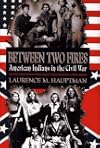
Huaptman's topic is of strong interest, and he covers the obscure well. However, he does not go far enough. During the American Civil War, American Indian tribes participated--many for the Union, but most for the Confederacy. Huaptman divides his book into 3 major sections: the Trans-Mississippi West, the South, and the North.
Across the Mississippi River, the Delaware contributed to the Union cause. The celebrated Cherokee Stand Waite has a chapter of his own and deservedly so. Waite was one show more of the last to surrender and the only Confederate General of a strong degree of American Indian blood.
In the Southern section (the section I consider obscure and highly captivating), he covers the Pamunkey and Lumbee Unionist, the Catawba, and the Eastern Band of Cherokee. Disappointingly, he includes a small one paragraph mention of the 1st Choctaw Battalion out of Mississippi. Huaptman could have gone a little further with them. In fact, there is enough material about them for a whole book, so a chapter about them would have been an integral part of this book.
In the last part, he investigates the Unionist roles of Northern tribes like the Ottawa, Ojibwa, Pequot, and Mohegan Indians. Ely S. Parker, the Seneca, was an interesting re-read as he is well known. Parker was on the staff of General Ulysses S. Grant.
Overall, he did an admirable job. I notice a number of discrepancies in the notes while doing my own research. On page 215, the letter from "John A. Davis to Major Memminger, April 12, 1863" ... The letter was actually from Brig. Gen. John Adams to Memminger. Also, on the same page, J. W. Pierce was the writer than a "J. N. Pierce." show less
Across the Mississippi River, the Delaware contributed to the Union cause. The celebrated Cherokee Stand Waite has a chapter of his own and deservedly so. Waite was one show more of the last to surrender and the only Confederate General of a strong degree of American Indian blood.
In the Southern section (the section I consider obscure and highly captivating), he covers the Pamunkey and Lumbee Unionist, the Catawba, and the Eastern Band of Cherokee. Disappointingly, he includes a small one paragraph mention of the 1st Choctaw Battalion out of Mississippi. Huaptman could have gone a little further with them. In fact, there is enough material about them for a whole book, so a chapter about them would have been an integral part of this book.
In the last part, he investigates the Unionist roles of Northern tribes like the Ottawa, Ojibwa, Pequot, and Mohegan Indians. Ely S. Parker, the Seneca, was an interesting re-read as he is well known. Parker was on the staff of General Ulysses S. Grant.
Overall, he did an admirable job. I notice a number of discrepancies in the notes while doing my own research. On page 215, the letter from "John A. Davis to Major Memminger, April 12, 1863" ... The letter was actually from Brig. Gen. John Adams to Memminger. Also, on the same page, J. W. Pierce was the writer than a "J. N. Pierce." show less
An excellent overview of Indian experiences in the Civil War, focusing on several tribes and individuals. Covers military experiences as well as home life, and broader effects on tribes. Some background on their histories before and after the war. Short, but detailed.
The Native Americans; A History of the First Residents of New Paltz and Environs by Laurence M. Hauptman

Pamphlet by SUNY New Paltz history professor
You May Also Like


Associated Authors
Statistics
- Works
- 24
- Also by
- 3
- Members
- 414
- Popularity
- #58,865
- Rating
- 3.8
- Reviews
- 3
- ISBNs
- 42