
Vance Packard (1914–1996)
Author of The Hidden Persuaders
About the Author
Works by Vance Packard
Associated Works
Tagged
Common Knowledge
- Legal name
- Packard, Vance Oakley
- Birthdate
- 1914-05-22
- Date of death
- 1996-12-12
- Gender
- male
- Education
- Pennsylvania State University (BA|English|1936)
Columbia University (MA|Journalism|1937) - Occupations
- journalist
social critic - Organizations
- The American Magazine
Collier's
Centre Daily Times
Boston Daily Record - Awards and honors
- Named Distinguished Alumnus, Pennsylvania State University (1961)
- Nationality
- USA
- Birthplace
- Granville Summit, Pennsylvania, USA
- Places of residence
- State College, Pennsylvania, USA
New Canaan, Connecticut, USA
Martha's Vineyard, Massachusetts, USA - Place of death
- Oak Bluffs, Martha's Vineyard, Massachusetts, USA
- Associated Place (for map)
- USA
Members
Reviews

The US economy, and the continued happiness and prosperity of its citizens, rely almost completely on the promotion of wasteful consumption by the ad-men, the corporate executives, and the keeping-up-with-the-Joneses mentality of the super-size-me American Dream. Or so goes the narrative of leaders of the mid-century US economy that comes under the razor-sharp analysis of Vance Packard. It runs us through the consumption patterns of its citizens, and the ongoing foot-on-the-accelerator show more efforts of advertising industry to make turnover of goods ever faster.
Planned obsolescence of goods as a business model is something difficult to justify either morally (mainly in terms of its damage to the environment), or to the consumer on a value-for-money basis (so this relies on them not fully realizing what’s happening). Yet the number of types of obsolescence or encouraged waste (Packard counts nine) employed by the big corporations to boost spending, is staggering, and illustrated in concise yet bountiful detail here. Let me run through these briefly:
1. Encouraging people to buy more of everything (examples – two exhausts on a car that needs one, two cars to a household that needs one, his and hers versions of an item that they could share, two-household homes (with two of every appliance of course),
2. The throw-away spirit (fast-fashion, planned obsolescence of style, single-use or disposable items, non-recyclable food packing etc, goods cheaper to replace than repair)
3. Planned obsolescence (goods designed to break just after expired warranty)
4. Planned obsolescence of desirability (styling cycles)
5. Prevention of economical repair (often by design)
6. Planned chaos
7. Instant money/cash loans (to oil the wheels of spending)
8. Hedonism for the masses (everyone expects more out of life, erosion of spartan/protestant ideals)
9. Proliferation of people (encouragement of reproduction)
The only major things that have changed since this book was written are the exact monetary figures (they’ve only got bigger), that what was said about the US now applies to most of the developed world, and that a proportion of more educated citizens are railing against the wasteful behaviour described herein. This book was ahead of its time in calling out the excesses that were draining the world of its non-renewable resources, and now we are in the metaphorical hangover stage..
Read this. Don't be fooled! show less
Planned obsolescence of goods as a business model is something difficult to justify either morally (mainly in terms of its damage to the environment), or to the consumer on a value-for-money basis (so this relies on them not fully realizing what’s happening). Yet the number of types of obsolescence or encouraged waste (Packard counts nine) employed by the big corporations to boost spending, is staggering, and illustrated in concise yet bountiful detail here. Let me run through these briefly:
1. Encouraging people to buy more of everything (examples – two exhausts on a car that needs one, two cars to a household that needs one, his and hers versions of an item that they could share, two-household homes (with two of every appliance of course),
2. The throw-away spirit (fast-fashion, planned obsolescence of style, single-use or disposable items, non-recyclable food packing etc, goods cheaper to replace than repair)
3. Planned obsolescence (goods designed to break just after expired warranty)
4. Planned obsolescence of desirability (styling cycles)
5. Prevention of economical repair (often by design)
6. Planned chaos
7. Instant money/cash loans (to oil the wheels of spending)
8. Hedonism for the masses (everyone expects more out of life, erosion of spartan/protestant ideals)
9. Proliferation of people (encouragement of reproduction)
The only major things that have changed since this book was written are the exact monetary figures (they’ve only got bigger), that what was said about the US now applies to most of the developed world, and that a proportion of more educated citizens are railing against the wasteful behaviour described herein. This book was ahead of its time in calling out the excesses that were draining the world of its non-renewable resources, and now we are in the metaphorical hangover stage..
Read this. Don't be fooled! show less
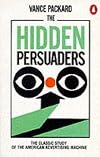
Now it is somewhat dated. The original was, after all, published in 1957; the edition I read had an epilogue and introduction from 1981, updating things slightly. Still a lot of the general comments and the large picture rings a lot of warning bells in my skull. I actually found it more chilling than any horror book I've read.
This looks at how we are sold things, how things are packaged to attract and to encourage us to enter into a unthinking mode of living. Allowing the advertising to show more wash us up on the aisles of shops reaching for foods and goods that we will later bin. You can see how the advertising machine both misjudges and adapts to other societies.
It warns us that we need to stop accepting and be active consumers, thinking about the products we're sold and whether or not we need them or if they are of any real use to us nutritionally or otherwise. However as this book is over 50 years old and we're still behaving in the same ways we also need to ask if the general public really want to learn the lessons in this book, but that's where it gets scary. show less
This looks at how we are sold things, how things are packaged to attract and to encourage us to enter into a unthinking mode of living. Allowing the advertising to show more wash us up on the aisles of shops reaching for foods and goods that we will later bin. You can see how the advertising machine both misjudges and adapts to other societies.
It warns us that we need to stop accepting and be active consumers, thinking about the products we're sold and whether or not we need them or if they are of any real use to us nutritionally or otherwise. However as this book is over 50 years old and we're still behaving in the same ways we also need to ask if the general public really want to learn the lessons in this book, but that's where it gets scary. show less

Vance Packard’s “The Hidden Persuaders” presents an overview of the psychological research done by the advertising industry, which it uses to influence us, often subconsciously, to think we want their products.
This trend for in-depth psychological research, as opposed to more traditional market research and statistical analysis, has been growing since the 1940s. It has influenced the bulk of society to a vast degree in creating false wants and has expanded the economy so that show more products are not merely sold to fulfil demands, but demands are created to sell products. It has done this in a way that traditional marketing based on the assumption that the consumer was a rational entity could not, by leveraging the subconscious. Much of the research that has gone into this is quite clever and interesting to read about.
This is a fascinating volume not merely from the point of view of understanding human nature and the unexpected psychological factors behind common purchasing decisions, but also because of the prevalence of advertising and consumerism and the need to be on guard against the ubiquitous manipulations of companies trying to gain the upper hand. Recommended reading for anyone with an interest in psychology, business, or society. show less
This trend for in-depth psychological research, as opposed to more traditional market research and statistical analysis, has been growing since the 1940s. It has influenced the bulk of society to a vast degree in creating false wants and has expanded the economy so that show more products are not merely sold to fulfil demands, but demands are created to sell products. It has done this in a way that traditional marketing based on the assumption that the consumer was a rational entity could not, by leveraging the subconscious. Much of the research that has gone into this is quite clever and interesting to read about.
This is a fascinating volume not merely from the point of view of understanding human nature and the unexpected psychological factors behind common purchasing decisions, but also because of the prevalence of advertising and consumerism and the need to be on guard against the ubiquitous manipulations of companies trying to gain the upper hand. Recommended reading for anyone with an interest in psychology, business, or society. show less
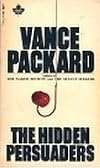
Although I read this book many years ago, it stuck inside my head like an old familiar tune that you can’t quite place and are not sure of the words. Time and again the book’s message has resurfaced in terms like “Planned Obsolescence,” while watching the movie, “Mom & Dad – staring Nickolas Cage” and whenever I found myself using a disposable item.
Recently, I’ve begun speaking out against companies that would rather toss their unsold goods into landfills, rather than show more selling them at reduced prices or donating them to worthy charities/causes. Many “Big-Name” stores are notorious for this practice and consumers are just becoming aware of the effects: Food, Clothing, Books, Appliances, Electronics and more – all thrown away when they go unsold – as new models are unpacked for the shelves and racks.
I have forgone the “Rat Race,” choosing a simple life of working from my home-office, here, on my farm – where very little is ever thrown away and we are continuously learning new ways to recycle, re-purpose and reuse.
But my question remains – what can I do to change this wasteful practice when I see it taking place? How can I help others understand the brainwashing efforts of marketers without sounding fanatical? show less
Recently, I’ve begun speaking out against companies that would rather toss their unsold goods into landfills, rather than show more selling them at reduced prices or donating them to worthy charities/causes. Many “Big-Name” stores are notorious for this practice and consumers are just becoming aware of the effects: Food, Clothing, Books, Appliances, Electronics and more – all thrown away when they go unsold – as new models are unpacked for the shelves and racks.
I have forgone the “Rat Race,” choosing a simple life of working from my home-office, here, on my farm – where very little is ever thrown away and we are continuously learning new ways to recycle, re-purpose and reuse.
But my question remains – what can I do to change this wasteful practice when I see it taking place? How can I help others understand the brainwashing efforts of marketers without sounding fanatical? show less
Lists
Awards


You May Also Like


Associated Authors
Statistics
- Works
- 20
- Also by
- 4
- Members
- 2,240
- Popularity
- #11,448
- Rating
- 3.8
- Reviews
- 28
- ISBNs
- 74
- Languages
- 7
- Favorited
- 1