
Bi Feiyu
Author of Three Sisters
About the Author
Works by Bi Feiyu
Solistkinja 1 copy
Associated Works
Tagged
Common Knowledge
Members
Reviews
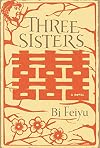
I picked this Chinese novel up on a whim at a library sale and I'm glad I did. [Three Sisters] takes place during the 1970s Cultural Revolution in China. The book is divided into three parts, each highlighting one of the sisters. Their family is made up of a father who is a mid-ranking government official, their mother, and 8 siblings - 7 girls and finally 1 boy. Yumi, the oldest sister, gets the focus first. She is driven and focused and determined to make a good marriage, despite her show more father's sexual escapades, which end up losing him his government position. The next section is about Yuxiu, the third sister, who is more flighty, more flirty, and looks to her older sister to help her make her way in the world. Yuyang is the smartest sister and goes off to school. There she finds that school is just as corrupt as the government and her home community.
The politics and ideology of the Cultural Revolution are present behind all of the sisters' stories, but they pleasingly form a backdrop rather than overriding the girls' personal stories. I was very invested in the first two sections. Yumi and Yuxiu's lives connect and also form contrasting experiences. Yuyang's story was less impactful to me. Though I appreciate the way the author sets up the school setting in contrast to the community/town setting, the section felt like it didn't connect well to the first two sections.
I found the ending unsatisfying and hoped that things would be tied up a little better, but even with an unsatisfying ending, I did enjoy this book quite a bit and would recommend it if you are interested in contemporary Chinese literature. show less
The politics and ideology of the Cultural Revolution are present behind all of the sisters' stories, but they pleasingly form a backdrop rather than overriding the girls' personal stories. I was very invested in the first two sections. Yumi and Yuxiu's lives connect and also form contrasting experiences. Yuyang's story was less impactful to me. Though I appreciate the way the author sets up the school setting in contrast to the community/town setting, the section felt like it didn't connect well to the first two sections.
I found the ending unsatisfying and hoped that things would be tied up a little better, but even with an unsatisfying ending, I did enjoy this book quite a bit and would recommend it if you are interested in contemporary Chinese literature. show less
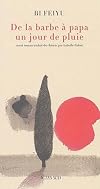
I don't often read Chinese books but this beautiful title drew me in: Cotton candy on a rainy day. It immediately leaves an impression of youthful innocence quickly ruined by the imminent summer afternoon storm. The narrator of this story recounts the story of his friend Hongdou, a young man who should have been born as something else; should have been brought up as someone else; should have tried to become anything else. Instead he lets himself be taken into a world which is not his own and show more instead belongs to his father: war. Hongdou, son of a hero of the Korean war, enrolls himself in the Sino-Vietnamese conflict of 1979 and comes back broken. We are first introduced to the dead Hongdou and see quickly how the young man of 28 succumbed to the horrors of his destiny. As the summary on the back of the book so beautifully writes: "The deeply moving story, which we could interpret as anti-war, is foremost a tribute to those who don't have the force to live outside the paths created for them." show less

This is really two separate books and it feels almost like two different authors. The setting for both are the Chinese countryside during the Maoist Return To The Land Movement in the early 1970s, when Communist Party functionaries held almost unlimited power in villages and schools. In the first story, a family with seven girls finally has a boy, and the two elder sisters have a running battle for power within the family and for the respect of the village residents. In the second, the show more youngest daughter studies hard enough to leave home and attend school, but, once again, the power struggles make her life difficult. It's a very intricate look at the habits and mores of what was considered to be the peasant class. There must be novels that address how this generation handled the enormous changes China has undergone over the last forty years. show less
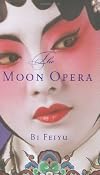
A diva of the Peking Opera House, more notably the star of the "Moon Opera," attacks a rival, and in the fallout, she subsequently retreats to just teaching. Twenty years later a very wealthy factory manager offers to underwrite a new production of the same opera, but only if that specific diva will return and take the lead role. Xiao Yanqiu, our volatile diva, now married and with a child, accepts the position, and thus our dramatic (somewhat crazy) story begins.
It took me a chapter or two show more to settle into this story, and get to know our diva, Yanqui, who is a diva by both definitions of the word: "a famous female singer of the the opera" and "a self-important person who is temperamental and difficult to please" (let the games begin!)
A relatively quick read at 177 small pages; but an entertaining introduction to Chinese opera… with all it’s drama. show less
It took me a chapter or two show more to settle into this story, and get to know our diva, Yanqui, who is a diva by both definitions of the word: "a famous female singer of the the opera" and "a self-important person who is temperamental and difficult to please" (let the games begin!)
A relatively quick read at 177 small pages; but an entertaining introduction to Chinese opera… with all it’s drama. show less
Awards


You May Also Like


Associated Authors
Statistics
- Works
- 12
- Also by
- 1
- Members
- 299
- Popularity
- #78,482
- Rating
- 3.5
- Reviews
- 12
- ISBNs
- 47
- Languages
- 7