
Michael A. Lebowitz
Author of Build It Now: Socialism for the Twenty-First Century
About the Author
Michael A. Lebowitz is professor emeritus of economics at Simon Fraser University in Vancouver, Canada, and the author of several books including The Socialist Imperative and The Contradictions of "Real Socialism. "He was Director, Program in Transformative Practice and Human Development, Centro show more Internacional Miranda, in Caracas, Venezuela, from 2006 to 2011. show less
Works by Michael A. Lebowitz
Associated Works
Tagged
Common Knowledge
- Birthdate
- 1937-11-27
- Gender
- male
Members
Reviews

Michael Lebowitz, Professor of Economics at Simon Fraser in Vancouver, has been able to do with this book what no theoretician has done in decades: he has actually added to Marx and the Marxist view of society, explaining what Marx left out of "Capital", and showing what the importance of the missing parts of Marxist theory is.
The crux of the book is this: "Capital", says Lebowitz, is essentially a one-sided book. It brilliantly explains the Marxist view of the political economy of show more capitalism, but only from the side of capital. This one-sided view of society has led to many errors and a constant problem with economism. Lebowitz, however, is able to show that what is missing is (among other things!) a view of capitalism from the vantage point of wage-labour.
This of itself is already quite groundbreaking. But the book goes on to explain the consequences of this (wilful) omission, and shows how viewing the capitalist society from the point of view of wage-labour allows us to solve or at least clarify many issues that have bothered Marxists for many decades. Among these are:
- What place the class struggle can have in the 'closed' system of capitalism;
- What the meaning is of the reproduction of the labourer by means of his wage;
- The theory of capitalist crises from the view of the wage-labourer;
- How the rising real wages of labourers in history since Marx in no way refutes Marxism, and how it is in fact compatible with the immiseration ("Verelendung");
- What the role of capital is in the problem of unpaid domestic labour on the part of wife and children in patriarchal family relations;
- Why (as reviewer Byars pointed out) socialism is not inevitable, and yet can be a more rational and productive system from the view of the wage-labourer;
- And why capitalism always tries to create new needs for wage-labourers, and at once always must fail to fulfil them.
Lebowitz has done a masterful job and the book is written in clear language, though a basic understanding of "Capital" and the Marxist view of political economy is certainly needed to understand the book. All who profess Marxism or are even slightly interested in Marx' views for economic or historical reasons must have this book on their shelf. show less
The crux of the book is this: "Capital", says Lebowitz, is essentially a one-sided book. It brilliantly explains the Marxist view of the political economy of show more capitalism, but only from the side of capital. This one-sided view of society has led to many errors and a constant problem with economism. Lebowitz, however, is able to show that what is missing is (among other things!) a view of capitalism from the vantage point of wage-labour.
This of itself is already quite groundbreaking. But the book goes on to explain the consequences of this (wilful) omission, and shows how viewing the capitalist society from the point of view of wage-labour allows us to solve or at least clarify many issues that have bothered Marxists for many decades. Among these are:
- What place the class struggle can have in the 'closed' system of capitalism;
- What the meaning is of the reproduction of the labourer by means of his wage;
- The theory of capitalist crises from the view of the wage-labourer;
- How the rising real wages of labourers in history since Marx in no way refutes Marxism, and how it is in fact compatible with the immiseration ("Verelendung");
- What the role of capital is in the problem of unpaid domestic labour on the part of wife and children in patriarchal family relations;
- Why (as reviewer Byars pointed out) socialism is not inevitable, and yet can be a more rational and productive system from the view of the wage-labourer;
- And why capitalism always tries to create new needs for wage-labourers, and at once always must fail to fulfil them.
Lebowitz has done a masterful job and the book is written in clear language, though a basic understanding of "Capital" and the Marxist view of political economy is certainly needed to understand the book. All who profess Marxism or are even slightly interested in Marx' views for economic or historical reasons must have this book on their shelf. show less
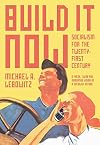
Good in spots, but not consistent or compelling: Michael Lebowitz's Build It Now is a collection of seven short essays, all but one originally published or presented elsewhere, discussing some basic concepts of Marxism, democratic socialism, and recent events in Venezuela, where Lebowitz served as an advisor in the Ministry of Social Economy in 2004. While each essay is generally decent on its own -- well-written and often thought-provoking -- they are not well integrated into a coherent show more whole. They can also get repetitive, with whole paragraphs repeated verbatim in different essays. All together, Build It Now ends up less than the sum of its parts, while with some judicious editing it could have been considerably more.
Although the cover claims that Build It Now offers "a fresh, clear and innovative vision" of "socialism for the twenty-first century", I got the sense that Lebowitz primarily looked backwards, making Marx the central figure of the book and putting him on a very high pedestal. Somewhat more modern socialist topics were largely limited to Che Guevara and Yugoslavian experimentation with worker co-operatives, while Venezuela's Bolivarian revolution was pretty much the only twenty-first century phenomenon considered by Lebowitz.
Here are some very brief summaries of the seven essays that make up Build It Now.
"The Needs of Capital versus the Needs of Human Beings" (2002) focuses entirely on Marx, presenting a brief but clear development of some of Marx's criticisms of capitalism.
"Ideology and Economic Development" (2004) criticizes neoclassical and Keynesian economics, along with the associated politics of neoliberalism and social democracy (respectively), promoting instead radical endogenous development.
"The Knowledge of a Better World" (2004) revisits Marx, challenging the commodification of knowledge, as opposed to "the accumulation of knowledge for human development".
"Reclaiming a Socialist Vision" (2000) argues that simply opposing capitalism, without a vision of a socialist alternative, has only limited potential. Again, much of the discussion centers on Marx and his contemporaries.
"Socialism Doesn't Drop from the Sky" (2005) presents a nice discussion of "socialism as a process", as well as arguing against the idea that "you can change the world without taking power".
"Seven Difficult Questions" (2005) is an interesting essay, which outlined some of the problems encountered by Yugoslavian experiments with worker self-management, largely concerning relations between individual firms and society at large.
"The Revolution of Radical Needs: Behind the Bolivarian Choice of a Socialist Path" is the essay written especially for this volume. Since the previous essays are not well integrated, I hoped that this chapter would attempt to knit them together more coherently. However, it doesn't make much reference at all to the preceding pages, instead summarizing the recent history of Venezuela and the development of its Bolivarian revolution, from the 1989 Caracazo to the 1998 election of Chavez and the course of his presidency through 2005.
Individually, some of these were interesting and engaging, though not especially innovative or forward-looking. But they don't mesh or provide enough substance to live up to the title of the book, taken from the famous slogan of the South African Communist Party: "Socialism is the future, build it now!" show less
Although the cover claims that Build It Now offers "a fresh, clear and innovative vision" of "socialism for the twenty-first century", I got the sense that Lebowitz primarily looked backwards, making Marx the central figure of the book and putting him on a very high pedestal. Somewhat more modern socialist topics were largely limited to Che Guevara and Yugoslavian experimentation with worker co-operatives, while Venezuela's Bolivarian revolution was pretty much the only twenty-first century phenomenon considered by Lebowitz.
Here are some very brief summaries of the seven essays that make up Build It Now.
"The Needs of Capital versus the Needs of Human Beings" (2002) focuses entirely on Marx, presenting a brief but clear development of some of Marx's criticisms of capitalism.
"Ideology and Economic Development" (2004) criticizes neoclassical and Keynesian economics, along with the associated politics of neoliberalism and social democracy (respectively), promoting instead radical endogenous development.
"The Knowledge of a Better World" (2004) revisits Marx, challenging the commodification of knowledge, as opposed to "the accumulation of knowledge for human development".
"Reclaiming a Socialist Vision" (2000) argues that simply opposing capitalism, without a vision of a socialist alternative, has only limited potential. Again, much of the discussion centers on Marx and his contemporaries.
"Socialism Doesn't Drop from the Sky" (2005) presents a nice discussion of "socialism as a process", as well as arguing against the idea that "you can change the world without taking power".
"Seven Difficult Questions" (2005) is an interesting essay, which outlined some of the problems encountered by Yugoslavian experiments with worker self-management, largely concerning relations between individual firms and society at large.
"The Revolution of Radical Needs: Behind the Bolivarian Choice of a Socialist Path" is the essay written especially for this volume. Since the previous essays are not well integrated, I hoped that this chapter would attempt to knit them together more coherently. However, it doesn't make much reference at all to the preceding pages, instead summarizing the recent history of Venezuela and the development of its Bolivarian revolution, from the 1989 Caracazo to the 1998 election of Chavez and the course of his presidency through 2005.
Individually, some of these were interesting and engaging, though not especially innovative or forward-looking. But they don't mesh or provide enough substance to live up to the title of the book, taken from the famous slogan of the South African Communist Party: "Socialism is the future, build it now!" show less
Despite the general title, this booklet is really about the issues Lebowitz, formerly Professor of Economics at Simon Fraser in Vancouver, encountered while helping 'build' socialism in Venezuela. The content consists of a bunch of short essays on the nature of socialism, worker management, resisting global capital, and identifying problems that need solving.
The general tone of the book is very simple and it's clearly aimed at people with no knowledge of socialism or economics whatever. show more This is in fact the case to such a degree that the only use this booklet can have is as a pointer for people who are sympathetic to socialist solutions, or have an inkling that capitalism may not be all it's cracked up to be, but have no clue where to look for answers. For them, Lebowitz might be a good introduction before they go on to reading real works. For everyone else, this is too simple and too lacking in discussion of serious problems in practice and theory to be worthwhile. Another thing is that Lebowitz seems to equate socialism with market socialism, which is a popular but not entirely uncontroversial solution. Most useful is therefore the last chapter/essay in the booklet, which discusses practical problems encountered in market socialism in Yugoslavia and how to solve them (though the former more than the latter).
I'll give the book three stars because its intent is good and it may be useful as popular literature to spread among friends and family. But do not look here for anything of serious theoretical value, contrary to Lebowitz' other excellent works. show less
The general tone of the book is very simple and it's clearly aimed at people with no knowledge of socialism or economics whatever. show more This is in fact the case to such a degree that the only use this booklet can have is as a pointer for people who are sympathetic to socialist solutions, or have an inkling that capitalism may not be all it's cracked up to be, but have no clue where to look for answers. For them, Lebowitz might be a good introduction before they go on to reading real works. For everyone else, this is too simple and too lacking in discussion of serious problems in practice and theory to be worthwhile. Another thing is that Lebowitz seems to equate socialism with market socialism, which is a popular but not entirely uncontroversial solution. Most useful is therefore the last chapter/essay in the booklet, which discusses practical problems encountered in market socialism in Yugoslavia and how to solve them (though the former more than the latter).
I'll give the book three stars because its intent is good and it may be useful as popular literature to spread among friends and family. But do not look here for anything of serious theoretical value, contrary to Lebowitz' other excellent works. show less
Opens by talking about "the shortage economy" supposedly prevalent in post-WW2 socialist bloc, doesn't give you any statistics or anything just assures you it's the defining feature of Real Socialism, if I want to find out more I need to pick up a few obscure, expensive books. What's the point y'know. Just such a waste of my time.
why do these sorts of books often note good things from the perspective of the worker (high wages for example - noted that the practice of "storming" where things show more are rushed at the end of the month gets high overtime pay for workers) but don't think anything of them
what is with every criticism of the USSR making it genuinely sound like a worker's paradise
just did not get much out of this at all. focuses only on a single specific time period (ussr 1950s -80s) then generalises this out to "vanguard Marxism" without defining the phrase even. he then ends by saying "i don't deny the necessity for leadership or a state " like ok but if you're so pissed about vanguard ideas how can you stop these things descending into what you've spent so much time attacking? he actually has a whole section where he says that it's easier to offer answers and instead writes down a bunch of good questions about socialism, Leninism and his own ideas but doesn't give even vague answers and speaks authoritatively again next chapter as if these questions are irrelevant. stuff like "how to reconcile individual worker's councils into a social whole " are hard but absolutely essential. he also only quotes a few times from any socialist except Marx - his main sources are economists whose goals were to institute capitalism in the USSR and yet he barely criticises them. he describes the highly unusual economic situation for workers of the USSR, with things like incredible job rights, high wages vs low working hours, but doesn't seem to think much of it - it's just part of a "social contract " which solidifies "vanguard" rule. like I'm 100 percent behind criticism of the USSR but this just recycles the same old points we've heard a million times with only limited new analysis and very limited ideas on how to change things, what caused this model, how to avoid it in future etc. without a more thorough analysis of intentions, party ideology and the problems experienced and fought against it's just not useful reading. also unhelpful to generalise without looking once at any socialist state outside the ussr or outside that specific time period.
the most interesting bit of what he says himself to me was the talk about relations between managers and the centre, which was genuinely interesting and valuable information and analysis. i also appreciated the talk about real economic conditions of workers, even if he doesn't go into statistical or analytical detail except to dismiss them. thinking about the mode of production as conflict between attempted command economy and capitalist logic from managers is useful show less
why do these sorts of books often note good things from the perspective of the worker (high wages for example - noted that the practice of "storming" where things show more are rushed at the end of the month gets high overtime pay for workers) but don't think anything of them
what is with every criticism of the USSR making it genuinely sound like a worker's paradise
just did not get much out of this at all. focuses only on a single specific time period (ussr 1950s -80s) then generalises this out to "vanguard Marxism" without defining the phrase even. he then ends by saying "i don't deny the necessity for leadership or a state " like ok but if you're so pissed about vanguard ideas how can you stop these things descending into what you've spent so much time attacking? he actually has a whole section where he says that it's easier to offer answers and instead writes down a bunch of good questions about socialism, Leninism and his own ideas but doesn't give even vague answers and speaks authoritatively again next chapter as if these questions are irrelevant. stuff like "how to reconcile individual worker's councils into a social whole " are hard but absolutely essential. he also only quotes a few times from any socialist except Marx - his main sources are economists whose goals were to institute capitalism in the USSR and yet he barely criticises them. he describes the highly unusual economic situation for workers of the USSR, with things like incredible job rights, high wages vs low working hours, but doesn't seem to think much of it - it's just part of a "social contract " which solidifies "vanguard" rule. like I'm 100 percent behind criticism of the USSR but this just recycles the same old points we've heard a million times with only limited new analysis and very limited ideas on how to change things, what caused this model, how to avoid it in future etc. without a more thorough analysis of intentions, party ideology and the problems experienced and fought against it's just not useful reading. also unhelpful to generalise without looking once at any socialist state outside the ussr or outside that specific time period.
the most interesting bit of what he says himself to me was the talk about relations between managers and the centre, which was genuinely interesting and valuable information and analysis. i also appreciated the talk about real economic conditions of workers, even if he doesn't go into statistical or analytical detail except to dismiss them. thinking about the mode of production as conflict between attempted command economy and capitalist logic from managers is useful show less
Lists
Awards

You May Also Like


Associated Authors
Statistics
- Works
- 12
- Also by
- 1
- Members
- 203
- Popularity
- #108,638
- Rating
- 3.6
- Reviews
- 5
- ISBNs
- 35
- Languages
- 2
- Favorited
- 1