
Patricia Cornwell
Author of Post-Mortem
About the Author
Patricia Cornwell was born in Miami, Florida on June 9, 1956. When she was nine years old, her mother tried to give her and her two brothers to evangelist Billy Graham and his wife to care for. For a while the children lived with missionaries since their mother was unable to care for them. After show more graduating from Davidson College in 1979, she worked for The Charlotte Observer eventually covering the police beat and winning an investigative reporting award from the North Carolina Press Association for a series of articles on prostitution and crime in downtown Charlotte. Her award-winning biography of Ruth Bell Graham, the wife of Billy Graham, A Time for Remembering, was published in 1983. From 1984 to 1990, she worked as a technical writer and a computer analyst at the Office of the Chief Medical Examiner in Richmond, Virginia. While working for the medical examiner, she began to write novels. Although the award-winning novel Postmortem was initially rejected by seven different publishers, once it was published in 1990 it became the only novel ever to win the Edgar, Creasey, Anthony, and Macavity awards as well as the French Prix du Roman d'Adventure, in one year. She is the author of the Kay Scarpetta series, the Andy Brazil series, and the Winston Garano series. She has also written two cookbooks entitled Scarpetta's Winter Table and Food to Die For; a children's book entitled Life's Little Fable; and non-fiction works like Portrait of a Killer: Jack the Ripper - Case Closed. (Bowker Author Biography) show less
Series
Works by Patricia Cornwell
Patricia Cornwell CD Audio Treasury Volume Two: Postmortem | Body of Evidence [Abridged Audiobook] (2006) 17 copies
Five Scarpetta Novels (Cause of Death, Unnatural Exposure, Point of Origin, Black Notice, and Trace) (2011) 8 copies
Kay Scarpetta set #1-14 5 copies
Cause innaturali 3 copies
Cornwell Patricia 3 copies
Livore 2 copies
Flesh and Blood: Free Sampler 2 copies
The Body Farm / From Potter's Field / Unnatural Exposure / Blow Fly / Trace / Book of the Dead / Scarpetta / The Scarpetta Factor (1990) 2 copies
Patricia Cornwell Andy Brazil/Hammer & Gareno Series (5 Book Set) : Hornet's Nest, Southern Cross, Isle of Dogs, At Risk, The Front (1998) 2 copies
Unnatural Exprosure 2 copies
Point of Origin 27 Copy Displa 2 copies
7 Patricial Cornwell Books--Portrait Of A Killer,Predator,Cause of Death,Isle of Dogs,Body of Evidence,Cause of Death,Blow Fly (2003) 2 copies
À double tranchant 2 copies
Second Chance Tuesday 2 copies
Kay Scarpetta 21: Dust 1 copy
Kay Scarpetta 24: Chaos 1 copy
Kay Scarpetta 19: Red Mist 1 copy
Kay Scarpetta 16: Scarpetta 1 copy
Kay Scarpetta 14: Predator 1 copy
Kay Scarpetta 13: Trace 1 copy
Kay Scarpetta 12: Blow Fly 1 copy
The Scarpetta Factor 1 copy
Touch of Darkness 1 copy
Split Image (2010) 1 copy
Point Of Sale Book # ( 1 copy
Calliphora 1 copy
Ritratto di un assasino 1 copy
NË RREZIK 1 copy
Scarpettas Winter Table 1 copy
Phantom 1 copy
Totenbuch 1 copy
The Last Precinct 1 copy
Star Quest 1 copy
Salattu henkilöllisyys 1 copy
CONTÁGIO PERVERSO 1 copy
Dove comincia l'uomo 1 copy
Konseki 1 (痕跡 上) 1 copy
Kay Scarpetta Series : 1-17 1 copy
Predator, Part 2 1 copy
Predator, Part 1 1 copy
Konseki 2 (痕跡 下) 1 copy
Scarpetta, Part 2 1 copy
Scarpetta, Part 1 1 copy
Trace / Predator 1 copy
Kay Scarpetta set #1-7 1 copy
The Last Precinct / Predator 1 copy
Patricia Cornwell (Set of 5) Black Notice; Blow Fly; Trace; Predator; Scarpetta Factor (2009) 1 copy
Harlequin 1 copy
Personalities along the track...: Gladstone's tribute to our railway workers (2001) — Editor — 1 copy
Kay Scarpetta set #8-14 1 copy
Punto di origine 1998 1 copy
Zona de muerte 1 copy
Luonnoton kuolema 1 copy
Identiteit onbekend 1 copy
roofdier 1 copy
Deaths Acre 1 copy
Kay Scarpetta Series 9-12 1 copy
Playing for the Ashes 1 copy
Big Day in Moscow: Sketchbook Favorite Place Coloring Book: Vol. 2: Adult Activity Book (Volume 2) (2016) 1 copy
Patricia Cornwell Gift Set: "Isle of Dogs", "Cruel and Unusual", "Body of Evidence" No.1 (2001) 1 copy
Link 1 copy
CONTÁGIO CRIMINOSO 1 copy
Associated Works
The Book That Changed My Life: 71 Remarkable Writers Celebrate the Books That Matter Most to Them (2006) — Contributor — 411 copies, 18 reviews
Reader's Digest Select Editions 2000 v01 #247: Black Notice / Eddie's Bastard / Boundary Waters / The Innocents Within (2000) — Contributor — 49 copies
Time Life Book Digest: It Doesn't Take a Hero / All That Remains / Honest Illusions / Double Deuce (1992) 3 copies
Tagged
Common Knowledge
- Legal name
- Cornwell, Patricia Carroll Daniels
- Birthdate
- 1956-06-09
- Gender
- female
- Education
- Davidson College (BA | 1979 | English)
- Occupations
- reporter
technical writer (Office of Chief Medical Examiner of Virginia)
computer analyst - Short biography
- Her first crime novel, Postmortem, was published by Scribner’s in 1990. Initially rejected by seven major publishing houses, it became the first novel to win the Edgar, Creasey, Anthony, and Macavity awards as well as the French Prix du Roman d’Aventure in a single year. In Postmortem, Cornwell introduced Dr. Kay Scarpetta as the intrepid Chief Medical Examiner of the Commonwealth of Virginia. In 1999, Dr. Scarpetta herself won the Sherlock Award for best detective created by an American author
- Nationality
- USA
- Birthplace
- Miami, Florida, USA
- Places of residence
- Miami, Florida, USA
Montreat, North Carolina, USA
New York, New York, USA - Associated Place (for map)
- USA
Members
Reviews
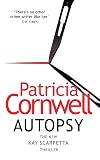
I’ve been reading the Scarpetta books for a number of years. I read the first seven back in the 1990s, but started the series again a few years ago – and have been working my way through them ever since. I was looking forward to the television adaptation, which had been promised for many years, and when it was finally made, and broadcast this year, I watched it… Despite the stellar cast, there were changes I’d not expected. It was also based on the plot of this book, Autopsy, the show more series’ twenty-fifth novel, which I hadn’t read at the time.
Now I have. The most obvious changes in the TV series were: Pete Marino is married to Scarpetta’s sister, Dorothy, and niece Lucy’s wife and adopted son are both dead. None of which was the case in the preceding book, Chaos.
However, Marino is indeed married to Dorothy in Autopsy, which appeared five years after Chaos and, more pertinently, after the pandemic. Lucy’s family apparently died of covid while living in London (Cornwell outright lies here and implies the UK fatalities were much greater than those of the US; in fact, far more people, and more people per capita, died in the US). The romance between Marino and Dorothy was hinted at in Chaos, and before that in Flesh and Blood and Depraved Heart, but there is no good reason I could discern why Janet and Desi should be killed off. (Or for Janet’s change of nationality to British, when in the books she is ex-FBI and first met Lucy at Quantico.)
So, it seems the TV adaptation is mostly quite faithful (and yes, an AI Janet does feature in the novel). In terms of plot… Autopsy opens with Scarpetta back in Virginia and once again the Commonwealth Chief Medical Examiner, taking over from the incompetent and manipulative Elvin Reddy, who is apparently an old adversary of Scarpetta’s, although he wasn’t mentioned in earlier novels (as far as I remember). She is called to the house of a young woman who has disappeared, and who might be the victim in an ongoing murder investigation. A body was discovered beside some railway tracks in a park, and its hands had been removed. They quickly confirm the missing woman is the murder victim. She worked for a laboratory researching 3D-printed organs, and they discover she was a spy – corporate espionage, or for the Russians, they don’t know. She has an accomplice, who is aboard an orbiting laboratory operated by the same company. Except he’s gone rogue, murdered the other two astronauts, and fled in the Soyuz spacecraft.
Scarpetta is asked to help understand what happened in the orbital laboratory (it doesn’t crash on Earth, as it does in the TV series, because, well, things falling from orbit rarely reach the ground). She doesn’t think the woman’s murder is related to the spying, but she does think an earlier death in the same park, ruled accidental by Reddy, was murder – and by the same killer. Meanwhile, she has to contend with Reddy’s cronies making her job difficult, her sister and Marino staying with her (although they don’t bicker as much as they do in the TV adaptation), and Lucy’s grief.
Then Reddy fires her. And a man tries to break into her house…
Everything is wrapped up in a couple of pages of epilogue. Scarpetta gets her job back. Lucy kills the intruder, who turns out to be an odd-job man Scarpetta had used several times. He also murdered the two women, and had been a serial rapist for years. WTF. “By the way, here’s how the story ended” is a piss-poor way to finish a novel.
Given the changes to Scarpetta’s situation, I have to wonder if the novel was written with the TV series in mind – ie, Marino’s marriage, Lucy’s loss. were added to the book because the TV adaptation needed them to create home drama. Scarpetta’s move back to her old job as Chief Medical Examiner in Virginia was because in the narrative set in the past, and based on the first Scarpetta novel, Postmortem, she held that position – and so was dictated by the structure of the TV series. The book was published in 2021, and the series was greenlit that same year, so it’s certainly possible.
Despite all of the above, the strangest thing about the book is that it appears to have been written by AI. Things were different back in 2021, but GPT-3 had been around for a year, and while less sophisticated than current LLMs, it’s not inconceivable Cornwell could have used it. It would certainly explain the bizarre writing. Cornwell is hardly a prose stylist, but in Autopsy the writing is actually terrible. Sentences have weird hanging adverbial clauses. Dependent clauses lack verbs. The relative pronoun “which” is conspicuous by its absence, especially in sentences which would be grammatically correct if it had been used. The same bizarre syntax also appears occasionally in dialogue, in actual speech spoken by characters. And, most bafflingly, the swearwords have all been bowdlerised – eg, “effing”, “cluster-eff”, “flipping”. The bowdlerisation is even annotated:
“They can screw themselves.” Only Marino doesn’t say screw. (p 272)
WTAF.
The last few Scarpetta novels have been frustrating reads, chiefly because plot reasons require Scarpetta, and hence the reader, be kept in dark for much of the book. But I quite liked the microscopic focus on the lead character in Chaos. Autopsy, on the other hand, is easily one of the worst books in the series so far, if not the actual worst. Appallingly written, poorly plotted, and with changes to Scarpetta’s family life that make no sense, unless introduced with the TV series in mind (and even then baffling). I hope the remaining four novels in the series are not the same. show less
Now I have. The most obvious changes in the TV series were: Pete Marino is married to Scarpetta’s sister, Dorothy, and niece Lucy’s wife and adopted son are both dead. None of which was the case in the preceding book, Chaos.
However, Marino is indeed married to Dorothy in Autopsy, which appeared five years after Chaos and, more pertinently, after the pandemic. Lucy’s family apparently died of covid while living in London (Cornwell outright lies here and implies the UK fatalities were much greater than those of the US; in fact, far more people, and more people per capita, died in the US). The romance between Marino and Dorothy was hinted at in Chaos, and before that in Flesh and Blood and Depraved Heart, but there is no good reason I could discern why Janet and Desi should be killed off. (Or for Janet’s change of nationality to British, when in the books she is ex-FBI and first met Lucy at Quantico.)
So, it seems the TV adaptation is mostly quite faithful (and yes, an AI Janet does feature in the novel). In terms of plot… Autopsy opens with Scarpetta back in Virginia and once again the Commonwealth Chief Medical Examiner, taking over from the incompetent and manipulative Elvin Reddy, who is apparently an old adversary of Scarpetta’s, although he wasn’t mentioned in earlier novels (as far as I remember). She is called to the house of a young woman who has disappeared, and who might be the victim in an ongoing murder investigation. A body was discovered beside some railway tracks in a park, and its hands had been removed. They quickly confirm the missing woman is the murder victim. She worked for a laboratory researching 3D-printed organs, and they discover she was a spy – corporate espionage, or for the Russians, they don’t know. She has an accomplice, who is aboard an orbiting laboratory operated by the same company. Except he’s gone rogue, murdered the other two astronauts, and fled in the Soyuz spacecraft.
Scarpetta is asked to help understand what happened in the orbital laboratory (it doesn’t crash on Earth, as it does in the TV series, because, well, things falling from orbit rarely reach the ground). She doesn’t think the woman’s murder is related to the spying, but she does think an earlier death in the same park, ruled accidental by Reddy, was murder – and by the same killer. Meanwhile, she has to contend with Reddy’s cronies making her job difficult, her sister and Marino staying with her (although they don’t bicker as much as they do in the TV adaptation), and Lucy’s grief.
Then Reddy fires her. And a man tries to break into her house…
Everything is wrapped up in a couple of pages of epilogue. Scarpetta gets her job back. Lucy kills the intruder, who turns out to be an odd-job man Scarpetta had used several times. He also murdered the two women, and had been a serial rapist for years. WTF. “By the way, here’s how the story ended” is a piss-poor way to finish a novel.
Given the changes to Scarpetta’s situation, I have to wonder if the novel was written with the TV series in mind – ie, Marino’s marriage, Lucy’s loss. were added to the book because the TV adaptation needed them to create home drama. Scarpetta’s move back to her old job as Chief Medical Examiner in Virginia was because in the narrative set in the past, and based on the first Scarpetta novel, Postmortem, she held that position – and so was dictated by the structure of the TV series. The book was published in 2021, and the series was greenlit that same year, so it’s certainly possible.
Despite all of the above, the strangest thing about the book is that it appears to have been written by AI. Things were different back in 2021, but GPT-3 had been around for a year, and while less sophisticated than current LLMs, it’s not inconceivable Cornwell could have used it. It would certainly explain the bizarre writing. Cornwell is hardly a prose stylist, but in Autopsy the writing is actually terrible. Sentences have weird hanging adverbial clauses. Dependent clauses lack verbs. The relative pronoun “which” is conspicuous by its absence, especially in sentences which would be grammatically correct if it had been used. The same bizarre syntax also appears occasionally in dialogue, in actual speech spoken by characters. And, most bafflingly, the swearwords have all been bowdlerised – eg, “effing”, “cluster-eff”, “flipping”. The bowdlerisation is even annotated:
“They can screw themselves.” Only Marino doesn’t say screw. (p 272)
WTAF.
The last few Scarpetta novels have been frustrating reads, chiefly because plot reasons require Scarpetta, and hence the reader, be kept in dark for much of the book. But I quite liked the microscopic focus on the lead character in Chaos. Autopsy, on the other hand, is easily one of the worst books in the series so far, if not the actual worst. Appallingly written, poorly plotted, and with changes to Scarpetta’s family life that make no sense, unless introduced with the TV series in mind (and even then baffling). I hope the remaining four novels in the series are not the same. show less
Read: Sept-Oct 2022
Rating: 5/5 stars, best of 2022
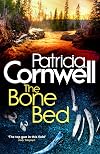
I loved The Bone Bed, it is the best Kay Scarpetta novel since Point of Origin in my opinion. At the start of this novel, Kay is dealing with three separate cases; a video sent to her personally which appears to depict a severed ear – possibly belonging to a missing scientist named Emma Schubert; the body of a woman named Peggy Lynn Stanton recovered from a river; and the murder trial of Channing Lott, who stands accused of killing his show more wife, Mildred, though her body was never found.
The story itself is very detailed, with the whole 500 page plot taking place over the course of two days, but somehow Cornwell manages to keep the pace moving and keep it interesting. I definitely prefer Kay being written in first person, and her worries about aging and how it affects her personal and professional life felt very real and showed a more vulnerable side to such a competent, professional character. Lucy and Benton have strong roles in the story, with Marino being forced to take a backseatafter the killer implicated him in the murders . I also liked the contrast between Douglas Burke and Kay as they clashed several times over the course of the two-investigation.
My only issue is one that has been pointed out by other reviewers; there was no real chance to ‘play detective’ and try to figure out the killer.Although he had been briefly mentioned before the big reveal, there was no way the reader could have ever figured it out.
Despite this issue, I think is the best Scarpetta book I’ve read for a long time, and I am looking forward to the next book in the series, Dust. show less
Rating: 5/5 stars, best of 2022
I loved The Bone Bed, it is the best Kay Scarpetta novel since Point of Origin in my opinion. At the start of this novel, Kay is dealing with three separate cases; a video sent to her personally which appears to depict a severed ear – possibly belonging to a missing scientist named Emma Schubert; the body of a woman named Peggy Lynn Stanton recovered from a river; and the murder trial of Channing Lott, who stands accused of killing his show more wife, Mildred, though her body was never found.
The story itself is very detailed, with the whole 500 page plot taking place over the course of two days, but somehow Cornwell manages to keep the pace moving and keep it interesting. I definitely prefer Kay being written in first person, and her worries about aging and how it affects her personal and professional life felt very real and showed a more vulnerable side to such a competent, professional character. Lucy and Benton have strong roles in the story, with Marino being forced to take a backseat
My only issue is one that has been pointed out by other reviewers; there was no real chance to ‘play detective’ and try to figure out the killer.
Despite this issue, I think is the best Scarpetta book I’ve read for a long time, and I am looking forward to the next book in the series, Dust. show less
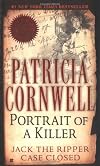
This is one of the best non-fiction books that I have read; very well written, well detailed and extremely informative. Patricia Cornwell's research is not only fascinating but compelling and convincing.
Cornwell's research presents damn near irrefutable, extensive forensic evidence that Walter Sickert is Jack the Ripper. Cornwell does an amazing job explaining the psychological profile of Walter Sickert that adds to her proof that he very well could be the infamous Jack the Ripper. She holds show more nothing back, giving us readers, in great depth, all the gore and gruesomeness.
She also tells, in great detail, of the deplorable conditions the poor had to endure in 1880’s London, England, which I found captivating.
I have always been fascinated with all things related to Jack the Ripper. So much so that when in London, my husband and I did the “THE ORIGINAL JACK THE RIPPER MURDERS TOUR”, https://www.jack-the-ripper-tour.com/.... Now whether or not Walter Sickert is The Ripper, I couldn't say 100% one way or another. However, I can say if you are a Ripperologist, this is definitely worth a go! show less
Cornwell's research presents damn near irrefutable, extensive forensic evidence that Walter Sickert is Jack the Ripper. Cornwell does an amazing job explaining the psychological profile of Walter Sickert that adds to her proof that he very well could be the infamous Jack the Ripper. She holds show more nothing back, giving us readers, in great depth, all the gore and gruesomeness.
She also tells, in great detail, of the deplorable conditions the poor had to endure in 1880’s London, England, which I found captivating.
I have always been fascinated with all things related to Jack the Ripper. So much so that when in London, my husband and I did the “THE ORIGINAL JACK THE RIPPER MURDERS TOUR”, https://www.jack-the-ripper-tour.com/.... Now whether or not Walter Sickert is The Ripper, I couldn't say 100% one way or another. However, I can say if you are a Ripperologist, this is definitely worth a go! show less
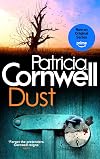
Benton, Scarpetta’s husband, a FBI profiler, is away working on three linked murders of women in Washington DC, but his expertise is being ignored, disparaged even. And then the body of a murdered woman appears in Cambridge (Massachusetts, that is), Scarpetta’s jurisdiction, and it’s clear it’s connected to the three in Washington, even if it seems to contradict the prevailing theory held by the FBI about the crimes.
Scarpetta, Benton, Lucy and Marino find themselves trying to show more identify a serial killer who, it seems, is being protected by someone powerful, at least to the extent the FBI agent in charge of the investigation is ignoring evidence and focusing instead on a teenager who disappeared seventeen years before.
Once again, Scarpetta’s reputation is under attack, as are her family and relationships, but this time she sets out to methodically prove every point of her - and Benton’s - theory of the crimes, and so bring down the FBI agent deliberately misleading everyone. As in other books in the series, the murderer is more than human, almost as if the nearest the US can get to real-life superheroes are serial killers, which is pretty damn sick no matter which way you look at it. It might even be said crime novels which focus on serial killer stories - as so many of the Scarpetta series have - have much in common with fantasy or science fiction. True, one of the reasons I like the Scarpetta series is because Cornwell details the forensic science used - which does occasionally read like science fiction (much like the many CSI TV series).
Another draw is Cornwell’s focus on characterisation. Her cast are not enigmatic, phlegmatic, whimsical or just sketched-in, as is usually the case in crime fiction. She started out using first-person narratives, then switched to third-person omniscient before moving back again to first-person, except now there’s far more interiority and Scarpetta’s every thought is worked through implacably.
Dust is one of the better books in the series, even though the plot centres around an implausible serial killer, and a defining event occurs off-stage and is far too easy to be credible. There’s also a fascinating article about Cornwell after the novel in the ebook edition, highlighting the many parallels between Cornwell herself and her characters, especially Scarpetta and Lucy. show less
Scarpetta, Benton, Lucy and Marino find themselves trying to show more identify a serial killer who, it seems, is being protected by someone powerful, at least to the extent the FBI agent in charge of the investigation is ignoring evidence and focusing instead on a teenager who disappeared seventeen years before.
Once again, Scarpetta’s reputation is under attack, as are her family and relationships, but this time she sets out to methodically prove every point of her - and Benton’s - theory of the crimes, and so bring down the FBI agent deliberately misleading everyone. As in other books in the series, the murderer is more than human, almost as if the nearest the US can get to real-life superheroes are serial killers, which is pretty damn sick no matter which way you look at it. It might even be said crime novels which focus on serial killer stories - as so many of the Scarpetta series have - have much in common with fantasy or science fiction. True, one of the reasons I like the Scarpetta series is because Cornwell details the forensic science used - which does occasionally read like science fiction (much like the many CSI TV series).
Another draw is Cornwell’s focus on characterisation. Her cast are not enigmatic, phlegmatic, whimsical or just sketched-in, as is usually the case in crime fiction. She started out using first-person narratives, then switched to third-person omniscient before moving back again to first-person, except now there’s far more interiority and Scarpetta’s every thought is worked through implacably.
Dust is one of the better books in the series, even though the plot centres around an implausible serial killer, and a defining event occurs off-stage and is far too easy to be credible. There’s also a fascinating article about Cornwell after the novel in the ebook edition, highlighting the many parallels between Cornwell herself and her characters, especially Scarpetta and Lucy. show less
Lists
READ IN 2022 (1)
A Novel Cure (1)
Southern Fiction (1)
Books About Murder (17)
Detective Stories (14)
Female Author (5)
Jarett's Books (4)
Florida (3)
Read in 2014 (2)
Edgar Award (1)
Awards


You May Also Like


Associated Authors
Statistics
- Works
- 198
- Also by
- 14
- Members
- 136,630
- Popularity
- #50
- Rating
- 3.4
- Reviews
- 1,782
- ISBNs
- 2,931
- Languages
- 31
- Favorited
- 270


