
Staatliche Museen zu Berlin
Author of Gerhard Richter: Panorama: A Retrospective
About the Author
Series
Works by Staatliche Museen zu Berlin
Mantegna & Bellini (cat. exp., Londres, National Gallery, 1 octobre 2018 - 27 janvier 2019; Berlin, Gemäldegalerie, 1 mars - 30 juin 2019) (2018) 62 copies
Neues Museum Berlin : Egyptian Museum and Papyrus Collection : Museum of Prehistory and Early History (2009) 42 copies
Pergamon Museum : Collection of Classical Antiquities : Museum of the Ancient Near East : Museum of Islamic Art (2011) 30 copies
Französische Meisterwerke des 19. Jahrhunderts: Aus dem Metropolitan Museum of Art, New York. Ausstellung in der Nationalgalerie Berlin, 1.6 - 7.10. 2007 (2007) 27 copies
Sebastiano del Piombo : 1485-1547 (cat. exp., Roma, Palazzo di Venezia, 8 février – 18 mai 2008 ; Berlin, Gemäldegalerie, 28 juin – 28 septembre 2008) (2008) 13 copies
Islamische Kunst: Meisterwerke aus dem Metropolitan Museum of Art, New York = The Arts of Islam : Masterpieces from the Metropolitan Museum of Art, New York (1981) 12 copies, 1 review
Prints and drawings by Adolph Menzel: A selection from the collections of the museums of West Berlin (1984) 8 copies
Von Göttern und Menschen: Bilder auf griechischen Vasen. Antikensammlung Staatliche Museen zu Berlin (2010) — Corporate Author — 5 copies
Holländische Malerei aus Berliner Privatbesitz [cat. exp., Berlin, Gemäldegalerie, 1984] (1984) 5 copies
Die italienischen Zeichnungen des 14. und 15. Jahrhunderts im Berliner Kupferstichkabinett : kritischer Katalog (1995) 5 copies
Deutsche Zeichnungen des 18. Jahrhunderts: Zwischen Tradition und Aufklarung : eine Ausstellung aus den Bestanden des Be (1987) 4 copies
Demotische Papyri aus den Staatlichen Museen zu Berlin - Preussischer Kulturbesitz - Lfg. 3 Papyri von der Insel Elephantine (1993) 3 copies
Gesamtverzeichnis 2 copies
Neues Museum 2 copies
Stickmustertucher 2 copies
Gemäldegalerie Berlin. Gesamtverzeichnis der Gemälde. Complete Catalogue of the Paintings (1986) 2 copies
Kunsthandwerk der Dürerzeit und der deutschen Renaissance : Ausstellg. anlässich des 500. Geburtstages von Albrecht Dürer — Corporate Author — 1 copy
Der Pergamonaltar 1 copy
Sammlungswelten. (2016) 1 copy
Amerika 1492 - 1992 Neue Welten - Neue Wirklichkeiten. Eine Dokumentation — Herausgeber — 1 copy
Katalog 1 copy
Die deutschen Gemälde des 18. Jahrhunderts / Staatliche Museen zu Berlin, Gemäldegalerie : kritischer Bestandskatalog (2002) 1 copy
Arts of India, Southeast Asia, China and Beyond. The Kienzle-Hardt Museum Treasury Part 2 — Museum deaccessor — 1 copy
Humboldt Forum - Ethnologisches Museum, Museum für Asiatische Kunst. Band 1. (2021) — Host Institute — 1 copy
Deutsche Volkskunst — Host Institute — 1 copy
Kunstausstellung der Volksrepublik China — Corporate Author and Host Institute — 1 copy
Gemã¤Ldegalerie 1 copy
George Grosz. 1 copy
Kunst in Berlin 1648 - 1987. Staatliche Museen zu Berlin. Ausstellung im Alten Museum vom 10. Juni bis 25.Oktober 1987. (1987) 1 copy
Antikensammlung 1 copy
Die Papyri als Zeugen antiker Kultur — Corporate Author — 1 copy
Die Gemälde der Nationalgalerie. Verzeichnis. Deutsche Malerei vom Klassizismus bis zum Impressionismus. Ausländische Malerei von 1800 bis 1930 1 copy, 1 review
The Altar of Pergamum 1 copy
Altes Museum 1 copy
Bode-Museum 1 copy
Pergamonmuseum 1 copy
Jahrbuch Der Berliner Museen. Jahrbuch Der Preussischen Kunstsammlungen. Jahrbuch Der Berliner Museen 2012 (German Edition) (2015) 1 copy
Kunst Ostasiens 1 copy
Schätze der Museen des Moskauer Kreml — Corporate Author — 1 copy
Priene: Funde aus einer griechischen Stadt (Bilderheft der Staatlichen Museen Preussischer Kulturbesitz) (1983) 1 copy
Bilder, Schriften, Alphabete 1 copy
Associated Works
Short Guide Pergamon Museum: Collection of Classical Antiquities, Museum of Western Asiatic Antiquity (1992) 77 copies
Spirit of an Age: Nineteenth-Century Paintings From the National Galerie, Berlin (2001) 65 copies, 1 review
Along the Ancient Silk Roads : Central Asian Art from the West Berlin State Museums (1982) 48 copies, 1 review
Tagged
Common Knowledge
- Other names
- Berlin State Museums
Stiftung Preußischer Kulturbesitz - Gender
- n/a
- Relationships
- Alte Nationalgalerie (member)
- Nationality
- Germany
- Places of residence
- Berlin, Germany
- Associated Place (for map)
- Berlin, Germany
Members
Reviews
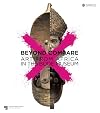
This is an excellent book in every respect: high quality photography and printing. Extremely good scholarship and writing. Based on a conceptually unique exhibition (at least to my knowledge) of fascinating and uniformly high quality pieces and - in the case of the African objects - of a tradition rarely seen in Western art galleries. The idea of juxtaposing African and European artistic objects - mainly "sculptures" but see below turns out to have been a stroke of genius.
The Introduction is show more extremely thought provoking across a range of topics, including: Euro-centric views of art history (and just history in toto); how the context in which objects are viewed influences our attitudes to and interpretations of them; how our biases about the originating cultures influence our attitudes to artistic objects.
Expanding on some of these, African art was long considered a largely irrelevant distraction from the main thread of artistic development, which is Western, because African art was deemed "primitive" like the African peoples themselves. A view imposed by Westerners with implicit assumptions of cultural and intellectual superiority. Such attitudes are only now being challenged in the context of art and of world history. In fact, this exhibition demonstrates that much African art has been created with as much skill and expressive talent as European masterworks. There is a yawning gulf in a really significant aspect, however: European art from at least the Mediaeval period to the invention of photography can be seen as a continuous quest for the most convincingly realistic representation of the chosen subject matter. African art simply could not care less about this. Absolutely none of the African items in this book are focused on realism. They are often highly abstract, though still clearly representational, and have a symbolic aspect and emotional impact that belie the idea of "primitiveness." These works aimed to achieve certain goals and strike their marks - but realism just isn't one of these goals. This seems to have been viewed as some kind of failure by Europeans at the same time as people were collecting spectacular objects because of their rarity and exoticism.
The context an object is seen in affects our perception of it: Most of the African items come from an "Ethnological" Museum, whilst most of the European ones are held by a Fine Art Museum. This radically affects our attitudes towards them but neither is the context intended by the artists: most of these objects were intended for religious or ceremonial use, not passive observation in any kind of musuem display, along with written contextualisation. There are, however numerous other points of comparison and contrast shown up by the juxtapositions and discussed in detail by the editors.
For me, the African art proved much more interesting and affecting than the European in the large majority of cases. I can identify several reasons for this: unfamiliarity (I've seen very little African art); avoidance of realism (making the human figures in particular much more emotionally expressive than their European counterparts); different beauty standards (e.g. deliberate scarifications for both men and women); a seemingly wider lexicon of iconography (Mediaeval European art strikes me as heavily bound up with a quite narrow range of basic Christian icons e.g. the Madonna and Child, that, due to endless repitition with little variation have turned into empty cliches. The much rarer imagery such as fantastical depictions of Hell and demons hold way more power.) In the case of the African objects shown here, obvious genres are still readilly identifiable but because of the lack of realism and the much broader range of basic icons (large numbers of different supernatural entities, rulers and ancestors) there is much greater scope even within a specific genre such as spiritual masks, power figures or ceremonial chairs.
Over all, the most challenging and rewarding art book I've ever read! show less
The Introduction is show more extremely thought provoking across a range of topics, including: Euro-centric views of art history (and just history in toto); how the context in which objects are viewed influences our attitudes to and interpretations of them; how our biases about the originating cultures influence our attitudes to artistic objects.
Expanding on some of these, African art was long considered a largely irrelevant distraction from the main thread of artistic development, which is Western, because African art was deemed "primitive" like the African peoples themselves. A view imposed by Westerners with implicit assumptions of cultural and intellectual superiority. Such attitudes are only now being challenged in the context of art and of world history. In fact, this exhibition demonstrates that much African art has been created with as much skill and expressive talent as European masterworks. There is a yawning gulf in a really significant aspect, however: European art from at least the Mediaeval period to the invention of photography can be seen as a continuous quest for the most convincingly realistic representation of the chosen subject matter. African art simply could not care less about this. Absolutely none of the African items in this book are focused on realism. They are often highly abstract, though still clearly representational, and have a symbolic aspect and emotional impact that belie the idea of "primitiveness." These works aimed to achieve certain goals and strike their marks - but realism just isn't one of these goals. This seems to have been viewed as some kind of failure by Europeans at the same time as people were collecting spectacular objects because of their rarity and exoticism.
The context an object is seen in affects our perception of it: Most of the African items come from an "Ethnological" Museum, whilst most of the European ones are held by a Fine Art Museum. This radically affects our attitudes towards them but neither is the context intended by the artists: most of these objects were intended for religious or ceremonial use, not passive observation in any kind of musuem display, along with written contextualisation. There are, however numerous other points of comparison and contrast shown up by the juxtapositions and discussed in detail by the editors.
For me, the African art proved much more interesting and affecting than the European in the large majority of cases. I can identify several reasons for this: unfamiliarity (I've seen very little African art); avoidance of realism (making the human figures in particular much more emotionally expressive than their European counterparts); different beauty standards (e.g. deliberate scarifications for both men and women); a seemingly wider lexicon of iconography (Mediaeval European art strikes me as heavily bound up with a quite narrow range of basic Christian icons e.g. the Madonna and Child, that, due to endless repitition with little variation have turned into empty cliches. The much rarer imagery such as fantastical depictions of Hell and demons hold way more power.) In the case of the African objects shown here, obvious genres are still readilly identifiable but because of the lack of realism and the much broader range of basic icons (large numbers of different supernatural entities, rulers and ancestors) there is much greater scope even within a specific genre such as spiritual masks, power figures or ceremonial chairs.
Over all, the most challenging and rewarding art book I've ever read! show less
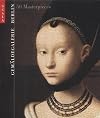
This is an okay, not great, presentation of 50 masterpieces from Berlin's wonderful Gemaldegalerie painting museum. The works selected are masterpieces, well worth savoring. The texts, however, are pedestrian, with not as much historical / art-analysis insight as comparable guides from world-class museums. Exceptions prove the rule: The discussion of Lucas Cranach's The Fountain of Youth, where women enter as hags and trip out the other side as starlets, is excellent. The book makes a nice show more souvenir of a visit to the museum, but is not as useful to carry during a visit. It points out worthwhile works, but without in-depth discussion; just bringing, or using one of the museum's, highlights-lists serves that purpose, without lugging the book. show less
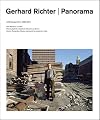
Spanning nearly five decades, and coinciding with the artist's 80th birthday, Gerhard Richter: Panorama is a major chronological retrospective that groups together significant moments of this remarkable painter's career. It includes portraits based on photographs such as the famous Betty 1988, abstractions, subtle landscapes, colour charts, works on paper, mirrors and three important glass constructions.
Gerhard Richter was one of the first German artists to reflect on the history of National show more Socialism, creating paintings of family members who had been members, as well as victims of, the Nazis, as well as canvases reminiscent of images of the bombing of Dresden. In 1988 he produced the 15-part work October 18 1977, a sequence of black and white paintings based on images of the Baader Meinhof group. Richter has continued to respond to significant moments in history. Gerhard Richter (born 1932) is widely regarded as one of the most important painters at work in the world today and has exhibited at many of the world's leading art institutions. He is as well known for his figurative works as he is for his abstract paintings, often combining elements of both in groundbreaking ways. On the occasion of a major, touring, retrospective exhibition, a collaboration between Tate Modern, London, Nationalgalerie, Staatliche Museen zu Berlin and Centre Pompidou, Paris, this important book encompasses Richter's entire career. With texts by leading international authorities on Richter's work, a new interview with the artist and over 300 illustrations, it will remain the most comprehensive survey of Richter's monumental achievements for many years to come. show less
Gerhard Richter was one of the first German artists to reflect on the history of National show more Socialism, creating paintings of family members who had been members, as well as victims of, the Nazis, as well as canvases reminiscent of images of the bombing of Dresden. In 1988 he produced the 15-part work October 18 1977, a sequence of black and white paintings based on images of the Baader Meinhof group. Richter has continued to respond to significant moments in history. Gerhard Richter (born 1932) is widely regarded as one of the most important painters at work in the world today and has exhibited at many of the world's leading art institutions. He is as well known for his figurative works as he is for his abstract paintings, often combining elements of both in groundbreaking ways. On the occasion of a major, touring, retrospective exhibition, a collaboration between Tate Modern, London, Nationalgalerie, Staatliche Museen zu Berlin and Centre Pompidou, Paris, this important book encompasses Richter's entire career. With texts by leading international authorities on Richter's work, a new interview with the artist and over 300 illustrations, it will remain the most comprehensive survey of Richter's monumental achievements for many years to come. show less

This small book is intended as an affordable (for an art book) souvenir of a visit to the museum housing the Scharf-Gerstenberg Collection. It reproduces "highlights" of the Collection with a short commentary on each piece. Said Collection was a private collection of mainly Surrealist and related works, now held by a Foundation dedicated to making the art accessible to the public.
The two most notable results of my visit were discovery of Piranesi and for the firsst time appreciating works by show more Paul Klee. This book has two reproductions by the former and several by the latter. There's a lot of other interesting work, too, though. show less
The two most notable results of my visit were discovery of Piranesi and for the firsst time appreciating works by show more Paul Klee. This book has two reproductions by the former and several by the latter. There's a lot of other interesting work, too, though. show less
You May Also Like


Associated Authors
Statistics
- Works
- 175
- Also by
- 16
- Members
- 935
- Popularity
- #27,473
- Rating
- 4.1
- Reviews
- 7
- ISBNs
- 116
- Languages
- 4

