

Rita E. Freed
Author of Ramses II: the Great Pharaoh and His Time
About the Author
Works by Rita E. Freed
Associated Works
Fragments of a Shattered Visage: The Proceedings of the International Symposium of Ramesses the Great (1993) — Editor, some editions — 8 copies
Tagged
Common Knowledge
- Legal name
- Freed, Rita Evelyn
- Birthdate
- 1952-06-29
- Gender
- female
- Education
- New York University
- Occupations
- art historian
museum curator - Organizations
- Museum of Fine Arts, Boston
Wellesley College - Nationality
- USA
- Associated Place (for map)
- USA
Members
Reviews
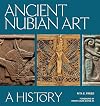
Ancient Nubian Art: A History, by Rita E Freed, is an attractive book that is also a wonderfully informative and accessible read.
Being the nerd I am I read my coffee table books (or ones I call end table or sofa table books, of which I consider this one) as well as appreciate them for their appearance. Many true coffee table books, the large oversized ones, have great information in them that often gets overlooked because people flip through them and perhaps read a few pages leaning over a show more table or in their lap. But, honestly, they can be cumbersome to read the way you do a standard hardcover. The one I happen to have on my side table by my desk is 9x11, not what most people read propped up in bed. I am saying all this because one of the things I love about slightly oversized books like this one, 8.5x9, is that they lend themselves more easily to someone actually reading the text as well as enjoy the pictures. And this volume is worth a close and careful reading.
The pictures are fascinating and well worth putting out for display in your home. The illustrations are described wonderfully and the history is presented in an engaging style that really piques your curiosity to dive deeper. Like so many books, taking advantage of all the information available online to supplement your particular areas of interest can make the experience even better. Names, places, keywords, there are a wide range of things in the book you can use to go deeper into whatever caught your imagination.
The foreword by Henry Louis Gates Jr is an excellent gateway into the book that also reflects back into our contemporary world. By the time I finished his short piece I was ready to jump right into the book.
Highly recommended for anyone interested in art history, ancient art, Nubian art/culture/history, as well as those who simply enjoy a beautiful book. I don't say this often about art history books, but I can see myself rereading this one again in addition to thumbing through it regularly.
Reviewed from a copy made available by the publisher via NetGalley. show less
Being the nerd I am I read my coffee table books (or ones I call end table or sofa table books, of which I consider this one) as well as appreciate them for their appearance. Many true coffee table books, the large oversized ones, have great information in them that often gets overlooked because people flip through them and perhaps read a few pages leaning over a show more table or in their lap. But, honestly, they can be cumbersome to read the way you do a standard hardcover. The one I happen to have on my side table by my desk is 9x11, not what most people read propped up in bed. I am saying all this because one of the things I love about slightly oversized books like this one, 8.5x9, is that they lend themselves more easily to someone actually reading the text as well as enjoy the pictures. And this volume is worth a close and careful reading.
The pictures are fascinating and well worth putting out for display in your home. The illustrations are described wonderfully and the history is presented in an engaging style that really piques your curiosity to dive deeper. Like so many books, taking advantage of all the information available online to supplement your particular areas of interest can make the experience even better. Names, places, keywords, there are a wide range of things in the book you can use to go deeper into whatever caught your imagination.
The foreword by Henry Louis Gates Jr is an excellent gateway into the book that also reflects back into our contemporary world. By the time I finished his short piece I was ready to jump right into the book.
Highly recommended for anyone interested in art history, ancient art, Nubian art/culture/history, as well as those who simply enjoy a beautiful book. I don't say this often about art history books, but I can see myself rereading this one again in addition to thumbing through it regularly.
Reviewed from a copy made available by the publisher via NetGalley. show less
The book consists of 8 chapters in addition to the introduction: Beginnings; Expanding World: A-Group; C-Group and Pan-Grave Cultures Move In; Nubia’s First Empire: Kerma; An Interlude with Egypt; Nubia’s Second Empire: The Napatan Period; Nubia’s Third Empire: The Meriotic Period; and Beyond the Meroitic Empire. There’s a forward by Henry Louix Gates, Jr. that explores what Nubia and Egypt meant to enslaved Africans in America, and why learning about ancient African nations and show more their accomplishments was so important to black Americans.
The book follows the chronological history of Nubia, as we can piece it together through archaeological evidence. The early chapters are fairly short, as there isn’t much evidence or material objects. There are at least a few photos per chapter illuminating the text. The chapters get more detailed as empires rose, since they left significantly more behind. The book constantly compares the artwork, homes, clothing, and habits (as well as can be determined) to the more well known Egyptian one. So we’re told that Egyptian artwork is more formulaic, while Nubian artwork has more of a naturalistic look, with freer forms and curvier figures. I was especially interested to learn the ways Nubian metalworkers experimented with enamel to create mixed forms much earlier than appeared elsewhere in the world.
In addition to images of artworks, the book also has some floor plans for palaces and temples, diagrams of houses, etc.
It’s fascinating learning about such a little known culture. Their artwork deserves to be known in its own right, separate from that of Egypt. Hopefully this book will encourage people to learn more about the Nubians and their culture. show less
The book follows the chronological history of Nubia, as we can piece it together through archaeological evidence. The early chapters are fairly short, as there isn’t much evidence or material objects. There are at least a few photos per chapter illuminating the text. The chapters get more detailed as empires rose, since they left significantly more behind. The book constantly compares the artwork, homes, clothing, and habits (as well as can be determined) to the more well known Egyptian one. So we’re told that Egyptian artwork is more formulaic, while Nubian artwork has more of a naturalistic look, with freer forms and curvier figures. I was especially interested to learn the ways Nubian metalworkers experimented with enamel to create mixed forms much earlier than appeared elsewhere in the world.
In addition to images of artworks, the book also has some floor plans for palaces and temples, diagrams of houses, etc.
It’s fascinating learning about such a little known culture. Their artwork deserves to be known in its own right, separate from that of Egypt. Hopefully this book will encourage people to learn more about the Nubians and their culture. show less

A lavishly-illustrated publication to accompany the fantastic MFA exhibit by the same name. Excellent contextual historical and technical information about the tomb and its contents. Slightly over-jargoned, perhaps, but if you can get by that, I expect you'll probably enjoy this.

An excellent book covering all the items on display during an exhibit held at the Boston Museum of Science. The descriptions and additional material make this a great book for learning more about the life and times of one of the most famous pharoahs of Egypt.
Lists
You May Also Like


Associated Authors
Statistics
- Works
- 11
- Also by
- 2
- Members
- 616
- Popularity
- #40,814
- Rating
- 4.2
- Reviews
- 9
- ISBNs
- 16
- Languages
- 1