
Sheldon Kopp (1929–1999)
Author of If You Meet the Buddha on the Road, Kill Him! The Pilgrimage of Psychotherapy Patients
About the Author
Works by Sheldon Kopp
If You Meet the Buddha on the Road, Kill Him! The Pilgrimage of Psychotherapy Patients (1972) 920 copies, 7 reviews
Even a Stone Can Be a Teacher: Learning and Growing from the Experiences of Everyday Life (1985) 62 copies
All God's Children Are Lost, but Only a Few Can Play the Piano: Finding a Life That Is Truly Your Own (1991) 43 copies, 1 review
Rock, Paper, Scissors: Understanding the Paradoxes of Personal Power and Taking Charge of Our Lives (1989) 14 copies
An End to Innocence 1 copy
Tagged
Common Knowledge
- Legal name
- Kopp, Sheldon Bernard
- Other names
- Kopp, Sheldon B.
- Birthdate
- 1929-03-29
- Date of death
- 1999-03-29
- Gender
- male
- Education
- New School for Social Research
- Occupations
- psychotherapist
author - Short biography
- Dr. Sheldon B. Kopp (1929–1999) was a psychotherapist and teacher of psychotherapy in Washington, DC. His writing was published in Psychology Today, American Journal of Psychotherapy, and many others. He was the author of Blues Ain’t Nothing But a Good Soul Feeling Bad, Guru, The Hanged Man, and If You Meet the Buddha on the Road, Kill Him!
- Nationality
- USA
- Birthplace
- New York, New York, USA
- Places of residence
- New York, New York, USA
Washington, D.C., USA - Associated Place (for map)
- USA
Members
Reviews

Rambling thoughts on personality types, repressed desires, dreaming, etc. Each chapter is headed by a tarot card which somewhat pertains to its contents. Kopp reveals that he is gay, an introvert, and agnostic or atheist, except for a token attraction to Eastern religious beliefs. He brings in examples from various areas of literature and history. I wish the book had more lines like this one from Ch. 10 (Let Our Dreams Instruct Us, illustrated by the Moon card) - "Sometimes I forget that I show more have a secret friend, a wise but hidden counselor, whose voice I ought to listen to more often. This counselor is my dreaming self, that part of me who sees more clearly than my waking self, whose vision is less cluttered with reason, logic, and conventional wisdom." show less
If You Meet the Buddha on the Road, Kill Him! The Pilgrimage of Psychotherapy Patients by Sheldon B. Kopp
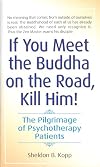
This book is a mix of Sheldon Kopp's personal life and professional story, his views on the nature of therapy and its possibilities, and his recounting of religious or legendary tales of gurus and pilgrimages as a metaphor for therapy. One of his central themes - that the client must eventually realise their therapist is as much of a journeying pilgrim as they are in order to benefit from the therapy - is helpful, even if the pilgrims' tales occupy rather more space in the book than they show more probably deserve in order to make the point. It is his honesty in writing about his personal suffering and journey, including his own loneliness, illness, and suicidal despair that bring the book to life for me. In keeping with his central theme, it helps to remind me that therapists too are allowed to feel helpless, lost, evil, lonely and weak simply by virtue of being human. Kopp is a very quotable writer, and throughout his perspective is very existential in orientation, even if he never uses that term. One small quibble are a couple of references to homosexuality as deviant or misguided - perhaps this was a more common attitude in the early 1970s, even among therapists. show less
If You Meet the Buddha on the Road, Kill Him! The Pilgrimage of Psychotherapy Patients by Sheldon B. Kopp
Self-help books are generally terrible. This is not, therefore, a true self-help book, because it isn't terrible. It does, though, help - if you get the idea. Kopp is a psychoanalyst (and a lot else besides) and his book is a combination memoir and guide to troubled souls. It was well-written and accessible, and not at all airy or empty like so many others in the genre.
If You Meet the Buddha on the Road, Kill Him! The Pilgrimage of Psychotherapy Patients by Sheldon B. Kopp
If I Meet [a:Sheldon B. Kopp|1326397|Sheldon B. Kopp|http://www.goodreads.com/images/nophoto/nophoto-U-50x66.jpg] on the Road, I will Kill Him! That's what I thought when I was halfway through the [b:If You Meet the Buddha on the Road Kill Him|119390|If You Meet the Buddha on the Road, Kill Him! The Pilgrimage of Psychotherapy Patients|Sheldon B. Kopp|http://photo.goodreads.com/books/1316542361s/119390.jpg|1660264]. Towards the end though it completely changed my perspective. Don't be biased show more like I was after seeing the "The Pilgrimage of Psychotherapy Patients" in the title and the continuous mention of "in therapy" throughout the book.
"The most important things that each man must learn no one can teach him. Once he accepts this disappointment, he will be able to stop depending on the therapist, the guru who turns out to be just another struggling human being." This is what is written at the back of the book and is emphasized throughout as well. But the message doesn't ends here and you end up knowing or rather remembering, like a forgotten dream, much more than you thought.
The book is divided into four parts which I will not mention. The journey was rewarding and I just loved Part III and Part IV. Writings and tales have been included to give a fresh perspective to the book but there lies its folly as it has become rather a confused mixture and that's why Part II tends to be the weakest. But the author draws from his personal experiences as well and this is what makes this book so realistically honest.
In all a must read, for towards the end you will find though you have learnt nothing new you were not aware of already. The only point being here "you were not aware of it". show less
"The most important things that each man must learn no one can teach him. Once he accepts this disappointment, he will be able to stop depending on the therapist, the guru who turns out to be just another struggling human being." This is what is written at the back of the book and is emphasized throughout as well. But the message doesn't ends here and you end up knowing or rather remembering, like a forgotten dream, much more than you thought.
The book is divided into four parts which I will not mention. The journey was rewarding and I just loved Part III and Part IV. Writings and tales have been included to give a fresh perspective to the book but there lies its folly as it has become rather a confused mixture and that's why Part II tends to be the weakest. But the author draws from his personal experiences as well and this is what makes this book so realistically honest.
In all a must read, for towards the end you will find though you have learnt nothing new you were not aware of already. The only point being here "you were not aware of it". show less
You May Also Like


Statistics
- Works
- 20
- Members
- 1,431
- Popularity
- #17,978
- Rating
- 3.8
- Reviews
- 12
- ISBNs
- 52
- Languages
- 4
- Favorited
- 1