
Michel Leiris (1901–1990)
Author of Manhood: A Journey from Childhood into the Fierce Order of Virility
About the Author
Image credit: Michel Leiris, en 1978
Series
Works by Michel Leiris
Frail Riffs: The Rules of the Game, Volume 4 (Volume 4) (The Margellos World Republic of Letters) (2024) 6 copies
The Prints of Joan Miro 2 copies
Racisme en de derde wereld vijf etnologische beschouwingen over ras, beschaving, kolonialisme (1971) 2 copies
LAM 1970 Wifredo, Wifredo Lam 2 copies
Phantom Afrika - Tagebuch einer Expedition von Dakar nach Djibouti, 1931-1933 - Band 2 (1991) 1 copy
Michel Leiris. Miroir de la tauromachie : Précédé de Tauromachies. Dessins de André Masson (1964) 1 copy
デュシャン、ミロ、マッソン、ラム 1 copy
Michel Leiris. L'Age d'homme. Précédé de : De la Littérature considérée comme une tauromachie 1 copy
Alberto Giacometti 1 copy
La possession 1 copy
André Masson et le théâtre 1 copy
La néréide de la mer rouge 1 copy
Vivantes cendres, innommées 1 copy
Rue Blomet 45 1 copy
Le point cardinal 1 copy
Mannesalter 1 copy
Bacon, le hors-la-loi 1 copy
Race et civilisation 1 copy
Associated Works
Oskar Kokoschka, Städteportraits: [Ausstellung "Oskar Kokoschka - Städteportraits", Österreichisches Museum für Angewandte Kunst, Wien, 4. März - 6. April 1986] (1986) — Contributor — 3 copies
Francis Bacon : œuvres récentes — Foreword — 1 copy
Masterpieces of African art, Tishman collection : the Israel Museum, Jerusalem = צירות מוכרז ז״ול אמוות אפריקה אוסף פוס זריכומו — Contributor — 1 copy, 1 review
Kunst aus Haiti : Ausstellung der Berliner Festspiele GmbH — Contributor — 1 copy
現代詩手帖 1989年 06月号 特集=ミシェル・レリス — Contributor — 1 copy
現代詩手帖 1970年 11月号 — Contributor — 1 copy
Tagged
Common Knowledge
- Canonical name
- Leiris, Michel
- Legal name
- Leiris, Julien Michel
- Birthdate
- 1901-04-20
- Date of death
- 1990-09-30
- Gender
- male
- Education
- Lycée Janson de Sailly (baccalauréat|1918)
- Occupations
- poet
critic
anthropologist - Organizations
- College de Sociologie (1937-1939)
Centre national de la recherche scientifique
Musée de l'Homme - Relationships
- Godon, Louise (wife)
Bataille, Georges (friend)
Einstein, Carl (co-editor) - Nationality
- France
- Birthplace
- Paris, France
- Place of death
- Saint-Hilaire, Essonne, France
- Associated Place (for map)
- France
Members
Reviews

“O sonho não é uma fuga. Nossos pensamentos noturnos — mesmo os mais bizarros — saem do mesmo cadinho que nossos pensamentos diurnos. Não podemos esperar destituir durante o sono os desejos, os medos ou a mera mudança da mente que molda cada fase de nossa existência.show more
O sonho não é uma revelação. Se um sonho oferece ao sonhador alguma luz sobre si mesmo, não é a pessoa de olhos fechados que faz a descoberta, mas a pessoa de olhos abertos, suficientemente lúcida para organizar
os pensamentos.
O sonho — uma miragem cintilante cercada de sombras — é essencialmente poesia.”
Este diário-duplo, escrito pelo surrealista Michel Leiris, nasce quando o autor percebe, de certa maneira, que a tinta com que seus sonhos são escritos, influi e se mistura nas páginas do seu próprio diário; naturalmente, sem que force, a bruma que cobre os sonhos também cobre a sua vida real.
Estreita-se a margem entre vida e sonho (e daí vem o título desta edição, ou, da francesa, ainda melhor: (vulgarmente) Noites Claras e Dias Escuros).
Na minha opinião todos deveriam tirar um tempo para ler estes sonhos, vislumbres oníricos, que se apresentam este diário de múltiplos donos, pois, conforme você vai lendo, você vai percebendo que este diário também é o seu diário; e os sonhos do Leiris, desencadeiam na sua (e na nossa) vida, memórias incompreensíveis de sonhos que ficaram marcados no nosso inconsciente.
‘‘Basta um pequeno ajuste de iluminação ou um leve tropel de retórica para que a vida cotidiana assuma a mesma distância incerta dos sonhos, ou, para que o sonho seja desmistificado, diluído no cotidiano.”
A demarcação porosa entre vigília e sonho é desfeita. Como diz o grande Nerval: “O sonho é uma segunda vida.” e “aqui começa o que chamarei de invasão do sonho na vida real.” Neiris faz a mesma descoberta: a vivacidade profundamente gravada e misteriosa que experimenta nos sonhos, também experimenta em certos episódios de sua realidade.
“As últimas palavras de Nerval, um bilhete (de suicídio?) deixado na mesa da cozinha de sua tia: “Ne m’attends pas ce soir, car la nuit sera noire et blanche”. Não espere por mim esta noite, pois a noite será preto e branca.”
O livro é curto, onírico, poético, certas vezes, exageradamente surreal, mas, extremamente interessante:
“1942, Sonho: Eu sou o ator Jean Yonnel e estou declamando uma espécie de tragédia raciniana. De repente, não me lembro mais das minhas falas. Passo a falar devagar, em frases curtas e bruscas, embora ainda mantendo meu fervor declamatório; proclamo que, o esquecimento que me acometeu, tornou-me consciente da peça, logo, não posso mais representá-la como costumava fazer, uma performance que só em fluxo, só em falta de consciência tornava-se possível.”
Vamos vivendo como o sonho, passando por essa noite sem noite como Michel Leiris a chama; essa noite duplamente noturna dada a ausência e subtração de si em si mesma, essa noite da qual também nós somos subtraídos e escultados, e assim postos em um estado que não é o dormir e nem o despertar: suspensos entre o ser e o não-ser.
“1924, vida real: Tendo retornado de Mainz, onde trabalhava como jornalista, e prestes a partir novamente para Le Havre, sua terra natal, Georg es Limb nosso autor de L’Enf ant polair e daquele Soleils bas decorado pelas gravuras prodigiosamente agudas e arejadas de André Masson — estava dividindo meu quarto no apartamento da mãe por alguns dias.
Por volta das duas da manhã, acordo e vejo Limb sentado no sofá que estava usando como cama, lançando um olhar perplexo ao redor do quarto.
O sofá parece estar completamente envolto em gaze, como se estivesse coberto com uma rede mosquiteira.
Quando lhe pergunto qual é o problema, ele responde que pensou que alguém havia pendurado cortinas em volta do sofá para enforcá-lo.
Nesse ponto, a ilusão desaparece.”
Paro por aqui para não estragar mais a experiência que é lê-lo.
Vulgarmente: o que importa para Leiris no sonho são as evocações de novos sentimentos, de um sentido que não é sentido, e não o lugar comum, de dotar o sonho de significados e significações. É o sonho como sonho, a noite como dia, e o dia como noite. Essa abordagem faz com que o livro flua suavemente, uma experiência rápida mas gostosa, que deixo como uma curiosa recomendação, que se você for experiente no francês ou no inglês, você o lê em não mais que duas horas.
“Estas experiências já foram sonhos; são agora, signos de poesia.” (p. xxii), prefácio do Maurice Blanchot.show less
FINAL REVIEW
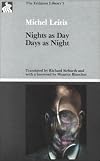
French surreal fiction writer Michel Leiris in 1922. Nights as Day, Days as Night - More than one hundred entries in this book, the author's dream journal, composed over a span of forty years. Here is the very first entry: In front of a crowd of gawking spectators - of whom I am one - a series of executions is being carried out, and this rivets my attention. Up until the moment when the executioner and his attendants direct themselves toward me because it is my turn now. Which show more comes as a complete and terrifying surprise.
What I especially enjoy about this dream is how Leiris, as dreamer, is initially merely a spectator but then there is a radical shift - the main players within the dream, the executioner and his attendants, turn their attention on the dreamer. Which leaves us with the question: Now that his turn has come, what will be the experience of the dreamer if he is executed? Similar in spirit to all the other dreams in his journal, Michel Leiris neither poses the question nor provides an answer since he regards his dreams as a kind of poetry, dream prose poems to be recorded free of analysis or commentary.
As Maurice Blanchot notes in his excellent ten-page forward, for Michel Leiris, dream is not an escape; rather, dreams emerge from the same crucible as our waking day thoughts; we can’t shake off our desires and fears. Indeed, Leiris begins his dream journal with a quote from Gerard de Neval: “Dream is a second life.” For me, reading this book was a decidedly intimate experience; I had the distinct feeling dream was even more than the author’s second life – dream took center stage; dream was his primary life. And, why not? Michel Leiris was a highly creative literary artist who, similar to nearly all his fellow surrealists, favored a dream narrative over the more conventional forms of poetry and the novel.
Turning to the entries themselves, poetry and the arts are frequent subjects and abiding themes, as when Michel Leiris, as dreamer, walks along a broad Paris avenue and passes a huge dark building that turns out to be a psychiatric hospital. The patients are out on the sidewalk, each caged up, sort of, by a circle of bars that comes up to his or her waist. All the lunatics are screaming and waving their arms. Michel recognizes several people, among them Georges Gabory, whom he congratulates on his recently published book of poems. After looking carefully, making sure no hospital guard is watching, Georges escapes from his cage and joins Michel on a long walk.
In another entry, Michel observes a bit of dialogue between André Breton and Robert Desnos as the two men perform as actors on a stage. Or, on further reflection, Michel might be actually reading the words on a page with stage directions. And in still another entry, a Scotsman plays a bagpipe in the shape of a gigantic bloated man in the manner of Picasso’s “Baigneuse.” With dreams like these, is it any surprise Michel Leiris had a longtime affiliation with the surrealists and surrealism?
Here is one of my favorites, a shorter three sentence entry: One night, drunk, on the Boulevard de Sebastolpol, I pass an old wretch of a man and call out to him. He answers: “Leave me alone . . . I am the master of the heights of cinema.” Then he continues on his way to Belleville.
As readers, we may ask: How does the dreamer know he is drunk and what does it feel like to be drunk within a dream? How does being under the influence of alcohol affect the clarity of the dream? Are the words Michel calls out garbled? Again, as the poetry is in the dream itself, Michel Lieris recounts as accurately as possible the dream content without further elaboration or explanation. Such is the nature of dreams that in a curious and ticklish way, the more quizzical, the more perplexing and puzzling, the greater the entry’s poetic and imaginative power.
Another surreal entry: My friend André Masson and I are soaring through the air like gymnasiarchs. A voice calls up to us: “World-class acrobats when are the two of you finally going to come down to earth?” At these words, we execute a flip over the horizon and drop into a concave hemisphere.
I encourage anyone who feels the call to join these acrobats of the sky, anyone ready to take the leap into concave hemispheres, to treat your imagination to this collection of surreal dreams. And when you return to earth, you can also join Michel Leiris when he becomes part of a cubist painting, that is, when his very being, via his gaze, projects itself into the painting, into a cubist world without perspective.
Portrait of Michel Lieris by Francis Bacon. show less
French surreal fiction writer Michel Leiris in 1922. Nights as Day, Days as Night - More than one hundred entries in this book, the author's dream journal, composed over a span of forty years. Here is the very first entry: In front of a crowd of gawking spectators - of whom I am one - a series of executions is being carried out, and this rivets my attention. Up until the moment when the executioner and his attendants direct themselves toward me because it is my turn now. Which show more comes as a complete and terrifying surprise.
What I especially enjoy about this dream is how Leiris, as dreamer, is initially merely a spectator but then there is a radical shift - the main players within the dream, the executioner and his attendants, turn their attention on the dreamer. Which leaves us with the question: Now that his turn has come, what will be the experience of the dreamer if he is executed? Similar in spirit to all the other dreams in his journal, Michel Leiris neither poses the question nor provides an answer since he regards his dreams as a kind of poetry, dream prose poems to be recorded free of analysis or commentary.
As Maurice Blanchot notes in his excellent ten-page forward, for Michel Leiris, dream is not an escape; rather, dreams emerge from the same crucible as our waking day thoughts; we can’t shake off our desires and fears. Indeed, Leiris begins his dream journal with a quote from Gerard de Neval: “Dream is a second life.” For me, reading this book was a decidedly intimate experience; I had the distinct feeling dream was even more than the author’s second life – dream took center stage; dream was his primary life. And, why not? Michel Leiris was a highly creative literary artist who, similar to nearly all his fellow surrealists, favored a dream narrative over the more conventional forms of poetry and the novel.
Turning to the entries themselves, poetry and the arts are frequent subjects and abiding themes, as when Michel Leiris, as dreamer, walks along a broad Paris avenue and passes a huge dark building that turns out to be a psychiatric hospital. The patients are out on the sidewalk, each caged up, sort of, by a circle of bars that comes up to his or her waist. All the lunatics are screaming and waving their arms. Michel recognizes several people, among them Georges Gabory, whom he congratulates on his recently published book of poems. After looking carefully, making sure no hospital guard is watching, Georges escapes from his cage and joins Michel on a long walk.
In another entry, Michel observes a bit of dialogue between André Breton and Robert Desnos as the two men perform as actors on a stage. Or, on further reflection, Michel might be actually reading the words on a page with stage directions. And in still another entry, a Scotsman plays a bagpipe in the shape of a gigantic bloated man in the manner of Picasso’s “Baigneuse.” With dreams like these, is it any surprise Michel Leiris had a longtime affiliation with the surrealists and surrealism?
Here is one of my favorites, a shorter three sentence entry: One night, drunk, on the Boulevard de Sebastolpol, I pass an old wretch of a man and call out to him. He answers: “Leave me alone . . . I am the master of the heights of cinema.” Then he continues on his way to Belleville.
As readers, we may ask: How does the dreamer know he is drunk and what does it feel like to be drunk within a dream? How does being under the influence of alcohol affect the clarity of the dream? Are the words Michel calls out garbled? Again, as the poetry is in the dream itself, Michel Lieris recounts as accurately as possible the dream content without further elaboration or explanation. Such is the nature of dreams that in a curious and ticklish way, the more quizzical, the more perplexing and puzzling, the greater the entry’s poetic and imaginative power.
Another surreal entry: My friend André Masson and I are soaring through the air like gymnasiarchs. A voice calls up to us: “World-class acrobats when are the two of you finally going to come down to earth?” At these words, we execute a flip over the horizon and drop into a concave hemisphere.
I encourage anyone who feels the call to join these acrobats of the sky, anyone ready to take the leap into concave hemispheres, to treat your imagination to this collection of surreal dreams. And when you return to earth, you can also join Michel Leiris when he becomes part of a cubist painting, that is, when his very being, via his gaze, projects itself into the painting, into a cubist world without perspective.
Portrait of Michel Lieris by Francis Bacon. show less
FINAL REVIEW
French surreal fiction writer Michel Leiris in 1922. Nights as Day, Days as Night - More than one hundred entries in this book, the author's dream journal, composed over a span of forty years. Here is the very first entry: In front of a crowd of gawking spectators - of whom I am one - a series of executions is being carried out, and this rivets my attention. Up until the moment when the executioner and his attendants direct themselves toward me because it is my turn now. Which show more comes as a complete and terrifying surprise.
What I especially enjoy about this dream is how Leiris, as dreamer, is initially merely a spectator but then there is a radical shift - the main players within the dream, the executioner and his attendants, turn their attention on the dreamer. Which leaves us with the question: Now that his turn has come, what will be the experience of the dreamer if he is executed? Similar in spirit to all the other dreams in his journal, Michel Leiris neither poses the question nor provides an answer since he regards his dreams as a kind of poetry, dream prose poems to be recorded free of analysis or commentary.
As Maurice Blanchot notes in his excellent ten-page forward, for Michel Leiris, dream is not an escape; rather, dreams emerge from the same crucible as our waking day thoughts; we can’t shake off our desires and fears. Indeed, Leiris begins his dream journal with a quote from Gerard de Neval: “Dream is a second life.” For me, reading this book was a decidedly intimate experience; I had the distinct feeling dream was even more than the author’s second life – dream took center stage; dream was his primary life. And, why not? Michel Leiris was a highly creative literary artist who, similar to nearly all his fellow surrealists, favored a dream narrative over the more conventional forms of poetry and the novel.
Turning to the entries themselves, poetry and the arts are frequent subjects and abiding themes, as when Michel Leiris, as dreamer, walks along a broad Paris avenue and passes a huge dark building that turns out to be a psychiatric hospital. The patients are out on the sidewalk, each caged up, sort of, by a circle of bars that comes up to his or her waist. All the lunatics are screaming and waving their arms. Michel recognizes several people, among them Georges Gabory, whom he congratulates on his recently published book of poems. After looking carefully, making sure no hospital guard is watching, Georges escapes from his cage and joins Michel on a long walk.
In another entry, Michel observes a bit of dialogue between André Breton and Robert Desnos as the two men perform as actors on a stage. Or, on further reflection, Michel might be actually reading the words on a page with stage directions. And in still another entry, a Scotsman plays a bagpipe in the shape of a gigantic bloated man in the manner of Picasso’s “Baigneuse.” With dreams like these, is it any surprise Michel Leiris had a longtime affiliation with the surrealists and surrealism?
Here is one of my favorites, a shorter three sentence entry: One night, drunk, on the Boulevard de Sebastolpol, I pass an old wretch of a man and call out to him. He answers: “Leave me alone . . . I am the master of the heights of cinema.” Then he continues on his way to Belleville.
As readers, we may ask: How does the dreamer know he is drunk and what does it feel like to be drunk within a dream? How does being under the influence of alcohol affect the clarity of the dream? Are the words Michel calls out garbled? Again, as the poetry is in the dream itself, Michel Lieris recounts as accurately as possible the dream content without further elaboration or explanation. Such is the nature of dreams that in a curious and ticklish way, the more quizzical, the more perplexing and puzzling, the greater the entry’s poetic and imaginative power.
Another surreal entry: My friend André Masson and I are soaring through the air like gymnasiarchs. A voice calls up to us: “World-class acrobats when are the two of you finally going to come down to earth?” At these words, we execute a flip over the horizon and drop into a concave hemisphere.
I encourage anyone who feels the call to join these acrobats of the sky, anyone ready to take the leap into concave hemispheres, to treat your imagination to this collection of surreal dreams. And when you return to earth, you can also join Michel Leiris when he becomes part of a cubist painting, that is, when his very being, via his gaze, projects itself into the painting, into a cubist world without perspective.
Portrait of Michel Lieris by Francis Bacon. show less
French surreal fiction writer Michel Leiris in 1922. Nights as Day, Days as Night - More than one hundred entries in this book, the author's dream journal, composed over a span of forty years. Here is the very first entry: In front of a crowd of gawking spectators - of whom I am one - a series of executions is being carried out, and this rivets my attention. Up until the moment when the executioner and his attendants direct themselves toward me because it is my turn now. Which show more comes as a complete and terrifying surprise.
What I especially enjoy about this dream is how Leiris, as dreamer, is initially merely a spectator but then there is a radical shift - the main players within the dream, the executioner and his attendants, turn their attention on the dreamer. Which leaves us with the question: Now that his turn has come, what will be the experience of the dreamer if he is executed? Similar in spirit to all the other dreams in his journal, Michel Leiris neither poses the question nor provides an answer since he regards his dreams as a kind of poetry, dream prose poems to be recorded free of analysis or commentary.
As Maurice Blanchot notes in his excellent ten-page forward, for Michel Leiris, dream is not an escape; rather, dreams emerge from the same crucible as our waking day thoughts; we can’t shake off our desires and fears. Indeed, Leiris begins his dream journal with a quote from Gerard de Neval: “Dream is a second life.” For me, reading this book was a decidedly intimate experience; I had the distinct feeling dream was even more than the author’s second life – dream took center stage; dream was his primary life. And, why not? Michel Leiris was a highly creative literary artist who, similar to nearly all his fellow surrealists, favored a dream narrative over the more conventional forms of poetry and the novel.
Turning to the entries themselves, poetry and the arts are frequent subjects and abiding themes, as when Michel Leiris, as dreamer, walks along a broad Paris avenue and passes a huge dark building that turns out to be a psychiatric hospital. The patients are out on the sidewalk, each caged up, sort of, by a circle of bars that comes up to his or her waist. All the lunatics are screaming and waving their arms. Michel recognizes several people, among them Georges Gabory, whom he congratulates on his recently published book of poems. After looking carefully, making sure no hospital guard is watching, Georges escapes from his cage and joins Michel on a long walk.
In another entry, Michel observes a bit of dialogue between André Breton and Robert Desnos as the two men perform as actors on a stage. Or, on further reflection, Michel might be actually reading the words on a page with stage directions. And in still another entry, a Scotsman plays a bagpipe in the shape of a gigantic bloated man in the manner of Picasso’s “Baigneuse.” With dreams like these, is it any surprise Michel Leiris had a longtime affiliation with the surrealists and surrealism?
Here is one of my favorites, a shorter three sentence entry: One night, drunk, on the Boulevard de Sebastolpol, I pass an old wretch of a man and call out to him. He answers: “Leave me alone . . . I am the master of the heights of cinema.” Then he continues on his way to Belleville.
As readers, we may ask: How does the dreamer know he is drunk and what does it feel like to be drunk within a dream? How does being under the influence of alcohol affect the clarity of the dream? Are the words Michel calls out garbled? Again, as the poetry is in the dream itself, Michel Lieris recounts as accurately as possible the dream content without further elaboration or explanation. Such is the nature of dreams that in a curious and ticklish way, the more quizzical, the more perplexing and puzzling, the greater the entry’s poetic and imaginative power.
Another surreal entry: My friend André Masson and I are soaring through the air like gymnasiarchs. A voice calls up to us: “World-class acrobats when are the two of you finally going to come down to earth?” At these words, we execute a flip over the horizon and drop into a concave hemisphere.
I encourage anyone who feels the call to join these acrobats of the sky, anyone ready to take the leap into concave hemispheres, to treat your imagination to this collection of surreal dreams. And when you return to earth, you can also join Michel Leiris when he becomes part of a cubist painting, that is, when his very being, via his gaze, projects itself into the painting, into a cubist world without perspective.
Portrait of Michel Lieris by Francis Bacon. show less

There was a time over 30 yrs ago when I studied Surrealism w/ great interest. When I was in my late teens or early 20s I tried sleeping w/ a pencil or a pen tied to my hand w/ a sheet of paper nearby as an experiment in trying to generate more authentic Automatic Writing than what I thought others before me had created. Predictably, nothing more than a few scribbles & rips resulted. I'd already written dream accounts starting around age 13 - before I'd probably heard of Surrealism.
The show more history of Surrealism that I was familiar w/ stressed that its alpha male, André Breton, 'excommunicated' many Surrealists for being too impure or whatever & that sort of thing put me off of him at least. Any movement w/ a leader ain't for me. I remember reading that Robert Desnos, one of the authors here, had been kicked out by Breton partially b/c he started writing Alexandrine verse (or was at least ostracized later for doing so) - a more traditional form that emphasized rhyming schemes rather than automatism. I cd both understand the desire to be rigorous - & find it stupid to kick someone out. I remember a picture of Desnos w/ heavy bags under his eyes - the story being that he was so deep into trance-generated writing that he was precipitously close to being comatose (not really an accurate description but I'm writing quickly here). Desnos' piece is the longest of the 4.
As w/ all Atlas Press bks, this one is scholarly enuf to have at least one writer in it I don't think I was previously familiar w/: Georges Limbour. Michel Leiris I've probably encountered but only remember by name. Benjamin Péret I remember mainly b/c of a foto of him spitting at a priest. That fierce anti-clericalism always appealed to me & made me curious. & it was his 'novel' that appealed to me the most.
The question is, though, just what IS "automatic writing"? Is stream-of-consciousness automatic writing? Is free association automatic writing? In translator Terry Hale's intro, distinctions between the writers' styles are explained. In the end, though, I just think these guys were good extemporizers & that each person's style comes thru. Peret was probably funny-as-fuck to be around. & then there's the IMAGERY w/ wch the whole bk abounds:
"I am alone, that's true, but to well-born souls the necklace does not count on the number of diamonds. One day I was in a barn with the straw and the cows. The cows were eating the straw and vice-versa, however strange that might seem to you. And yet what happened to me next is even stranger. I was gazing with the rapture that is called for by such a spectacle, the cows eating the straw, when the roof of the barn split open along its entire length. A white sheet slipped through the opening and flapped in a wind I did not feel. Then, slowly, it descended to the ground. The ground opened in its turn. And pursuing a rigidly perpendicular course, I saw a small goldfish descend from the roof along the sheet and bury itself in the soil. It was followed by a second and a third. In a word, their number increased as quickly as their size and the rarification of the air in the upper reaches of the atmosphere permitted. The wind rose, and the barn slid along the ground. When I say it slid . . . it subsided, or rather they took off, for the barn was divided in two. One half divided with the straw and the other half with the cows, and each in a different direction, ending up in the same place: the mountain of rabbit-skins."
In the end, I feel stupid reading this in translation. Regardless of what a good job Hale & Iain White do, it's obvious that's something's missing in English. A flow. I'm sure that all sorts of alliterations & allusions, phonetic linkages are lost. There are footnotes that explain some things but, much else is obviously lost. Take, eg, "You presume to assume the features of a salt-cellar so as to be able to go from urn to urn with the attitudes of an English cigarette": There's a bk of writings by Marcel Duchamp called "Salt Seller" in wch a pun is made of Duchamp's name as "Marchand du Sel" - ie: a "salt seller", a merchant of salt. En Français, "cellar" = "cave", & ecclesiastically speaking, a "cellarer" = "cellérier". According to Arturo Schwarz, it was Robert Desnos who transformed Duchamp's name as such. At any rate, fee-fi-fo-fum, I smell the pun of an Frenchymun. show less
The show more history of Surrealism that I was familiar w/ stressed that its alpha male, André Breton, 'excommunicated' many Surrealists for being too impure or whatever & that sort of thing put me off of him at least. Any movement w/ a leader ain't for me. I remember reading that Robert Desnos, one of the authors here, had been kicked out by Breton partially b/c he started writing Alexandrine verse (or was at least ostracized later for doing so) - a more traditional form that emphasized rhyming schemes rather than automatism. I cd both understand the desire to be rigorous - & find it stupid to kick someone out. I remember a picture of Desnos w/ heavy bags under his eyes - the story being that he was so deep into trance-generated writing that he was precipitously close to being comatose (not really an accurate description but I'm writing quickly here). Desnos' piece is the longest of the 4.
As w/ all Atlas Press bks, this one is scholarly enuf to have at least one writer in it I don't think I was previously familiar w/: Georges Limbour. Michel Leiris I've probably encountered but only remember by name. Benjamin Péret I remember mainly b/c of a foto of him spitting at a priest. That fierce anti-clericalism always appealed to me & made me curious. & it was his 'novel' that appealed to me the most.
The question is, though, just what IS "automatic writing"? Is stream-of-consciousness automatic writing? Is free association automatic writing? In translator Terry Hale's intro, distinctions between the writers' styles are explained. In the end, though, I just think these guys were good extemporizers & that each person's style comes thru. Peret was probably funny-as-fuck to be around. & then there's the IMAGERY w/ wch the whole bk abounds:
"I am alone, that's true, but to well-born souls the necklace does not count on the number of diamonds. One day I was in a barn with the straw and the cows. The cows were eating the straw and vice-versa, however strange that might seem to you. And yet what happened to me next is even stranger. I was gazing with the rapture that is called for by such a spectacle, the cows eating the straw, when the roof of the barn split open along its entire length. A white sheet slipped through the opening and flapped in a wind I did not feel. Then, slowly, it descended to the ground. The ground opened in its turn. And pursuing a rigidly perpendicular course, I saw a small goldfish descend from the roof along the sheet and bury itself in the soil. It was followed by a second and a third. In a word, their number increased as quickly as their size and the rarification of the air in the upper reaches of the atmosphere permitted. The wind rose, and the barn slid along the ground. When I say it slid . . . it subsided, or rather they took off, for the barn was divided in two. One half divided with the straw and the other half with the cows, and each in a different direction, ending up in the same place: the mountain of rabbit-skins."
In the end, I feel stupid reading this in translation. Regardless of what a good job Hale & Iain White do, it's obvious that's something's missing in English. A flow. I'm sure that all sorts of alliterations & allusions, phonetic linkages are lost. There are footnotes that explain some things but, much else is obviously lost. Take, eg, "You presume to assume the features of a salt-cellar so as to be able to go from urn to urn with the attitudes of an English cigarette": There's a bk of writings by Marcel Duchamp called "Salt Seller" in wch a pun is made of Duchamp's name as "Marchand du Sel" - ie: a "salt seller", a merchant of salt. En Français, "cellar" = "cave", & ecclesiastically speaking, a "cellarer" = "cellérier". According to Arturo Schwarz, it was Robert Desnos who transformed Duchamp's name as such. At any rate, fee-fi-fo-fum, I smell the pun of an Frenchymun. show less
Lists
Awards


You May Also Like


Associated Authors
Statistics
- Works
- 144
- Also by
- 10
- Members
- 2,010
- Popularity
- #12,806
- Rating
- 3.6
- Reviews
- 26
- ISBNs
- 216
- Languages
- 13
- Favorited
- 6

