
Jess Row
Author of Your Face in Mine: A Novel
About the Author
Jess Row is the author of the novel Your Face in Mine and the story collections The Train, to Lo Wu and Nobody Ever Gets Lost. He lives in New York and teaches at The College of New Jersey.
Works by Jess Row
Storyknife 3 copies
The Empties 1 copy
Associated Works
Hint Fiction: An Anthology of Stories in 25 Words or Fewer (2010) — Contributor — 148 copies, 26 reviews
Tagged
Common Knowledge
- Gender
- male
- Awards and honors
- Whiting Writers' Award (2003)
Members
Reviews
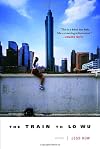
I almost gave up on this collection after reading the first two stories. I knew from the dust jacket that all the stories were set in Hong Kong, and two of the central characters in those stories - a 16-year-old girl and an 80-year-old masseuse -- have limited English skills, so their dialogue with the Americans they encounter is written in broken English. Those stories are both very powerful, but I wasn't sure if I could stand 200 pages of what, even in the hands of a writer as skillful as show more Row sounds like Charlie Chan movie dialogue. Fortunately, for me anyway, the first 2 stories are the only ones with those character-imposed dialogue constraints. It really is quite a powerful collection. All the topics you'd expect from stories in this setting are covered -- Zen Buddhism, the long-lasting and devastating impact of the Cultural Revolution, and the odd historical and political relationship between Hong Kong and China. But all of the stories took me places I'd never been before. Row offers wonderful descriptions of the city, and all of his characters have an incredible amount of integrity, as they struggle with their attempt to cope with their traumatic personal histories or the difficulty of making long-lasting personal connections.
The 7 stories in the collection are:
1. The Secrets of Bats - 21 pp - An English teacher in Hong Kong tries to understand a project undertaken by a 16-year-old student whose mother committed suicide. The girl walks around with a headband over her eyes, trying to see and navigate her world the way bats do, without the benefit of sight. There is a Chinese superstition that the ghosts of suicides wander the world, so the girl may be trying to "see" her mother.
2. The American Girl - 25 pp - A graduate student in anthropology ties to get an old masseuse in Hong Kong to talk about his experiences as a child during the Cultural Revolution. The masseuse resists her attempts to speak of the traumas he experienced, though he can't help but be haunted by the memories.
3. For You - 27 pp - A photographer moves with his wife, a consultant for PriceWaterhouse, to Hong Kong. While she works all day, he can't find any assignments and starts to go crazy from the boredom and isolation. He goes off to a Zen-Buddhist retreat, but his elusive teacher doesn't give him any quick and easy answers about whether he should divorce his wife, just all the obtuse and elliptical responses that force him to accept there are no perfect answers and no way to control all the possible outcomes or consequences of his decisions.
4. Train To Lo Wu - 28 pp - A Hong Kong businessman starts a relationship with a Chinese woman when he visits a club inside China. The political situation, with restrictions on travel, prevent them from being together, but while he dreams of the hoops they could jump through to be together years into the future, she refuses to be one of those apparently all-too-commonly foolish Chinese women, who wait near the border for rich Hong Kong men to deliver on their promises to rescue them.
5. The Ferry - 24 pp - A great story about two black lawyers who are exploited in different ways by a prestigious, predominantly white firm. The older lawyer was hired as a PR ploy to show they weren't discriminatory, and after the older lawyer established a once thriving, but now floundering, outpost in Hong Kong, the younger lawyer is sent to the city to fire him. The younger man realizes he is being used in a political ploy too, but the older man isn't upset by the game the firm is playing because he's made a career of playing loose with the rules. After initially being thrown by the "foreign-ness of the city," the younger lawyer, at least viscerally, begins to sense its attractions.
6. Revolutions - 30 pp - A Buddhist nun, originally from Poland, serves as a physical therapist to an American painter who injured his knee in a motorcycle accident. His career has also hit a dead-end, and when the nun sees he is about ready to give up on life, she moves in and forms a relationship with him to help bring him back to good physical and mental health. She's proves to be an intriguing character, and far removed from the standard - or at least Catholic-influenced - idea of what a nun is.
7. Heaven Lake - 18 pp - When a widowed man's daughter is about to move away from their Hong Kong home to study for a year in Paris, he is forced to remember his own experience as a student in New York City when he worked as a bicycle delivery boy for a Chinese restaurant. Momentarily kidnapped by a bookie who owed his boss money, the man is still haunted by what he did to get free - and still isn't sure whether it was an act of self-preservation or cowardice. show less
The 7 stories in the collection are:
1. The Secrets of Bats - 21 pp - An English teacher in Hong Kong tries to understand a project undertaken by a 16-year-old student whose mother committed suicide. The girl walks around with a headband over her eyes, trying to see and navigate her world the way bats do, without the benefit of sight. There is a Chinese superstition that the ghosts of suicides wander the world, so the girl may be trying to "see" her mother.
2. The American Girl - 25 pp - A graduate student in anthropology ties to get an old masseuse in Hong Kong to talk about his experiences as a child during the Cultural Revolution. The masseuse resists her attempts to speak of the traumas he experienced, though he can't help but be haunted by the memories.
3. For You - 27 pp - A photographer moves with his wife, a consultant for PriceWaterhouse, to Hong Kong. While she works all day, he can't find any assignments and starts to go crazy from the boredom and isolation. He goes off to a Zen-Buddhist retreat, but his elusive teacher doesn't give him any quick and easy answers about whether he should divorce his wife, just all the obtuse and elliptical responses that force him to accept there are no perfect answers and no way to control all the possible outcomes or consequences of his decisions.
4. Train To Lo Wu - 28 pp - A Hong Kong businessman starts a relationship with a Chinese woman when he visits a club inside China. The political situation, with restrictions on travel, prevent them from being together, but while he dreams of the hoops they could jump through to be together years into the future, she refuses to be one of those apparently all-too-commonly foolish Chinese women, who wait near the border for rich Hong Kong men to deliver on their promises to rescue them.
5. The Ferry - 24 pp - A great story about two black lawyers who are exploited in different ways by a prestigious, predominantly white firm. The older lawyer was hired as a PR ploy to show they weren't discriminatory, and after the older lawyer established a once thriving, but now floundering, outpost in Hong Kong, the younger lawyer is sent to the city to fire him. The younger man realizes he is being used in a political ploy too, but the older man isn't upset by the game the firm is playing because he's made a career of playing loose with the rules. After initially being thrown by the "foreign-ness of the city," the younger lawyer, at least viscerally, begins to sense its attractions.
6. Revolutions - 30 pp - A Buddhist nun, originally from Poland, serves as a physical therapist to an American painter who injured his knee in a motorcycle accident. His career has also hit a dead-end, and when the nun sees he is about ready to give up on life, she moves in and forms a relationship with him to help bring him back to good physical and mental health. She's proves to be an intriguing character, and far removed from the standard - or at least Catholic-influenced - idea of what a nun is.
7. Heaven Lake - 18 pp - When a widowed man's daughter is about to move away from their Hong Kong home to study for a year in Paris, he is forced to remember his own experience as a student in New York City when he worked as a bicycle delivery boy for a Chinese restaurant. Momentarily kidnapped by a bookie who owed his boss money, the man is still haunted by what he did to get free - and still isn't sure whether it was an act of self-preservation or cowardice. show less
What if I was born of the wrong ethnicity? Could I be happier in a different culture? If I could change my ethnicity, would I? These are the kinds of questions at the center of Jess Row's novel Your Face in Mine. I could relate. Had racial reassignment surgery been a viable option twenty years ago, I would've begged my parents to allow me to do it (oh, I can imagine how well that would've gone). This is the point where I can get really personal and tell you my story, but I think I'll pass show more this time. Needless to say, I have long had my own doubts regarding cultural attachments and my place in the world.
Perhaps my personal experience is why I loved this book from the get-go. I could identify with Martin. As a character in a novel, I don't think Martin is developed well enough—I never quite got a sense of why he'd go through with the racial reassignment—nevertheless, I understood the unspoken and the understated: Martin's draw to blackness was an emotional need, the appeal of compassion and family he found lacking in his own culture. So Martin gets the surgery and creates a completely new identity and in the first pages of this novel, he calls out to Kelly, a friend from high school. It has been nearly twenty years. This is where the story blooms. Kelly has to negotiate his feelings about Martin being a completely different man. The narrative, as told by Kelly, gets lost in backstory, subplots, and philosophy, but these largely do not detract from the primary story. Sure, I didn't quite buy the relationship between the three high school friends (Martin and Kelly, plus Alan, a significant player in their past), nor did I find Martin's mental transition organic, but those things largely didn't matter. I was fascinated by Martin and the choice he'd made; I was intrigued by how different of a person he'd become simply by “changing his 'race'”. To add to my enjoyment of the story, Kelly's history was heartbreaking and a wonderful component to keep the primary story from growing stale. I loved this novel...
until I just stopped caring. Two-thirds of the way through Your Face in Mine, there's a drastic change. In comparison to the narrative flow and tone of the novel, Martin's racial reassignment seems mild. Suddenly we're in the middle of a suspenseful something-or-other. Characters do one-eighties on us, with the turn of a page they're someone else (which may seem apt given the book's subject, but in the context of the novel it felt like a ploy, manipulating the story into the mold of the author's desire). Character choices come out of nowhere and I never got a firm handle on the 'why'. More suspense and a random illogical appearance by a minor character from earlier in the novel left me wishing I'd put it down after Part One. Everything after and ever after did not gel for me.
It felt to me like Row was writing for me in Part One. No, the novel wasn't perfect and it was definitely not going to be an all-time favorite, but I could've handed it a five-star rating. Whomever Row was writing to in Part Two, it wasn't me. And I have a feeling that that person who loved Part Two probably didn't feel like Part One was written for them; that person will likely find all the philosophical discussions earlier in the book quite tedious. Your Face in Mine is an odd little book that has so much potential, but I'm not sure who the intended audience really is. It is a great idea for a story, but in the end this novel itself is suffering from questions of identity. show less
Perhaps my personal experience is why I loved this book from the get-go. I could identify with Martin. As a character in a novel, I don't think Martin is developed well enough—I never quite got a sense of why he'd go through with the racial reassignment—nevertheless, I understood the unspoken and the understated: Martin's draw to blackness was an emotional need, the appeal of compassion and family he found lacking in his own culture. So Martin gets the surgery and creates a completely new identity and in the first pages of this novel, he calls out to Kelly, a friend from high school. It has been nearly twenty years. This is where the story blooms. Kelly has to negotiate his feelings about Martin being a completely different man. The narrative, as told by Kelly, gets lost in backstory, subplots, and philosophy, but these largely do not detract from the primary story. Sure, I didn't quite buy the relationship between the three high school friends (Martin and Kelly, plus Alan, a significant player in their past), nor did I find Martin's mental transition organic, but those things largely didn't matter. I was fascinated by Martin and the choice he'd made; I was intrigued by how different of a person he'd become simply by “changing his 'race'”. To add to my enjoyment of the story, Kelly's history was heartbreaking and a wonderful component to keep the primary story from growing stale. I loved this novel...
until I just stopped caring. Two-thirds of the way through Your Face in Mine, there's a drastic change. In comparison to the narrative flow and tone of the novel, Martin's racial reassignment seems mild. Suddenly we're in the middle of a suspenseful something-or-other. Characters do one-eighties on us, with the turn of a page they're someone else (which may seem apt given the book's subject, but in the context of the novel it felt like a ploy, manipulating the story into the mold of the author's desire). Character choices come out of nowhere and I never got a firm handle on the 'why'. More suspense and a random illogical appearance by a minor character from earlier in the novel left me wishing I'd put it down after Part One. Everything after and ever after did not gel for me.
It felt to me like Row was writing for me in Part One. No, the novel wasn't perfect and it was definitely not going to be an all-time favorite, but I could've handed it a five-star rating. Whomever Row was writing to in Part Two, it wasn't me. And I have a feeling that that person who loved Part Two probably didn't feel like Part One was written for them; that person will likely find all the philosophical discussions earlier in the book quite tedious. Your Face in Mine is an odd little book that has so much potential, but I'm not sure who the intended audience really is. It is a great idea for a story, but in the end this novel itself is suffering from questions of identity. show less
 This review was written for LibraryThing Early Reviewers.
This massive (audio) book is overflowing with family trauma and with the tedious laments of a husband (Sandy) and wife (Naomi) whose self-centeredness and smug Upper West Side lives put their three children in jeopardy. Sandy is a lawyer who unwittingly defended a false Holocaust survivor claiming rights to stolen paintings (the comeuppance is never explained), and scientist Naomi has written a book claiming that the earth is deliberately destroying itself. They both take a crack at becoming show more Zen teachers but quit when adultery with the sensei is uncovered. Their three children - Patrick, Bering, and Winter - each have miserably disturbing childhoods, resulting in one death, one disability, and one marriage to a deportee. The plot leaps from decade to decade, seemingly purposely but I didn't find it. It's 17 CDs long and a good listen for a few long car rides, mostly because the listener thinks that with age, everyone must improve. A side plot featuring Naomi's Black father springs to life midway and is probably the most intriguing part of the book, though mostly wasted in its lack of detail. show less
A book I had an incomplete handle on. Often in essay collections there are two or three exceedingly strong pieces bolstered with a bunch of average ones to make up a book. In this case, it felt like Row had some provocative (and effective) arguments to make about the different ways race plays (or fails to play) a role in white American fiction. It's when he gets off course from this, into political theory, sociology, and even personal history that I feel the individual essays lose their grip show more a little bit -- it's not that this material is wrong, it just feels shallower, less of an original mind, and more the summoning of expected characters (Derrida, Butler, etc.), with a bit less exegesis than I like.
Plenty of forceful, thoughtful, challenging paragraphs that never quite cohere into the broader punch of idea I hope for from an essay. But those paragraphs, nuggets of insight were more than enough for me to give this 3*, I was weighing between 3 and 4. I think a condensed, long essay version of this could be remarkable. show less
Plenty of forceful, thoughtful, challenging paragraphs that never quite cohere into the broader punch of idea I hope for from an essay. But those paragraphs, nuggets of insight were more than enough for me to give this 3*, I was weighing between 3 and 4. I think a condensed, long essay version of this could be remarkable. show less
Awards


You May Also Like


Associated Authors
Statistics
- Works
- 8
- Also by
- 9
- Members
- 356
- Popularity
- #67,309
- Rating
- 3.7
- Reviews
- 12
- ISBNs
- 22
- Languages
- 2
