

Michael O. Wise
Author of The Dead Sea Scrolls
About the Author
Works by Michael O. Wise
Associated Works
The Concept of the Covenant in the Second Temple Period (Supplements to the Journal for the Study of Judaism (Formerl) (2003) — Contributor — 28 copies
Tagged
Common Knowledge
- Legal name
- Wise, Michael Owen
- Birthdate
- 1954-02-17
- Gender
- male
- Education
- University of Minnesota (BA)
Trinity Evangelical Divinity School (MDiv)
University of Chicago (PhD) - Occupations
- Professor of Hebrew Bible and Ancient Languages
Evangelical Free Church minister
scholar - Organizations
- University of Northwestern – St. Paul
- Nationality
- USA
- Places of residence
- St. Paul, Minnesota, USA
Inver Grove Heights, Minnesota, USA - Associated Place (for map)
- Minnesota, USA
Members
Reviews
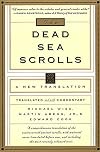
In 1946, the world of biblical studies was rocked by the discovery of several scrolls in caves around the Dead Sea. The Dead Sea Scrolls contained translations of portions of the books of the Hebrew scriptures, a manual of discipline for the community responsible for producing the scrolls and a scroll that narrated an apocalyptic battle between the sons of light, led by a figure called the Teacher of Righteousness, and the sons of darkness. These documents gave biblical scholars a show more tantalizing glimpse of the then relatively unknown period of first-century Judaism and of the theology of at least one of its sects. Very quickly, though, the ownership of the scrolls became a point of great political contention between the Israeli government and American scholars like Frank Moore Cross at Harvard, and, consequently, translations of the scrolls appeared very slowly, if at all. Finally, in 1991, author Martin Abegg, then a graduate student at the University of Cincinnati, published a volume of previously unreleased scrolls. Following this publication, the Huntington Library announced that it had photographs of all the unreleased scrolls and that it would allow unrestricted access to the photos. Wise, Abegg and Cook's collection is now the most complete collection of the Dead Sea Scrolls available. The authors' English translations capture the nuances of the Hebrew, and sometimes the Greek, of the scrolls, many of which are merely fragments. Also contained here is a thorough introduction to the history of the discovery of the scrolls and a theory about the community that produced the scrolls: the authors convincingly argue that the Essenes, to whom the scrolls are traditionally attributed, were likely not the community responsible for writing the scrolls. For all interested in learning from primary texts about the development of first-century Judaism, this is an essential volume
Wise and his team of scholars and writers occupy what might be called the minority position in scrolls scholarship: The Qumran group cannot be identified simply as "Essenes," the site itself was not a headquarters, and few if any of the scrolls were written at Qumran. The position of Wise et al., in contrast with the "Standard Model" (as they call it), is set forth in a brief introduction along with the usual information about the discovery and publication of the scrolls. One of the most helpful things these translators do for nonspecialist readers is to explain the process of manuscript reconstruction and the use of brackets and parentheses to indicate missing portions of text and the like. The translations themselves are generally more idiomatic and less stiff than those in Florentino G. Martinez's The Dead Sea Scrolls Translated (Eerdmans, 1996. 2d ed.). As the fruit of an alternative approach to the origins and significance of the scrolls, and as a smooth translation, this work should be in collections where there is scholarly and popular interest. show less
Wise and his team of scholars and writers occupy what might be called the minority position in scrolls scholarship: The Qumran group cannot be identified simply as "Essenes," the site itself was not a headquarters, and few if any of the scrolls were written at Qumran. The position of Wise et al., in contrast with the "Standard Model" (as they call it), is set forth in a brief introduction along with the usual information about the discovery and publication of the scrolls. One of the most helpful things these translators do for nonspecialist readers is to explain the process of manuscript reconstruction and the use of brackets and parentheses to indicate missing portions of text and the like. The translations themselves are generally more idiomatic and less stiff than those in Florentino G. Martinez's The Dead Sea Scrolls Translated (Eerdmans, 1996. 2d ed.). As the fruit of an alternative approach to the origins and significance of the scrolls, and as a smooth translation, this work should be in collections where there is scholarly and popular interest. show less
The Dead Sea Scrolls Uncovered: The First Complete Translation and Interpretation of 50 Key Documents withheld for Over 35 Years by Robert H. Eisenman
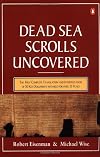
A translation of the dead sea scrolls, which suffers from a good deal of pedantry. It's interesting for what you can learn about religious history, but overall, many of the scrolls appear to be basically similar to the Hebrew Bible, with differences in wording in places from the books. The tedium of the Biblical begats is in this spot taken over by the tedium of the calendric scrolls, with endless lists of days and dates to explicate the complicated calendar the authors of the scroll were show more using, and also correlating it with the different calendar being used by other Jewish communities. Overall, it's interesting on the margins, and the authors included a transliteration of the scrolls, so readers could check their translations themselves (for those readers who can read Hebrew and/or Aramaic). It does raise the question of whether Pascal was right in saying there is nothing to lose in believing, since an awful lot of people spent an awful lot of hours on this, which really didn't do anything to improve the human condition at all (and the people I count here are not only the many modern researchers, but the ancient scribes who created and preserved these writings). Overall, not a bad read, but I wouldn't recommend it for casual readers. The jargon flows too freely for that. show less
I've become somewhat of an expert - as to a reader, that is - on the Dead Sea Scrolls. This summary is not as captivating as that by Millar Burrows - one of the first archaeologists involved with the Bedouin, Kando and Shaia when scraps of velum were offered for sale to the world in 1946/47. The reader is introduced to the Essenes one of three branches of Judaism in the first century - along with the Pharisees and Sadducees. See similarities to the early Christians. You'll wonder if John the show more Baptist had been an Essene. show less
The Dead Sea Scrolls Uncovered: The First Complete Translation and Interpretation of 50 Key Documents withheld for Over 35 Years by Robert H. Eisenman
Now that all of the Dead Sea Scrolls have been published, this book is pretty much pointless. And Eisenman's theories are a stretch, to say the least.
You May Also Like


Associated Authors
Statistics
- Works
- 7
- Also by
- 1
- Members
- 2,749
- Popularity
- #9,330
- Rating
- 3.7
- Reviews
- 17
- ISBNs
- 35
- Languages
- 7