
Stanley Bing (1952–2020)
Author of What Would Machiavelli Do? The Ends Justify the Meanness
About the Author
Stanley Bing is a columnist for Fortune magazine, which he joined in 1995 after a decade writing a monthly column for Esquire magazine. When he is not commenting on corporate life, Bing works for an enormous multinational conglomerate whose identity is one of the worst-kept secrets in business.
Works by Stanley Bing
Sun Tzu Was a Sissy: Conquer Your Enemies, Promote Your Friends, and Wage the Real Art of War (2004) 158 copies, 2 reviews
Rome, Inc.: The Rise and Fall of the First Multinational Corporation (Enterprise) (2006) 109 copies, 4 reviews
The Big Bing: Black Holes of Time Management, Gaseous Executive Bodies, Exploding Careers, and Other Theories on the Origins of the Business Universe (2003) 57 copies, 1 review
Confidence Game 1 copy
Associated Works
How to Succeed in Business Without Really Trying (1952) — Introduction, some editions — 91 copies, 2 reviews
Tagged
Common Knowledge
- Legal name
- Schwartz, Gil
- Birthdate
- 1952
- Date of death
- 2020-05-02
- Gender
- male
- Occupations
- public relations
- Organizations
- Fortune Magazine
CBS - Relationships
- Svienty, Laura (wife)
- Short biography
- Stanley Bing is a columnist for Fortune magazine, which he joined in 1995 after a decade writing a monthly column for Esquire magazine. When he is not commenting on corporate life, Bing works for an enormous multinational conglomerate whose identity is one of the worst-kept secrets in business. [adapted from What Would Machiavelli Do? (2000)]Stanley Bing is a Fortune columnist and best-selling author of business books noted for their wisdom as well as their sharp, slightly acrid sense of humor. He is also the only writer on business and the workplace who still puts on a suit and tie and goes to do battle with the dragons that breathe fire at corporate America every day. This site captures what remains of his brain after it has exploded in all other directions.
http://stanleybing.com/ - Cause of death
- cardiac arrest
- Nationality
- USA
- Birthplace
- New York, New York, USA
- Place of death
- Santa Monica, California, USA
- Map Location
- USA
Members
Reviews
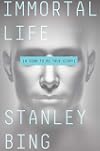
The late Gil Schwartz aka Stanley Bing was a CBS executive who wrote many best-selling books with titles like 100 Bullshit Jobs . . . and How to Get Them, Sun Tzu Was a Sissy, and Executricks, or How to Retire While You’re Still Working. Prior to this he wrote a couple of non-science fiction novels. He was also was a reader of science fiction.
That corporate experience and knowledge of science fiction give this novel a breezy, knowing air without stylistically stumbling the way many show more non-genre novelists do when wandering into science fiction.
And this book is pure science fiction, a black satire on one of humanity’s oldest obsessions: the quest for immortality.
And Bing is right up front in his dedication about who his targets are: “To Craig Venter, Larry Ellison, Sergey Brin and Larry Page, Mark Zuckerberg, Marc Andreessen, Elon Musk, and all the visionary titans exploring the possibility of eternal life for those who can afford it.”
Arthur Vogel is definitely one of those who can afford it. At 127, he’s the world’s richest man. His day is a tedious regimen of drugs and supplements and no normal food, walking about on his cyborg legs. His only fun time comes after printing out a penis, popping some pills, and having sex with his hot wife Sallie.
Arthur is the last boomer. He even went to Woodstock. He made a fortune in finance and retired at age 35 to pursue “dark studies” about the boundary between life and death. In the early 20th century, he made even more money after inventing a switch for quantum computers.
His obsession is conquering death and for that he has enlisted Bob, a research scientist. (As far as I can tell, Bob never gets a last name. I suspect his name is Bing’s knowing joke on the “As you know, Bob” cliché. But it’s Bob who does a lot of the explaining here.) Bob has an attractive assistant named Bronwyn who thinks Bob is a good guy with a “loose moral compass”.
Bob has created Gene, the fourth iteration of a project to create a human body for Arthur to download his consciousness to. 3-D printed to spec, Gene is supposed to have just enough function and consciousness to work independently but not enough to interfere with Arthur’s goal. Gene is an amiable sort of person, fitted with some knowledge (courtesy of Bob who used some of his own memories and knowledge), and not a lot of memories.
But, when the project nears completion and Gene is brought around for Arthur to examine, things start to go wrong. Especially after Sallie looks approvingly at Gene’s body and says she hopes they will become good friends. Gene begins to suspect what’s planned for him and bolts to reunite with a woman he dimly remembers loving, a schoolteacher named Livia.
But, when you have a cranial tracking device and are up against the security forces of a trillionaire, you aren’t going to get far, and Gene is reeled in.
The project proceeds. Arthur takes up residence in Gene’s skull.
And then we begin to learn of two conspiracies: Arthur’s plan to sell his immorality to his fellow trillionaires in exchange for control of the Cloud and a shadowy group of rebels led by Master Tim (modelled, I suspect, on Apple Chairman Tim Cook) who plan on stopping him and hitting the reset button on this civilization. Livia and Bronwyn are members of that group.
The book is quite funny in parts with robot cops, a security head whose principal asset and liability is his stupidity, banter between Bob and Gene, Gene really only being able to wrest control of his body from Arthur by being wasted on liquor all the time, and Sallie being appalled by the man she loves returning to the top of his form.
But this isn’t the usual adventure of rebels fighting a system by attacking its one Achilles Heel – another cliché Bing acknowledges. It’s a serious look at the technodreams of our current elites.
This is a world of uploaded minds, cranial implants, augmented reality, transhumanism, and life extension. But it’s not yet reached the Singularity the rebels fear.
In this future, only the coastal cities and Chicago are under full corporate control. The Real United States of America, full of citizens who have resisted brain implants, lives in the heartland, a market that Arthur wants to exploit, a group he wants to rule.
At a crucial meeting of the world’s CEOs, we learn all is not well. (And, significantly, this is mostly news only to the world’s richest man).
While medicine has advanced to the point where more people die of household accidents than anything else, society has become very risk-adverse. Indeed, the vehicles on Arthur’s corporate campus move no faster than 15 mph. There is overcrowding. Automation like self-driving vehicles have created a passive and workforce with plenty of time to consult “internal-electronics” and further divorce themselves from “real experience”. They can live a full day without an “analog experience”. Teledildonics have allowed people to divorce themselves from human contact even during sex. Humans 2.0 --“enhanced individuals – are more capable but explode and are “extremely fungible”, representing “yet another demotivator for people who are already prone to inertia, indolence, and virtual existence”. Extended life means multiple sexual partners and marriage.
“Extended intergenerational families from such multiple unions take up massive amounts of space and sometimes create creatures of . . . uncertain legitimacy”
(Is Bing hinting at massive dwellings with incest going on?)
The use of cranial implants is leading to brain centers of undirected thinking atrophying. The workforce has no competition to work against and no chance of promotion and no sense of ownership. Productivity is down and. Disorganization and malaise are up.
You can argue about the validity of some of these extrapolations, but it’s hard to argue with all or another passage which notes that, in a world of instant connectivity and knowledge embedded in the Cloud, even the professionals of this world don’t really know much anymore. They just know how to look things up.
At 290 pages, it’s a fast-paced, funny, but serious satire that ends on a note of ambiguity which may strike some as unsatisfying in its coda, but that’s a minor quibble. This novel deserves to be better known as an examination about the merits of extending life too far. show less
That corporate experience and knowledge of science fiction give this novel a breezy, knowing air without stylistically stumbling the way many show more non-genre novelists do when wandering into science fiction.
And this book is pure science fiction, a black satire on one of humanity’s oldest obsessions: the quest for immortality.
And Bing is right up front in his dedication about who his targets are: “To Craig Venter, Larry Ellison, Sergey Brin and Larry Page, Mark Zuckerberg, Marc Andreessen, Elon Musk, and all the visionary titans exploring the possibility of eternal life for those who can afford it.”
Arthur Vogel is definitely one of those who can afford it. At 127, he’s the world’s richest man. His day is a tedious regimen of drugs and supplements and no normal food, walking about on his cyborg legs. His only fun time comes after printing out a penis, popping some pills, and having sex with his hot wife Sallie.
Arthur is the last boomer. He even went to Woodstock. He made a fortune in finance and retired at age 35 to pursue “dark studies” about the boundary between life and death. In the early 20th century, he made even more money after inventing a switch for quantum computers.
His obsession is conquering death and for that he has enlisted Bob, a research scientist. (As far as I can tell, Bob never gets a last name. I suspect his name is Bing’s knowing joke on the “As you know, Bob” cliché. But it’s Bob who does a lot of the explaining here.) Bob has an attractive assistant named Bronwyn who thinks Bob is a good guy with a “loose moral compass”.
Bob has created Gene, the fourth iteration of a project to create a human body for Arthur to download his consciousness to. 3-D printed to spec, Gene is supposed to have just enough function and consciousness to work independently but not enough to interfere with Arthur’s goal. Gene is an amiable sort of person, fitted with some knowledge (courtesy of Bob who used some of his own memories and knowledge), and not a lot of memories.
But, when the project nears completion and Gene is brought around for Arthur to examine, things start to go wrong. Especially after Sallie looks approvingly at Gene’s body and says she hopes they will become good friends. Gene begins to suspect what’s planned for him and bolts to reunite with a woman he dimly remembers loving, a schoolteacher named Livia.
But, when you have a cranial tracking device and are up against the security forces of a trillionaire, you aren’t going to get far, and Gene is reeled in.
The project proceeds. Arthur takes up residence in Gene’s skull.
And then we begin to learn of two conspiracies: Arthur’s plan to sell his immorality to his fellow trillionaires in exchange for control of the Cloud and a shadowy group of rebels led by Master Tim (modelled, I suspect, on Apple Chairman Tim Cook) who plan on stopping him and hitting the reset button on this civilization. Livia and Bronwyn are members of that group.
The book is quite funny in parts with robot cops, a security head whose principal asset and liability is his stupidity, banter between Bob and Gene, Gene really only being able to wrest control of his body from Arthur by being wasted on liquor all the time, and Sallie being appalled by the man she loves returning to the top of his form.
But this isn’t the usual adventure of rebels fighting a system by attacking its one Achilles Heel – another cliché Bing acknowledges. It’s a serious look at the technodreams of our current elites.
This is a world of uploaded minds, cranial implants, augmented reality, transhumanism, and life extension. But it’s not yet reached the Singularity the rebels fear.
In this future, only the coastal cities and Chicago are under full corporate control. The Real United States of America, full of citizens who have resisted brain implants, lives in the heartland, a market that Arthur wants to exploit, a group he wants to rule.
At a crucial meeting of the world’s CEOs, we learn all is not well. (And, significantly, this is mostly news only to the world’s richest man).
While medicine has advanced to the point where more people die of household accidents than anything else, society has become very risk-adverse. Indeed, the vehicles on Arthur’s corporate campus move no faster than 15 mph. There is overcrowding. Automation like self-driving vehicles have created a passive and workforce with plenty of time to consult “internal-electronics” and further divorce themselves from “real experience”. They can live a full day without an “analog experience”. Teledildonics have allowed people to divorce themselves from human contact even during sex. Humans 2.0 --“enhanced individuals – are more capable but explode and are “extremely fungible”, representing “yet another demotivator for people who are already prone to inertia, indolence, and virtual existence”. Extended life means multiple sexual partners and marriage.
“Extended intergenerational families from such multiple unions take up massive amounts of space and sometimes create creatures of . . . uncertain legitimacy”
(Is Bing hinting at massive dwellings with incest going on?)
The use of cranial implants is leading to brain centers of undirected thinking atrophying. The workforce has no competition to work against and no chance of promotion and no sense of ownership. Productivity is down and. Disorganization and malaise are up.
You can argue about the validity of some of these extrapolations, but it’s hard to argue with all or another passage which notes that, in a world of instant connectivity and knowledge embedded in the Cloud, even the professionals of this world don’t really know much anymore. They just know how to look things up.
At 290 pages, it’s a fast-paced, funny, but serious satire that ends on a note of ambiguity which may strike some as unsatisfying in its coda, but that’s a minor quibble. This novel deserves to be better known as an examination about the merits of extending life too far. show less
Plainly speaking, Immortal Life is a disappointment. Meant to be a satirical cautionary tale, it falls victim to its attempts at tongue-in-cheek humor. Meant as a nod and a wink to savvy readers, its references to tech industry titans have all the feel of convenient name-dropping. The story is choppy, and the science is nonsensical. Rest assured, this is no Andy Weir blockbuster, although it is valiantly attempting to be just like it.
There is no doubt that mankind has always been obsessed show more with living longer and finding that fountain of youth. The premise that the über rich are actively seeking ways to live forever is not a stretch of the imagination. What will strike readers as odd is the fact that it is the tech titans who are funding this immortality research. Mr. Bing mentions almost all of them by first name to leave no doubts that he means those giants of industry who created Apple and Microsoft and Tesla and all the rest. These are supposedly the men funding projects that would prolong their lives – using everything from bio-engineering to artificial intelligence to DNA cloning.
The thing is that if Mr. Bing had done his research, he would know that these titans have actively warned against the use of artificial intelligence in any form. They have warned about the ethical issues with bio-engineering. Their concerns are for the future of humanity, and they are not alone in that regard. They sit right alongside the likes of Stephen Hawking when touting the idea that artificial intelligence and robotics will mean the end of mankind. Knowing this information, it makes the entire premise that these One Percenters would ever go so far as to use robotic arms, legs, and internal organs to extend their lives, let along clone another human being into which they could transfer their personalities, utterly preposterous.
Granted, no one reading Immortal Life could ever take it as science fact or even science potential. The science portions of the story are laughable. If anything these passages read more like wishful thinking rather than anything possible right now. The theories mentioned and the science used throughout the novel have no basis in reality. For a science fiction novel, it appears to be more fantasy than science-based.
All this brings me back to the idea that Immortal Life is supposed to be a satire, but one has to wonder what exactly it is trying mock. One can see the ridicule of our obsession with youth, looking young and staying fit as long as possible. However, it is difficult to take the novel seriously let alone use it as a magnifying glass to highlight faults within modern society. In attempting to scorn certain trends, the story goes too far into the incredulous making it ineffective at the very thing it was trying to do. show less
There is no doubt that mankind has always been obsessed show more with living longer and finding that fountain of youth. The premise that the über rich are actively seeking ways to live forever is not a stretch of the imagination. What will strike readers as odd is the fact that it is the tech titans who are funding this immortality research. Mr. Bing mentions almost all of them by first name to leave no doubts that he means those giants of industry who created Apple and Microsoft and Tesla and all the rest. These are supposedly the men funding projects that would prolong their lives – using everything from bio-engineering to artificial intelligence to DNA cloning.
The thing is that if Mr. Bing had done his research, he would know that these titans have actively warned against the use of artificial intelligence in any form. They have warned about the ethical issues with bio-engineering. Their concerns are for the future of humanity, and they are not alone in that regard. They sit right alongside the likes of Stephen Hawking when touting the idea that artificial intelligence and robotics will mean the end of mankind. Knowing this information, it makes the entire premise that these One Percenters would ever go so far as to use robotic arms, legs, and internal organs to extend their lives, let along clone another human being into which they could transfer their personalities, utterly preposterous.
Granted, no one reading Immortal Life could ever take it as science fact or even science potential. The science portions of the story are laughable. If anything these passages read more like wishful thinking rather than anything possible right now. The theories mentioned and the science used throughout the novel have no basis in reality. For a science fiction novel, it appears to be more fantasy than science-based.
All this brings me back to the idea that Immortal Life is supposed to be a satire, but one has to wonder what exactly it is trying mock. One can see the ridicule of our obsession with youth, looking young and staying fit as long as possible. However, it is difficult to take the novel seriously let alone use it as a magnifying glass to highlight faults within modern society. In attempting to scorn certain trends, the story goes too far into the incredulous making it ineffective at the very thing it was trying to do. show less
Sun Tzu Was a Sissy: Conquer Your Enemies, Promote Your Friends, and Wage the Real Art of War by Stanley Bing

Bitter and biting, this indictment of corporate dealings zig-zags from wry to deadly serious to cheap-shots with examples real and legendary. Published in 2004, proto-45 is more frequently mentioned than Warren Buffet. Full of awful Tzutsy Tzuff, ending on tzissy wistful note.
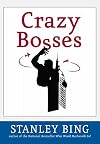
Chock full of anecdotes that back up his conclusions, Bing provides narratives for the five worst case bosses: bully, paranoid, narcissist, wimp, and disaster hunter - and even those who are combos. He's really a humor writer but the subject is seriously important, especially when it comes to the impact that hating these people (justifiably) can have on your own life and mental health.
Quotes: "Senior management is proud of its craziness. They eat it for breakfast. They roll in it. In their show more great craziness, there is strength."
Re: Donald Trump (2007 edition) "Figure of fun for several decades, know for outlandish and entertaining inability to implement impulse control; now perhaps the most successful individual on the planet at marketing his own pathologies to a mass audience."
"Charles Revson, founder of Revlon, was concerned about the fact that the company couldn't seem to retain its top talent. So he called a meeting to discusss it - at 6 PM on the Friday before the July 4th weekend."
"My bad boss was a convenient excuse for everything that was wrong in my life."
"The paranoid: capable of great, intense emotion but virtually no actual feeling."
"Anxiety and distrust are without question the sanest reaction to life as we know it. Rational paranoia is therefore endemic."
"In America most of all, the guy who believes he's the lone redwood standing at the edge of the bold frontier can be found in every business that employs more than one person. We're all guilty of this convenient personal myth, to a certain degree."
"The disaster artist: he's like a kid that, when caught eating candy, immediately shoves another huge handful into his mouth."
"A procrastinator lives life on the edge and needs the drug of terror to get the job done not well, but at all." show less
Quotes: "Senior management is proud of its craziness. They eat it for breakfast. They roll in it. In their show more great craziness, there is strength."
Re: Donald Trump (2007 edition) "Figure of fun for several decades, know for outlandish and entertaining inability to implement impulse control; now perhaps the most successful individual on the planet at marketing his own pathologies to a mass audience."
"Charles Revson, founder of Revlon, was concerned about the fact that the company couldn't seem to retain its top talent. So he called a meeting to discusss it - at 6 PM on the Friday before the July 4th weekend."
"My bad boss was a convenient excuse for everything that was wrong in my life."
"The paranoid: capable of great, intense emotion but virtually no actual feeling."
"Anxiety and distrust are without question the sanest reaction to life as we know it. Rational paranoia is therefore endemic."
"In America most of all, the guy who believes he's the lone redwood standing at the edge of the bold frontier can be found in every business that employs more than one person. We're all guilty of this convenient personal myth, to a certain degree."
"The disaster artist: he's like a kid that, when caught eating candy, immediately shoves another huge handful into his mouth."
"A procrastinator lives life on the edge and needs the drug of terror to get the job done not well, but at all." show less
Awards

You May Also Like


Associated Authors
Statistics
- Works
- 31
- Also by
- 3
- Members
- 1,220
- Popularity
- #21,043
- Rating
- 3.2
- Reviews
- 29
- ISBNs
- 90
- Languages
- 7
