

Rosemary Sutcliff (1920–1992)
Author of The Eagle of the Ninth
About the Author
Rosemary Sutcliff was on born December 14, 1920 in East Clandon in Surrey, England. As a child she had Still's Disease, a form of juvenile arthritis. The effect of this led to many stays in hospital for painful remedial operations. She ended her formal education at fourteen, and went to Bideford show more Art School. She passed the City and Guilds examination and worked as a painter of miniatures. She felt cramped by the small canvas of miniature painting and turned to writing. Her first two books, The Chronicles of Robin Hood and The Queen Elizabeth Story, were published in 1950. Her other works included The Eagle of the Ninth, The Silver Branch, Sword Song, and the autobiography Blue Remembered Hills. She won the annual Carnegie Medal from the Library Association for The Lantern Bearers in 1959 and the annual Horn Book Award for Tristan and Iseult in 1971. She won inaugural Phoenix Award in 1985 for The Mark of the Horse Lord and again in 2010 for The Shining Company. In 1975, she was appointed an Officer of the Order of the British Empire for services to children's literature, and was promoted to be a Commander of the Order of the British Empire in 1992. She died on July 23, 1992. (Bowker Author Biography) show less
Series
Works by Rosemary Sutcliff
The Sword and the Circle: King Arthur and the Knights of the Round Table (1979) 749 copies, 6 reviews
Best of Rosemary Sutcliff:Warrior Scarlet,Mark of the Horse Lord and Knight's Fee (1987) 84 copies, 1 review
The Man Who Died At Sea 1 copy
Writing a Historical Novel 1 copy
Dawn Wind 1 copy
Mystery ranch 1 copy
The eagle of the Ninth 1 copy
Frontier Wind 1 copy
Flowering Dagger 1 copy
Associated Works
Within the Hollow Hills: An Anthology of New Celtic Writing (1994) — Contributor — 36 copies, 1 review
Tagged
Common Knowledge
- Birthdate
- 1920-12-14
- Date of death
- 1992-07-23
- Gender
- female
- Education
- Bideford Art School
- Occupations
- novelist
children's book author - Awards and honors
- Order of the British Empire (Officer ∙ 1975)
Order of the British Empire (Commander ∙ 1992) - Short biography
- Rosemary Sutcliff was born in England and spent her childhood in Malta and various other naval bases at which her father, a Royal Navy officer, was stationed. She was diagnosed with rheumatoid arthritis at a young age and used a wheelchair most of her life. She left school at age 14 and entered Bideford Art School, which she attended for three years. She worked as a painter of miniatures and began her published writing career in 1950 with The Chronicles of Robin Hood. Her best-known work, The Eagle of the Ninth, was published in 1954. Although she was considered primarily a children's author, much of her work also appeals to adults. Sutcliff won many awards for her writing, and is published worldwide. She never married.
- Nationality
- UK
- Birthplace
- East Clandon, Surrey, England, UK
- Places of residence
- Arundel, Sussex, England, UK
Surrey, England, UK
Malta
London, Middlesex, England, UK - Place of death
- Chichester, West Sussex, England, UK
- Burial location
- West Sussex, England, UK
- Map Location
- England, UK
Members
Discussions
📚MARCH 2026 The Eagle of the Ninth An Introduction in GoodThings I've Read (March 11)
The Eagle of the Ninth in Folio Society Devotees (April 2023)
British Author Challenge January 2023: Rosemary Sutcliff and Fred D'Aguiar in 75 Books Challenge for 2023 (February 2023)
Rosemary Sutcliff in Roman and Dark Ages Britain (November 2018)
Book Discussion: Arthurian Themed Read *Spoiler Free* in The Green Dragon (March 2008)
Reviews
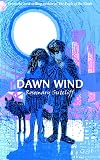
This is a reread and a childhood favorite, a book I first read in 6th grade, checked out from my elementary school library. (Which rather surprises me now, as this book is VERY dark, especially at the start.) I then managed to buy a discarded hardcover of Dawn Wind from my hometown library in the mid-90s. I probably haven't read it in... gosh, at least fifteen years, but it's moved around the country with me.
Rosemary Sutcliff's historical fiction had a big impact on me as a writer. She show more writes deep, engrossing works, and really delves into detail. Perhaps too much detail for some readers, but I can geek out over this stuff. This book takes place as Britain falls to Saxon invaders. Owain is at that final, fateful battle with his father and brother. He is the lone survivor--human survivor, anyway. He finds a dog, dubbed Dog, who becomes his steadfast companion. They wander for a while before returning to the city where the war host gathered, to find the Roman-British inhabitants have fled before the Saxon forces. There, he finds a girl just slightly younger than him. Regina was a beggar even in better times, and together they scrape by to survive. But as they follow a fantasy of fleeing to Gaul, Regina falls terribly ill. For a chance of saving her, Owain turns to enemy Saxons, selling himself into slavery so that Regina can get the aid she needs.
One thing I always loved about this book is that every character is nuanced. There are helpful and horrible Britains, and kind and horrendous Saxons. It does a great job of showing the full spectrum of humanity, though Owain is certainly an example of goodness and purity. If this book were an RPG, he'd be a lawful good paladin in training. He readily sacrifices years of his life in order to help others--and does this more than once. As a kid, I accepted this ideal and embraced it. At age 39, his extreme altruism strikes me as unlikely in reality, but not impossible, certainly.
I really enjoyed this reread. Also, until inputting this book on Goodreads, I had no idea this was considered part of the same series as several other of Sutcliff's books that I read ages ago. Now I want to seek out the ones I've missed and reread the others. show less
Rosemary Sutcliff's historical fiction had a big impact on me as a writer. She show more writes deep, engrossing works, and really delves into detail. Perhaps too much detail for some readers, but I can geek out over this stuff. This book takes place as Britain falls to Saxon invaders. Owain is at that final, fateful battle with his father and brother. He is the lone survivor--human survivor, anyway. He finds a dog, dubbed Dog, who becomes his steadfast companion. They wander for a while before returning to the city where the war host gathered, to find the Roman-British inhabitants have fled before the Saxon forces. There, he finds a girl just slightly younger than him. Regina was a beggar even in better times, and together they scrape by to survive. But as they follow a fantasy of fleeing to Gaul, Regina falls terribly ill. For a chance of saving her, Owain turns to enemy Saxons, selling himself into slavery so that Regina can get the aid she needs.
One thing I always loved about this book is that every character is nuanced. There are helpful and horrible Britains, and kind and horrendous Saxons. It does a great job of showing the full spectrum of humanity, though Owain is certainly an example of goodness and purity. If this book were an RPG, he'd be a lawful good paladin in training. He readily sacrifices years of his life in order to help others--and does this more than once. As a kid, I accepted this ideal and embraced it. At age 39, his extreme altruism strikes me as unlikely in reality, but not impossible, certainly.
I really enjoyed this reread. Also, until inputting this book on Goodreads, I had no idea this was considered part of the same series as several other of Sutcliff's books that I read ages ago. Now I want to seek out the ones I've missed and reread the others. show less
The King Arthur Trilogy: 'Sword And The Circle', 'Light Beyond The Forest', 'Road To Camlann' by Rosemary Sutcliff
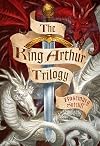
When the darkness crowds beyond the door, and the logs on the hearth burn clear and red and fall in upon themselves, making caverns and ships and swords and dragons and strange faces in the heart of the fire, that is the time for storytelling.
Come closer then, and listen.
So begins The Road to Camlann, the third volume in Rosemary Sutcliff's King Arthur Trilogy. Doesn't it just give you a delightful shiver? The first and second books, The Sword and the Circle and The Light Beyond the Forest, show more are told with same deft touch that characterizes all of Sutcliff's work.
It's been years since I last read these classic Arthurian stories. She remains very faithful to the originals (at least, as faithful as one can be to a tradition that has so many variants), without the major reinventing that has become so fashionable these days. Arthurian stories are always interesting to adapt for younger audiences because of all the lusty scandals, but she handles these well, not shying away from the events but not making them explicit, either.
Sutcliff's stories are peopled with individuals who live and breathe. Nimue is mysterious rather than sinister, Guinevere, Arthur, and especially Lancelot are rendered believable and even understandable in their everlasting love triangle, and many of the other knights are given little touches of personality that add an extra dimension to their characters. This volume will probably be my children's first serious foray into these stories, and I couldn't think of a better place for them to start. Recommended. show less
Come closer then, and listen.
So begins The Road to Camlann, the third volume in Rosemary Sutcliff's King Arthur Trilogy. Doesn't it just give you a delightful shiver? The first and second books, The Sword and the Circle and The Light Beyond the Forest, show more are told with same deft touch that characterizes all of Sutcliff's work.
It's been years since I last read these classic Arthurian stories. She remains very faithful to the originals (at least, as faithful as one can be to a tradition that has so many variants), without the major reinventing that has become so fashionable these days. Arthurian stories are always interesting to adapt for younger audiences because of all the lusty scandals, but she handles these well, not shying away from the events but not making them explicit, either.
Sutcliff's stories are peopled with individuals who live and breathe. Nimue is mysterious rather than sinister, Guinevere, Arthur, and especially Lancelot are rendered believable and even understandable in their everlasting love triangle, and many of the other knights are given little touches of personality that add an extra dimension to their characters. This volume will probably be my children's first serious foray into these stories, and I couldn't think of a better place for them to start. Recommended. show less

Roman centurion Marcus Flavius Aquila has his first command, and, at his request, it’s in Roman Britain. Marcus’s father was part of the lost Ninth Legion, which disappeared after marching north beyond Hadrian’s wall. Not long after Marcus takes command, his men must defend the fort against a British uprising. Marcus’s uncle has retired in Britain, and Marcus goes there to heal from the battle wound that has left him lame for life. Just as Marcus begins to contemplate his future, he show more gets the opportunity to head into the north country to see if he can find out what happened to the lost legion and recover their eagle.
This story seems like capture the flag on steroids. Finding the missing eagle is only half the battle. If Marcus is successful in locating it, he’ll still need to get it back to the safety of Roman occupied territory. The desperate flight south through Scotland had me thinking of Richard Hannay’s flight across the same landscape almost two millennia later. It’s an exhilarating read! show less
This story seems like capture the flag on steroids. Finding the missing eagle is only half the battle. If Marcus is successful in locating it, he’ll still need to get it back to the safety of Roman occupied territory. The desperate flight south through Scotland had me thinking of Richard Hannay’s flight across the same landscape almost two millennia later. It’s an exhilarating read! show less
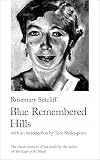
https://fromtheheartofeurope.eu/blue-remembered-hills-by-rosemary-sutcliff/
As a child and teenager, I enjoyed a lot of Rosemary Sutcliff’s historical novels – I particularly remember the Eagle of the Ninth trilogy, The Hound of Ulster, and Warrior Scarlet. I picked up this autobiography a while back without really looking at it, and plucked it off the shelves at random the other day, interested to get to know more about a much-loved writer. (She lived from 1920 to 1993.)
My first show more surprise, once I actually looked at the front cover, was to see that it has an introduction by Tom Shakespeare. I knew Tom vaguely when we were students at Cambridge, and he once managed to get a front page photograph in the Guardian by eating fire on King’s Parade in protest at the government’s student loans proposals. We’ve exchanged the odd note over the last few years. He has achondroplasia, the most visible symptom of which is dwarfism, and is one of the world’s leading experts on the politics of disability.
Why, I wondered, would he write a foreword to Rosemary Sutcliff’s autobiography? I supposed that he might have shared my youthful enthusiasm for her writing, possibly even more so (he started Cambridge with the Anglo-Saxon, Norse and Celtic course, before switching to Social and Political Sciences). My copy of the book, which features a head-and-neck photograph of Sutcliff, failed to give me the vital clue that the two earlier editions would have done as soon as I looked at them.
Rosemary Sutcliff had Still’s Disease, systemic-onset juvenile idiopathic arthritis, and suffered various medical treatments and operations which were deemed necessary by the doctors advising her parents. (Tom Shakespeare points out that “orthopaedics” literally means “putting children right”.) She spent long periods in hospitals, isolated from her family and her few friends. (She was an only child; a sister had died before she was born.) As an adult, she used a wheelchair (after the death of her mother, who refused to allow her to have one). Writing cannot have been comfortable for her; but at her peak, she wrote 1800 words a day, by hand.
Once you know all this, a lot about her writing makes more sense. Tom Shakespeare lists nineteen of her novels where a major character has either a congenital or an acquired physical disability, and comments, “I cannot think of another writer who has done more or better.” And her disabled characters are not defined by their disabilities. They are simply people getting along as best they can in challenging circumstances. And it makes sense to choose Tom Shakespeare as the writer of the introduction to the book.
Sutcliff’s father was in the Navy, her mother was difficult (possibly bipolar) and her childhood was one of bouncing around between different ports, including Sheerness, Chatham and more exotically Malta. She was very slow to learn to read and write, left school at fourteen and worked as an artist until she rather suddenly became a full-time writer at the age of twenty-nine.
Having said all of that, it’s not a sad book. We live the life we get to live, and Sutcliffe makes the most of it, with occasional shafts of real humour. “I have always been sorry for children born more than two hundred years ago, and therefore denied the pleasure of popping fuchsia buds.” (This got some extraordinary responses when I posted it to Facebook.) She has a great eye for the countryside, and depicts friends and pets with love and candour. It’s a portrait of a particular time from a particular viewpoint, but it’s very nicely done.
In the last couple of chapters, she tells of her romantic relationship with Rupert King, a year younger than her but already separated from his first wife and the father of two sons. Eventually he decided to marry someone else, and she decided that she could not bear to be the third person in that relationship. It’s an intense and ultimately unhappy story, but she clearly feels that this thwarted romance was good for her in the end. I did a bit of my own delving on Rupert, using the online genealogy resources; he was married four times in all, with three more children on top of the two from his first marriage, and ended up in Australia. I don’t think he’d have made Rosemary happy in the medium to long term.
Anyway, brief, punchy, evocative, well worth it. show less
As a child and teenager, I enjoyed a lot of Rosemary Sutcliff’s historical novels – I particularly remember the Eagle of the Ninth trilogy, The Hound of Ulster, and Warrior Scarlet. I picked up this autobiography a while back without really looking at it, and plucked it off the shelves at random the other day, interested to get to know more about a much-loved writer. (She lived from 1920 to 1993.)
My first show more surprise, once I actually looked at the front cover, was to see that it has an introduction by Tom Shakespeare. I knew Tom vaguely when we were students at Cambridge, and he once managed to get a front page photograph in the Guardian by eating fire on King’s Parade in protest at the government’s student loans proposals. We’ve exchanged the odd note over the last few years. He has achondroplasia, the most visible symptom of which is dwarfism, and is one of the world’s leading experts on the politics of disability.
Why, I wondered, would he write a foreword to Rosemary Sutcliff’s autobiography? I supposed that he might have shared my youthful enthusiasm for her writing, possibly even more so (he started Cambridge with the Anglo-Saxon, Norse and Celtic course, before switching to Social and Political Sciences). My copy of the book, which features a head-and-neck photograph of Sutcliff, failed to give me the vital clue that the two earlier editions would have done as soon as I looked at them.
Rosemary Sutcliff had Still’s Disease, systemic-onset juvenile idiopathic arthritis, and suffered various medical treatments and operations which were deemed necessary by the doctors advising her parents. (Tom Shakespeare points out that “orthopaedics” literally means “putting children right”.) She spent long periods in hospitals, isolated from her family and her few friends. (She was an only child; a sister had died before she was born.) As an adult, she used a wheelchair (after the death of her mother, who refused to allow her to have one). Writing cannot have been comfortable for her; but at her peak, she wrote 1800 words a day, by hand.
Once you know all this, a lot about her writing makes more sense. Tom Shakespeare lists nineteen of her novels where a major character has either a congenital or an acquired physical disability, and comments, “I cannot think of another writer who has done more or better.” And her disabled characters are not defined by their disabilities. They are simply people getting along as best they can in challenging circumstances. And it makes sense to choose Tom Shakespeare as the writer of the introduction to the book.
Sutcliff’s father was in the Navy, her mother was difficult (possibly bipolar) and her childhood was one of bouncing around between different ports, including Sheerness, Chatham and more exotically Malta. She was very slow to learn to read and write, left school at fourteen and worked as an artist until she rather suddenly became a full-time writer at the age of twenty-nine.
Having said all of that, it’s not a sad book. We live the life we get to live, and Sutcliffe makes the most of it, with occasional shafts of real humour. “I have always been sorry for children born more than two hundred years ago, and therefore denied the pleasure of popping fuchsia buds.” (This got some extraordinary responses when I posted it to Facebook.) She has a great eye for the countryside, and depicts friends and pets with love and candour. It’s a portrait of a particular time from a particular viewpoint, but it’s very nicely done.
In the last couple of chapters, she tells of her romantic relationship with Rupert King, a year younger than her but already separated from his first wife and the father of two sons. Eventually he decided to marry someone else, and she decided that she could not bear to be the third person in that relationship. It’s an intense and ultimately unhappy story, but she clearly feels that this thwarted romance was good for her in the end. I did a bit of my own delving on Rupert, using the online genealogy resources; he was married four times in all, with three more children on top of the two from his first marriage, and ended up in Australia. I don’t think he’d have made Rosemary happy in the medium to long term.
Anyway, brief, punchy, evocative, well worth it. show less
Lists
Books Read in 2015 (12)
Favourite Books (1)
Elevenses (1)
Precious People (1)
el (1)
The Trojan War (1)
Ambleside Books (1)
Ambleside Year 7 (1)
Comfort Reads (1)
Folio Society (3)
THE WAR ROOM (4)
Roman Britain (3)
Sonlight Books (2)
Monastic life (1)
Female Author (1)
Books with Twins (1)
Which house? (1)
Best Young Adult (2)
Five star books (2)
Awards


You May Also Like


Associated Authors
Statistics
- Works
- 84
- Also by
- 14
- Members
- 22,286
- Popularity
- #955
- Rating
- 4.0
- Reviews
- 346
- ISBNs
- 701
- Languages
- 23
- Favorited
- 82
