

James Muirden
Author of A Rhyming History of Britain: 55 B.C.-A.D. 1966
About the Author
James Muirden is the author of eleven books on astronomy. He spent nine years working as an astronomical optician making telescopes before receiving a teaching degree at Exeter University, and is now Project Publications Officer for the Schools Health Education Unit at Exeter. He lives with his show more wife and two children in Exeter, England show less
Disambiguation Notice:
According to Library of Congress, this author writes both about rhyming and astronomy.
Series
Works by James Muirden
Precautionary Tales for Grandparents: Some of Which May be Read to the Young for Their Moral Improvement (2008) 13 copies
The Pan Book of Astronomy 8 copies
Picture Facts Planet Earth 1 copy
Picture Facts: The Universe 1 copy
The moon-winners 1 copy
Associated Works
Tagged
Common Knowledge
Members
Reviews
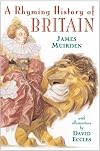
I chose this book because I thought its rhymes would help me learn British history, but it absolutely did not work. There are so many damned royals named Charles, Edward, William, James, or Henry, it's just impossible to keep them and their role in history straight. Now, aside from not sticking in my head at all, the book was fine. In fact, it was pretty fun to read. So good for general fun reading, but probably not for learning/retaining info.

An attempt to relate the history of Britain, in an entertaining way, from about 55BC (the Romans arrival in Britain) to 1966. 'Attempt' is the defining word for me - one star for effort, perhaps, but this isn't a success. This may be partly because I find this form - the semi-serious history - very unsatisfying. It's trying to be educational and light-hearted and fails at both. '1066 and all that' is another example, although I know that there are many, many people who like that book. If you show more do, perhaps you will also like this one.
But you do have to deal with the added problem of the quality of the poetry, which ranges from acceptable to appalling. Here's an example, from the flyleaf, where the author has chosen to describe themselves in verse:
Some of it is worse than that, and some of it is better. But it frequently fails to scan and is very hard work.
The text is illustrated with light-hearted (but again, not actually funny) cartoons and is annotated with remarks indicating which historical event is being described, which gives it some credibility from the educational point of view. But I struggle to understand who would gain pleasure, or learn much, from reading this. show less
But you do have to deal with the added problem of the quality of the poetry, which ranges from acceptable to appalling. Here's an example, from the flyleaf, where the author has chosen to describe themselves in verse:
Four lines I'm granted to describe my life -
No need for more, as far as I can see!
I've got two children and a helpful wife
And don't take any sugar in my tea.
Some of it is worse than that, and some of it is better. But it frequently fails to scan and is very hard work.
The text is illustrated with light-hearted (but again, not actually funny) cartoons and is annotated with remarks indicating which historical event is being described, which gives it some credibility from the educational point of view. But I struggle to understand who would gain pleasure, or learn much, from reading this. show less
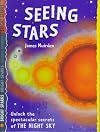
Seeing Stars is a science picture book by James Muirden brings readers on a journey across the universe as they learn how a star is born. This is an in depth knowledge of what a star is, what they're made of, how they come to be, and what we use them for, that takes the important information to keep it understandable for young children. Muirden's book also includes information about gravity, solar systems, astronomy, and galaxies all with fantastic art. A teacher can use this in bits and show more pieces as the beginning of a science lesson to teach young children the contents of our universe. show less

Stars and Planets is a very informative and interesting book. Muriden explains new vocabulary on each page, and then provides multiple examples for each! We learn all about the different life stages of stars, constallations, and different planets. However, the book is a bit overwhelming because it covers so many topics. This book would be great for a review though on the Solar System, after the students are already familiar with the vocabulary.
Awards

You May Also Like


Associated Authors
Statistics
- Works
- 51
- Also by
- 1
- Members
- 1,445
- Popularity
- #17,791
- Rating
- 3.8
- Reviews
- 9
- ISBNs
- 92
- Languages
- 6