

Charles D'Ambrosio
Author of The Dead Fish Museum: Stories
About the Author
Charles D'Ambrosio was born in 1960. After growing up in Seattle, D'Ambrosio graduated with a degree in English. D'Ambrosio took on many odd jobs until he enrolled in the Iowa Writer's Workshop. D'Ambrosio's short stories appeared in The New Yorker, Story, Best American Short Stories, and the show more Pushcart Anthology. He also published The Point, a collection of his short story works. D'Ambrosio's story, "Her Real Name" won the Aga Kahn Prize of the Paris Review. He has also received the HenfieldTransatlantic Award and a James Michener Fellowship. (Bowker Author Biography) show less
Image credit: Charles d'Ambrosio in Paris,France on the 24th of May 2007
Works by Charles D'Ambrosio
The Scheme of Things [short story] 3 copies
Associated Works
The Workshop: Seven Decades of the Iowa Writers Workshop - 43 Stories, Recollections, & Essays on Iowa's Place in Twentieth-Century American Literature (1999) — Contributor — 197 copies, 1 review
Money Changes Everything: Twenty-Two Writers Tackle the Last Taboo with Tales of Sudden Windfalls, Staggering Debts, and (2007) — Contributor — 51 copies, 1 review
Tagged
Common Knowledge
- Canonical name
- D'Ambrosio, Charles
- Birthdate
- 1958-04-10
- Gender
- male
- Education
- Oberlin College (BA)
Iowa Writers Workshop - Occupations
- professor
short story writer
essayist - Organizations
- Portland State University
Tin House Summer Writers Workshop - Awards and honors
- American Academy of Arts and Letters Academy Award (Literature, 2007)
Whiting Writers' Award (2006) - Nationality
- USA
- Places of residence
- Seattle, Washington, USA
Portland, Oregon, USA - Associated Place (for map)
- USA
Members
Reviews
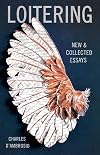
Part of my reading practice is to keep a slip of paper or notebook to scribble thoughts or words to look up. For D'Ambrosio's collection of essays, I needed a big piece of paper for the latter. Beyond to often overly esoteric subject matter, D'Ambrosio sometimes seems to be writing for the purpose of displaying his otherworldly vocabulary. Funny enough, the last word I had to look up - pleonasm - rendered a definition that was almost on point for a one-word review: "the use of more words show more than necessary to denote mere sense." While all of that seems like I didn't like the book, the opposite is true. He is a keen observer of humans and human behavior, and extremely frank with his own history and pain. My favorite essay was the lead, dealing with his observations from the street during a volatile police call over a man barricaded in an apartment with a gun. I also quite enjoyed his essays dealing with literary topics and writers, save for the last one during which he went on a deep exegetical dive through a poem, plumbing farther than almost anyone would into the writing - and farther, I suspect, than any poet on their own work. On balance, a very enjoyable book. show less

Some of the most insightful and disturbing essays I've ever read. D'Ambrosio's incredibly imagery captures a sense of what corporatism has done to America; he also writes about people who fell through the big holes in the cultural webs, the kooks and visionaries. His pen cuts deep into the consensual bias and the ink oozes into places the reader wanted so much to pretend weren't there. He is perhaps one of our finest prose poets writing today.
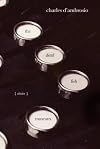
I’ve never read anything quite like Charles D’Ambrosio’s short story collection, The Dead Fish Museum. It’s Carvereque not only in setting, but it’s that same gritty realism that Carver so brilliantly displayed with his cast of eclectic characters mired in confusion and trouble. Six of the nine stories previously appeared in The New Yorker. And BTW, referring to the cover (which I love), why is “dead” in italics?
This is the first I’ve ever read anything by D’Ambrosio. His show more writing is poetic and technically stunning with some of the most amazing metaphors I can ever remember reading in a book of short stories (A bite taken out of an apple “turned brown like an old laugh; black leather buttons on a cardigan look like “a baby’s withered navel”), but it’s not a book to read if you’re in a bad mood. Some are very dark and disturbing in tone, but every story in the collection resonates. His fusions of character and setting are just astonishing. This one is vying for my best read short story collection of 2006, right next to Amy Hempel, Alice Munro and Maeve Brennan. I don’t know if I’ll be able to pick one over the other two, each is so different from the other(although a case could me made that Hempel and D’Ambrosio cover the same territory) and affected me in their own distinct way.
Discovering writers like D’Ambrosio keep my reading juices flowing. Just when I think I’m bored with my reading selections and nothing seems to really impress or shock me, along comes a book like this. This is the book I'm pimping on everyone for the rest of the year. show less
This is the first I’ve ever read anything by D’Ambrosio. His show more writing is poetic and technically stunning with some of the most amazing metaphors I can ever remember reading in a book of short stories (A bite taken out of an apple “turned brown like an old laugh; black leather buttons on a cardigan look like “a baby’s withered navel”), but it’s not a book to read if you’re in a bad mood. Some are very dark and disturbing in tone, but every story in the collection resonates. His fusions of character and setting are just astonishing. This one is vying for my best read short story collection of 2006, right next to Amy Hempel, Alice Munro and Maeve Brennan. I don’t know if I’ll be able to pick one over the other two, each is so different from the other(although a case could me made that Hempel and D’Ambrosio cover the same territory) and affected me in their own distinct way.
Discovering writers like D’Ambrosio keep my reading juices flowing. Just when I think I’m bored with my reading selections and nothing seems to really impress or shock me, along comes a book like this. This is the book I'm pimping on everyone for the rest of the year. show less
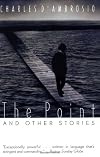
D'Ambrosio's colection of essays, [Loitering], is wonderful. So, I wanted to try his fiction. The writing is workmanlike but doesn't have the same flashes of greatness as the essays. The most memorable story features a boy who frequently is left to escort drunk men and women home from his mother's parties. The boy ends up a collector of all the rumors and gossip of these people's lives. Another stand out was the tale of a young couple's grief after the loss of their child. But, on balance, show more the stories didn't resonate near as well as D'Ambrosio's more personal non-fiction.
3 bones!!! show less
3 bones!!! show less
Lists
Awards


You May Also Like


Associated Authors
Statistics
- Works
- 6
- Also by
- 11
- Members
- 971
- Popularity
- #26,520
- Rating
- 3.7
- Reviews
- 21
- ISBNs
- 24
- Languages
- 3
- Favorited
- 3

