
About the Author
Peter V. Rabins, MD, MPH, is professor emeritus of psychiatry and medicine at the Johns Hopkins University School of Medicine. He was the founding director of its geriatric psychiatry program and the first holder of the Richman Family Professorship of Alzheimer Disease and Related Disorders.
Works by Peter V. Rabins
The 36-Hour Day: A Family Guide to Caring for People Who Have Alzheimer Disease, Related Dementias, and Memory Loss (1981) 1,352 copies, 21 reviews
Is It Alzheimer's?: 101 Answers to Your Most Pressing Questions about Memory Loss and Dementia (A Johns Hopkins Press Health Book) (2020) 9 copies
Rabins One-on-One 1 copy
Tagged
Common Knowledge
- Gender
- male
Members
Reviews
The 36-Hour Day: A Family Guide to Caring for People Who Have Alzheimer Disease, Other Dementias, and Memory Loss (A Johns Hopkins Press Health Book) by Nancy L. Mace
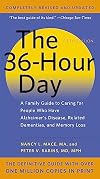
Developed to help caregivers and family members who are coping with a loved one with mental impairment due to disease, I wished, while reading, that someone had referred me to this book years ago. Most of what it contains I have learned already through trial and error or independent research, but it is a fairly comprehensive, but easy to read, book on the subject.
As someone who is dealing daily with the problems this book addresses, I felt I needed to review the book and encourage anyone show more who is seeing those early symptoms, the mood changes, the short-term memory loss, the confusion, the complaints of eyesight problems when the ophthalmologist says nothing is wrong with the eyes, or a sudden lack of interest in doing things, to please pay attention and get an early diagnosis and help.
One thing people should realize, but often don’t, is that there are many diseases that fall under the umbrella of dementia. Alzhiemer’s is only one of them. This book does go into the different types and points you in the direction that you need to go for the specific type of dementia you are dealing with. My husband has dementia associated with Parkinson’s, but also that brought on by stroke, so I am dealing with a two-fold disease. And, very important--your loved one may have delirium, which is treatable and often reversible, so you need a true diagnosis and the sooner the better.
Don’t stop pushing for a diagnosis, particularly if you are dealing with an elderly individual. I went through a number of health professionals who patted my husband on the head and said “not fun getting old, is it?” before I found one who would listen to me that there was much more going on here than aging. Once I got the diagnosis, I got some help, and that has made a great deal of difference for him, and for me. You cannot stop dementia or Parkinsons, they are degenerative diseases, but you can help with symptoms, know what to do in the face of what seems unfaceable, and you can feel a little more in control when you know what to expect and what new symptoms mean.
I read a fair amount of medical information and I do not tend to review those kinds of books here, but I truly felt that if only one person who suspects there might be a problem read this book early on, I might be actually helping. My husband first began to display symptoms in 2014; I got a diagnosis in 2019. Those five years of not knowing and no help were the hardest to bear. I made radical changes in our lives to get that diagnosis, and the last two years have been easier, despite the fact that his disease has become more pronounced and harder to manage.
Forgive me if this review is just too personal. I could find no way to write it without bringing my own situation fully into the picture. My prayers are with everyone out there who is dealing with these horrendous diseases that steal our loved ones in bits and pieces. BTW, if you are not directly involved in taking care of someone with dementia, but you know someone who is, you might want to read this book and know what they are dealing with. They need your understanding; they need your prayers. show less
As someone who is dealing daily with the problems this book addresses, I felt I needed to review the book and encourage anyone show more who is seeing those early symptoms, the mood changes, the short-term memory loss, the confusion, the complaints of eyesight problems when the ophthalmologist says nothing is wrong with the eyes, or a sudden lack of interest in doing things, to please pay attention and get an early diagnosis and help.
One thing people should realize, but often don’t, is that there are many diseases that fall under the umbrella of dementia. Alzhiemer’s is only one of them. This book does go into the different types and points you in the direction that you need to go for the specific type of dementia you are dealing with. My husband has dementia associated with Parkinson’s, but also that brought on by stroke, so I am dealing with a two-fold disease. And, very important--your loved one may have delirium, which is treatable and often reversible, so you need a true diagnosis and the sooner the better.
Don’t stop pushing for a diagnosis, particularly if you are dealing with an elderly individual. I went through a number of health professionals who patted my husband on the head and said “not fun getting old, is it?” before I found one who would listen to me that there was much more going on here than aging. Once I got the diagnosis, I got some help, and that has made a great deal of difference for him, and for me. You cannot stop dementia or Parkinsons, they are degenerative diseases, but you can help with symptoms, know what to do in the face of what seems unfaceable, and you can feel a little more in control when you know what to expect and what new symptoms mean.
I read a fair amount of medical information and I do not tend to review those kinds of books here, but I truly felt that if only one person who suspects there might be a problem read this book early on, I might be actually helping. My husband first began to display symptoms in 2014; I got a diagnosis in 2019. Those five years of not knowing and no help were the hardest to bear. I made radical changes in our lives to get that diagnosis, and the last two years have been easier, despite the fact that his disease has become more pronounced and harder to manage.
Forgive me if this review is just too personal. I could find no way to write it without bringing my own situation fully into the picture. My prayers are with everyone out there who is dealing with these horrendous diseases that steal our loved ones in bits and pieces. BTW, if you are not directly involved in taking care of someone with dementia, but you know someone who is, you might want to read this book and know what they are dealing with. They need your understanding; they need your prayers. show less
The 36-Hour Day: A Family Guide to Caring for People Who Have Alzheimer Disease, Other Dementias, and Memory Loss (A Johns Hopkins Press Health Book) by Nancy L. Mace
This was a difficult book to read from an emotional standpoint; much of it made me think of my father's ordeal with Primary CNS Lymphoma and a little bit of when my grandmother dealt with Alzheimer's though I was a bit more removed from that case. It can also be a little overwhelming to read about the possibilities of what might be coming in the future. However, it was far easier to read than I thought it would be, not dry at all and very reaffirming and caring toward the person reading it. show more I thought the research part at the end was very interesting although I was reading the 5th edition from 2011; I thought I had purchased the most recent but apparently I had not. I highly recommend this to anyone who has a loved one dealing with any sort of disease that causes dementia, or memory loss. It has helped me become (and still working on it) more understanding. show less
The 36-Hour Day: A Family Guide to Caring for People Who Have Alzheimer Disease, Related Dementias, and Memory Loss by Nancy L. Mace
I bought this in a rush to understand what my mother was descending into, and I found it quite helpful. I do wish that I had recognized her memory loss earlier as I think this would have been much more help. As it was, I read it three months before she died, but what the book taught me was that the signs were there ten years earlier, I just failed to recognize them. I think anyone that is dealing with an aging parent or other friend or relative would do well to use this in their research at show more the beginning, even if on a just-in-case basis. show less
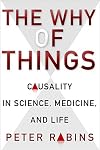
Peter Rabins’s The Why of Things tries to get to the philosophical root of everything. He’s not trying to find a single underlying cause for all actions and entities in the universe, but rather develop a system of thought that helps the thinker come to useful and fundamental conclusions about observable phenomena (and even some unobservable phenomena). Rabins’s system involves thinking about the world using three different facets and then breaking them down into different subfacets. show more Looking at things as a model, you have categorical, probalistic, and emergent models; using differing types of logic, there are empirical, empathic, and ecclesiastic logics; and using differing levels of analysis, we find predisposing causes, precipitating causes, programmatic causes, and purposive causes. All these would take far too long to explain here, though.
Each of these lines of thought and investigation lead to a new way of framing the question. Using these models, Rabins takes the reader through their many different applications, including the discovery, spread, and analysis of the HIV/AIDS virus, the publication of the theory of plate tectonics, and even an investigation into the causal explanation of human aggression and grief. The writing here is not inspiring or elevated, but rather seeks to educate. It’s not as heady as some philosophy textbooks, but does have that feel throughout. I halfway expected there to be thought exercises at the end of each chapter at points. The author does, however, show how parts of the world connect and spur causal relationships as well as how many complex systems can be seen as analogous. This one is not for everybody, but if you’re looking to learn how to better reason things out through logic and comparative analysis, then this one may be for you. show less
Each of these lines of thought and investigation lead to a new way of framing the question. Using these models, Rabins takes the reader through their many different applications, including the discovery, spread, and analysis of the HIV/AIDS virus, the publication of the theory of plate tectonics, and even an investigation into the causal explanation of human aggression and grief. The writing here is not inspiring or elevated, but rather seeks to educate. It’s not as heady as some philosophy textbooks, but does have that feel throughout. I halfway expected there to be thought exercises at the end of each chapter at points. The author does, however, show how parts of the world connect and spur causal relationships as well as how many complex systems can be seen as analogous. This one is not for everybody, but if you’re looking to learn how to better reason things out through logic and comparative analysis, then this one may be for you. show less
Lists
You May Also Like


Associated Authors
Statistics
- Works
- 7
- Members
- 1,435
- Popularity
- #17,925
- Rating
- 3.9
- Reviews
- 23
- ISBNs
- 93
- Languages
- 6