
Gabriel Kolko (1932–2014)
Author of The Triumph of Conservatism: A Reinterpretation of American History, 1900-1916
About the Author
Gabriel Kolko is Distinguished Research Professor Emeritus at York University in Toronto
Works by Gabriel Kolko
The Triumph of Conservatism: A Reinterpretation of American History, 1900-1916 (1977) 204 copies, 1 review
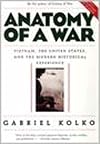
Anatomy of a War: Vietnam, the United States, and the Modern Historical Experience (1986) 168 copies, 1 review
The Politics of War: The World and United States Foreign Policy, 1943-1945 (1969) 94 copies, 1 review
Taxation and inequality 2 copies
Taxation and Equality 1 copy
Bogactwo i władza w Ameryce 1 copy
Wealth and Power 1 copy
Railroads and Regulation 1 copy
Associated Works
Iraq and the Lessons of Vietnam: Or, How Not to Learn from the Past (2007) — Contributor — 61 copies
For a New America: Essays in History and Politics from Studies on the Left, 1959-1967 (1970) — Contributor — 21 copies
Tagged
Common Knowledge
- Birthdate
- 1932-08-17
- Date of death
- 2014-05-19
- Gender
- male
- Education
- Kent State University (BA ∙ 1954)
University of Wisconsin (MS ∙ 1955)
Harvard University (PhD|1962) - Occupations
- historian
university professor - Organizations
- University of Pennsylvania
State University of New York, Buffalo
York University - Relationships
- Kolko, Joyce (wife)
- Cause of death
- euthanasia
- Nationality
- USA
- Birthplace
- Paterson, New Jersey, USA
- Place of death
- Amsterdam, Netherlands
- Associated Place (for map)
- USA
Members
Reviews

Gabriel Kolko is a liberal historian whose scholarship prevails over ideology. Now deceased, in 2014 at age 81, he wrote "Railroads and Regulation" (1965), on the early history of the Interstate Commerce Commission, and "The Limits of Power" (1972), on the early history of the Cold War.
"The Triumph of Conservatism" (1963), is a definitive history of the Progressive Era, 1900-1916. Professor Kolko looks at the two decades of the twentieth century when the government finally started to show more regulate monopolist businesses. He makes a strong case that big business in fact played a major role in designing and imposing the new regulations. He shows that monopolist private stock companies were able to contain competition that could not be stopped by market means. "As new competition sprang up, and as economic power was diffused throughout an expanding nation, it became apparent to many important businessmen that only the federal government could rationalize the economy...". It was not the existence of monopoly that caused the federal government to intervene -- "trust busting" -- in the economy, but the lack of it. Sherman and Teddy Roosevelt, were, after all, from the GOP.
The thesis, that Conservatism in the plutocratic sense triumphed in the so-called Progressive Era, is never really shown. This work does not explain the dramatic expansion of the Middle Class during this era, which happened in spite of the best efforts of the monopolists.
Kolko does sober up the liberal myths about benevolent reformers and conservative myths about independent, market-loving businessmen. This book remains a watershed moment in the New Left's emerging critique of the corporate state, and in spite of the author's own progressive inclinations, the so-called free-market libertarians can find some comfort in it.
Reason Blog has a great post-mortem 2014 review of Kolko May 20, 2014 show less
"The Triumph of Conservatism" (1963), is a definitive history of the Progressive Era, 1900-1916. Professor Kolko looks at the two decades of the twentieth century when the government finally started to show more regulate monopolist businesses. He makes a strong case that big business in fact played a major role in designing and imposing the new regulations. He shows that monopolist private stock companies were able to contain competition that could not be stopped by market means. "As new competition sprang up, and as economic power was diffused throughout an expanding nation, it became apparent to many important businessmen that only the federal government could rationalize the economy...". It was not the existence of monopoly that caused the federal government to intervene -- "trust busting" -- in the economy, but the lack of it. Sherman and Teddy Roosevelt, were, after all, from the GOP.
The thesis, that Conservatism in the plutocratic sense triumphed in the so-called Progressive Era, is never really shown. This work does not explain the dramatic expansion of the Middle Class during this era, which happened in spite of the best efforts of the monopolists.
Kolko does sober up the liberal myths about benevolent reformers and conservative myths about independent, market-loving businessmen. This book remains a watershed moment in the New Left's emerging critique of the corporate state, and in spite of the author's own progressive inclinations, the so-called free-market libertarians can find some comfort in it.
Reason Blog has a great post-mortem 2014 review of Kolko May 20, 2014 show less

An extraordinary work of historical scholarship that merges the economic, the diplomatic, and the military aspects of World War II to draw the contours of the global crisis that have lasted from 1945 on to the present. It is dense, but you'll never think about the postwar world quite the same again.
You May Also Like


Associated Authors
Statistics
- Works
- 26
- Also by
- 2
- Members
- 948
- Popularity
- #27,124
- Rating
- 4.0
- Reviews
- 3
- ISBNs
- 50
- Languages
- 5
- Favorited
- 2