

Herbert R. Kohl
Author of 36 Children
About the Author
Herbert Kohl has written more than forty books. He was founder and first director of the Teachers & Writers Collaborative and established the PEN West Center and the Institute for Social Justice and Education at the University of San Francisco
Works by Herbert R. Kohl
Should We Burn Babar?: Essays on Children's Literature and the Power of Stories (1995) 177 copies, 2 reviews
A Call to Character: A Family Treasury of Stories, Poems, Plays, Proverbs, and Fables to Guide the Development of Values for You and Your Children (1995) — Editor — 128 copies
A Grain of Poetry: How to Read Contemporary Poems and Make Them A Part of Your Life (2000) 63 copies, 1 review
She Would Not Be Moved: How We Tell the Story of Rosa Parks and the Montgomery Bus Boycott (2005) 46 copies, 1 review
Associated Works
Other People's Children: Cultural Conflict in the Classroom (1995) — Afterword, some editions — 679 copies, 6 reviews
Transforming Teacher Unions : Fighting for Better Schools and Social Justice (1999) — Contributor — 12 copies
A schoolmaster of the great city: a progressive educator's pioneering vision for urban schools (1917) — Introduction, some editions — 11 copies
Tagged
Common Knowledge
- Canonical name
- Kohl, Herbert R.
- Birthdate
- 1937-08-22
- Gender
- male
- Education
- Harvard University (BA | Philosophy)
Columbia University (MA | Education)
University of Oxford (Philosophy) - Occupations
- teacher (1962)
- Nationality
- USA
- Places of residence
- Point Arena, California, USA
Bronx, New York, USA - Associated Place (for map)
- USA
Members
Reviews
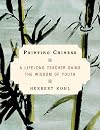
This is one of the most beautiful, joyous, and emotionally engaging books I've ever read! Kohl is a college professor in his sixties who was teaching at USF (U. of San Francisco) when his position was terminated. He had a lot of free time on his hands, and decided to take a class on Chinese ink painting. He enrolls in a beginner's class in the Sunset District, a largely Asian neighborhood in the city, and on the first day of class he finds out that the class consists of himself and a dozen show more or so 5-7 year old Chinese-American kids! He originally assumes that a mistake has been made, but the teacher tells him that this is his proper class. He originally assumes the teacher role, and tries to help his "classmates" with their work, but soon realizes that he learning more from them than they are from him, in terms of technique, Chinese culture -- and patience. He continues to attend classes there, and the experience transforms his views of teaching, and the later years of his life. It's a short, quick read, but I was actually very sad and a bit emotional at the end of the story, as I wanted it to go on an on forever! I think I'll read it again, very soon, and post a review. culture. He continues to attend classes there, and the experience transforms his views of teaching, and the later years of his life. It's a short, quick read, but I was actually very sad and a bit emotional at the end of the story, as I wanted it to go on and on forever! show less
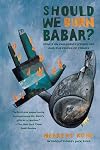
This is a collection of essays by an intelligent person with a severely constrained way of thinking. This is probably just the right sort of mind, for a person who has worked in the way he has. Each essay is on a fairly different topic and can be treated separately:
* Should we burn Babar? Questioning power in children's literature
A well-written, plausible essay which argues its way to incorrect conclusions from a bunch of false premises. One absurd premise is that a book for children must be show more charming, because children often are. Children often are charming to adults, but they are not charming to each other. When I was a child, I had no concept of "charming", and the books that I read were not charming to me. That a child's book must be viewed as charming by adults is due to adult self-deception. I read a review of "The Story of Babar" in which the reviewer describes the reaction of his daughter to the appearance of the hunter: she starts yelling to Babar to watch out. This child evidently does not experience the book as charming; she sees a terrible danger and calamity approaching; she is a far better reader of this book than any self-deluding adult.
* The Story of Rosa Parks and the Montgomery Boycott Revisited
This is an essay about the way the boycott is misrepresented in children's books. These alter the story from one of careful planning and arduous effort over a considerable period by a well organized group of activists supported by a strong community to a spontaneous and easy effort sparked by the actions of one tired old lady. It's no way to inspire activists of the future. The real story is much more compelling and inspiring, and at the same time it's a blueprint for activism that, history shows us, can work. This essay was excellent, and I also learned more about the bus boycott than I had ever known before. show less
* Should we burn Babar? Questioning power in children's literature
A well-written, plausible essay which argues its way to incorrect conclusions from a bunch of false premises. One absurd premise is that a book for children must be show more charming, because children often are. Children often are charming to adults, but they are not charming to each other. When I was a child, I had no concept of "charming", and the books that I read were not charming to me. That a child's book must be viewed as charming by adults is due to adult self-deception. I read a review of "The Story of Babar" in which the reviewer describes the reaction of his daughter to the appearance of the hunter: she starts yelling to Babar to watch out. This child evidently does not experience the book as charming; she sees a terrible danger and calamity approaching; she is a far better reader of this book than any self-deluding adult.
* The Story of Rosa Parks and the Montgomery Boycott Revisited
This is an essay about the way the boycott is misrepresented in children's books. These alter the story from one of careful planning and arduous effort over a considerable period by a well organized group of activists supported by a strong community to a spontaneous and easy effort sparked by the actions of one tired old lady. It's no way to inspire activists of the future. The real story is much more compelling and inspiring, and at the same time it's a blueprint for activism that, history shows us, can work. This essay was excellent, and I also learned more about the bus boycott than I had ever known before. show less
The View from the Oak: The Private Worlds of Other Creatures (National Book Award for Children's Literature) by Judith Kohl
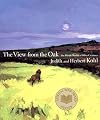
One of the most beautiful books ever written. The Kohls present Jakob von Uexküll's concept of the umwelt (the hidden inner worlds of animals) in a lyrical and accessible way. This book introduces children and adults to the magic and mind opening wonder of how other species perceive the world.
Buy the book because it will change the way you look at other beings, read it for the pure, luminous beauty of the prose.
Buy the book because it will change the way you look at other beings, read it for the pure, luminous beauty of the prose.
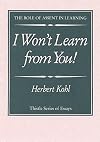
This is a slim gem from one of my education policy and philosophy heroes.
"To agree to learn from a stranger who does not respect your integrity causes a major loss of self. The only alternative is to not-learn and reject the stranger's world."
"Not-learning (as a conscious choice, as opposed to a failure to learn) and unlearning are central techniques that support changes of consciousness and help people develop positive ways of thinking and speaking in opposition to dominant forms of show more oppression. Not-learning in particular requires a strong will and an ability to take the kinds of pressure exerted by people whose power you choose to question."
"Throughout life, there may be as much occasion for not-learning as there is occasion for learning. It is uncomfortable to talk about the need to reject certain kinds of learning and reassuring to look at learning in a positive way, but without studying not-learning we can get only a partial view of the complex decisions facing people as they choose values and decide upon actions. I am just beginning to understand the importance of not-learning in the lives of children, and I urge other people to think and write about roads people choose to not-travel and how those choices define character and influence destiny." show less
"To agree to learn from a stranger who does not respect your integrity causes a major loss of self. The only alternative is to not-learn and reject the stranger's world."
"Not-learning (as a conscious choice, as opposed to a failure to learn) and unlearning are central techniques that support changes of consciousness and help people develop positive ways of thinking and speaking in opposition to dominant forms of show more oppression. Not-learning in particular requires a strong will and an ability to take the kinds of pressure exerted by people whose power you choose to question."
"Throughout life, there may be as much occasion for not-learning as there is occasion for learning. It is uncomfortable to talk about the need to reject certain kinds of learning and reassuring to look at learning in a positive way, but without studying not-learning we can get only a partial view of the complex decisions facing people as they choose values and decide upon actions. I am just beginning to understand the importance of not-learning in the lives of children, and I urge other people to think and write about roads people choose to not-travel and how those choices define character and influence destiny." show less
Awards


You May Also Like


Associated Authors
Statistics
- Works
- 49
- Also by
- 4
- Members
- 1,609
- Popularity
- #16,021
- Rating
- 4.0
- Reviews
- 15
- ISBNs
- 95
- Languages
- 3