
Sathnam Sanghera
Author of Empireland: How Imperialism Has Shaped Modern Britain
About the Author
Works by Sathnam Sanghera
The Boy with the Topknot: A Memoir of Love, Secrets and Lies in Wolverhampton (2008) 155 copies, 11 reviews
Tagged
Common Knowledge
- Birthdate
- 1976
- Gender
- male
- Nationality
- UK
- Birthplace
- Wolverhampton, England, UK
- Associated Place (for map)
- England, UK
Members
Reviews
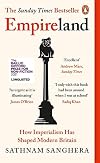
The author, who is of Sikh heritage but was born in Britain, examines the consequences of the British Empire on modern Britain. His account is balanced, not polemic, but despite his wit and enlightened outlook, traces of anger and exasperation still come through by the end of the book. Certainly the history of the Empire isn't taught well in Britain, and to most American readers it is probably even more obscure. This book doesn't avoid the most horrific incidents of massacre and genocide. As show more for the current controversies, such as removal of statues, Sanghera makes the perfectly reasonable point that taking down a statue of an imperialist does no more to change history than taking down Nazi symbols in Germany after the war changed the history of World War II.
Is there a book that tries to do the same thing for our American divide on politics, race, and history? Or is our own country past hope? show less
Is there a book that tries to do the same thing for our American divide on politics, race, and history? Or is our own country past hope? show less
Empireland – A remarkably lucid book
Sathnam Sanghera has written a remarkably lucid book about the one subject most people in Britain know little about, but talk a lot of – empire, Britain’s Imperial Past. Those of us who are historians are used to being attacked as woke when we address the complex issues of empire. We often get told we hate our country, sorry I love my country, but I do question what has been done in our name.
This is a very personal journey of discovery for Sanghera, show more as a Black Country Sikh like the rest of the country has been taught very little or nothing at all about what happened in the empire. In Empireland he shines a light on some of the darkest corners and misunderstood corners of our shared history. As a journalist Sanghera has brought a flourish to the writing of a very difficult subject.
This book challenges some of the nostalgia that has festered around the empire, when a quarter of the world’s map was covered in pink for “our” empire. As someone born in 1969, I have none of the rose tinted glasses towards an empire and neither do many people alive in Britain today. This can be seen in the Brexit vote with the desire of head back to a time of nostalgia of the 1950s and 1960s.
Across twelve chapters we get an excellent investigation on how imperialism shaped modern Britain. It does not make for comfortable reading, if you open the book with an open mind. With the recent acts of statues being torn down or defended, concert halls and schools being renamed or companies apologising for past actions as Sanghera puts it “the effect of British empire upon this country is poorly understood. I could not have put it better myself.
Sanghera is not afraid to tackle some of the tougher subjects including Enoch Powell’s infamous speech. Explaining how his view was framed by the history of colonialism and that the white imperialists were the guiding lights and protectors of the dark ‘natives’. The idea of equality was a calamity for Powell.
We are reminded that for a long period of time, 1660 to 1807, Britain profiteered from the evils of slavery by shipping around 3 million Africans to America. It was during the late nineteenth and early twentieth century that the Prime Minister called imperialism and empire “the vulgar and bastard imperialism of irritation and provocation and aggression… of grabbing everything even if we have no use for it ourselves.”
In the imagination of the modern imperialist, the empire was a good thing, there are only two states: dominant and submissive, coloniser and colonised. If England is not an imperial power, it must be the only other thing it can be: a colony. Those who campaigned to leave the EU described our past and future relationship with the EU in colonial terms. Dominic Raab said Britain would be able to resume its historic role as a buccaneering free trader. Clearly did not understand that British free trade in the nineteenth century was accompanied with a Royal Navy gunboat, and canon to fire our way to “free” trade.
It must be remembered that Clive of India is blamed for the Great Bengal Famine of 1770 estimated to have killed 10 million people. Clive received one of the largest windfalls in history which today was the equivalent to £702 million. When William Dalrymple describes Clive as an “unstable sociopath” it seems rather restrained. Clive was widely loathed during his lifetime, Samuel Johnson stated that Clive had “acquired his fortune by such crimes that his consciousness of them impelled him to cut his own throat.” When Clive committed suicide in 1774 he was placed in an unmarked grave.
Empireland is an excellent book, that is accessible, well researched and conveys a message that we all need to learn about imperialism and the empire, and not see things through rose-tinted glasses. We need to open our eyes. We need to ask how people gained their fortunes at the expense of others. Remember the slave compensation act was in favour of those who owned slaves not the people who were enslaved. The compensation bill we finally settled in 2015, nearly 200 years after it was enacted.
We really need to do as the Germans would say – Vergangenheitsaufarbeitung, work off the past. Maybe it is because we have not been invaded since 1066, that we have never had to revaluate our actions and our history. If we did we may understand why some countries in the world see us as the bogeyman, Iran, Iraq spring to mind.
Buy this book, read this book, it is engaging and you will learn something. show less
Sathnam Sanghera has written a remarkably lucid book about the one subject most people in Britain know little about, but talk a lot of – empire, Britain’s Imperial Past. Those of us who are historians are used to being attacked as woke when we address the complex issues of empire. We often get told we hate our country, sorry I love my country, but I do question what has been done in our name.
This is a very personal journey of discovery for Sanghera, show more as a Black Country Sikh like the rest of the country has been taught very little or nothing at all about what happened in the empire. In Empireland he shines a light on some of the darkest corners and misunderstood corners of our shared history. As a journalist Sanghera has brought a flourish to the writing of a very difficult subject.
This book challenges some of the nostalgia that has festered around the empire, when a quarter of the world’s map was covered in pink for “our” empire. As someone born in 1969, I have none of the rose tinted glasses towards an empire and neither do many people alive in Britain today. This can be seen in the Brexit vote with the desire of head back to a time of nostalgia of the 1950s and 1960s.
Across twelve chapters we get an excellent investigation on how imperialism shaped modern Britain. It does not make for comfortable reading, if you open the book with an open mind. With the recent acts of statues being torn down or defended, concert halls and schools being renamed or companies apologising for past actions as Sanghera puts it “the effect of British empire upon this country is poorly understood. I could not have put it better myself.
Sanghera is not afraid to tackle some of the tougher subjects including Enoch Powell’s infamous speech. Explaining how his view was framed by the history of colonialism and that the white imperialists were the guiding lights and protectors of the dark ‘natives’. The idea of equality was a calamity for Powell.
We are reminded that for a long period of time, 1660 to 1807, Britain profiteered from the evils of slavery by shipping around 3 million Africans to America. It was during the late nineteenth and early twentieth century that the Prime Minister called imperialism and empire “the vulgar and bastard imperialism of irritation and provocation and aggression… of grabbing everything even if we have no use for it ourselves.”
In the imagination of the modern imperialist, the empire was a good thing, there are only two states: dominant and submissive, coloniser and colonised. If England is not an imperial power, it must be the only other thing it can be: a colony. Those who campaigned to leave the EU described our past and future relationship with the EU in colonial terms. Dominic Raab said Britain would be able to resume its historic role as a buccaneering free trader. Clearly did not understand that British free trade in the nineteenth century was accompanied with a Royal Navy gunboat, and canon to fire our way to “free” trade.
It must be remembered that Clive of India is blamed for the Great Bengal Famine of 1770 estimated to have killed 10 million people. Clive received one of the largest windfalls in history which today was the equivalent to £702 million. When William Dalrymple describes Clive as an “unstable sociopath” it seems rather restrained. Clive was widely loathed during his lifetime, Samuel Johnson stated that Clive had “acquired his fortune by such crimes that his consciousness of them impelled him to cut his own throat.” When Clive committed suicide in 1774 he was placed in an unmarked grave.
Empireland is an excellent book, that is accessible, well researched and conveys a message that we all need to learn about imperialism and the empire, and not see things through rose-tinted glasses. We need to open our eyes. We need to ask how people gained their fortunes at the expense of others. Remember the slave compensation act was in favour of those who owned slaves not the people who were enslaved. The compensation bill we finally settled in 2015, nearly 200 years after it was enacted.
We really need to do as the Germans would say – Vergangenheitsaufarbeitung, work off the past. Maybe it is because we have not been invaded since 1066, that we have never had to revaluate our actions and our history. If we did we may understand why some countries in the world see us as the bogeyman, Iran, Iraq spring to mind.
Buy this book, read this book, it is engaging and you will learn something. show less
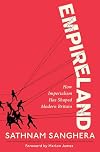
This is a very well done synthesis of contemporary research on the history and legacy of the British empire, interspersed with the kind of personal nonfiction that I gather the author is better known for.
The chapter on museums (I think it was chapter 3?) is excellent and would provide a solid introduction to anyone who is interested in debates about cultural property. The chapter "We Were Here Because You Were There" is also extremely well done and makes an argument for a "multicultural show more Britain" that existed long before the Windrush generation.
Sanghera uses a wide variety of sources to argue that the legacy of empire suffuses many aspects of contemporary Britain, and that empire's history is simultaneously hypervisible and swept under the rug. He also suggests that the empire brought both good and bad outcomes to Britain and its colonies.
This book is definitely polemical and probably mostly appeals to an audience that already feels a certain way about the history of empire, but I thought his account was quite balanced. Sanghera is careful to distinguish patriotism from nationalism, and he ends on a cautiously hopeful note. show less
The chapter on museums (I think it was chapter 3?) is excellent and would provide a solid introduction to anyone who is interested in debates about cultural property. The chapter "We Were Here Because You Were There" is also extremely well done and makes an argument for a "multicultural show more Britain" that existed long before the Windrush generation.
Sanghera uses a wide variety of sources to argue that the legacy of empire suffuses many aspects of contemporary Britain, and that empire's history is simultaneously hypervisible and swept under the rug. He also suggests that the empire brought both good and bad outcomes to Britain and its colonies.
This book is definitely polemical and probably mostly appeals to an audience that already feels a certain way about the history of empire, but I thought his account was quite balanced. Sanghera is careful to distinguish patriotism from nationalism, and he ends on a cautiously hopeful note. show less
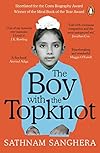
I confess that I was drawn to this book by the mention of Wolverhampton, the city my father and his family hail from and, for the benefit of non-UK LTers, a place with a reputation as an unattractive and unglamorous destination nobody could want to visit (it's not as unattractive as its reputation suggests, but there's probably no compelling reason to go there).
However, in this memoir, journalist Sathnam Sanghera really concerns himself with two issues: his relatively traditional Sikh show more upbringing by parents who, in spite of arriving in the UK from the Punjab in the 1960s, speak no English and remain isolated from many aspects of British culture; and the discovery that his father and eldest sister have long been beset by mental health problems.
This may sound rather bleak, but Sanghera himself admits to being no fan of misery memoirs and has produced a humorous and touching account of his childhood and his attempts, as an adult, to piece together his family's story. He may poke fun at Wolverhampton and some Sikh traditions, but he is equally happy to ridicule his metrosexual London lifestyle. And, at just a few years younger than Sanghera, I enjoyed his reminiscences about growing up in the 80s and could identify, though to much a lesser extent, with the seeming gulf between the life we carve out for ourselves and the one we live with our parents.
There's probably no reason for many readers to pick up a book whose chief subjects are mental illness, Sikhism and Wolverhampton, but I'm so very glad I did! show less
However, in this memoir, journalist Sathnam Sanghera really concerns himself with two issues: his relatively traditional Sikh show more upbringing by parents who, in spite of arriving in the UK from the Punjab in the 1960s, speak no English and remain isolated from many aspects of British culture; and the discovery that his father and eldest sister have long been beset by mental health problems.
This may sound rather bleak, but Sanghera himself admits to being no fan of misery memoirs and has produced a humorous and touching account of his childhood and his attempts, as an adult, to piece together his family's story. He may poke fun at Wolverhampton and some Sikh traditions, but he is equally happy to ridicule his metrosexual London lifestyle. And, at just a few years younger than Sanghera, I enjoyed his reminiscences about growing up in the 80s and could identify, though to much a lesser extent, with the seeming gulf between the life we carve out for ourselves and the one we live with our parents.
There's probably no reason for many readers to pick up a book whose chief subjects are mental illness, Sikhism and Wolverhampton, but I'm so very glad I did! show less
Lists
Awards


You May Also Like


Statistics
- Works
- 8
- Members
- 975
- Popularity
- #26,421
- Rating
- 3.9
- Reviews
- 23
- ISBNs
- 43