
Kate Clanchy
Author of Meeting the English
Works by Kate Clanchy
Bride Hill (Short story) 1 copy
Associated Works
Eight Ghosts: The English Heritage Book of New Ghost Stories (2017) — Contributor — 129 copies, 5 reviews
Tagged
Common Knowledge
- Birthdate
- 1965
- Gender
- female
- Education
- University of Edinburgh
University of Oxford - Occupations
- poet
- Nationality
- UK
- Birthplace
- Glasgow
- Associated Place (for map)
- Glasgow
Members
Reviews
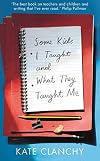
A mix of memoir, tract, tribute, othering, outright offense, & online drama.
Chronology of controversy in final section of this review.
Review is of Picador's original 2019 text
Clanchy built quiet fame as an inspirational English teacher, specialising in nurturing & publishing her pupils' poems. Most come from disadvantaged backgrounds, including recent refugees.
I was unaware of her until March 2021, when I read a startling & critical review on GR, posted in November 2020. I noticed show more comments, claiming to be by the author, complaining that quotes she herself described as “racist”, were “made up” & threatening to report the reviewer (a teacher) to her employer! I was intrigued, got a copy, read a couple of chapters, & skimmed the rest. I found plenty of problematic phrasing, but other more positive aspects. It left a sour taste & I cast it aside.
A few months later, she took her fight to Twitter & the story was picked up by the BBC & broadsheet media. Big names joined in. I followed in real time. It got nasty. When it had died down a little, I decided to read & review the book thoughtfully, completely, & objectively.
Note about quotes
I copied directly from my 2020 paperback, with page numbers for most. I’ve included a lot, to indicate the distinctive tone of the book, especially the obsession with describing children's bodies. It is just over 250 pages of large, generously-spaced text, & I’ve included only a few. Some start out innocuous & then turn unquestionably mean; others are more debatable. Different people will wince at different ones, but I'm amazed anyone can read the whole book & think it's all fine - that it went through writing, editing, & publishing in 2019 & emerged as it has.
I can't imagine it being published if a man wrote it.
THE GOOD
Clanchy “wanted to change the world” & chose teaching in state schools, knowing it’s an undeservedly undervalued profession.
Teaching English
The sections describing how she teaches, how she inspires her pupils to frame their poems, & when she quotes some of them at length, are wonderful. She stresses the importance of creative reading & creative writing, which are being squeezed out of the curriculum in favour of abstruse grammar, which is easier to test & measure. She shares lightbulb moments, such as a couple of Bengali girls who wrote a teen novel set in a US-style summer camp. When she asks why all the characters are white, one says, “We are not in books”. She realises representation matters.
Advocacy
She advocates for the marginalised & excluded, in general & by writing letters to authorities. She notes that the “Inclusion Unit” for difficult pupils is really the opposite. She agonises about how & when the state should intervene to help or rescue children in & from dysfunctional families. She rails against the effects of years of government austerity.
“Poverty is stamped though Cheyenne like letters in a stick of rock, manifesting itself in her rotting, nineteenth-century mouth.” p160
School selection
Clanchy makes passionate & strong arguments against state-funded religious schools & against academically selective schools, especially when the two are indirectly combined. It becomes personal when she is deciding where to send “Oldest One”: whether to apply her principles by sending him to the nearest school - the one middle class parents strive to avoid. She says she is more concerned about the societal damage of separation by social class than by race. She’s also against setting by ability within schools:
“The mathematical law of setting: that the good done to the selected minority is always smaller than the bad done to the rejected majority.” p182
Sex
She’s socially liberal, aware of the importance of sex education & gender equality, & actively supportive of gay students.
Aware of her privilege?
She learns from her pupils “how white I am… I am a super-empowered, incredibly lucky member of the world’s ruling class” p87. When she discovered that her English teaching qualifications will never qualify her for a permanent post in Scotland, she reluctantly came south for good. She wonders if it gives her “some small insight into what institutional racism might feel like” p92. Is that the bridge she thinks it is, or another pedestal?
THE ODD
Colour & culture
I think Clanchy is genuinely fascinated by the cultural diversity she encounters, & wants to celebrate it. Some of the descriptions she has been criticised for were clearly intended as compliments, & the girl with “almond-shaped eyes” has explicitly defended the phrase & uses it herself. But the physical descriptions of children’s bodies are numerous, relentless, & unsettling.
Clanchy likes to get “an instant cultural history of the child” by asking where their names come from & what they mean. That’s not necessarily a bad idea, but needs to be handled sensitively, not using eugenic tropes & persisting in the face of denial:
“I was baffled when a boy with jet-black hair & eyes & a fine Ashkenazi nose named David Marks refused any Jewish heritage.” p19
When she wanted to start “an artsy version of the Bullingdon Club”, she asked fellow staff to suggest “Very Quiet Foreign Girls” (her capitalisation).
Snappy descriptions
Clanchy knows poetry thrives on concision. Some of her descriptions are kinder or more relevant than others: “Gentle Tom”, “Gigantic Dave”, “Anorexic Clarice”, “spooky, platinum Angel”, & “a vigorous Kurdish widow with a marvellous nose”. There’s a lot of implied phrenology, colourism, & worse:
• Imani of the “strong skull shape.” p117
• “Like all the Syrian kids, she is very pretty: pale skinned & dark eyed with a sensitive mouth & a tiny, high-pitched voice.” p263
• “Izzat so small & square & Afghan with his big nose & premature moustache.” p139
• “Aadil always seems so grand: a tall Somali boy with a deep, African voice, & the almost aristocratically calm manner that sometimes goes with being extremely good-looking.” p85
• “Cumar is long & slender as many of the Somali kids are, with a thin nose, narrow skull, & very dark, almost black skin. Aadil is more muscular & square-set, with chocolate-coloured skin, a broad-based nose, & rounded head.” p85
• “Jonathon, six-foot five inches tall with a slow, resonant African accent.” p78 & “Tall, strong, African Jonathon.” p243
• “She would call out to me for words, urgently, her black, almond-shaped eyes snapping, slim fingers blossoming.” p108
All so different from “my Nordic height & Celtic colouring”.
Weight
All the critical comments about weight are applied to girls, & most are in a section about health. Clanchy tries to include a compensatory compliment, but there are weird sexualising & classist undercurrents:
“When Kristell arrived in Year 9, she had a bosomy, curvy figure, with a tiny waist & pretty ankles… She had a soft, breathy voice to match the Bambi lashes & fresh mouth.” p237
Later
“She has put on a great deal of weight, so that the pretty figure is blurred… The dark eyes gazing out of the fat pink cheeks are still so very lovely.” p238-9
This “self-sabotage” was after being raped.
“Danielle really was special: she was exquisitely pretty in the dark & elfin, Audrey Hepburn mode. She knew it too; she was always finding occasion to take off her clothes & expose her pale, beautifully turned limbs.” p233
Later
“As if refusing middle-class food along with middle-class ambition, Danielle put on weight… her new bosom protruding ever more bulbously… I was surprised how hurt I was to see it. It wasn’t the flesh so much as the loss of grace.” p234
I know what she means with this next one, & there is a valid point. It’s probably intended to be self-deprecating & tongue-in-cheek, but...
“Lianne is stuffing fig rolls, my favourite, into her pretty fat face, & it is very hard indeed not to have one. I can manage it, I think, in the same way that I can manage to finish a poem, because I am middle class. Because, since I was a tiny child, I have been taught to wait for long-term goals.” p235
Love
There’s a long section describing, second-hand, a friend who was reported, by a “student intern” for a possibly inappropriate relationship with a pupil who brought her flowers, & who was then excluded for telling the intern he loved her, while he had a visible erection. The telling felt as inappropriate as the incident.
Clanchy then riffs on love.
“Of course, love happens in schools. Schools run on love.” p45
She contrasts the pure parental agape love with the playful experimentation of ludus love:
“Part of a school’s job is to supply a safe setting for this kind of love.”
She properly points out that schools try to exclude physical eros love.
LGBTQI+
Clanchy is supportive of gay pupils, although she’s hampered by stereotypes & sees camp as a “statement of otherness”. She takes an 18-year old to his first gay club, which she admits wouldn’t be acceptable now, sending him in with the words:
“‘Liam,’ I said, ‘I love you. You have to promise me to always use a condom & never get AIDS.’” p33
But she’s more dismissive of trans pupils. Like much of what she writes, I understand the concern she's raising, but the tone is trivialising:
“Are we all ‘fluid’ now? Perhaps. It is commonplace to proclaim oneself transsexual. & to actually be gay, especially if you are as pretty as Kristen Stewart is positively fashionable. A couple of kids have even changed gender, a decision so deliciously of the moment, so furiously defended by righteous students against non-existent opposition from staff that I worry only that they won’t feel the freedom to change back if they feel the need.” p34
Self-awareness?
Much of the criticism accused Clanchy of ignorance, rather than malice: a “white saviour” who relishes the exotic as something other. There are also safeguarding questions about whether children might identify themselves or be identified by others, to what extent they can have consented, & whether they should share in the profits. Apparently, the school where most of this happened knew nothing about it until she published after she left. Yet Clanchy mentions many of these points:
• “One of my self-doubts: whether I am a posh do-gooder, a Victorian lady on a mission who has not noticed that her message is obscured by her person, & the injustices of class which she embodies.” p158
• “Children have a right to privacy just as adults do.” p5
• “No named individual here should be identified as any particular living person.” p5
• “I have included nobody, teacher or pupil, about whom I could not write with love.” p5
• “I became aware of my greedy, writerly curiosity.” p54
• One of the reasons she likes volunteering in the local asylum centre is that “it offers me a world of stories”. p60
• “I am in each story, clearly delineated, so that you will know what sort of person is doing the listening & filtering.” p4
• “My commodifying, snobbish, patriarchal gaze.” p244”
THE UGLY
Dodgy descriptions
Page 8 stopped me in my tracks:
“My eye was tuned in to the multi-racial London pupils I’d taught the year before, who had, by the same age, Somali height or Cypriot bosoms or styled stiff Japanese hair.” p8
Who talks about the breasts of a twelve-year old child like that, & why?!
Anyway, Clanchy's new Scottish pupils, “winter-coloured, mouse-haired children”, were disconcertingly alike:
“I was having difficulty, as Prince Philip said he had with Chinese people, in telling them apart.”
“Saira is very butch-looking altogether, with square shoulders & a distinct moustache.” p122
“She wasn’t a pretty girl, even by the standards of the IU, even if she wasn’t making a terrible face. She was fat, a swathe of freckly flesh bulging out from her collar, blurring her jaw line, giving her premature double chins.” p239
Hijabs
Clanchy thinks about hijabs - a lot.
“I wonder again what Shakila does to her hijab, & why it seems to sit fuller & higher than the other girls’ - a Mother Superior hijab, or one from Vermeer. It can’t be starched. Maybe it’s draped over twisted horns of hair like Carrie Fisher’s in Star Wars. That would go with her furry eyebrows, her slanting, sparkling black eyes, her general, Mongolian ferocity.” p78
“Her high-set, starched hijab - did she have extra ears under there?” p109
“It is possible to wear a flirty hijab, like Samira’s leopard-patterned one. & that Farida’s dress may be loose & floor-length, but it still manages to show the beautiful lines of her figure when she hitches it tight around her as she sits by the basketball courts.” p117
“If I could put a burqa on Susie & Kristell tomorrow, I would. A year or two of being invisible to the male gaze, of going home quietly to study, could only be liberating, & enabling too, of the rest of their lives… It’s important to say that nothing that Susie or Kristell ever wear, however brief, entitles them to any abuse, ever.” p165
Autism & “other” gender
“Janie & Chris are eleven & have Autism Spectrum Disorder. They know this: they are fully certified & statemented; they will tell you all about it freely. They are cheerful, frank children in general: shouty, active, unselfconsciously odd. When we fill in the form for a poetry competition, they both seek out & tick ‘other’ for their gender. This seems spot on; though they both wear skirts & have long, thick hair, it is somehow very hard to identify them as girls… They flick through the lists of ‘country of origin’, I feel there should be an ‘other’ for that too: ASD Land.” p225
Her own feelings:
“The undeniable fact that no one else wants to be friends with them… Probably, more than an hour a week would irritate me, too, but for that hour, I like them very much.” p226
Almond eyes & food analogies
I didn't think “chocolate-coloured skin” & “almond-shaped eyes” problematic, but they’re the most cited in articles, & I now know some POC find them offensive, partly because of the association of some foods with slavery. I was surprised to read “a caramel woman”, a “pecan-colored” woman, & “his skin caramelized into deep brown” in a 2020 novel about colourism in African-American communities. But it’s by a black writer, Brit Bennett. See my review of The Vanishing Half, HERE.
THE FUROR
You can find plenty on Twitter & via Google, including screenshots of posts & comments Clanchy later deleted, & pages of the book. This is what I saw, written as it happened:
1. March 2021, Clanchy noticed negative reviews here on GR (posted months earlier), started complaining in comments on some of those reviews about "made up" quotes (which were not made up), flagging the reviews for GR to remove, & threatening to complain about libel to the employer of a teacher who'd posted one.
2. That didn't work, despite her commenting & complaining over several months. The reviews remained, & GR commenters mostly defended the reviews.
3. 30 July 2021, Clanchy used Twitter to ask her poetry fans to pile on to negative GR reviews & flag them for GR to delete. She included a screenshot of the teacher’s one. Her Twitter mob duly did as she asked.
4. Lots of new GR accounts sprang up, posting angry comments on negative reviews, & praising Clanchy. There was support on Twitter too, mainly from poetry fans who didn't seem to have read this book, so assumed any allegations of racist, anti-Semitic, & other demeaning language couldn't be true. They believed Clanchy's lies that the quotes were made up.
5. People started tweeting screenshots of the book, & the Twitter tide turned against her. Unable to continue saying the quotes were made up, she said they were "out of context", which didn't work with photos of double-page spreads.
6. Several writers of colour tweeted detailed, polite, & educational explanations of why certain terms are inappropriate. They mostly gave her the benefit of the doubt, assuming her intentions were good, but she needed to understand the weight of her words. They were largely ignored by Clanchy & targets of racist abuse by others.
7. Clanchy & Picador posted non-apologies focusing on her victimhood. She deleted her GR comments & many tweets. Meanwhile, some high-profile authors continued to defend her, creating more push-back, & another apology that said she would rewrite the book.
8. The tide turned back in her favour with articles & opinion pieces in traditional media. Most of them omit (or massively downplay) the fact that Clanchy herself triggered this cancel culture war on free speech by using lies to ask her fans to attack fair comment reviews by ordinary readers. The articles mostly focus on racial terminology, some of which is clearly well-intentioned if ignorant, not the inexcusable “Ashkenazi nose” or the sexualised, fat-shaming, & ASD-demeaning descriptions. Much was made of the fact that 25 former pupils (out of a whole career) wrote an open letter supporting her. She’s probably won. Carefully orchestrated DARVO (Denial, Attack, Reverse Victim & Offender = gaslighting) works.
9a. Will there be the promised rewrite? It seems improbable. If you take out just a quarter of the problematic phrases, that's a lot of content. How would she rewrite & sound like the same person? I suspect it will be postponed indefinitely.
9b. If it does happen, prepare for lots of free publicity, fuelled by recycling inaccurate claims that Clanchy was the victim of a censorious woke mob.
10. 20 Jan 2022, Clanchy & Picador separate.
11. After ten days of 20+ high-profile articles & two interviews, outraged at Clanchy's "cancellation", she announced a new publisher with an afterword & some of the controversial race & ASD-related phrasing removed or changed. The book was always available, though it's currently digital or second-hand. She has a louder & wider platform than ever. show less
Chronology of controversy in final section of this review.
Review is of Picador's original 2019 text
Clanchy built quiet fame as an inspirational English teacher, specialising in nurturing & publishing her pupils' poems. Most come from disadvantaged backgrounds, including recent refugees.
I was unaware of her until March 2021, when I read a startling & critical review on GR, posted in November 2020. I noticed show more comments, claiming to be by the author, complaining that quotes she herself described as “racist”, were “made up” & threatening to report the reviewer (a teacher) to her employer! I was intrigued, got a copy, read a couple of chapters, & skimmed the rest. I found plenty of problematic phrasing, but other more positive aspects. It left a sour taste & I cast it aside.
A few months later, she took her fight to Twitter & the story was picked up by the BBC & broadsheet media. Big names joined in. I followed in real time. It got nasty. When it had died down a little, I decided to read & review the book thoughtfully, completely, & objectively.
Note about quotes
I copied directly from my 2020 paperback, with page numbers for most. I’ve included a lot, to indicate the distinctive tone of the book, especially the obsession with describing children's bodies. It is just over 250 pages of large, generously-spaced text, & I’ve included only a few. Some start out innocuous & then turn unquestionably mean; others are more debatable. Different people will wince at different ones, but I'm amazed anyone can read the whole book & think it's all fine - that it went through writing, editing, & publishing in 2019 & emerged as it has.
I can't imagine it being published if a man wrote it.
THE GOOD
Clanchy “wanted to change the world” & chose teaching in state schools, knowing it’s an undeservedly undervalued profession.
Teaching English
The sections describing how she teaches, how she inspires her pupils to frame their poems, & when she quotes some of them at length, are wonderful. She stresses the importance of creative reading & creative writing, which are being squeezed out of the curriculum in favour of abstruse grammar, which is easier to test & measure. She shares lightbulb moments, such as a couple of Bengali girls who wrote a teen novel set in a US-style summer camp. When she asks why all the characters are white, one says, “We are not in books”. She realises representation matters.
Advocacy
She advocates for the marginalised & excluded, in general & by writing letters to authorities. She notes that the “Inclusion Unit” for difficult pupils is really the opposite. She agonises about how & when the state should intervene to help or rescue children in & from dysfunctional families. She rails against the effects of years of government austerity.
“Poverty is stamped though Cheyenne like letters in a stick of rock, manifesting itself in her rotting, nineteenth-century mouth.” p160
School selection
Clanchy makes passionate & strong arguments against state-funded religious schools & against academically selective schools, especially when the two are indirectly combined. It becomes personal when she is deciding where to send “Oldest One”: whether to apply her principles by sending him to the nearest school - the one middle class parents strive to avoid. She says she is more concerned about the societal damage of separation by social class than by race. She’s also against setting by ability within schools:
“The mathematical law of setting: that the good done to the selected minority is always smaller than the bad done to the rejected majority.” p182
Sex
She’s socially liberal, aware of the importance of sex education & gender equality, & actively supportive of gay students.
Aware of her privilege?
She learns from her pupils “how white I am… I am a super-empowered, incredibly lucky member of the world’s ruling class” p87. When she discovered that her English teaching qualifications will never qualify her for a permanent post in Scotland, she reluctantly came south for good. She wonders if it gives her “some small insight into what institutional racism might feel like” p92. Is that the bridge she thinks it is, or another pedestal?
THE ODD
Colour & culture
I think Clanchy is genuinely fascinated by the cultural diversity she encounters, & wants to celebrate it. Some of the descriptions she has been criticised for were clearly intended as compliments, & the girl with “almond-shaped eyes” has explicitly defended the phrase & uses it herself. But the physical descriptions of children’s bodies are numerous, relentless, & unsettling.
Clanchy likes to get “an instant cultural history of the child” by asking where their names come from & what they mean. That’s not necessarily a bad idea, but needs to be handled sensitively, not using eugenic tropes & persisting in the face of denial:
“I was baffled when a boy with jet-black hair & eyes & a fine Ashkenazi nose named David Marks refused any Jewish heritage.” p19
When she wanted to start “an artsy version of the Bullingdon Club”, she asked fellow staff to suggest “Very Quiet Foreign Girls” (her capitalisation).
Snappy descriptions
Clanchy knows poetry thrives on concision. Some of her descriptions are kinder or more relevant than others: “Gentle Tom”, “Gigantic Dave”, “Anorexic Clarice”, “spooky, platinum Angel”, & “a vigorous Kurdish widow with a marvellous nose”. There’s a lot of implied phrenology, colourism, & worse:
• Imani of the “strong skull shape.” p117
• “Like all the Syrian kids, she is very pretty: pale skinned & dark eyed with a sensitive mouth & a tiny, high-pitched voice.” p263
• “Izzat so small & square & Afghan with his big nose & premature moustache.” p139
• “Aadil always seems so grand: a tall Somali boy with a deep, African voice, & the almost aristocratically calm manner that sometimes goes with being extremely good-looking.” p85
• “Cumar is long & slender as many of the Somali kids are, with a thin nose, narrow skull, & very dark, almost black skin. Aadil is more muscular & square-set, with chocolate-coloured skin, a broad-based nose, & rounded head.” p85
• “Jonathon, six-foot five inches tall with a slow, resonant African accent.” p78 & “Tall, strong, African Jonathon.” p243
• “She would call out to me for words, urgently, her black, almond-shaped eyes snapping, slim fingers blossoming.” p108
All so different from “my Nordic height & Celtic colouring”.
Weight
All the critical comments about weight are applied to girls, & most are in a section about health. Clanchy tries to include a compensatory compliment, but there are weird sexualising & classist undercurrents:
“When Kristell arrived in Year 9, she had a bosomy, curvy figure, with a tiny waist & pretty ankles… She had a soft, breathy voice to match the Bambi lashes & fresh mouth.” p237
Later
“She has put on a great deal of weight, so that the pretty figure is blurred… The dark eyes gazing out of the fat pink cheeks are still so very lovely.” p238-9
This “self-sabotage” was after being raped.
“Danielle really was special: she was exquisitely pretty in the dark & elfin, Audrey Hepburn mode. She knew it too; she was always finding occasion to take off her clothes & expose her pale, beautifully turned limbs.” p233
Later
“As if refusing middle-class food along with middle-class ambition, Danielle put on weight… her new bosom protruding ever more bulbously… I was surprised how hurt I was to see it. It wasn’t the flesh so much as the loss of grace.” p234
I know what she means with this next one, & there is a valid point. It’s probably intended to be self-deprecating & tongue-in-cheek, but...
“Lianne is stuffing fig rolls, my favourite, into her pretty fat face, & it is very hard indeed not to have one. I can manage it, I think, in the same way that I can manage to finish a poem, because I am middle class. Because, since I was a tiny child, I have been taught to wait for long-term goals.” p235
Love
There’s a long section describing, second-hand, a friend who was reported, by a “student intern” for a possibly inappropriate relationship with a pupil who brought her flowers, & who was then excluded for telling the intern he loved her, while he had a visible erection. The telling felt as inappropriate as the incident.
Clanchy then riffs on love.
“Of course, love happens in schools. Schools run on love.” p45
She contrasts the pure parental agape love with the playful experimentation of ludus love:
“Part of a school’s job is to supply a safe setting for this kind of love.”
She properly points out that schools try to exclude physical eros love.
LGBTQI+
Clanchy is supportive of gay pupils, although she’s hampered by stereotypes & sees camp as a “statement of otherness”. She takes an 18-year old to his first gay club, which she admits wouldn’t be acceptable now, sending him in with the words:
“‘Liam,’ I said, ‘I love you. You have to promise me to always use a condom & never get AIDS.’” p33
But she’s more dismissive of trans pupils. Like much of what she writes, I understand the concern she's raising, but the tone is trivialising:
“Are we all ‘fluid’ now? Perhaps. It is commonplace to proclaim oneself transsexual. & to actually be gay, especially if you are as pretty as Kristen Stewart is positively fashionable. A couple of kids have even changed gender, a decision so deliciously of the moment, so furiously defended by righteous students against non-existent opposition from staff that I worry only that they won’t feel the freedom to change back if they feel the need.” p34
Self-awareness?
Much of the criticism accused Clanchy of ignorance, rather than malice: a “white saviour” who relishes the exotic as something other. There are also safeguarding questions about whether children might identify themselves or be identified by others, to what extent they can have consented, & whether they should share in the profits. Apparently, the school where most of this happened knew nothing about it until she published after she left. Yet Clanchy mentions many of these points:
• “One of my self-doubts: whether I am a posh do-gooder, a Victorian lady on a mission who has not noticed that her message is obscured by her person, & the injustices of class which she embodies.” p158
• “Children have a right to privacy just as adults do.” p5
• “No named individual here should be identified as any particular living person.” p5
• “I have included nobody, teacher or pupil, about whom I could not write with love.” p5
• “I became aware of my greedy, writerly curiosity.” p54
• One of the reasons she likes volunteering in the local asylum centre is that “it offers me a world of stories”. p60
• “I am in each story, clearly delineated, so that you will know what sort of person is doing the listening & filtering.” p4
• “My commodifying, snobbish, patriarchal gaze.” p244”
THE UGLY
Dodgy descriptions
Page 8 stopped me in my tracks:
“My eye was tuned in to the multi-racial London pupils I’d taught the year before, who had, by the same age, Somali height or Cypriot bosoms or styled stiff Japanese hair.” p8
Who talks about the breasts of a twelve-year old child like that, & why?!
Anyway, Clanchy's new Scottish pupils, “winter-coloured, mouse-haired children”, were disconcertingly alike:
“I was having difficulty, as Prince Philip said he had with Chinese people, in telling them apart.”
“Saira is very butch-looking altogether, with square shoulders & a distinct moustache.” p122
“She wasn’t a pretty girl, even by the standards of the IU, even if she wasn’t making a terrible face. She was fat, a swathe of freckly flesh bulging out from her collar, blurring her jaw line, giving her premature double chins.” p239
Hijabs
Clanchy thinks about hijabs - a lot.
“I wonder again what Shakila does to her hijab, & why it seems to sit fuller & higher than the other girls’ - a Mother Superior hijab, or one from Vermeer. It can’t be starched. Maybe it’s draped over twisted horns of hair like Carrie Fisher’s in Star Wars. That would go with her furry eyebrows, her slanting, sparkling black eyes, her general, Mongolian ferocity.” p78
“Her high-set, starched hijab - did she have extra ears under there?” p109
“It is possible to wear a flirty hijab, like Samira’s leopard-patterned one. & that Farida’s dress may be loose & floor-length, but it still manages to show the beautiful lines of her figure when she hitches it tight around her as she sits by the basketball courts.” p117
“If I could put a burqa on Susie & Kristell tomorrow, I would. A year or two of being invisible to the male gaze, of going home quietly to study, could only be liberating, & enabling too, of the rest of their lives… It’s important to say that nothing that Susie or Kristell ever wear, however brief, entitles them to any abuse, ever.” p165
Autism & “other” gender
“Janie & Chris are eleven & have Autism Spectrum Disorder. They know this: they are fully certified & statemented; they will tell you all about it freely. They are cheerful, frank children in general: shouty, active, unselfconsciously odd. When we fill in the form for a poetry competition, they both seek out & tick ‘other’ for their gender. This seems spot on; though they both wear skirts & have long, thick hair, it is somehow very hard to identify them as girls… They flick through the lists of ‘country of origin’, I feel there should be an ‘other’ for that too: ASD Land.” p225
Her own feelings:
“The undeniable fact that no one else wants to be friends with them… Probably, more than an hour a week would irritate me, too, but for that hour, I like them very much.” p226
Almond eyes & food analogies
I didn't think “chocolate-coloured skin” & “almond-shaped eyes” problematic, but they’re the most cited in articles, & I now know some POC find them offensive, partly because of the association of some foods with slavery. I was surprised to read “a caramel woman”, a “pecan-colored” woman, & “his skin caramelized into deep brown” in a 2020 novel about colourism in African-American communities. But it’s by a black writer, Brit Bennett. See my review of The Vanishing Half, HERE.
THE FUROR
You can find plenty on Twitter & via Google, including screenshots of posts & comments Clanchy later deleted, & pages of the book. This is what I saw, written as it happened:
1. March 2021, Clanchy noticed negative reviews here on GR (posted months earlier), started complaining in comments on some of those reviews about "made up" quotes (which were not made up), flagging the reviews for GR to remove, & threatening to complain about libel to the employer of a teacher who'd posted one.
2. That didn't work, despite her commenting & complaining over several months. The reviews remained, & GR commenters mostly defended the reviews.
3. 30 July 2021, Clanchy used Twitter to ask her poetry fans to pile on to negative GR reviews & flag them for GR to delete. She included a screenshot of the teacher’s one. Her Twitter mob duly did as she asked.
4. Lots of new GR accounts sprang up, posting angry comments on negative reviews, & praising Clanchy. There was support on Twitter too, mainly from poetry fans who didn't seem to have read this book, so assumed any allegations of racist, anti-Semitic, & other demeaning language couldn't be true. They believed Clanchy's lies that the quotes were made up.
5. People started tweeting screenshots of the book, & the Twitter tide turned against her. Unable to continue saying the quotes were made up, she said they were "out of context", which didn't work with photos of double-page spreads.
6. Several writers of colour tweeted detailed, polite, & educational explanations of why certain terms are inappropriate. They mostly gave her the benefit of the doubt, assuming her intentions were good, but she needed to understand the weight of her words. They were largely ignored by Clanchy & targets of racist abuse by others.
7. Clanchy & Picador posted non-apologies focusing on her victimhood. She deleted her GR comments & many tweets. Meanwhile, some high-profile authors continued to defend her, creating more push-back, & another apology that said she would rewrite the book.
8. The tide turned back in her favour with articles & opinion pieces in traditional media. Most of them omit (or massively downplay) the fact that Clanchy herself triggered this cancel culture war on free speech by using lies to ask her fans to attack fair comment reviews by ordinary readers. The articles mostly focus on racial terminology, some of which is clearly well-intentioned if ignorant, not the inexcusable “Ashkenazi nose” or the sexualised, fat-shaming, & ASD-demeaning descriptions. Much was made of the fact that 25 former pupils (out of a whole career) wrote an open letter supporting her. She’s probably won. Carefully orchestrated DARVO (Denial, Attack, Reverse Victim & Offender = gaslighting) works.
9a. Will there be the promised rewrite? It seems improbable. If you take out just a quarter of the problematic phrases, that's a lot of content. How would she rewrite & sound like the same person? I suspect it will be postponed indefinitely.
9b. If it does happen, prepare for lots of free publicity, fuelled by recycling inaccurate claims that Clanchy was the victim of a censorious woke mob.
10. 20 Jan 2022, Clanchy & Picador separate.
11. After ten days of 20+ high-profile articles & two interviews, outraged at Clanchy's "cancellation", she announced a new publisher with an afterword & some of the controversial race & ASD-related phrasing removed or changed. The book was always available, though it's currently digital or second-hand. She has a louder & wider platform than ever. show less

On the face of it, this is just a collection of anecdotes — sad, touching, inspiring, embarrassing, funny — about some of the more remarkable young people Clanchy has come across in her thirty years as a teacher in Scotland, Essex, and the Midlands (out of respect for the privacy of the kids, she changes names and obfuscates the identity of the schools and towns concerned). But of course it's rather more than that: it's a defence of what real teachers do in the real world of the late show more 20th and early 21st century, it's an attack on the politicians (and voters) who continue to shape the English education system as a tool for keeping the children of the poor in their proper place at the bottom of the heap, and above all it's a compassionate plea on behalf of the many kids who show brilliant promise at some point in their school career, but never realise it.
Over and over again she tells us about someone who seemed to be on track for university, the stage, or a brilliant writing career, but drops out into dead-end jobs, teenage pregnancy, self-harm, or is hit by one of the many types of accidents and illnesses that fall so much more heavily on the poor than on the middle classes. She points out how difficult it is to keep up self-confidence and believe in the delayed gratification of long-term goals (exams, university places, etc.) if you come from a background in which only hopeless dreamers think beyond the end of the month. The middle-classes are trained from birth to believe in jam tomorrow, but that's hard to do when no-one around you has ever seen any sign of jam or knows what it might be good for.
There's also a lot here about the shared excitement of poetry, and how much more interesting it is for both kids and teachers to create original work in response to books than it is to dissect them for exams. And Clanchy also shares a lot of her pleasure in the multi-culti world of the school where she teaches, where the absence of any dominant majority culture means that the students quite naturally fall into the habit of treating it as a neutral space in which to respect and enjoy their different backgrounds.
Very strong, engaging writing, with a lot of compassion and anger behind it. Definitely not just a book for teachers to read. show less
Over and over again she tells us about someone who seemed to be on track for university, the stage, or a brilliant writing career, but drops out into dead-end jobs, teenage pregnancy, self-harm, or is hit by one of the many types of accidents and illnesses that fall so much more heavily on the poor than on the middle classes. She points out how difficult it is to keep up self-confidence and believe in the delayed gratification of long-term goals (exams, university places, etc.) if you come from a background in which only hopeless dreamers think beyond the end of the month. The middle-classes are trained from birth to believe in jam tomorrow, but that's hard to do when no-one around you has ever seen any sign of jam or knows what it might be good for.
There's also a lot here about the shared excitement of poetry, and how much more interesting it is for both kids and teachers to create original work in response to books than it is to dissect them for exams. And Clanchy also shares a lot of her pleasure in the multi-culti world of the school where she teaches, where the absence of any dominant majority culture means that the students quite naturally fall into the habit of treating it as a neutral space in which to respect and enjoy their different backgrounds.
Very strong, engaging writing, with a lot of compassion and anger behind it. Definitely not just a book for teachers to read. show less
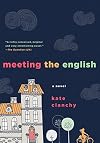
Satire of the first order - skewering the British literati, among others. Struan Robertson is a star pupil, upstanding young man, and salt of the earth person in the small town of Cuik, Scotland (in the Central Belt, as he has to keep explaining). For one year, he has a British English Lit. teacher who sees potential in him (and sees himself as a Dead Poet's Society influencer), so when he sees an ad in a literary journal for a caretaker needed for Phillip Prys, a mid-century British drama show more phenom, (and SOB), he recommends Struan broaden his world view and take it on. Struan, who grew up with his Gran after he nursed his father with MS until he died, has nothing else going until he applies to dental school, so he shows up at the London address and is engulfed in the domestic controversy that Philip's life has become. Phillip has been completely incapacitated by a stroke, and is at the mercy of his first wife, Myfanwy, who wants the house and security for the 2 children they had together - 16 year old Juliet, and 20-something, Jake, an Oxford eject. However, the house is occupied by Shirin, Phillip's 3rd, beautiful, young, foreign, artist wife. She has no intention of losing anything or repeating any part of her pushed-out-of-her-home refugee-from-Tehran history. Good-hearted Struan is sometimes a pawn, sometimes a patsy in this mess, but always concerned for Phillip's welfare and guided by his moral compass to do the right thing. In the milieu of selfish, spoiled, vengeful, Brits this is sorely tested, but ultimately good guys win on their own terms. A bit of a coming-of-age tale for our hero as he makes his way in a bigger world beyond Cuik, he also comes to terms with the responsibility of being morally good: "Struan wondered if this is what happened when you saved people, that you had to carry a bit of them on your belt forever, like a shrunken head." (247) With great power comes great responsibility - a lessons for individuals and civilizations both. show less
Meeting the English is a modern-day (set in 1989) comedy of manners: country bumpkin meets city slickers, but the bumpkin is more than he first appears and the slickers aren’t all that slick. In this case, “Bumpkin” means hailing from a mining town in central Scotland that no longer has a mine; “Slicker” means residing in London, convinced that one’s own sensitivity/intellect is superior to others’.
Struan Robertson (pronounced, STREW-in, not Strew-ANNE; it’s not an iamb) an show more exceptionally gifted student, planning to pursue a career in dentistry, takes a summer job working as an assistant to a fading playwright who has recently suffered a stroke. The playwright, Phillip Prys, is surrounded by a largely dysfunctional grouping of family and friends. His ex-wife (and mother of his two children) is a former actress, now losing money flipping houses (as we would put it today) in London’s falling real estate market. His current wife, a formerly wealthy refugee from Iran, paints post-modern Persian miniatures. His son is a self-absorbed want-to-be playwright who’s just been rusticated (in other words, kicked out for a year) from Oxford. His daughter is angry and lonely, sure she’ll never find love or happiness. His daughter’s best friend is a recovering anorexic. His agent is a semi-closeted gay man who finds Phillip demanding more and more time, while bringing in less and less revenue.
Hilarity (mostly) ensues. Some find love; some get their comeuppence; all are changed.
This is a great book to pick up when you want to laugh (not too unkindly) at others’ foibles. The style is breezy. The plot holds some surprises. If you’re starting to dream of vacation reading as you wait for winter to end, this book would be a fun title to put on your list. show less
Struan Robertson (pronounced, STREW-in, not Strew-ANNE; it’s not an iamb) an show more exceptionally gifted student, planning to pursue a career in dentistry, takes a summer job working as an assistant to a fading playwright who has recently suffered a stroke. The playwright, Phillip Prys, is surrounded by a largely dysfunctional grouping of family and friends. His ex-wife (and mother of his two children) is a former actress, now losing money flipping houses (as we would put it today) in London’s falling real estate market. His current wife, a formerly wealthy refugee from Iran, paints post-modern Persian miniatures. His son is a self-absorbed want-to-be playwright who’s just been rusticated (in other words, kicked out for a year) from Oxford. His daughter is angry and lonely, sure she’ll never find love or happiness. His daughter’s best friend is a recovering anorexic. His agent is a semi-closeted gay man who finds Phillip demanding more and more time, while bringing in less and less revenue.
Hilarity (mostly) ensues. Some find love; some get their comeuppence; all are changed.
This is a great book to pick up when you want to laugh (not too unkindly) at others’ foibles. The style is breezy. The plot holds some surprises. If you’re starting to dream of vacation reading as you wait for winter to end, this book would be a fun title to put on your list. show less
Lists
Awards


You May Also Like


Associated Authors
Statistics
- Works
- 19
- Also by
- 6
- Members
- 355
- Popularity
- #67,467
- Rating
- 3.7
- Reviews
- 12
- ISBNs
- 56
- Languages
- 1
- Favorited
- 2