
Akala
Author of Natives: Race and Class in the Ruins of Empire
Works by Akala
Visions. Part one 1 copy
Tagged
Common Knowledge
- Legal name
- Daley, Kingslee James
- Birthdate
- 1983-12-01
- Gender
- male
- Nationality
- England
UK - Birthplace
- Crawley, West Sussex, England, UK
- Map Location
- UK
Members
Reviews
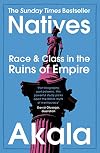
If Zack de la Rocha were British and wrote a book.
It’s a hard piece of writing to categorise. Political and personal and polemical. It’s almost like a personal work of sociology, properly referenced and with an interesting bibliography. Akala is obviously a very intelligent man with a finely tuned bullshit detector and a laser-like intellect that he turns on some very confusing issues. Thorough, precise, and sensible arguments and he never takes rhetorical shortcuts even when he’s show more angry. I didn’t agree with all his conclusions, but if we’re all going to agree we may as well give up and stop thinking now. A very thought-provoking book. I often found it sending my mind off at tangents so that reading it is almost like engaging in a dialogue. Also very funny at times. show less
It’s a hard piece of writing to categorise. Political and personal and polemical. It’s almost like a personal work of sociology, properly referenced and with an interesting bibliography. Akala is obviously a very intelligent man with a finely tuned bullshit detector and a laser-like intellect that he turns on some very confusing issues. Thorough, precise, and sensible arguments and he never takes rhetorical shortcuts even when he’s show more angry. I didn’t agree with all his conclusions, but if we’re all going to agree we may as well give up and stop thinking now. A very thought-provoking book. I often found it sending my mind off at tangents so that reading it is almost like engaging in a dialogue. Also very funny at times. show less
I first came across Akala via this awesome track: Comedy, Tragedy, History, a wonderful twist on Shakespeare. Then I came across a review of ‘Natives’ in the Guardian (of course) and was immediately intrigued. This book is a moving account of growing up mixed-race in Britain and an incisive account of racism’s history in America and Europe which also asks wider questions about class, historiography, and politics. I learned a lot from it, notably about Cuba’s role in the fall of South show more African apartheid which I’d had no idea about. Akala’s writing is erudite and clear, impassioned yet analytical, and his perspective is sadly an unusual one in contemporary non-fiction. He grew up poor in London and was treated shockingly badly at school by many of his teachers. That part of the book is especially horrifying in a very visceral way – a young child becoming aware that his teacher hates him just for the colour of his skin. Akala carefully explains how his life could easily have gone down a different, more violent path and invites the reader to empathise with young black boys who the media too often presents as violent threats:
The whole book is a systematic, brilliant unpicking of racism and white supremacy from a British perspective. Most (if not all) of the writing on race I’d previously read was by Americans (e.g. [a:Ta-Nehisi Coates|1214964|Ta-Nehisi Coates|https://images.gr-assets.com/authors/1300129823p2/1214964.jpg]) and ‘Natives’ provides a thoughtful response to American claims about the UK being much less racist than the US. Akala points out that, apart from anything else, it is much harder to gauge racial tensions in a country you are visiting as an honoured guest than one you grew up in. The experiences of his family demonstrate that racism in Britain is different to that of the US and how it has evolved over time. The commentary on the British empire’s racist legacy is especially valuable, given how thoroughly Akala dismantles lazy and comfortable assumptions about that pervade popular culture. For example:
And this on white saviour mythology around how slavery was made illegal in Britain:
This is extremely true. I personally could not name any major figures in slave trading; everything I’ve read about Georgian and Victorian Britain carefully elided it or treated it as an impersonal abstraction. I learned vastly more about Britain’s role in the slave trade from [b:The Black Jacobins: Toussaint L'Ouverture and the San Domingo Revolution|775985|The Black Jacobins Toussaint L'Ouverture and the San Domingo Revolution|C.L.R. James|https://images.gr-assets.com/books/1348230897s/775985.jpg|826133], a history of the Haitian revolution. ‘Natives’ has inspired me to read more about the British empire’s destructiveness and hidden legacy. From the helpful bibliography at the end, Gott’s [b:Britain's Empire: Resistance, Repression and Revolt|11109081|Britain's Empire Resistance, Repression and Revolt|Richard Gott|https://images.gr-assets.com/books/1373998312s/11109081.jpg|16031467] looks very promising. This book also reminded me how few non-white faces I’ve seen in privileged spaces I’ve spent time in, like the University of Cambridge. If you’re white and want to think more deeply about how racism persists in the UK, this book is a very useful source. It's extremely readable and involving, giving you a great deal to consider. I highly recommend it. show less
Accra in Ghana is obviously much poorer than London and the city faces many issues, yet teenagers stabbing each other over iPhones and postcodes is not one of them. I know for much of Britain it is easier to believe that there is a certain kind of boy that gets involved in that sort of stuff, that someone like me, an open exponent of education, could not possibly fall prey to such a mentality – if only things were so simple. The sense of hopelessness and fear felt during those formative years is so intense it is hard to even remember the sensation properly. The pressure to accumulate, the understanding that poverty is shameful, the double shame of being black and poor, the constant refrain of materialism coming from every facet of popular culture, the empty fridge, the disconnected electricity, the insecurity of being a tenant with eviction always just a few missed paycheques away, the stress and anger of your parents that trickles down far better than any capital accumulation, the naked injustices that you now know to be reality and the growing belief that one is indeed all of the negative stereotypes that the people in power say you are.
The whole book is a systematic, brilliant unpicking of racism and white supremacy from a British perspective. Most (if not all) of the writing on race I’d previously read was by Americans (e.g. [a:Ta-Nehisi Coates|1214964|Ta-Nehisi Coates|https://images.gr-assets.com/authors/1300129823p2/1214964.jpg]) and ‘Natives’ provides a thoughtful response to American claims about the UK being much less racist than the US. Akala points out that, apart from anything else, it is much harder to gauge racial tensions in a country you are visiting as an honoured guest than one you grew up in. The experiences of his family demonstrate that racism in Britain is different to that of the US and how it has evolved over time. The commentary on the British empire’s racist legacy is especially valuable, given how thoroughly Akala dismantles lazy and comfortable assumptions about that pervade popular culture. For example:
The threat posed to some people’s entire sense of identity by and exhibition of human excellence inside a black body is an amount of fear, sideways admiration and contempt for another group of humans that I can’t even imagine being constantly burdened by. These seemingly odd responses to black excellence did not pop out of a vacuum, but rather stem from centuries of anti-black marketing in European literature, thought, philosophy and historiography. Take the ‘historians’ that claimed that Africans, unlike the rest of humanity, had no history, and thus when they found evidence of this supposedly absent history from ‘pre-colonial’ Africa – from the ruins of great Zimbabwe, to the manuscripts of Timbuktu, to the sublime metal art of Ife Ife and Benin – set about trying to look for a non-African source for these works. In some cases, scholars were more willing to entertain the idea that aliens were responsible for African history than Africans! This ‘intellectual’ trend was pioneered by those who took the conditions of enslaved people - that is people physically prevented from attaining an education – and decided that their perceptions of the intellectual aptitude of slaves represented the permanent and genetically pre-determined state of all black people. To smarter and more humane European thinkers, even during the nineteenth century, it was obvious that an enslaved person had very good and obvious motivations for hiding and/or playing down their intelligence, and that any technological gaps between Europe and West Africa were no more likely to be due to skin colour than the technological gaps that existed for centuries between olive-skinned Romans and the ‘white’ people to the north and west of them, or indeed between Song China and tenth-century Britain.
And this on white saviour mythology around how slavery was made illegal in Britain:
What does it say about this society that, after two centuries of being of the most successful human traffickers in history, the only historical figure to emerge from this entire episode as a household name is a parliamentary abolitionist? Even though the names of many of these human traffickers surround us on the streets and buildings bearing their names, stare back at us through the opulence of their country estates still standing as monuments to king sugar, and live on in the institutions and infrastructure built partly from their profits – insurance, modern banking, railways – none of their names have entered the national memory to anything like the degree that Wilberforce has.
In fact, I sincerely doubt that most Brits could name a single soul involved with transatlantic slavery other than Wilberforce himself. The ability for collective, selective amnesia in the service of easing a nation’s cognitive dissonance is nowhere better exemplified than in the manner that most of Britain has chosen to remember transatlantic slavery in particular, and the British empire more generally.
This is extremely true. I personally could not name any major figures in slave trading; everything I’ve read about Georgian and Victorian Britain carefully elided it or treated it as an impersonal abstraction. I learned vastly more about Britain’s role in the slave trade from [b:The Black Jacobins: Toussaint L'Ouverture and the San Domingo Revolution|775985|The Black Jacobins Toussaint L'Ouverture and the San Domingo Revolution|C.L.R. James|https://images.gr-assets.com/books/1348230897s/775985.jpg|826133], a history of the Haitian revolution. ‘Natives’ has inspired me to read more about the British empire’s destructiveness and hidden legacy. From the helpful bibliography at the end, Gott’s [b:Britain's Empire: Resistance, Repression and Revolt|11109081|Britain's Empire Resistance, Repression and Revolt|Richard Gott|https://images.gr-assets.com/books/1373998312s/11109081.jpg|16031467] looks very promising. This book also reminded me how few non-white faces I’ve seen in privileged spaces I’ve spent time in, like the University of Cambridge. If you’re white and want to think more deeply about how racism persists in the UK, this book is a very useful source. It's extremely readable and involving, giving you a great deal to consider. I highly recommend it. show less

Best for:
White people living in the UK; anyone who likes to suggest that there isn’t racism or classism in the UK.
In a nutshell:
Journalist and rapper Akala discusses racism and classism in the UK and the places it colonized set against the memoir of his life growing up as someone racialized as Black in the UK.
Worth quoting:
I listened to the audio book so no specific direct quotes, but I can say that I did take a lot of notes in my notes app.
Why I chose it:
Growing up in the US I was barely show more taught anything about the history of racism and the current racism there. And definitely learned nothing about racism in the UK.
What it left me feeling:
Better educated
Review:
This book is part memoir and part well-researched political discussion of race and class. It isn’t so much prescriptive — Akala isn’t writing a book about how we end race and class disparities in the UK, though he definitely touches on how things can be improved — as it is descriptive. It comes across as extremely well researched, and the arguments puts forward (especially when pointing out hypocrisy) make sense.
Akala was born to a white mother from the outer islands of Scotland and a Black father from the Caribbean. He discusses the education he received in Camden, a part of London, and the racism he encountered from teachers there. He also discusses what is was like as a Black teen, and what he and some of his peers went through, including interactions with racist police and less-than-legal activities.
These stories of his youth and young adulthood serve to tell us more about his life experiences, but also serve as jumping off points to discuss broader political and sociological issues. He touches on so many topics, from the abandonment of the Windrush generation, to the fight against apartheid, to society’s desire to only focus on racism when it’s the type typically engaged in by poor people (as opposed to the institutional racism of the wealthy ruling class).
He has a great chapter debunking a lot of absurd thoughts and comments, such as playing the ‘race card,’ the concept of going back where they ostensibly came from, identity politics, and freedom of speech. He always backs these comments up with data; for example, did you know that in 2017, Jamaica was 8th in the world for press freedom, while the UK was … 40th?
He also talks a lot about the assumptions around which countries have racism, and what that racism looks like. For example, there tends to be rumblings in the UK that the racism here is not as bad as in the UK, which I’ve heard myself as someone from the US living in the UK in 2020 when police murder of Black people was getting news coverage. There was a lot of ‘it’s not as bad here’ comments from white British people. At the same time, Akala offers a nuanced take about how racism manifests itself given the different histories in different countries.
There’s so much more I could go on about, and I won’t because the book isn’t prohibitively long so I think you should just go read it. But I did want to mention some areas of inconsistency / hypocrisy that Akala brings up a couple of times. One is Black on Black crime. Specifically, why a Black person stabbing another Black person in London gets that label, but a gang fight between two white people in Glasgow, or the entire Troubles in the North of Ireland isn’t considered or referred to or brought up as white on white crime. Another is how we can support and celebrate Mandela for ending apartheid while also celebrating those who helped enact it (Churchill) or denigrating others who early on were vocal in opposing it (Cuba and Castro).
I enjoyed hearing the author read the book in his own voice, but I think I might pick up a physical copy too so I can have it to easily refer back to.
Recommend to a Friend / Keep / Donate it / Toss it:
Recommend to a Friend show less
White people living in the UK; anyone who likes to suggest that there isn’t racism or classism in the UK.
In a nutshell:
Journalist and rapper Akala discusses racism and classism in the UK and the places it colonized set against the memoir of his life growing up as someone racialized as Black in the UK.
Worth quoting:
I listened to the audio book so no specific direct quotes, but I can say that I did take a lot of notes in my notes app.
Why I chose it:
Growing up in the US I was barely show more taught anything about the history of racism and the current racism there. And definitely learned nothing about racism in the UK.
What it left me feeling:
Better educated
Review:
This book is part memoir and part well-researched political discussion of race and class. It isn’t so much prescriptive — Akala isn’t writing a book about how we end race and class disparities in the UK, though he definitely touches on how things can be improved — as it is descriptive. It comes across as extremely well researched, and the arguments puts forward (especially when pointing out hypocrisy) make sense.
Akala was born to a white mother from the outer islands of Scotland and a Black father from the Caribbean. He discusses the education he received in Camden, a part of London, and the racism he encountered from teachers there. He also discusses what is was like as a Black teen, and what he and some of his peers went through, including interactions with racist police and less-than-legal activities.
These stories of his youth and young adulthood serve to tell us more about his life experiences, but also serve as jumping off points to discuss broader political and sociological issues. He touches on so many topics, from the abandonment of the Windrush generation, to the fight against apartheid, to society’s desire to only focus on racism when it’s the type typically engaged in by poor people (as opposed to the institutional racism of the wealthy ruling class).
He has a great chapter debunking a lot of absurd thoughts and comments, such as playing the ‘race card,’ the concept of going back where they ostensibly came from, identity politics, and freedom of speech. He always backs these comments up with data; for example, did you know that in 2017, Jamaica was 8th in the world for press freedom, while the UK was … 40th?
He also talks a lot about the assumptions around which countries have racism, and what that racism looks like. For example, there tends to be rumblings in the UK that the racism here is not as bad as in the UK, which I’ve heard myself as someone from the US living in the UK in 2020 when police murder of Black people was getting news coverage. There was a lot of ‘it’s not as bad here’ comments from white British people. At the same time, Akala offers a nuanced take about how racism manifests itself given the different histories in different countries.
There’s so much more I could go on about, and I won’t because the book isn’t prohibitively long so I think you should just go read it. But I did want to mention some areas of inconsistency / hypocrisy that Akala brings up a couple of times. One is Black on Black crime. Specifically, why a Black person stabbing another Black person in London gets that label, but a gang fight between two white people in Glasgow, or the entire Troubles in the North of Ireland isn’t considered or referred to or brought up as white on white crime. Another is how we can support and celebrate Mandela for ending apartheid while also celebrating those who helped enact it (Churchill) or denigrating others who early on were vocal in opposing it (Cuba and Castro).
I enjoyed hearing the author read the book in his own voice, but I think I might pick up a physical copy too so I can have it to easily refer back to.
Recommend to a Friend / Keep / Donate it / Toss it:
Recommend to a Friend show less

This book is incredibly difficult to review. It criticises white British attitudes and, whilst I know that they leave much to be desired, my natural instinct is to defend and refute what is, unquestionably, a theses written from the alternative bias.
How far are my doubts about sections of this book justified, and how much is it my bias that rails against accepting due chastisement?
If I were to accept, without any reservation, my response wouldn't be honest: were I to deny any truth therein, show more I would become a member of Reform. This is an uncomfortable read and I learned a lot, not so much about the levels of discrimination, but about the human angle: what it's like to be black in Britain; how banging one's head against prejudice, on a regular basis, leads to an attitude of, "if they want me to be an ignorant savage, then I'll behave like one". My friends will tell you that I can be somewhat of a contrarian and I could so easily see me taking that view, were I not lucky enough to have been born white, male and lower, lower middleclass. (Let me stress, that I consider this lucky because of the benefits that accrue from this set of circumstances and NOT because I think white men are superior to women, or men of other ethnic origins!)
Worth the read but, I can't promise to read it again, even though it would probably benefit me so to do. show less
How far are my doubts about sections of this book justified, and how much is it my bias that rails against accepting due chastisement?
If I were to accept, without any reservation, my response wouldn't be honest: were I to deny any truth therein, show more I would become a member of Reform. This is an uncomfortable read and I learned a lot, not so much about the levels of discrimination, but about the human angle: what it's like to be black in Britain; how banging one's head against prejudice, on a regular basis, leads to an attitude of, "if they want me to be an ignorant savage, then I'll behave like one". My friends will tell you that I can be somewhat of a contrarian and I could so easily see me taking that view, were I not lucky enough to have been born white, male and lower, lower middleclass. (Let me stress, that I consider this lucky because of the benefits that accrue from this set of circumstances and NOT because I think white men are superior to women, or men of other ethnic origins!)
Worth the read but, I can't promise to read it again, even though it would probably benefit me so to do. show less
Lists
Awards


You May Also Like


Associated Authors
Statistics
- Works
- 6
- Members
- 630
- Popularity
- #39,983
- Rating
- 4.2
- Reviews
- 15
- ISBNs
- 17
- Favorited
- 1