
Laurie J. Marks
Author of Fire Logic
About the Author
Series
Works by Laurie J. Marks
Fire Logic Standee 1 copy
Associated Works
The WisCon Chronicles, Vol. 2: Provocative essays on feminism, race, revolution, and the future (2008) — Contributor — 25 copies, 1 review
Tagged
Common Knowledge
- Birthdate
- 1957-03-27
- Gender
- female
- Education
- Brown University (BA|1980)
- Occupations
- lecturer (University of Massachusetts Boston, College of Liberal Arts)
- Organizations
- Science Fiction and Fantasy Writers of America (SFWA)
Massachusetts Teachers Association
The Genrettes - Agent
- Shana Cohen
Donald Maass - Relationships
- Mensinger, Deb (wife)
- Nationality
- USA
- Places of residence
- Melrose, Massachusetts, USA
Newport Beach, California, USA (birthplace) - Associated Place (for map)
- USA
Members
Reviews

I'll note right off the bat that, while this is the start of a four-book series, it tells a complete story on its own, standing alone while leading into the next part of the characters' lives.
This book, the start of the story of several people in a country that has been overrun by invaders, manages to avoid many of the standard fantasy cliches. For example, while one side of the conquerors vs resistance clearly comes off as worse than the other, the better side doesn't exactly come off as show more the "good guys" either. Even the setting is atypical, being neither pseudo-medieval nor contemporary, but rather during the time period when firearms are starting to become more common but haven't displaced other weaponry in warfare yet.
All of the characters have their flaws, and the closest anyone seems to be to being always right in their thinking is the long-dead writer of a manuscript with a better-seeming philosophy than that of either the conquerors or the leader of the resistance (although it might turn out to be a bit naive when dealing with either of those forces). By the end of the book, one can understand, if not necessarily sympathize with, the motivations of most of the major characters and forces involved.
I'm not sure where the story of the series will go, but I'm in for at least one more book. show less
This book, the start of the story of several people in a country that has been overrun by invaders, manages to avoid many of the standard fantasy cliches. For example, while one side of the conquerors vs resistance clearly comes off as worse than the other, the better side doesn't exactly come off as show more the "good guys" either. Even the setting is atypical, being neither pseudo-medieval nor contemporary, but rather during the time period when firearms are starting to become more common but haven't displaced other weaponry in warfare yet.
All of the characters have their flaws, and the closest anyone seems to be to being always right in their thinking is the long-dead writer of a manuscript with a better-seeming philosophy than that of either the conquerors or the leader of the resistance (although it might turn out to be a bit naive when dealing with either of those forces). By the end of the book, one can understand, if not necessarily sympathize with, the motivations of most of the major characters and forces involved.
I'm not sure where the story of the series will go, but I'm in for at least one more book. show less
 This review was written for LibraryThing Early Reviewers.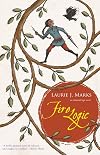
Fantasy sometimes has a peculiar way of delving into utterly fantastic worlds and landscapes while still speaking truths about the world we're living in. I think Ursula K. Le Guin comes most to mind when having that discussion -- at least for me -- and I've always loved her books for it. Now, I'll love Laurie J. Marks' books for the same reason. High praise? Absolutely. But also true.
Fire Logic begins the Elemental Logic series with a powerful and war-torn novel that focuses on a tight set show more of characters who feel as real as they are fantastic. War, addiction, faith vs. hope, magic, heartbreak... it's all here, alongside fantastic story-telling. The blurb for the fourth book in the series (which is now sitting on my desk) calls the series 'exciting, thoughtful, queer, diverse, politically aware, complex, [and] timely'--and all of that applies to even this first book in the series, which I suspect I'll be recommending to readers for years to come. It is smart, powerful, and full of meaning, while being carried along on lush, gorgeous writing and characters who come to life nearly from page 1.
For fantasy readers, I can't recommend this enough. Personally, I can't wait to dive into book 2. show less
Fire Logic begins the Elemental Logic series with a powerful and war-torn novel that focuses on a tight set show more of characters who feel as real as they are fantastic. War, addiction, faith vs. hope, magic, heartbreak... it's all here, alongside fantastic story-telling. The blurb for the fourth book in the series (which is now sitting on my desk) calls the series 'exciting, thoughtful, queer, diverse, politically aware, complex, [and] timely'--and all of that applies to even this first book in the series, which I suspect I'll be recommending to readers for years to come. It is smart, powerful, and full of meaning, while being carried along on lush, gorgeous writing and characters who come to life nearly from page 1.
For fantasy readers, I can't recommend this enough. Personally, I can't wait to dive into book 2. show less

This book was an odd duck for me. It has so many elements I love--realistic, morally ambiguous politics, fully realized worldbuilding that isn't over-described, female characters as competent and integral to the plot as the males, alternate social structures depicted sans virtue signaling, and some of the most beautiful descriptive language I've read everywhere. And yet, the overall effect is like reading a very well-written encyclopedia article: individuals appear and do things that shape show more history, but the reader's window into their psyches and emotional lives is detached and clinical. And that's this novel's major handicap: because I was not emotionally invested in these characters, I felt no pain when horrors befell them nor elation when they triumphed. I by no means regret reading this book and will probably continue on to the next, but the experience is more akin to reading a nonfiction historical overview than the viscerally immersive experience the best fiction evokes. show less
This review was written for LibraryThing Early Reviewers.This is an ER book I've had around for yonks because I couldn't get into it. Having realized I never will, I did plow through in order to figure out why the story didn't take hold of me. The book is well written, the world-building is fine if dependent on the work of Moon, Hobbs and others (which is OK with me as long as there is some flair involved), the characters have plenty of potential . . . so why, for me, no spark? The answer is, I don't know. The best I can come up with is that I show more couldn't sense an underlying pressure to tell this particular story? Not only is that vague, but it feels like an unfair thing to say because of the work Marks has put into the story. I'm giving the book *** stars, mainly for craftsmanship. I suspect this is a story that will either work for you or it won't. *** show less
This review was written for LibraryThing Early Reviewers.Lists
Awards


You May Also Like


Associated Authors
Statistics
- Works
- 11
- Also by
- 3
- Members
- 1,875
- Popularity
- #13,735
- Rating
- 3.9
- Reviews
- 77
- ISBNs
- 23
- Favorited
- 9

