
Barbara Brackman
Author of Encyclopedia of Pieced Quilt Patterns
About the Author
Image credit: via Moda Fabrics
Works by Barbara Brackman
Quilts from the Civil War: Nine Projects, Historic Notes, Diary Entries (2009) 184 copies, 2 reviews
America's Printed Fabrics 1770-1890: 8 Reproduction Quilt Projects: Historic Notes and Photographs; Dating Your Quilts (2004) 169 copies, 2 reviews
Facts and Fabrications: Unraveling the History of Quilts and Slavery: 8 Projects, 20 Blocks, First-Person Accounts (2006) 140 copies, 3 reviews
Making History: Quilts & Fabric from 1890-1970: 9 Reproduction Quilt Projects - Historic Notes & Photographs - Dating Your Quilts (2008) 120 copies
Barbara Brackman's Civil War Sampler: 50 Quilt Blocks with Stories from History (2012) 61 copies, 1 review
The Kansas City Star Quilts Sampler: 60 Blocks from 1928-1961, Historical Profiles by Barbara Brackman (2018) — Author — 31 copies
Susan McCord, the Unforgettable Artistry of an Indiana Quilter (Our Favorite Quiltmakers) (2004) 14 copies
Divided Hearts, A Civil War Friendship Quilts: Historical Narratives, 12 Blocks, Instruction & Inspirations (2020) 7 copies, 1 review
Patchwork Pattern 1030 1 copy
Unraveling The Story 1 copy
Blockbase 1 copy
A Morris Tapestry 1 copy
Tagged
Common Knowledge
- Canonical name
- Barbara Brackman
- Birthdate
- 1945-07-06
- Gender
- female
- Education
- University of Kansas (BA|art education|1967)
University of Kansas (MA|Special Education}1974) - Occupations
- author
quilt historian
fabric designer - Organizations
- American Quilt Study Group
- Awards and honors
- Quilter's Hall of Fame (2001)
- Short biography
- Brackman is best known for her Encyclopedia of Pieced Quilt Patterns (1979), which identified 4216 pieced quilt patterns, and Encyclopedia of Applique (1993), which identified 1795 appliqued quilt patterns. Both books are based on quilt collections and published sources from roughly 1800 to 1970. These books have also been released in electronic form under the title BlockBase (DOS version in 1995, Windows version in 2000). Clues in the Calico, published in 1989, was one of the first studies to use an anlaytic approach to identifying vintage quilts and other textiles on the basis of their color and design attributes. Brackman has also been active in debunking the fanciful myths surrounding the so-called "underground railroad quilt code".
- Nationality
- USA
- Birthplace
- New York, New York, USA
- Places of residence
- New York, New York, USA (birth)
Lawrence, Kansas, USA - Associated Place (for map)
- USA
Members
Reviews
Divided Hearts, A Civil War Friendship Quilts: Historical Narratives, 12 Blocks, Instruction & Inspirations by Barbara Brackman
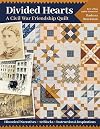
Barbara Brackman is one of my favorite quilt historians and bloggers. I love how she combines history, genealogy research, quilting and women's work, and women's history in her research.
Her newest book, Divided Hearts , arose from her free block of the month patterns on her Civil War Quilts blog.
Inspired by friendship quilts created between 1840 and 1861, Brackman focuses on women with 'divided hearts', Northern women living in the South, and Southern women educated in the North, or with show more families divided by the Civil War.
The twelve blocks represent the most popular pieced quilt designs of this time, frequently found in friendship quilts. The blocks are presented in 12" and 8" sizes. The patterns include patterns for inked signatures.
Blog followers who participated in sewing the blocks and completing the quilt are represented in the book. The variety of interpretations is broad, from reproduction fabrics reflecting those of the mid-19th c. to the use of contemporary fabrics with a modern vibe.
Brackman is a premier quilt historian who created the first collections of existent pieced and applique quilt patterns. Her knowledge on quilt history is outstanding. But she goes further with her deep research into the women who made quilts or owned quilts.
In Divided Hearts, readers learn about twelve women's lives that spanned the divide. Photographs and maps accompany the biographies. History comes alive through these women. Resources are given for those who want to 'read more'.
*Indiana Fletcher, from a Yankee family who moved to the South. Wandering Lover quilt block
Mary Lyon and Mount Holyoke. (Emily Dickinson attended Mount Holyoke briefly.) Lend and Borrow quilt block
*Constance Fenimore Woolson, a Northern girl who attended school with Southern girls. Friendship Star quilt block.( Read my review a biography of Woolson by Anne Boyd Rioux here.)
*Sarah Powell Leeds, a Quaker teacher. Quaker Pride quilt block
*Charlotte Forten Grimke' was the daughter of a Freeman. Charlotte married Rev. Francis J. Grimke. Francis's father was brother to Angelina and Sarah Grimke, plantation born women who became Quakers and abolitionists. His mother was Nancy Weston, Henry's slave mistress. Cross and Crown quilt block. (I first read about Charlotte in Lift Up Thy Voice: The Grimke Family's Journey from Slaveholders to Civil Rights Leaders by Mark Perry.)
*The Petigru Sisters, Southern women who went to school in the North. Mary Petigru Chestnut and Sue Petigru King had a contentious relationship. Mary Chestnut's diary is quite famous. Madame's Star quilt block
*Caroline Russell Seabury, a New England educator who taught in the South. Chimney Sweep quilt block.
*Mittie Bulloch Roosevelt, Teddy's beloved mother. The Southern Bullochs summered in the North. Southern Cross quilt block.
*Mary Ann Todd Lincoln was born in Kentucky and her family were Confederates. Lexington Belle quilt block
*Elizabeth Keckley and Anna Burwell. Keckley was a servant in the Burwell household. She became Mary Todd Lincoln's dressmaker and trusted friend. Carolina Lily quilt block.(I first read about her in Mrs. Lincoln and Mrs. Keckly : The Remarkable Story of the Friendship Between a First Lady and a Former Slave by Jennifer Fleischner.)
*Emily Wharton Sinkler was the daughter of a Philadelphia lawyer who wed a Southern man. Double Star quilt block
*Emma Willard and her 'every-widening circle' is represented by the This and That quilt block.
Each block includes instructions and examples. Various settings are offered: straight setting; alternating with double nine-patch blocks; on-point with sashing and applique; on-point with pieced border; on-point as a wall hanging of five blocks. A Gallery of finished quilts completes the book.
Quilters will have fun making the quilt their own. You don't have to be a quilt maker to enjoy reading the history and biographies of these amazing women.
Read Brackman's blog post about her book at
http://barbarabrackman.blogspot.com/2...
I was given a free egalley by the publisher. My review is fair and unbiased. show less
Her newest book, Divided Hearts , arose from her free block of the month patterns on her Civil War Quilts blog.
Inspired by friendship quilts created between 1840 and 1861, Brackman focuses on women with 'divided hearts', Northern women living in the South, and Southern women educated in the North, or with show more families divided by the Civil War.
The twelve blocks represent the most popular pieced quilt designs of this time, frequently found in friendship quilts. The blocks are presented in 12" and 8" sizes. The patterns include patterns for inked signatures.
Blog followers who participated in sewing the blocks and completing the quilt are represented in the book. The variety of interpretations is broad, from reproduction fabrics reflecting those of the mid-19th c. to the use of contemporary fabrics with a modern vibe.
Brackman is a premier quilt historian who created the first collections of existent pieced and applique quilt patterns. Her knowledge on quilt history is outstanding. But she goes further with her deep research into the women who made quilts or owned quilts.
In Divided Hearts, readers learn about twelve women's lives that spanned the divide. Photographs and maps accompany the biographies. History comes alive through these women. Resources are given for those who want to 'read more'.
*Indiana Fletcher, from a Yankee family who moved to the South. Wandering Lover quilt block
Mary Lyon and Mount Holyoke. (Emily Dickinson attended Mount Holyoke briefly.) Lend and Borrow quilt block
*Constance Fenimore Woolson, a Northern girl who attended school with Southern girls. Friendship Star quilt block.( Read my review a biography of Woolson by Anne Boyd Rioux here.)
*Sarah Powell Leeds, a Quaker teacher. Quaker Pride quilt block
*Charlotte Forten Grimke' was the daughter of a Freeman. Charlotte married Rev. Francis J. Grimke. Francis's father was brother to Angelina and Sarah Grimke, plantation born women who became Quakers and abolitionists. His mother was Nancy Weston, Henry's slave mistress. Cross and Crown quilt block. (I first read about Charlotte in Lift Up Thy Voice: The Grimke Family's Journey from Slaveholders to Civil Rights Leaders by Mark Perry.)
*The Petigru Sisters, Southern women who went to school in the North. Mary Petigru Chestnut and Sue Petigru King had a contentious relationship. Mary Chestnut's diary is quite famous. Madame's Star quilt block
*Caroline Russell Seabury, a New England educator who taught in the South. Chimney Sweep quilt block.
*Mittie Bulloch Roosevelt, Teddy's beloved mother. The Southern Bullochs summered in the North. Southern Cross quilt block.
*Mary Ann Todd Lincoln was born in Kentucky and her family were Confederates. Lexington Belle quilt block
*Elizabeth Keckley and Anna Burwell. Keckley was a servant in the Burwell household. She became Mary Todd Lincoln's dressmaker and trusted friend. Carolina Lily quilt block.(I first read about her in Mrs. Lincoln and Mrs. Keckly : The Remarkable Story of the Friendship Between a First Lady and a Former Slave by Jennifer Fleischner.)
*Emily Wharton Sinkler was the daughter of a Philadelphia lawyer who wed a Southern man. Double Star quilt block
*Emma Willard and her 'every-widening circle' is represented by the This and That quilt block.
Each block includes instructions and examples. Various settings are offered: straight setting; alternating with double nine-patch blocks; on-point with sashing and applique; on-point with pieced border; on-point as a wall hanging of five blocks. A Gallery of finished quilts completes the book.
Quilters will have fun making the quilt their own. You don't have to be a quilt maker to enjoy reading the history and biographies of these amazing women.
Read Brackman's blog post about her book at
http://barbarabrackman.blogspot.com/2...
I was given a free egalley by the publisher. My review is fair and unbiased. show less
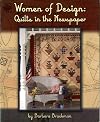
Barbara Brackman is an excellent quilt historian who has written several books that combine history with quilt-making instructions. In this book, Brackman covers the era when newspapers often published quilt patterns with rudimentary instructions. There were several people (almost all women) who were behind the patterns. Most of them had businesses of their own in selling more detailed quilt instructions. Brackman provides a thumbnail biography of each one featured, such as Ruby Short McKim, show more and associates a quilt block with that person. As it turns out, the blocks featured here are all basket blocks. An interesting and informative read, but I am not sure yet if I will actually make a quilt from this book (so many quilts, so little time). show less
Facts & Fabrications-Unraveling the History of Quilts & Slavery: 8 Projects 20 Blocks First-Person Accounts by Barbara Brackman
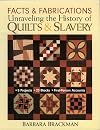
I began the book with enthusiasm, but couldn’t wait to finish. The author brought many civil war photographs to light, and I appreciate that. But her pronouncements seem to often be opinion, nowhere nearly factual. It gives a new meaning to the title. For example, her decision that people wanted to be remembered as “solemn,” therefore not smiling in the photographs.
First of all, they were instructed not to smile because of the very slow shutter speeds. Secondly, as with everything show more else in this world, one tried hard to follow the proper protocol.
I was pretty disappointed. show less
First of all, they were instructed not to smile because of the very slow shutter speeds. Secondly, as with everything show more else in this world, one tried hard to follow the proper protocol.
I was pretty disappointed. show less
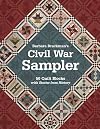
I really enjoyed walking through ‘Barbara Brackman’s Civil War Sampler’. Brackman did not make a book with 50 blocks in it, she tells the stories of the Civil War, and what each block would represent. The Civil War Sampler is a history of the War Between the States. The North and the South are each represented by the blocks, and Brackman even uses references to other books, where she obtained her information. Each block is shown in two colorways and instructions are given on how to show more make each block.
I have never been a history buff, but books like Brackman’s Civil War Sampler have become increasingly popular to me. After making a sample block for another person in a block swap for her own civil war quilt, I am becoming to understand both the political views during the three years of the War, and the options that were(n’t) available to the quilters of that time in history.
If you would like to learn more about Civil War history, along with learning new blocks, this book will be a welcome addition to your library!
http://www.ctpub.com/productdetails.cfm?PC=2743 show less
I have never been a history buff, but books like Brackman’s Civil War Sampler have become increasingly popular to me. After making a sample block for another person in a block swap for her own civil war quilt, I am becoming to understand both the political views during the three years of the War, and the options that were(n’t) available to the quilters of that time in history.
If you would like to learn more about Civil War history, along with learning new blocks, this book will be a welcome addition to your library!
http://www.ctpub.com/productdetails.cfm?PC=2743 show less
Awards


You May Also Like


Statistics
- Works
- 44
- Members
- 2,123
- Popularity
- #12,120
- Rating
- 4.2
- Reviews
- 23
- ISBNs
- 52
- Languages
- 1
- Favorited
- 2