

Rachel Ingalls (1940–2019)
Author of Mrs. Caliban
About the Author
Rachel Holmes Ingalls was born in Boston, Massachusetts on May 13, 1940. She received a bachelor's degree in languages from Radcliffe in 1962. She moved to London in 1965. Her first book, Theft, was published in 1970 and received the Authors' Club First Novel Award. Her other books included Mrs. show more Caliban and Binstead's Safari. She died from myeloma on March 6, 2019 at the age of 78. (Bowker Author Biography) show less
Works by Rachel Ingalls
A Gift of the Gods - story 1 copy
El safari dels Binstead 1 copy
Associated Works
The Literary Lover: Great Stories of Passion and Romance (1993) — Contributor — 55 copies, 2 reviews
Tagged
Common Knowledge
- Legal name
- Ingalls, Rachel Holmes
- Birthdate
- 1940-05-13
- Date of death
- 2019-03-06
- Gender
- female
- Occupations
- novelist
short story writer - Awards and honors
- American Academy of Arts and Letters Academy Award (Literature, 1991)
- Relationships
- Ingalls, Daniel H. H. (Sanskrit scholar, father)
Ingalls, Daniel H. J., Jr (computer scientist, brother) - Nationality
- USA (birth)
- Birthplace
- Boston, Massachusetts, USA
- Places of residence
- Cambridge, Massachusetts, USA
- Place of death
- London, England, UK
- Associated Place (for map)
- Massachusetts, USA
Members
Reviews
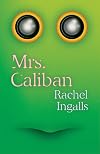
Dorothy is overwhelmed by her son’s death, a miscarriage, and the death of a dog that was supposed to have comforted her. Her marriage is unfulfilling since she and Fred, her husband, live separately under the same roof. Fred has been unfaithful. Dorothy is incredibly lonely and seeks companionship and love. My favorite quote from the novel is "I think we're too unhappy to get divorced," found on page 17.
After hearing warnings on the radio that a dangerous monster has escaped from an show more oceanographic institute, which may be figments of her imagination and unconscious, she allows Larry, the frogman monster, into her house and lets him stay in the guest room. She gives him food and finds that he is a good listener when she shares many of the depressing aspects of her life and her concerns about her only friend Estelle. Dorothy has both an emotional and sexual affair with Larry and begins to develop some self-esteem.
It doesn’t matter whether Larry is a live creature or something that Dorothy imagines to fill a void in her life. With either interpretation, we have an engaging novel with plot points and themes worth pondering. Dorothy refuses to believe that Larry is violent or dangerous. Based on Larry’s reports, she thinks it is much more likely that the researchers mistreated him. While reading this well-written and concise novel, the author gives us much to consider. Questions regarding the quality of relationships both in marriage and friendships provide subtext. Larry provides pertinent and poignant commentary about differences and sameness within and between species. Dorothy reconsiders many notions about finding one’s kindred spirit. The characters also give us much to consider about loyalty and betrayal among friends and spouses.
See all my reviews
https://quipsandquotes.net/ show less
After hearing warnings on the radio that a dangerous monster has escaped from an show more oceanographic institute, which may be figments of her imagination and unconscious, she allows Larry, the frogman monster, into her house and lets him stay in the guest room. She gives him food and finds that he is a good listener when she shares many of the depressing aspects of her life and her concerns about her only friend Estelle. Dorothy has both an emotional and sexual affair with Larry and begins to develop some self-esteem.
It doesn’t matter whether Larry is a live creature or something that Dorothy imagines to fill a void in her life. With either interpretation, we have an engaging novel with plot points and themes worth pondering. Dorothy refuses to believe that Larry is violent or dangerous. Based on Larry’s reports, she thinks it is much more likely that the researchers mistreated him. While reading this well-written and concise novel, the author gives us much to consider. Questions regarding the quality of relationships both in marriage and friendships provide subtext. Larry provides pertinent and poignant commentary about differences and sameness within and between species. Dorothy reconsiders many notions about finding one’s kindred spirit. The characters also give us much to consider about loyalty and betrayal among friends and spouses.
See all my reviews
https://quipsandquotes.net/ show less
I really loved the autobiographical essays in Part I, particularly Driving as Metaphor, On Rudeness, and of course, Aftermath. I'm being dramatic (or am I?), but I'm pretty infatuated with Cusk's ability to introduce an idea, go off on a tangent for about 20 pages, and then swiftly circle back to it to tie things up with finesse. Upon picking Coventry up, I didn't realize that Part II was criticism, but I'm so happy it was. Typically I read Cusk's work with focus and intent, but I actually show more struggled with this one because the tone was so monotonous throughout the first six essays.
The stand out to me in Part II was Eat, Pray, Love. It's smart, humorous, and to be blunt, quite honest:
"Women like this literature because it alleviates feelings of pressure without the attendant risks of rebellion or change."
"The problem lies in the egotism in these female goddesses and gurus who require that their female audience to standstill and they twirl about. Who require us to watch and listen, to laugh at their jokes, admire their beauty, reality, and their freedoms. To witness their successes ... but to say that would be to take it all the much too serious." show less
The stand out to me in Part II was Eat, Pray, Love. It's smart, humorous, and to be blunt, quite honest:
"Women like this literature because it alleviates feelings of pressure without the attendant risks of rebellion or change."
"The problem lies in the egotism in these female goddesses and gurus who require that their female audience to standstill and they twirl about. Who require us to watch and listen, to laugh at their jokes, admire their beauty, reality, and their freedoms. To witness their successes ... but to say that would be to take it all the much too serious." show less
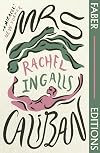
Mrs. Caliban by Rachel Ingalls is a peculiar story whose plot concerns a lonely housewife who finds comfort and companionship with an amphibious sea monster named Larry. I was surprised to find that the story was originally published in 1982 and has been re-issued as it certainly felt and read as being very current.
Dorothy and Fred are a miserable couple, they have suffered through the loss of their child and Fred’s infidelities. Dorothy feels very cut off from everyone and is now starting show more to hear “special” messages directed at her from the radio. When a giant frog-like male creature wanders into her kitchen she finds comfort, love and sexual fulfillment. She decides to help Larry to return to his home as he has been terribly mistreated at the research institute that he escaped from.
I puzzled over how to classify this surreal and compelling book. Magical realism? An Allegory? A fantasy? I settled on satire as it’s themes and issues were a tongue-in-cheek look at gender politics, mental health issues, and what it means to be human. I can’t say that I totally loved Mrs. Caliban as I found it to be quite melodramatic and over-the-top, but at a little over a hundred pages this is a quick, witty and intriguing story. show less
Dorothy and Fred are a miserable couple, they have suffered through the loss of their child and Fred’s infidelities. Dorothy feels very cut off from everyone and is now starting show more to hear “special” messages directed at her from the radio. When a giant frog-like male creature wanders into her kitchen she finds comfort, love and sexual fulfillment. She decides to help Larry to return to his home as he has been terribly mistreated at the research institute that he escaped from.
I puzzled over how to classify this surreal and compelling book. Magical realism? An Allegory? A fantasy? I settled on satire as it’s themes and issues were a tongue-in-cheek look at gender politics, mental health issues, and what it means to be human. I can’t say that I totally loved Mrs. Caliban as I found it to be quite melodramatic and over-the-top, but at a little over a hundred pages this is a quick, witty and intriguing story. show less
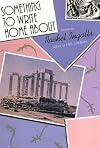
Ms. Ingalls died this past March 5th. I've got this collection of her short stories out of the library for a short while longer. I want to absorb a bit more of what the inspired author left us, and this was the first book I found that I didn't have to get from a different library system.
Theft retells the crucifixion story from one of the thieves' point of view. Horrifying. The details of his dying, the cruelty of the world, all mashed up with the expectation that I was reading about the Jim show more Crow South suddenly morphing into clarity about the actual subject...the sheer, gut-churning *awfulness* of realizing this story's timelessness has many, many facets and not all of them are facile...the hideous way the world in its unchanging indifference crushes the already fallen and, uncaring, grinds on.
This Easter is a notable one. I've read something about the subject that has instructed me and edified me. All it took was a talented writer telling a coherent story!
The Man Who Was Left Behind follows Mackenzie, a WWI vet whose life was derailed by tragedies. I so empathized with him, I live among people like him, I am myself like him; a man whose life changed stations without warning or explanation or consultation, who carries on without a whole lot of interest in the proceedings and who, in the end, disconnects from the world so he can get on with living his span out.
It was poignant to me that Mackenzie left everything behind to be in the present which, for him, consisted of scraping off the detritus of his past. I liked Mackenzie, but I suspect lots of readers wouldn't and didn't. People who still have a lot to lose don't like people who don't, as a rule; the gulf is wide and the bridges few and far between. I liked that he read old books from the library to use his brain. But of course I would.
Early Morning Sightseer several things...I hated Tilney, and Barney was a bore; England really soaked into Author Ingalls ("pyjamas" and "moving house" from an Indiana boy? Never); and there are so many ways I felt Patricia Highsmith's fingers on this piece it was unnerving. I loved several turns of phrase, though; it is, after all, a Rachel Ingalls piece.
There's an easter egg for the previous story, The Man Who Was Left Behind, in a minor character's name; it made me smile.
St. George and the Nightclub endings are as awkward and full of mistakes and fearful silences and babbling idiocies as beginnings are; the end of a marriage never, ever comes easy. Don cheated, some sleazeball told; Jeanie hurt, then hurt him; no one does it right all the time.
Forgiveness? What's that? A Rhodes nightclub evening with fools and lushes? No. Abandon hope. Just...breathe. And be damned grateful you still can.
Something to Write Home About details the final moments of self-delusion in John's two-year marriage to Amy, whose increasing mental illness is no longer avoidable and ignorable. Their Greek holiday just bashes his nose into the trouble Amy is in, makes him wretched then hopeful then numb; he breaks and stays broken, but fronts so Amy can't tell. Saddest of the sad stories.
All in all, a collection of mournful reflections on the nature and perils of intimacy; to my knowledge, Ingalls was not married nor romantically linked to any one person. I wonder if her father, an academic at Harvard, and mother the homemaker were unhappy. I read these without the great pleasure I read [Mrs. Caliban] with, but still with a huge sense of their honesty. Ingalls does not seem, on my current knowledge of her writing, to be able to write a dishonest sentence or use a superfluous image. Whence came this deep and fearless knowledge of intimate unhappiness? I'm of the school that says only one who knows can tell with such limpidity. Wherever she came by it, Ingalls understood and empathized with the unhappy. She bounded that experience with walls of words, fences of imagery, and made a dry, hot, bitter art out of unhappiness. show less
Theft retells the crucifixion story from one of the thieves' point of view. Horrifying. The details of his dying, the cruelty of the world, all mashed up with the expectation that I was reading about the Jim show more Crow South suddenly morphing into clarity about the actual subject...the sheer, gut-churning *awfulness* of realizing this story's timelessness has many, many facets and not all of them are facile...the hideous way the world in its unchanging indifference crushes the already fallen and, uncaring, grinds on.
This Easter is a notable one. I've read something about the subject that has instructed me and edified me. All it took was a talented writer telling a coherent story!
The Man Who Was Left Behind follows Mackenzie, a WWI vet whose life was derailed by tragedies. I so empathized with him, I live among people like him, I am myself like him; a man whose life changed stations without warning or explanation or consultation, who carries on without a whole lot of interest in the proceedings and who, in the end, disconnects from the world so he can get on with living his span out.
It was poignant to me that Mackenzie left everything behind to be in the present which, for him, consisted of scraping off the detritus of his past. I liked Mackenzie, but I suspect lots of readers wouldn't and didn't. People who still have a lot to lose don't like people who don't, as a rule; the gulf is wide and the bridges few and far between. I liked that he read old books from the library to use his brain. But of course I would.
Early Morning Sightseer several things...I hated Tilney, and Barney was a bore; England really soaked into Author Ingalls ("pyjamas" and "moving house" from an Indiana boy? Never); and there are so many ways I felt Patricia Highsmith's fingers on this piece it was unnerving. I loved several turns of phrase, though; it is, after all, a Rachel Ingalls piece.
How fast everything had seemed, and how special and different and sophisticated and rich. All the things that had struck me at first—the odd formality that would have been unfriendliness at home, the attitudinizing, the orgies of talk, the tension and snobbery—seemed to make life so complicated. But then you acquire a taste for complicated things, nothing simpler will satisfy you. Go back home, and it's a let-down, there's something missing, everything is slower, duller, the conversation makes you want to bang your head against the wall.
There's an easter egg for the previous story, The Man Who Was Left Behind, in a minor character's name; it made me smile.
St. George and the Nightclub endings are as awkward and full of mistakes and fearful silences and babbling idiocies as beginnings are; the end of a marriage never, ever comes easy. Don cheated, some sleazeball told; Jeanie hurt, then hurt him; no one does it right all the time.
Forgiveness? What's that? A Rhodes nightclub evening with fools and lushes? No. Abandon hope. Just...breathe. And be damned grateful you still can.
Something to Write Home About details the final moments of self-delusion in John's two-year marriage to Amy, whose increasing mental illness is no longer avoidable and ignorable. Their Greek holiday just bashes his nose into the trouble Amy is in, makes him wretched then hopeful then numb; he breaks and stays broken, but fronts so Amy can't tell. Saddest of the sad stories.
All in all, a collection of mournful reflections on the nature and perils of intimacy; to my knowledge, Ingalls was not married nor romantically linked to any one person. I wonder if her father, an academic at Harvard, and mother the homemaker were unhappy. I read these without the great pleasure I read [Mrs. Caliban] with, but still with a huge sense of their honesty. Ingalls does not seem, on my current knowledge of her writing, to be able to write a dishonest sentence or use a superfluous image. Whence came this deep and fearless knowledge of intimate unhappiness? I'm of the school that says only one who knows can tell with such limpidity. Wherever she came by it, Ingalls understood and empathized with the unhappy. She bounded that experience with walls of words, fences of imagery, and made a dry, hot, bitter art out of unhappiness. show less
Lists
Overdue Podcast (1)
Schwob Nederland (1)
Awards


You May Also Like


Associated Authors
Statistics
- Works
- 25
- Also by
- 4
- Members
- 1,541
- Popularity
- #16,713
- Rating
- 3.8
- Reviews
- 55
- ISBNs
- 74
- Languages
- 9
- Favorited
- 3
