
Julia Dahl
Author of Invisible City
About the Author
Series
Works by Julia Dahl
Associated Works
Tagged
Common Knowledge
- Other names
- Dahl, Julia Elizabeth
- Birthdate
- 1977-08-26
- Gender
- female
- Education
- Yale College (AB)
New School for Social Research (MFA|Creative Writing)
American University (MA|Journalism) - Occupations
- journalist
- Organizations
- CBS News
New York Post - Agent
- Stephanie Kip Rostan
- Relationships
- Joel (husband)
Bill and Barbara (parents)
Susan Sharer (sister) - Nationality
- USA
- Birthplace
- Fresno, California, USA
- Places of residence
- Brooklyn, New York, USA
- Associated Place (for map)
- USA
Members
Reviews
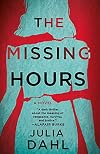
Review of Uncorrected Digital Galley
Claudia Castro, a freshman at New York University, seems to lead a privileged life. She comes from a famous family, has a huge trust fund, has attracted mega-followers on Instagram. But beneath the glitz, her family is less than perfect and life is messy. She has decided to use her college time to find her way toward something positive, something meaningful.
But after a night out [and too much to drink], she discovers her phone is missing, her memory is show more hazy, and she doesn’t remember much of the events of the previous evening. But she’s relatively certain she knows what happened . . . and the video sent to her phone confirms her worst fears.
When she misses the birth of her sister’s first child, Claudia believes her sister is angry with her and decides to stay away from her family.
And then she disappears.
Dark and disturbing, this narrative speaks to the way society views victims as it explores the aftermath of a gruesome assault. From the outset, the narrative pulls the reader into the telling of the tale and the propulsive action keeps the pages turning. Despite the troubling subject matter, readers will find it difficult to set this book aside before reaching the final page.
With characters that are believable [but not necessarily likable], the unfolding story takes several twists and turns as it moves in unexpected directions. There are some surprises along the way, but at its heart, this is a story of consequences, of obsessive revenge, of entitlement and privilege.
It is interesting to note that most of the characters in this absorbing tale are uber-wealthy and tend toward cliché. Claudia has access to almost unlimited funds. And as for the young men involved in the assault, one comes from a rich and privileged family, the other stands on the verge of a mega-record deal. An implied entitlement here appears to give the young men a pass despite their horrific attack on Claudia. This, then, is an important aspect of the narrative, allowing for an examination of the power wielded by rich, connected individuals.
But, in seeking redress, Claudia also acts from a position of affluent power. Is vindication dependent upon wealth? How is using wealth for retaliation different from using wealth for power and privilege? And does retaliation “balance the scale?” Is it acceptable because it comes only as a response to the attack? Are the attackers and the victim all lacking a moral compass or do money and privilege cancel out moral rightness?
Obviously, there is much to consider here, but the highlights of the unfolding story are the overcoming of a devastating attack and a family’s realization that they are stronger together, supporting each other.
Highly recommended.
I received a free copy of this eBook from St. Martin’s Press / Minotaur Books and NetGalley
#TheMissingHours #NetGalley show less
Claudia Castro, a freshman at New York University, seems to lead a privileged life. She comes from a famous family, has a huge trust fund, has attracted mega-followers on Instagram. But beneath the glitz, her family is less than perfect and life is messy. She has decided to use her college time to find her way toward something positive, something meaningful.
But after a night out [and too much to drink], she discovers her phone is missing, her memory is show more hazy, and she doesn’t remember much of the events of the previous evening. But she’s relatively certain she knows what happened . . . and the video sent to her phone confirms her worst fears.
When she misses the birth of her sister’s first child, Claudia believes her sister is angry with her and decides to stay away from her family.
And then she disappears.
Dark and disturbing, this narrative speaks to the way society views victims as it explores the aftermath of a gruesome assault. From the outset, the narrative pulls the reader into the telling of the tale and the propulsive action keeps the pages turning. Despite the troubling subject matter, readers will find it difficult to set this book aside before reaching the final page.
With characters that are believable [but not necessarily likable], the unfolding story takes several twists and turns as it moves in unexpected directions. There are some surprises along the way, but at its heart, this is a story of consequences, of obsessive revenge, of entitlement and privilege.
It is interesting to note that most of the characters in this absorbing tale are uber-wealthy and tend toward cliché. Claudia has access to almost unlimited funds. And as for the young men involved in the assault, one comes from a rich and privileged family, the other stands on the verge of a mega-record deal. An implied entitlement here appears to give the young men a pass despite their horrific attack on Claudia. This, then, is an important aspect of the narrative, allowing for an examination of the power wielded by rich, connected individuals.
But, in seeking redress, Claudia also acts from a position of affluent power. Is vindication dependent upon wealth? How is using wealth for retaliation different from using wealth for power and privilege? And does retaliation “balance the scale?” Is it acceptable because it comes only as a response to the attack? Are the attackers and the victim all lacking a moral compass or do money and privilege cancel out moral rightness?
Obviously, there is much to consider here, but the highlights of the unfolding story are the overcoming of a devastating attack and a family’s realization that they are stronger together, supporting each other.
Highly recommended.
I received a free copy of this eBook from St. Martin’s Press / Minotaur Books and NetGalley
#TheMissingHours #NetGalley show less

The world of mysteries have a lot of awards and in most years, the lists do not match - most of them have their own rules and inclinations and different books fit the different ones better. So when a debut novel seems to be on almost every best first novel list in a year, I take notice. And this time it is well deserved.
Meet Rebekah Roberts. She grew up in Florida with her father after her Hasidic mother, Aviva, left her when she was 6 months old and went back to New York. Rebekah never show more heard anything from her mother again, became a journalist and moved to New York. And never looked for her mother. Unfortunately, there are not too many opportunities for a young inexperienced journalist so she ends up as a stringer for the tabloid New York Tribune aka Trib. And one day, in the middle of a pretty cold winter, she get the call to go to where a body is found - a usual assignment for her but that one is different. Because this body is connected to the Hasidic Jews of New York, her mother's people. And she meets someone that knows Aviva - Saul Katz - an old friend of both her parents who is a policeman and is called to help becayse of his Orthodox connections and faith.
And it all starts - the police does not seem to be interested because they tend to stay away from the problems inside of the insular community, they even allow the dead woman to be buried without autopsy. And Rebekah and Saul decide not to stand for that and launch their own investigation. Except as expected, not everything is what it seems ad everyone is trying to further their own agenda.
The novel is set deep into the Orthodox Jewish community and the details of it are used as a background - very detailed but without overwhelming the story. And Rebekah is a fascinating character - complex, young in spirit (after all she is just 22) and a complete human being - with her acute anxiety, circle of friends, her sometimes overbearing boyfriend and her almost perfect father.
If I have an issue with the novel, it is the appearance of Saul just when he did - it was too coincidental. But without it, the novel won't be as complete so I am willing to accept it.
The solution proves to be tied to the community of course - both to the parts that accept their lives into it and the parts that rebel. Because we do not just see the community at its best - we also see the people that question their faith and their choices (and lack of choices).
And even if it is a mystery, it is also a novel about the Hasidim. And that makes it stronger - a lot stronger. It is well built and it is using the background to build more of the story - actions that would look alogical work here because of the norm of the society. Add to that the world of the stringers of the tabloids and the winter (because the cold and winter are almost characters here) and it is a wonderful story. Highly recommended. show less
Meet Rebekah Roberts. She grew up in Florida with her father after her Hasidic mother, Aviva, left her when she was 6 months old and went back to New York. Rebekah never show more heard anything from her mother again, became a journalist and moved to New York. And never looked for her mother. Unfortunately, there are not too many opportunities for a young inexperienced journalist so she ends up as a stringer for the tabloid New York Tribune aka Trib. And one day, in the middle of a pretty cold winter, she get the call to go to where a body is found - a usual assignment for her but that one is different. Because this body is connected to the Hasidic Jews of New York, her mother's people. And she meets someone that knows Aviva - Saul Katz - an old friend of both her parents who is a policeman and is called to help becayse of his Orthodox connections and faith.
And it all starts - the police does not seem to be interested because they tend to stay away from the problems inside of the insular community, they even allow the dead woman to be buried without autopsy. And Rebekah and Saul decide not to stand for that and launch their own investigation. Except as expected, not everything is what it seems ad everyone is trying to further their own agenda.
The novel is set deep into the Orthodox Jewish community and the details of it are used as a background - very detailed but without overwhelming the story. And Rebekah is a fascinating character - complex, young in spirit (after all she is just 22) and a complete human being - with her acute anxiety, circle of friends, her sometimes overbearing boyfriend and her almost perfect father.
If I have an issue with the novel, it is the appearance of Saul just when he did - it was too coincidental. But without it, the novel won't be as complete so I am willing to accept it.
The solution proves to be tied to the community of course - both to the parts that accept their lives into it and the parts that rebel. Because we do not just see the community at its best - we also see the people that question their faith and their choices (and lack of choices).
And even if it is a mystery, it is also a novel about the Hasidim. And that makes it stronger - a lot stronger. It is well built and it is using the background to build more of the story - actions that would look alogical work here because of the norm of the society. Add to that the world of the stringers of the tabloids and the winter (because the cold and winter are almost characters here) and it is a wonderful story. Highly recommended. show less
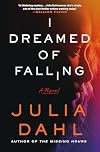
"I Dreamed of Falling" is a book that stirred strong emotions in me. While the beginning didn't immediately grab my attention, the emotional depth of this crime/mystery eventually won me over. Set in a small, weathered town where judgment and gossip reign, the story revolves around a family with a complex history. Their lives become even more entangled after a tragic event shatters their world.
The characters in "I Dreamed of Falling" are not perfect. They are flawed, like us. The book show more delves into topics like drugs, open relationships, depression, and bad parenting, which might not be everyone's cup of tea. However, if you, like me, have experienced the complexities of small-town life, you'll find the setting and behaviors portrayed in the book incredibly relatable. This connection with the characters and setting makes this book compelling for those who can appreciate these themes.
Big thanks to MacMillan Audio for the gifted ARC via NetGalley and to Minotaur Books for the gifted ebook through Edelweiss. I thoroughly enjoyed the audiobook while following along in the ebook, which is my favorite reading method. The narrators did an excellent job with the characters, and hearing from Ashley, the murdered mother, was a standout for me! show less
The characters in "I Dreamed of Falling" are not perfect. They are flawed, like us. The book show more delves into topics like drugs, open relationships, depression, and bad parenting, which might not be everyone's cup of tea. However, if you, like me, have experienced the complexities of small-town life, you'll find the setting and behaviors portrayed in the book incredibly relatable. This connection with the characters and setting makes this book compelling for those who can appreciate these themes.
Big thanks to MacMillan Audio for the gifted ARC via NetGalley and to Minotaur Books for the gifted ebook through Edelweiss. I thoroughly enjoyed the audiobook while following along in the ebook, which is my favorite reading method. The narrators did an excellent job with the characters, and hearing from Ashley, the murdered mother, was a standout for me! show less

Rebekah Roberts knows that nothing about Rivka Mendelssohn’s death makes sense. Not that a Hasidic woman would be found dead, completely nude, at a scrapyard owned by her husband’s family. Not that her head was recently shaved. Not that her sister-in-law says the devoted mother of four had been missing for days before Rivka’s body was discovered, but no one had reported her as missing. Not that, despite obvious signs that Rivka was beaten to death, the NYPD handed the body over to the show more funeral home without an autopsy. Not that Yakov, Rivka’s young son, has been told that his mother had been sick when he could see that wasn’t true. Nothing makes sense.
Twenty-two-year-old Rebekah (coincidentally, the English translation of Rivka from Yiddish) had a Hasidic mother (and a Methodist father); however, as her mother Aviva Kagan abandoned the family when Rebekah was a baby, she knows less about Hasidim and Yiddish than this shiksa who grew up in Miami and Miami Beach. But the Hasidic women, who knew Rebekah’s mother, consider her a Jew and trust her, whereas they don’t trust the police. Or their own male leaders. And rightly so.
Julia Dahl has penned an engrossing page-turner that provides an education into Brooklyn’s insular Hasidic community. I had never heard of her, and Dahl definitely deserves to be a household name. Imagine my delight in discovering Dahl has written two sequels! Highly recommended. show less
Twenty-two-year-old Rebekah (coincidentally, the English translation of Rivka from Yiddish) had a Hasidic mother (and a Methodist father); however, as her mother Aviva Kagan abandoned the family when Rebekah was a baby, she knows less about Hasidim and Yiddish than this shiksa who grew up in Miami and Miami Beach. But the Hasidic women, who knew Rebekah’s mother, consider her a Jew and trust her, whereas they don’t trust the police. Or their own male leaders. And rightly so.
Julia Dahl has penned an engrossing page-turner that provides an education into Brooklyn’s insular Hasidic community. I had never heard of her, and Dahl definitely deserves to be a household name. Imagine my delight in discovering Dahl has written two sequels! Highly recommended. show less
Awards


You May Also Like


Associated Authors
Statistics
- Works
- 7
- Also by
- 1
- Members
- 979
- Popularity
- #26,315
- Rating
- 3.7
- Reviews
- 69
- ISBNs
- 55
- Languages
- 2