
Deborah Kops
Author of The Great Molasses Flood: Boston, 1919
About the Author
Deborah Kops has written more than twenty books for children and young adults. She lives with her husband and son in Greater Boston and enjoys exploring old towns and neighborhoods, including the North End, where the Great Molasses Flood occurred.
Works by Deborah Kops
Alice Paul and the Fight for Women's Rights: From the Vote to the Equal Rights Amendment (2017) 60 copies, 1 review
Zachary Taylor: America's 12th President (Encyclopedia of Presidents. Second Series) (2004) 10 copies
Were Early Computers Really the Size of a School Bus?: And Other Questions About Inventions (Is That a Fact?) (2011) 7 copies
Were Potato Chips Really Invented by an Angry Chef?: And Other Questions About Food (Is That a Fact?) (2011) 6 copies
The Humpback Whale: Help Save This Endangered Species! (Saving Endangered Species) (2006) 4 copies, 1 review
Abraham Lincoln 3 copies
Tagged
Common Knowledge
- Gender
- female
Members
Reviews
Alice Paul and the Fight for Women's Rights: From the Vote to the Equal Rights Amendment by Deborah Kops

1992, high school gym class baseball. The teacher divided the class by sex then had the girls play on a muddy, disused soccer practice field with aluminum bats and rubber balls while he coached the boys up on the baseball practice field with real equipment. Two girls and I complained to the principal, who suggested that maybe the gym teacher was just "trying to keep the girls safe." Next class, girls were given the option to play with the boys, which wasn't what we wanted...we wanted to use show more the good equipment and the good field like the boys did, or at least trade off. One friend and I did go play with the boys on principle, even though it was incredibly embarrassing. It would have been so much better if the rest of the girls had gone with us, and I never got why they didn't. This biography of Alice Paul helps me understand a little of how some of those girls might have been thinking.
Not that I'm remotely like Alice Paul except in the sense that I'm argumentative and difficult to get along with, but I can relate to her frustration a little bit, I think. show less
Not that I'm remotely like Alice Paul except in the sense that I'm argumentative and difficult to get along with, but I can relate to her frustration a little bit, I think. show less

I am fond of "event books" that offer a broader view of a particular occurrence, placing it into the context of the time. This is such a book, offering a look at the American justice system, the anarchist movement of the early 20th century, the lifestyles of immigrants, the influence of big business, and the practical applications for science and engineering in the practice of law. All of these elements cross paths in this chronological story of a deadly explosion of a Boston molasses tank show more holding over two million gallons of the sticky brown sweetener.
Because the incident ended up as the subject of intense litigation, Kops had ample resources, in addition to newspaper accounts. The legal transcript of the trial fills forty volumes.
Kops' writing style is simple and compelling,
"The View from Above
At about 12:40 the brakeman on the elevated line was standing near the window of a passenger train, which had left South Station about five minutes earlier. As the train neared the molasses tank, the brakeman heard a loud noise, like metal ripping apart. He looked down to see the molasses tank split wide open and a wave of molasses heading toward the tracks.
As the train came around a curve, there was another surprise. The molasses hurled a great chunk of the tank against two columns supporting the elevated tracks. A moment later one of the El supports bent as if it was just a skinny twig. Park of the El's tracks, which the train had passed over just seconds before, sagged toward the road below."
Scattered sepia colored insets offer additional and helpful contextual information such as the burgeoning women's and anarchist movements, and an explanation of the urgency to use the stored molasses (prohibition was about to become the law of the land).
I did find fault with two stray comments that I thought "cringe-worthy" because they seemed dismissive of the catastrophic nature of the event.
"A sea of molasses quickly surrounded them. Antonio ran for his life, but he was no match for the tide. It dragged him along, shoving him into a curb. Ouch!"
The young man lost two teeth and a sister. Ouch? The other is similarly cavalier -
"Mrs. O'Brien Loses More Than Her Wash"
Mrs. O'Brien, in fact, lost her home, which rode the molasses wave right off its foundation and into the nearby park.
These are minor aberrations, however, in an otherwise fascinating and well-told story.
Booktalk The Great Molasses Flood: Boston, 1919 to your fiction readers, too! Freakish appeal and a generous amount of photos give this one cross-genre appeal. Highly recommended.
more @ http://shelf-employed.blogspot.com/2012/03/great-molasses-flood-review.html show less
Because the incident ended up as the subject of intense litigation, Kops had ample resources, in addition to newspaper accounts. The legal transcript of the trial fills forty volumes.
Kops' writing style is simple and compelling,
"The View from Above
At about 12:40 the brakeman on the elevated line was standing near the window of a passenger train, which had left South Station about five minutes earlier. As the train neared the molasses tank, the brakeman heard a loud noise, like metal ripping apart. He looked down to see the molasses tank split wide open and a wave of molasses heading toward the tracks.
As the train came around a curve, there was another surprise. The molasses hurled a great chunk of the tank against two columns supporting the elevated tracks. A moment later one of the El supports bent as if it was just a skinny twig. Park of the El's tracks, which the train had passed over just seconds before, sagged toward the road below."
Scattered sepia colored insets offer additional and helpful contextual information such as the burgeoning women's and anarchist movements, and an explanation of the urgency to use the stored molasses (prohibition was about to become the law of the land).
I did find fault with two stray comments that I thought "cringe-worthy" because they seemed dismissive of the catastrophic nature of the event.
"A sea of molasses quickly surrounded them. Antonio ran for his life, but he was no match for the tide. It dragged him along, shoving him into a curb. Ouch!"
The young man lost two teeth and a sister. Ouch? The other is similarly cavalier -
"Mrs. O'Brien Loses More Than Her Wash"
Mrs. O'Brien, in fact, lost her home, which rode the molasses wave right off its foundation and into the nearby park.
These are minor aberrations, however, in an otherwise fascinating and well-told story.
Booktalk The Great Molasses Flood: Boston, 1919 to your fiction readers, too! Freakish appeal and a generous amount of photos give this one cross-genre appeal. Highly recommended.
more @ http://shelf-employed.blogspot.com/2012/03/great-molasses-flood-review.html show less
When I heard about this molasses flood as an adult, it was from somebody who grew up in the area in the sixties and remembered the omnipresent smell.
This book starts with the day of the molasses tank explosion setting up many of the victims, where they were, what they were doing, to give us an at-the-moment time shot. The explosion and its aftermath includes the blame game and trial against the USIA (U.S. Industrial Alcohol Company), builders and owner of the molasses tank. She does an show more effective job explaining the populist's fear of anarchists existing at the time. Perhaps too much time is spent on the trial to hold the interest of the intended audience. show less
This book starts with the day of the molasses tank explosion setting up many of the victims, where they were, what they were doing, to give us an at-the-moment time shot. The explosion and its aftermath includes the blame game and trial against the USIA (U.S. Industrial Alcohol Company), builders and owner of the molasses tank. She does an show more effective job explaining the populist's fear of anarchists existing at the time. Perhaps too much time is spent on the trial to hold the interest of the intended audience. show less
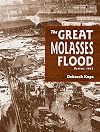
Last time we baked molasses cookies at home, I began telling my 4yo about the molasses flood in Boston. She wanted to know more, so we got this book out while we were waiting for the more age-appropriate picture book Molasses Flood by Blair Lent. Mainly we looked at the photographs and I skimmed parts of the text, but it seems like an excellent book for anyone interested in this bizarre and tragic event in Boston's history.
Commemorative plaque on Commercial Street in Boston:
Boston Molasses show more Flood
On January 15, 1919, a molasses tank at 529 Commercial Street exploded under pressure, killing 21 people. A 40-foot wave of molasses buckled the elevated railroad tracks, crushed buildings, and inundated the neighborhood. Structural defects in the tank combined with unseasonably warm temperatures contributed to the disaster. show less
Commemorative plaque on Commercial Street in Boston:
Boston Molasses show more Flood
On January 15, 1919, a molasses tank at 529 Commercial Street exploded under pressure, killing 21 people. A 40-foot wave of molasses buckled the elevated railroad tracks, crushed buildings, and inundated the neighborhood. Structural defects in the tank combined with unseasonably warm temperatures contributed to the disaster. show less
Lists
Awards


You May Also Like


Statistics
- Works
- 26
- Members
- 340
- Popularity
- #70,095
- Rating
- 3.6
- Reviews
- 11
- ISBNs
- 58
- Languages
- 1