
Buzz Aldrin
Author of Encounter with Tiber
About the Author
Edwin "Buzz" Aldrin was born in Montclair, New Jersey, on January 20, 1930. After graduating from the U.S. Military Academy at West Point with a Bachelors of Science in mechanical engineering, he completed U.S. Air Force pilot training in 1952 and flew over 60 combat missions during the Korean War. show more He received a Doctorate of Science in Astronautics from MIT. In 1963 NASA selected him as an astronaut. He served as backup pilot of the Gemini IX and as pilot for Gemini XII in 1966. He was made backup command module pilot for Apollo VIII and lunar module pilot for Apollo XI, the most famous flight in space history, which landed on the moon July 20, 1969. Aldrin was the second man to walk on the moon; Neil Armstrong, the first man, beat Aldrin by just 15 minutes. He completed his Air Force career as commandant of the Aerospace Research Pilot School, retiring from the Air Force in 1972. Since then he has served as a consultant and has written several books including Reaching for the Moon, Look to the Stars, The Return, Encounter with Tiber, Men from Earth, and Return to Earth. (Bowker Author Biography) show less
Image credit: Neil Armstrong (1969).
Works by Buzz Aldrin
First on the Moon: A Voyage With Neil Armstrong, Michael Collins and Edwin E. Aldrin, Jr. (1970) — Author — 457 copies, 6 reviews
A csillagok fiai I kötet 1 copy
Associated Works
A Man on the Moon: The Voyages of the Apollo Astronauts (1994) — Special foreword, some editions — 1,494 copies, 37 reviews
Masters of Success: Proven Techniques for Achieving Success in Business and Life (2004) — Contributor — 41 copies
National Geographic The New Universe (National Geographic The New Universe) (2010) — Foreword — 17 copies
Tagged
Common Knowledge
- Canonical name
- Aldrin, Buzz
- Other names
- Aldrin, Edwin Eugene, Jr.
- Birthdate
- 1930-01-20
- Gender
- male
- Education
- United States Military Academy (BS ∙ Mechanical Engineering)
Montclair High School
Massachusetts Institute of Technology - Occupations
- pilot
astronaut
writer - Organizations
- US Air Force
National Aeronautics and Space Administration - Awards and honors
- Presidential Medal of Freedom (1969 | Distinction)
Robert J. Collier Trophy (1969)
NASA Distinguished Service Medal (1970)
Air Force Distinguished Service Medal
Legion of Merit
Distinguished Flying Cross (show all 7)
Congressional Gold Medal (2009) - Nationality
- USA
- Birthplace
- Glen Ridge, New Jersey, USA
- Places of residence
- Los Angeles, California, USA
Satellite Beach, Florida, USA
The Moon - Associated Place (for map)
- USA
Members
Reviews
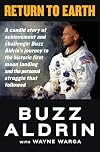
This is Buzz Aldrin's memoir written in the early 1970s of the effects the first Moon landing had on his subsequent life and, in particular, on his mental health. In early 1970s America, he was one of the very few prominent public figures to speak openly about his mental health and to want depression to be treated without judgement as are physical infirmities.
The account begins with three chapters detailing the massive round the country and round the world tours that Buzz did alongside Neil show more Armstrong and Mike Collins for many months after their return to Earth. The extensive and exhaustingly rapid changes of location, press conferences, speeches and receptions, often involving their wives and children as well, and with minimal downtime built in to their schedules, took its toll on most of them in one way or another.
In the middle part of the book Buzz recounts his life story (at home, young Edwin "became known as “Brother.” My sister, Fay Ann, a year and a half older, could not quite manage that: her version came out “Buzzer” and it stuck until it evolved into Buzz"). His father was a pilot so Buzz flew from a very early age and, later graduating from West Point, entered the Air Force and flew in Korea during the war as a young man. Unlike Neil Armstrong and many other astronauts, he was not a test pilot, but became an astronaut in 1963 at the second attempt and took part in the Gemini programme (without the mishaps that Armstrong had undergone in his flight earlier on that programme).
Buzz apparently had reservations about being on the first lunar landing flight: "My instinct was murmuring quietly that my own scientific interests might be better served by one of the longer, more adventurous missions later on and, if I went on the first flight, it might turn out a bit difficult to get back into the swing of the astronaut business again. My instinct eventually proved to be guilty of a major understatement". While prescient, I cannot help but wonder whether there is at least some post hoc rationalisation here; and other accounts have said that Buzz was upset at not being selected as the first man to step onto the lunar surface (whatever the truth of that, his father was very angry about the situation, regardless of his son's true feelings about it). Buzz records his feelings about the Moon itself: "the surface was “Beautiful. Beautiful. Magnificent desolation.”" and "was particularly struck by the contrast between the starkness of the shadows and the desertlike barrenness of the rest of the surface." He reflects on how he and his fellow moon walkers view their home planet in light of their experience: "If the twelve of us have any one viewpoint in common, it is that unlike most men we have a special concept of the earth. We have seen it from space as whole and bright and beautiful; we have seen it from the surface of the moon as not very large and somehow vulnerable. With all its imperfections, it is a great place to come from and an even greater place to go back to."
The effect of the demands of his life and career on Buzz's well-being manifested themselves in an early warning from his nervous system even before his Apollo days. One day after the ending of the Gemini programme at the end of 1966, he "felt an almost overwhelming sense of fatigue mixed with a vague sadness. I yearned for sleep so strongly, I considered nodding off right there and not going to bed. I made it to bed and stayed there for five days." Four years later after the razzmatazz of the Apollo flight and the subsequent tours had started to died down, when Buzz was re-assessing his life and deciding what to do next, this depression returned with a vengeance. While extensive research had been carried out into the effects of spaceflight on astronauts' physical health, none had been carried out on their emotional and mental health. So Buzz was charting new territory for a man in his position and, as was nearly always the case then and sometimes still is now, albeit less so, he hid his condition as he worried it would damage his career. His relationship with his father foundered, as the latter could not understand or accept his son's condition and his wish to change his life and move away from the structured career of the Air Force. Buzz was not able to get across to his father or other older family members the crippling effects of his depression: "my intellect was by now separated by the jagged and dangerous wall of my emotions. The rule of my emotions was absolute and ruthless. In no way could I stop what I felt, but I hoped somehow to stop feeling anything at all. I yearned for a brightly lit oblivion—wept for it." His marriage to Joan also suffered hugely and he had an affair with a New York widow, although at the time this book was published in 1973, they had to an extent patched up their marriage (however, they divorced the following year).
Like many high-functioning sufferers from depression, he was extremely hard on himself: "I felt I was not entitled to have such emotions. My goal was command of every situation in which I might find myself, and such an aim was unattainable. When I sensed I was not in full command, there was no harsher judge of my actions than I myself." In conclusion, he sums up pithily what life has taught him thus: "I traveled to the moon, but the most significant voyage of my life began when I returned from where no man had been before." show less
The account begins with three chapters detailing the massive round the country and round the world tours that Buzz did alongside Neil show more Armstrong and Mike Collins for many months after their return to Earth. The extensive and exhaustingly rapid changes of location, press conferences, speeches and receptions, often involving their wives and children as well, and with minimal downtime built in to their schedules, took its toll on most of them in one way or another.
In the middle part of the book Buzz recounts his life story (at home, young Edwin "became known as “Brother.” My sister, Fay Ann, a year and a half older, could not quite manage that: her version came out “Buzzer” and it stuck until it evolved into Buzz"). His father was a pilot so Buzz flew from a very early age and, later graduating from West Point, entered the Air Force and flew in Korea during the war as a young man. Unlike Neil Armstrong and many other astronauts, he was not a test pilot, but became an astronaut in 1963 at the second attempt and took part in the Gemini programme (without the mishaps that Armstrong had undergone in his flight earlier on that programme).
Buzz apparently had reservations about being on the first lunar landing flight: "My instinct was murmuring quietly that my own scientific interests might be better served by one of the longer, more adventurous missions later on and, if I went on the first flight, it might turn out a bit difficult to get back into the swing of the astronaut business again. My instinct eventually proved to be guilty of a major understatement". While prescient, I cannot help but wonder whether there is at least some post hoc rationalisation here; and other accounts have said that Buzz was upset at not being selected as the first man to step onto the lunar surface (whatever the truth of that, his father was very angry about the situation, regardless of his son's true feelings about it). Buzz records his feelings about the Moon itself: "the surface was “Beautiful. Beautiful. Magnificent desolation.”" and "was particularly struck by the contrast between the starkness of the shadows and the desertlike barrenness of the rest of the surface." He reflects on how he and his fellow moon walkers view their home planet in light of their experience: "If the twelve of us have any one viewpoint in common, it is that unlike most men we have a special concept of the earth. We have seen it from space as whole and bright and beautiful; we have seen it from the surface of the moon as not very large and somehow vulnerable. With all its imperfections, it is a great place to come from and an even greater place to go back to."
The effect of the demands of his life and career on Buzz's well-being manifested themselves in an early warning from his nervous system even before his Apollo days. One day after the ending of the Gemini programme at the end of 1966, he "felt an almost overwhelming sense of fatigue mixed with a vague sadness. I yearned for sleep so strongly, I considered nodding off right there and not going to bed. I made it to bed and stayed there for five days." Four years later after the razzmatazz of the Apollo flight and the subsequent tours had started to died down, when Buzz was re-assessing his life and deciding what to do next, this depression returned with a vengeance. While extensive research had been carried out into the effects of spaceflight on astronauts' physical health, none had been carried out on their emotional and mental health. So Buzz was charting new territory for a man in his position and, as was nearly always the case then and sometimes still is now, albeit less so, he hid his condition as he worried it would damage his career. His relationship with his father foundered, as the latter could not understand or accept his son's condition and his wish to change his life and move away from the structured career of the Air Force. Buzz was not able to get across to his father or other older family members the crippling effects of his depression: "my intellect was by now separated by the jagged and dangerous wall of my emotions. The rule of my emotions was absolute and ruthless. In no way could I stop what I felt, but I hoped somehow to stop feeling anything at all. I yearned for a brightly lit oblivion—wept for it." His marriage to Joan also suffered hugely and he had an affair with a New York widow, although at the time this book was published in 1973, they had to an extent patched up their marriage (however, they divorced the following year).
Like many high-functioning sufferers from depression, he was extremely hard on himself: "I felt I was not entitled to have such emotions. My goal was command of every situation in which I might find myself, and such an aim was unattainable. When I sensed I was not in full command, there was no harsher judge of my actions than I myself." In conclusion, he sums up pithily what life has taught him thus: "I traveled to the moon, but the most significant voyage of my life began when I returned from where no man had been before." show less
First on the Moon: A Voyage With Neil Armstrong, Michael Collins and Edwin E. Aldrin, Jr. by Neil Armstrong

Excellent description of both the lunar voyage and American life circa 1969.
I watched the lunar landing from a tiny TV set imported into my New Hampshire sleepaway camp during July 1969. We couldn't really see the moon that night; like much of that "summer" it was pouring rain.
The book helped me fill in what I missed by not reading daily papers while away at camp. It put me back into history.
I watched the lunar landing from a tiny TV set imported into my New Hampshire sleepaway camp during July 1969. We couldn't really see the moon that night; like much of that "summer" it was pouring rain.
The book helped me fill in what I missed by not reading daily papers while away at camp. It put me back into history.
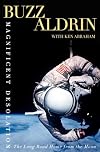
In Magnificent Desolation: The Long Journey Home from the Moon, Buzz Aldrin chronicles both his personal struggles and continued aerospace work following his historic Apollo 11 mission. He writes of the period following the moon landing, "With no mission or goal on which to focus, those words I'd uttered on the moon - 'magnificent desolation' - mocked me as a poignant description of my life on Earth" (p. 144). Aldrin's autobiographical account of his life after returning to Earth focuses on show more two main subjects: his struggles with depression and alcoholism, which he candidly discusses in the hope that his honesty will help others; and his work to further space exploration and develop space tourism.
In chronicling his struggle with depression and alcoholism, Aldrin demonstrates that even those people who are nearly universally adored are still human. He does not shy away from his bleaker moments and does not make excuses. In taking responsibility for his past, Aldrin shows how others can follow his example and seek the help they need and overcome their own struggles.
In discussing the future of space travel, Aldrin writes, "I truly believe that we have the universe at our fingertips. We were on the right track when we took the challenge laid down by President Kennedy, and we will continue on the right track if we expand upon that commitment" (p. 307). Aldrin remains among the hardest working (and smartest) people in aerospace, continually thinking up new methods to improve America's space program or spark an interest in young people to pursue privatized space travel. His continued commitment should stand as a challenge to NASA and America to reinvigorate our space program. Aldrin implores his readers, "Please keep this dream alive; please keep going; Mars is there waiting for your footsteps" (p. 309).
Those looking for an account of NASA in the 1960s and the early years of Project Apollo should read Men from Earth, also by Aldrin. Magnificent Desolation is, as the subtitle suggests, about Aldrin's life following his Apollo mission, though it will still be interesting to those interested in space travel, both historic and prospective ideas for the future. show less
In chronicling his struggle with depression and alcoholism, Aldrin demonstrates that even those people who are nearly universally adored are still human. He does not shy away from his bleaker moments and does not make excuses. In taking responsibility for his past, Aldrin shows how others can follow his example and seek the help they need and overcome their own struggles.
In discussing the future of space travel, Aldrin writes, "I truly believe that we have the universe at our fingertips. We were on the right track when we took the challenge laid down by President Kennedy, and we will continue on the right track if we expand upon that commitment" (p. 307). Aldrin remains among the hardest working (and smartest) people in aerospace, continually thinking up new methods to improve America's space program or spark an interest in young people to pursue privatized space travel. His continued commitment should stand as a challenge to NASA and America to reinvigorate our space program. Aldrin implores his readers, "Please keep this dream alive; please keep going; Mars is there waiting for your footsteps" (p. 309).
Those looking for an account of NASA in the 1960s and the early years of Project Apollo should read Men from Earth, also by Aldrin. Magnificent Desolation is, as the subtitle suggests, about Aldrin's life following his Apollo mission, though it will still be interesting to those interested in space travel, both historic and prospective ideas for the future. show less
For most of us, whether we want to admit it or not, the highlight of our lives, the event which we define ourselves, the successful summit to the Mt. Olympus of our existence, happened before we were 25.
For an aerospace engineer with an inquisitive and fertile mind it seemed a disappointment that it happened at age 39.
This book is divided into three parts.
Part 1: Getting to the moon and back.
A fascinating first hand account which I, for one, cannot get enough and worth the price of the show more book.
I can't begin imagine going on a mission where "plan B" is to cut off communications and let me die - or that 1,000 things need to go absolutely right for a success - all run by a ... 74K computer?????
I can't imagine what not being afraid to die feels like.
Part 2: Dr. Aldrin's fight with depression and alcoholism.
I can certainly understand how being in space, looking down on earth and realizing how insignificant we all are is a crushing blow to any human being and especially ones with huge egos...you know...like astronauts.
It is fascinating to read about Dr. Aldrin's depression, his understanding of the problem and his long term solutions to dealing with it.
Even though I don't understand addicts, nor do I think that there is anything heroic about fighting an addiction (because you shouldn't have became an addict in the first place) I do recognize the achievement of beating addictions as well as the strength, perseverance and emotional toll it took for Dr. Aldrin to admit to it publicly and, in that act alone, help multitudes of people.
Part 3: Dr. Aldrin's push to make space travel affordable.
The first two parts of the book are very interesting, this part falls short.
We get a glimpse into the genius which is Buzz Aldrin and his fight to promote space travel (as well as himself, but who could blame him).
I think the book could use a bit of re-writing by a "commoner". It's almost insulting to read that Dr. Aldrin and his lovely wife say they had no income in one paragraph, yet they travel the globe, take ski vacations, go diving around the world and drive luxury cars in the next paragraph.
It just doesn't make sense and takes away from the inspirational story.
Newsflash: Most people don't make a quarter million dollars a year so it's hard to feel bad for someone who does even if they should make more or all their friends are multi-millionaires.
It just doesn't resonate.
The last few pages have a problem that most of us encounter on almost a daily base - what's written doesn't translate to the way it was meant to be read.
Ever had someone misunderstand an e-mail you wrote because they read it in the wrong "tone" of which you wrote it, or didn't get the sarcasm?
These pages come off as boasting and name dropping which I'm sure wasn't the intention.
For example, Dr. Aldrin's great anecdote about giving a speech in Madrid, Spain and not knowing anyone in town with a few hours to kill so he called King Juan Carlos.
I found it to be funny and I can only imagine the look on his wife's face - but it reads more like boasting than a light hearted anecdote.
By the way, I think personal anecdotes, like the story mentioned above, are great and what make an autobiography worth reading.
Even though there has been criticism of Dr. Aldrin's behavior in the past there is not a single person in the astronaut corps who has done more to promote space than the good doctor.
Not a single one!
Funny enough, the one thing which might have pushed Dr. Aldrin's agenda further into the future and get kids interested in space and science was not his doing, but Disney paying him homage in Toy Story.
Dr. Aldrin recognized the opportunity and instead of picking a fight with "the Mouse" he embraced it with both hand, not only for himself, but also for the future astronauts of this nation.
I hope Dr. Aldrin will keep working tirelessly to promote his agenda for the Mars orbiter, space tourism and educating our youth.
Keep appearing on Sesame Street, keep the late night appearances and keep being a friend to Buzz Lightyear - the best ambassador of math and science we currently have.
By the way - Dr. Aldrin can rest at ease. The big achievement of Apollo 11 was to land the Eagle on the moon, not to step off a ladder. show less
For an aerospace engineer with an inquisitive and fertile mind it seemed a disappointment that it happened at age 39.
This book is divided into three parts.
Part 1: Getting to the moon and back.
A fascinating first hand account which I, for one, cannot get enough and worth the price of the show more book.
I can't begin imagine going on a mission where "plan B" is to cut off communications and let me die - or that 1,000 things need to go absolutely right for a success - all run by a ... 74K computer?????
I can't imagine what not being afraid to die feels like.
Part 2: Dr. Aldrin's fight with depression and alcoholism.
I can certainly understand how being in space, looking down on earth and realizing how insignificant we all are is a crushing blow to any human being and especially ones with huge egos...you know...like astronauts.
It is fascinating to read about Dr. Aldrin's depression, his understanding of the problem and his long term solutions to dealing with it.
Even though I don't understand addicts, nor do I think that there is anything heroic about fighting an addiction (because you shouldn't have became an addict in the first place) I do recognize the achievement of beating addictions as well as the strength, perseverance and emotional toll it took for Dr. Aldrin to admit to it publicly and, in that act alone, help multitudes of people.
Part 3: Dr. Aldrin's push to make space travel affordable.
The first two parts of the book are very interesting, this part falls short.
We get a glimpse into the genius which is Buzz Aldrin and his fight to promote space travel (as well as himself, but who could blame him).
I think the book could use a bit of re-writing by a "commoner". It's almost insulting to read that Dr. Aldrin and his lovely wife say they had no income in one paragraph, yet they travel the globe, take ski vacations, go diving around the world and drive luxury cars in the next paragraph.
It just doesn't make sense and takes away from the inspirational story.
Newsflash: Most people don't make a quarter million dollars a year so it's hard to feel bad for someone who does even if they should make more or all their friends are multi-millionaires.
It just doesn't resonate.
The last few pages have a problem that most of us encounter on almost a daily base - what's written doesn't translate to the way it was meant to be read.
Ever had someone misunderstand an e-mail you wrote because they read it in the wrong "tone" of which you wrote it, or didn't get the sarcasm?
These pages come off as boasting and name dropping which I'm sure wasn't the intention.
For example, Dr. Aldrin's great anecdote about giving a speech in Madrid, Spain and not knowing anyone in town with a few hours to kill so he called King Juan Carlos.
I found it to be funny and I can only imagine the look on his wife's face - but it reads more like boasting than a light hearted anecdote.
By the way, I think personal anecdotes, like the story mentioned above, are great and what make an autobiography worth reading.
Even though there has been criticism of Dr. Aldrin's behavior in the past there is not a single person in the astronaut corps who has done more to promote space than the good doctor.
Not a single one!
Funny enough, the one thing which might have pushed Dr. Aldrin's agenda further into the future and get kids interested in space and science was not his doing, but Disney paying him homage in Toy Story.
Dr. Aldrin recognized the opportunity and instead of picking a fight with "the Mouse" he embraced it with both hand, not only for himself, but also for the future astronauts of this nation.
I hope Dr. Aldrin will keep working tirelessly to promote his agenda for the Mars orbiter, space tourism and educating our youth.
Keep appearing on Sesame Street, keep the late night appearances and keep being a friend to Buzz Lightyear - the best ambassador of math and science we currently have.
By the way - Dr. Aldrin can rest at ease. The big achievement of Apollo 11 was to land the Eagle on the moon, not to step off a ladder. show less
Lists
Awards


You May Also Like


Associated Authors
Statistics
- Works
- 21
- Also by
- 6
- Members
- 3,341
- Popularity
- #7,645
- Rating
- 4.0
- Reviews
- 82
- ISBNs
- 112
- Languages
- 4


