
Robb Forman Dew (1946–2020)
Author of The Evidence Against Her
About the Author
The novels of Robb Forman Dew deal primarily with the nature of relationships in contemporary family life. Dale Loves Sophie to Death (1981), a winner of the American Book Award in 1982, inspired a sequel, Fortunate Lives (1992). Her third novel, The Time of Her Life, was published in 1984. Dew has show more also published a non-fiction work about her own family, Family Heart: A Memoir of When Our Son Came Out; and a cookbook, A Southern Thanksgiving: Recipes and Musings for a Manageable Feast (1992). She wrote a fiction trilogy which included The Evidence Against Her (2001), The Truth of the Matter (2005), and Being Polite to Hitler (2011). Dew, born in 1946, was raised in the South and credits time spent living with her grandfather, John Crowe Ransom, poet and critic, as an influence on her writing style. She is married to historian Charles Dew, and has two sons. Rob Forman Dew died at the age of 73 on May 22, 2020. (Bowker Author Biography) show less
Image credit: Howie Levitz
Series
Works by Robb Forman Dew
Associated Works
Tagged
Common Knowledge
- Legal name
- Dew, Robb Reavill Forman
- Birthdate
- 1946-10-26
- Date of death
- 2020-05-22
- Gender
- female
- Education
- Louisiana State University
- Occupations
- author
- Awards and honors
- National Book Award 1981
- Relationships
- Ransom, John Crowe (grandfather)
Forman, Helen Ransom (mother)
Warren, Robert Penn (godfather)
Dew, Charles B. (husband) - Cause of death
- endocarditis
- Nationality
- USA
- Birthplace
- Mount Vernon, Ohio, USA
- Places of residence
- Mount Vernon, Ohio, USA
Baton Rouge, Louisiana, USA
Columbia, Missouri, USA
Williamstown, Massachusetts, USA - Place of death
- Springfield, Massachusetts, USA
- Associated Place (for map)
- USA
Members
Reviews
I don't normally read non-fiction, but I have two memoirs in my book pile at the moment (this one & Cheryl Strayed's "Wild"). This one is there because I've read Dew's fiction and liked it. From reading her fiction she struck me as someone who would be very thoughtful and insightful about family relationships. I wondered if she might have something to say about her relationship with her gay son and what life was like for him that might tell me something about my daughter's life and my show more relationship with her. I guess the main message I got was that: (a) even basically sensible parents can say and do some pretty offensive things to their children, out of pure thoughtlessness, and (b) the parents who live their lives through their children are most likely to be unable to deal with children who have different sexuality from their own. An interesting read....not earth shattering, but worth finishing. show less
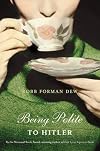
Normally I don't like to read books in a series out of order but I didn't know that Being Polite to Hitler was the final book in a trilogy. Thankfully that turned out not to matter and I am even rather pleased to know that I can revisit these characters when I so choose, even if I do already know their ultimate outcomes (and I suspect that I have the first two books somewhere deep on the tbr mountains already so it will be easy enough for me to do). Putting aside the trilogy order issue show more though, how could I possibly pass up a book so enticingly titled especially coupled with the cover image of a woman daintily sipping tea? It was just too appealing.
Taking place in the years following World War II, from the early 50's to the early 70's, the novel follows the Scofield clan through their everyday lives in small town Washburn, Ohio. Matriarch Agnes Scofield starts the novel coming to the conclusion that she is tired of teaching. It was only ever something she did out of obligation and now she wishes to be able to leave off. Whether she will have the courage and ability to change her life in the face of the mundane remains to be seen. The novel also follows Agnes' family in their daily struggles, financial, marital, and personal as well.
Althought it might seem as if there's not much going on in this quietly domestic novel, there is nothing going on in the way that there was nothing happening in Virginia Woolf's novels. There is a sense of the ordinary extraordinariness of daily life in a small town during the post war years. And like Woolf's, many of Dew's characters face that elegantly quiet desperation in which only the comfortable upper middle class can indulge. The characters peopling the pages of the novel are langorous and yet tightly wound too, a neat, tricky bit of writing that Dew pulls off admirably.
The hopscotching narrative functions as a window to peek in on various different Scofields and the state of the world as America comes of age after the war. Dew weaves historically significant events throughout the story. Some are intact and lengthy (Kenndy's assassination) while others are merely alluded to or briefly discussed by the characters (the Rosenbergs), their prominence in the storyline mirroring the importance of each event commensurate with their impact on the middle America of the time. This is a book filled with moments, everday moments, extraordinary moments, and even authorial moments. At one point, with a wink to her readers, Dew gives herself a tongue in cheek tip of the hat in the midst of an exposition.
Beautifully crafted, this is a quietly resonant novel. When Agnes' daughter-in-law Lavinia crossly accuses her husband Claytor of being willing to endure anything, willing to sit being polite to Hitler so as not to ruffle any feathers, the perfection of the title as a descriptor for the characters' lives is highlighted. And for those people who often find themselves bemoaning tepid endings, this book has one of the very best ending lines I have read, perfectly in keeping with the entire tone of everything that went on before. Lovers of literary fiction will find much to savor here and Woolf fans will rejoice in the understated homage to To the Lighthouse. show less
Taking place in the years following World War II, from the early 50's to the early 70's, the novel follows the Scofield clan through their everyday lives in small town Washburn, Ohio. Matriarch Agnes Scofield starts the novel coming to the conclusion that she is tired of teaching. It was only ever something she did out of obligation and now she wishes to be able to leave off. Whether she will have the courage and ability to change her life in the face of the mundane remains to be seen. The novel also follows Agnes' family in their daily struggles, financial, marital, and personal as well.
Althought it might seem as if there's not much going on in this quietly domestic novel, there is nothing going on in the way that there was nothing happening in Virginia Woolf's novels. There is a sense of the ordinary extraordinariness of daily life in a small town during the post war years. And like Woolf's, many of Dew's characters face that elegantly quiet desperation in which only the comfortable upper middle class can indulge. The characters peopling the pages of the novel are langorous and yet tightly wound too, a neat, tricky bit of writing that Dew pulls off admirably.
The hopscotching narrative functions as a window to peek in on various different Scofields and the state of the world as America comes of age after the war. Dew weaves historically significant events throughout the story. Some are intact and lengthy (Kenndy's assassination) while others are merely alluded to or briefly discussed by the characters (the Rosenbergs), their prominence in the storyline mirroring the importance of each event commensurate with their impact on the middle America of the time. This is a book filled with moments, everday moments, extraordinary moments, and even authorial moments. At one point, with a wink to her readers, Dew gives herself a tongue in cheek tip of the hat in the midst of an exposition.
Beautifully crafted, this is a quietly resonant novel. When Agnes' daughter-in-law Lavinia crossly accuses her husband Claytor of being willing to endure anything, willing to sit being polite to Hitler so as not to ruffle any feathers, the perfection of the title as a descriptor for the characters' lives is highlighted. And for those people who often find themselves bemoaning tepid endings, this book has one of the very best ending lines I have read, perfectly in keeping with the entire tone of everything that went on before. Lovers of literary fiction will find much to savor here and Woolf fans will rejoice in the understated homage to To the Lighthouse. show less
Absolutely stunning novel so full of meaning and history that I could bearly read each page without wanting to stop, consider and take it in. This novel is wonderful reading, as well as an uncompromising insight into family dynamics. Ms Dew's sense of plot and timing is seamless.
Robb Forman Dew, a National Book Award winner for her book, "Dale Loves Sophie To Death," is an author whose ilk I have rarely experienced since college days in Classic American Literature. In fact, her book ought show more to be studied in colleges, it's that relevant today for understanding our social and political history, and its roots in post-WWII 1950's. This book stands shoulder to shoulder with those of Joyce Carol Oates, Margaret Atwood, Virginia Woolf and Carson McCullers.
"Being Polite to Hitler," is a story centered around the Scofield family of "small, ordinary town" Ohio. Through them, Ms Dew renders a microcosmic view of how everyday people might react to critical transitions and social upheavals such as civil rights, womens' issues, the Rosenbergs, Werhner von Braun, the atomic bomb, the Russians and bomb shelters, just to name a few. The unrelenting exposure to one scenario after another as these people deal with the day-to-day threats and complexities of the 1950's, builds a tension in the reader and brings to mind our lives in contemporary America in the latter decades of the 20th century. This is a cautionary story suited for our times as well as being nostalgic.
Characterization is perfection with female characters such as Agnes, the matriarch, who isn't as staid and boring as her grown children might think. My personal favorite, Lavinia, is the random voice of "women's lib" on the verge, 'though still fraught with "...being better than the Joneses," and the new wealth and commercialism of the decade. All of Robb's characters are to be cherished for their individuality and believability. What mother hasn't thought to herself somethng like Agnes's:
"But, what on earth possessed these people for whom she had been the best parent she could manage to be, for whom she had tried so hard to pretend wisdom, to mime adulthood--oh, Lord! Those children! Why weren't they safe by now? What were they doing? They rushed along through their lives, discarding the days like so many pieces of bad fish...Why were they so careless of their own contentment? Why weren't they willing to be happy all the time?"
Thank God, motherhood was taking a turn toward not feeling so guilty about everything their children did!
There is no question that Robb Forman Dew is a gifted writer whose work is rare and an edict for our times. Caught up in our everyday distractions we fail to "see" as the world and its complications spin by us. It is so much easier to be seduced into complacency by media which can lull us into believing, and cause us to be pacified if we blog or tweet, discuss the "situation" with our friends and family...or if we throw some money at it and pat ourselves on the back. Should we actually refuse to "be(ing) polite to Hitler," it would cut through our denial and require personal sacrifices, our actions, and true commitment. We might actually make a difference like Robb Dew and others who take a stand and stake their reputations on it.
As you can see, I was deeply moved by this book. It is a novel I can recommend without reservation to women and men. This book will be discussed from dinner parties to bookgroups to cozy lunch dates with significant others. Please do yourself a favor...don't miss it. In the meantime, I will be busy reading the other two novels in this trilogy.
Deborah/TheBookishDame show less
Robb Forman Dew, a National Book Award winner for her book, "Dale Loves Sophie To Death," is an author whose ilk I have rarely experienced since college days in Classic American Literature. In fact, her book ought show more to be studied in colleges, it's that relevant today for understanding our social and political history, and its roots in post-WWII 1950's. This book stands shoulder to shoulder with those of Joyce Carol Oates, Margaret Atwood, Virginia Woolf and Carson McCullers.
"Being Polite to Hitler," is a story centered around the Scofield family of "small, ordinary town" Ohio. Through them, Ms Dew renders a microcosmic view of how everyday people might react to critical transitions and social upheavals such as civil rights, womens' issues, the Rosenbergs, Werhner von Braun, the atomic bomb, the Russians and bomb shelters, just to name a few. The unrelenting exposure to one scenario after another as these people deal with the day-to-day threats and complexities of the 1950's, builds a tension in the reader and brings to mind our lives in contemporary America in the latter decades of the 20th century. This is a cautionary story suited for our times as well as being nostalgic.
Characterization is perfection with female characters such as Agnes, the matriarch, who isn't as staid and boring as her grown children might think. My personal favorite, Lavinia, is the random voice of "women's lib" on the verge, 'though still fraught with "...being better than the Joneses," and the new wealth and commercialism of the decade. All of Robb's characters are to be cherished for their individuality and believability. What mother hasn't thought to herself somethng like Agnes's:
"But, what on earth possessed these people for whom she had been the best parent she could manage to be, for whom she had tried so hard to pretend wisdom, to mime adulthood--oh, Lord! Those children! Why weren't they safe by now? What were they doing? They rushed along through their lives, discarding the days like so many pieces of bad fish...Why were they so careless of their own contentment? Why weren't they willing to be happy all the time?"
Thank God, motherhood was taking a turn toward not feeling so guilty about everything their children did!
There is no question that Robb Forman Dew is a gifted writer whose work is rare and an edict for our times. Caught up in our everyday distractions we fail to "see" as the world and its complications spin by us. It is so much easier to be seduced into complacency by media which can lull us into believing, and cause us to be pacified if we blog or tweet, discuss the "situation" with our friends and family...or if we throw some money at it and pat ourselves on the back. Should we actually refuse to "be(ing) polite to Hitler," it would cut through our denial and require personal sacrifices, our actions, and true commitment. We might actually make a difference like Robb Dew and others who take a stand and stake their reputations on it.
As you can see, I was deeply moved by this book. It is a novel I can recommend without reservation to women and men. This book will be discussed from dinner parties to bookgroups to cozy lunch dates with significant others. Please do yourself a favor...don't miss it. In the meantime, I will be busy reading the other two novels in this trilogy.
Deborah/TheBookishDame show less
Every summer, while her husband works in the city, a woman takes the family goes out of town and rents the house she grew up in.
It's full of memories, both pleasant and painful. Her relationship with her father has been very troubled but via the children it gradually thaws. She gradually stops blaming her parents for imagined hurts and takes responsibility for her life, her marriage and her children.
Confusing, overwrought and too much introspection and navel gazing for my liking. I struggled show more to muster any interest in the heroine's summer of silly emotional tumults. show less
It's full of memories, both pleasant and painful. Her relationship with her father has been very troubled but via the children it gradually thaws. She gradually stops blaming her parents for imagined hurts and takes responsibility for her life, her marriage and her children.
Confusing, overwrought and too much introspection and navel gazing for my liking. I struggled show more to muster any interest in the heroine's summer of silly emotional tumults. show less
Lists
Awards


You May Also Like


Associated Authors
Statistics
- Works
- 9
- Also by
- 1
- Members
- 1,138
- Popularity
- #22,560
- Rating
- 3.3
- Reviews
- 15
- ISBNs
- 48
- Languages
- 2
- Favorited
- 1