
Eugene Field (1850–1895)
Author of Wynken, Blynken, and Nod
About the Author
Eugene Field was born in Saint Louis, Missouri , September 2, 1850 . He's an American writer, best known for poetry for children and for humorous essays. After the death of his mother he was raised by a cousin in Amherst, Massachusetts. Field briefly attended various colleges in Massachusetts and show more Missouri. He tried acting and studying law. He then set off for a trip through Europe only to return to the U.S. six months later penniless. Field then worked as a journalist for the Gazette in Saint Joseph, Missouri in 1875. The same year he married Julia Comstock. The couple had 8 children. Field soon rose to become city editor of the Gazette. From 1876 through 1880 Field lived in Saint Louis, where he was an editorial writer. He then took a job as managing editor of the Kansas City, Missouri Times, then from 1881 began two years as managing editor of the Tribune of Denver, Colorado. In 1883 he moved to Chicago, Illinois where he wrote a humorous newspaper column called Sharps & Flats for the Chicago Daily News. Field first started publishing poetry in 1879, when his book Christian Treasures appeared. Over a dozen more volumes followed, and he became well known for his light-hearted poems for children; perhaps the best known is "Wynken, Blynken, and Nod". Several of his poems were set to music with commercial success. Eugene Field died in Chicago at the age of 45. His former home in Saint Louis is now a museum. A memorial to him, a statue of the "Dream Lady" from his poem, "Rock-a-by-Lady" was erected in 1922 at the Lincoln Park Zoo in Chicago. (Bowker Author Biography) show less
Works by Eugene Field
The Sugar-Plum Tree and Other Verses: Includes a Read-and-Listen CD (Dover Read and Listen) (2010) 16 copies
A little book of Tribune verse : a number of hitherto uncollected poems, grave and gay (1901) 11 copies
John Smith U.S.A. 3 copies
Childhood Memories from Eugene Field 2 copies
The Poems of Eugene Field 2 copies
The Symbol and the Saint 2 copies
Sister's cake 2 copies
Two poems by Eugene Field reproduced from the original mss. Seein' things at night : To M. L. Gray 2 copies
The Sugar Plum Tree 2 copies
Brilliants 2 copies
Sharps and Flats - Volume II 1 copy
A gentle obsession 1 copy
The coquettish doll 1 copy
Sharps and Flats - Volume I 1 copy
Dibdin's ghost 1 copy
The Writings in Prose and Verse of Eugene Field - Second Book of Verse - Second Book of Verse (1896) 1 copy
The lullaby book of poems 1 copy
Wynken Blynken and Nod & the Gingham Dog and the Calico Cat a Tall Twin Book Illustrated By Helen Page (1945) 1 copy
Dibden's ghost 1 copy
Three poems 1 copy
Our debt to monkish men 1 copy
Willie 1 copy
Wynken, Blynken and Nod; The Sugar Plum Tree; The Gingham Dog and The Calico Cat; The Dinky-Bird 1 copy
Socratic Love 1 copy
Field Poetry 1 copy
Dibdin's ghost ; & Boccaccio 1 copy
My book 1 copy
Penn-Yan Bill's wooing 1 copy
Japanese lullaby 1 copy
Associated Works
The Illustrated Treasury of Children's Literature, Volumes 1-2 (1955) — Contributor — 523 copies, 4 reviews
Tales of the Wandering Jew: A Collection of Contemporary and Classic Stories (1991) — Contributor — 29 copies
Taylor's Popular Recitations: Containing Gems of James Whitcomb Riley, Ella Wheeler Wilcox, Eugene Field, Etc. (1908) — Contributor — 3 copies
Tagged
Common Knowledge
- Other names
- Field, Eugene, Sr.
- Birthdate
- 1850-09-02
- Date of death
- 1895-11-04
- Gender
- male
- Education
- Williams College
Knox College
University of Missouri - Occupations
- poet
journalist - Nationality
- USA
- Birthplace
- St. Louis, Missouri, USA
- Places of residence
- St. Louis, Missouri, USA (birth)
Chicago, Illinois, USA (death)
Amherst, Massachusetts, USA - Place of death
- Chicago, Illinois, USA
- Burial location
- Church of the Holy Comforter, Kenilworth, Illinois, USA
- Associated Place (for map)
- Illinois, USA
Members
Reviews

Wynken, Blynken, & Nod, illustrated by Johanna Westerman.
Three children sail off into a starry sea of dew in this classic poem from Eugene Field, accompanied by the gorgeous watercolor artwork of illustrator Johanna Westerman. Navigating in their wooden shoe—here a Dutch sabot—the children tell the inquisitive moon that they are in search of herring, and fish the stars with their nets of silver and gold, before descending to earth once more, to their comfortable beds...
A bedtime classic show more that I somehow missed as a child myself—I don't recall my parents ever reading this one to me—Wynken, Blynken, & Nod was originally published in 1889, and entitled Dutch Lullaby. It has been presented in countless picture book editions over the years, and has been adapted in song many times. I sought out this specific presentation because I admire the work of illustrator Johanna Westerman, whose paintings can also be found in such titles as Mother Holly (retold by John Warren Stewig) and Maggie Mab and the Bogey Beast (retold by Valerie Scho Carey). Apparently Westerman also illustrated another Eugene Field poem, in The Gingham Dog and the Calico Cat. In any case, I am glad to have finally read this poem, which I found lovely—a real bedtime idyll for imaginative children—and (not unexpectedly) I greatly appreciated the artwork, which captured the moonlight beauty of the tale perfectly. Recommended to anyone looking for poetic bedtime book with a sense of magic, as well as to those seeking picture book editions of this famous poem. I shall have to see if I can track down other versions, to contrast and compare. show less
Three children sail off into a starry sea of dew in this classic poem from Eugene Field, accompanied by the gorgeous watercolor artwork of illustrator Johanna Westerman. Navigating in their wooden shoe—here a Dutch sabot—the children tell the inquisitive moon that they are in search of herring, and fish the stars with their nets of silver and gold, before descending to earth once more, to their comfortable beds...
A bedtime classic show more that I somehow missed as a child myself—I don't recall my parents ever reading this one to me—Wynken, Blynken, & Nod was originally published in 1889, and entitled Dutch Lullaby. It has been presented in countless picture book editions over the years, and has been adapted in song many times. I sought out this specific presentation because I admire the work of illustrator Johanna Westerman, whose paintings can also be found in such titles as Mother Holly (retold by John Warren Stewig) and Maggie Mab and the Bogey Beast (retold by Valerie Scho Carey). Apparently Westerman also illustrated another Eugene Field poem, in The Gingham Dog and the Calico Cat. In any case, I am glad to have finally read this poem, which I found lovely—a real bedtime idyll for imaginative children—and (not unexpectedly) I greatly appreciated the artwork, which captured the moonlight beauty of the tale perfectly. Recommended to anyone looking for poetic bedtime book with a sense of magic, as well as to those seeking picture book editions of this famous poem. I shall have to see if I can track down other versions, to contrast and compare. show less
This is a difficult book for me to rate. I was unaware when I began reading that it was a satire, and that the author and the narrator were different people. In fact I knew very little of Eugene Field, aside from a few of his poems that I have read.
The book itself was a fanciful rambling account of the narrator's experiences with books. Despite moments of enchantment, I was frequently bored and distracted. Occasionally the author made odd comments about women, which I overlooked as I was show more unsure whether he was serious or joking. And then I came to the opening line of the penultimate chapter:
"The women-folk are few up there,
For ’t were not fair, you know,
That they our heavenly bliss should share
Who vex us here below!
The few are those who have been kind
To husbands such as we:
They knew our fads and didn’t mind—
Says Dibdin’s ghost to me."
He then goes on to say, "It has never been explained to my satisfaction why women, as a class, are the enemies of books, and are particularly hostile to bibliomania."
The chapter went on to describe in more detail and with a jocular tone the obstacles women create in the enjoyment of books.
At this point I stopped reading and marked the book as DNF. However after doing so, I read some of the reviews of other readers and began to get an inkling that there was more to this book than I had realised.
Unfortunately I had been listening to the Librivox audiobook, which omitted the introduction. Reading this (luckily I happen to also own the ebook) and some further information on trusty Wikipedia prompted me to finish the book. I felt somehow that I owed it to Eugene Field to do so. This was his final book, written despite his very poor health. He died a week after its completion, still in his prime, with a large family.
I'll never be able to say I particularly liked this book. But at least I can say I made the effort to finish it. show less
The book itself was a fanciful rambling account of the narrator's experiences with books. Despite moments of enchantment, I was frequently bored and distracted. Occasionally the author made odd comments about women, which I overlooked as I was show more unsure whether he was serious or joking. And then I came to the opening line of the penultimate chapter:
"The women-folk are few up there,
For ’t were not fair, you know,
That they our heavenly bliss should share
Who vex us here below!
The few are those who have been kind
To husbands such as we:
They knew our fads and didn’t mind—
Says Dibdin’s ghost to me."
He then goes on to say, "It has never been explained to my satisfaction why women, as a class, are the enemies of books, and are particularly hostile to bibliomania."
The chapter went on to describe in more detail and with a jocular tone the obstacles women create in the enjoyment of books.
At this point I stopped reading and marked the book as DNF. However after doing so, I read some of the reviews of other readers and began to get an inkling that there was more to this book than I had realised.
Unfortunately I had been listening to the Librivox audiobook, which omitted the introduction. Reading this (luckily I happen to also own the ebook) and some further information on trusty Wikipedia prompted me to finish the book. I felt somehow that I owed it to Eugene Field to do so. This was his final book, written despite his very poor health. He died a week after its completion, still in his prime, with a large family.
I'll never be able to say I particularly liked this book. But at least I can say I made the effort to finish it. show less
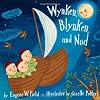
This book as loved into oblivion at our house. I LOVED reading the dreamy, mesmerizing poem instead of some of the more grating children's books, and the pictures of the three children harvesting stars and fish and then coming back home to bed were wonderful. It was read almost every night for a year, and I'm planning to get a new copy now that my younger is almost two.
This is an anthology of poems about children, and in some cases for children. The author had a very deep and obvious love for children that I greatly admire. Some of the poems are dated, but most are as relevant today as they were at the time of writing. I guess family and relationships are timeless. 3 1/2 stars, with an extra 1/2 star for putting me to sleep several times. Always appreciated. And many thanks to the Librivox narrator. I thought her interpretation of the text was, for the show more most part, well done and I appreciated the effort she put into the reading. show less
Lists
Awards


You May Also Like


Associated Authors
Statistics
- Works
- 114
- Also by
- 34
- Members
- 2,555
- Popularity
- #10,048
- Rating
- 4.0
- Reviews
- 44
- ISBNs
- 261
- Languages
- 2
- Favorited
- 3

