
Ward Moore (1903–1978)
Author of Bring the Jubilee
About the Author
Image credit: Courtesy of the NYPL Digital Gallery (image use requires permission from the New York Public Library)
Series
Works by Ward Moore
Bibliothek der besten SF- Stories. Die fünfziger Jahre I. ( 1950 - 1954 ). (SF- Spezial). (1981) — Contributor — 8 copies
Dominions Beyond 2 copies
It Becomes Necessary [short fiction] 2 copies
Bring the Jubilee [short story] 2 copies
No Man Pursueth 2 copies
E Tudo o Tempo Levou Livro 1 1 copy
Greener than you think 1 copy
e tudo o tempo levou 1 copy
Breathe the Air Again 1 copy
Lot's Daughter 1 copy
Associated Works
The Best Alternate History Stories of the 20th Century (2001) — Contributor — 617 copies, 10 reviews
The Saturday Evening Post Reader of Fantasy and Science Fiction (1963) — Contributor — 104 copies, 1 review
The Wild Years 1946-1955 (Amazing Science Fiction Anthology Series) (1987) — Contributor — 27 copies
The Magazine of Fantasy and Science Fiction February 1962, Vol. 22, No. 2 (1962) — Contributor — 11 copies
Amazing Science Fiction Stories Vol. 34, No. 2 [February 1960] — Author — 2 copies
Tagged
Common Knowledge
- Legal name
- Moore, Joseph Ward
- Birthdate
- 1903-08-10
- Date of death
- 1978-01-28
- Gender
- male
- Nationality
- USA
- Birthplace
- Madison, New Jersey, USA
- Places of residence
- Madison, New Jersey, USA
New York, New York, USA
Chicago, Illinois, USA
California, USA - Associated Place (for map)
- USA
Members
Reviews
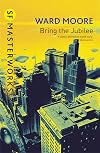
Published in 1952 this novel has been collected in the SF Masterwork series. I have read that it is the earliest book in the alternative history sub genre, but whatever its claims it is a very good novel and excellent science fiction.
“Although I am writing this in the year 1877, I was not born until 1921. Neither the dates nor the tenses are error - let me explain:”
So Hodgins Backmaker starts the account of his extraordinary life. During his adolescence he lives in a small rural show more community in the United States - United States with just 13 member states because the Union lost the American Civil war. The Confederacy agreed to the union keeping much of its territory but extracted a huge indemnity that beggared the Union for the foreseeable future. This has not only resulted in the United States becoming a third world country, but also hindered the development of science and engineering on a world wide scale. There are still no aeroplanes and no electricity and many of its citizens are indentured to international companies, there are repatriation schemes for the black population and the country suffers not only from poverty, but also from mean spiritedness. Hodgins must find his own way in a difficult world and at 17 years old starts his four day walk to New York.
The story continues with a lucky encounter in the big city and he gets a position working in a book store. He is fascinated by books and wants to learn and so agrees to work for bed and board for a little pocket money and free access to the books. The book store is also a front for the rebel Grand Army and Hodgins faces a steep learning curve involving his education, life in the city, romance and steering clear of trouble. His studying leads to a dream of an academic life, he wants to be a historian, but there are no worthwhile academic centres in the Union, however he manages to become involved in a self supporting academic community who live out in the countryside, where he continues his education and becomes a leading historian specialising in the American Civil war.
Ward Moore writes well and easily, his characters are particularly well drawn and the novel for much of its length is a very good bildungsroman. It switches smoothly between its story telling to being a novel of ideas and a tableau of an alternative world. The world building itself is not attempted in any detail, but just enough to create a fascinating backdrop for the story. This is not anything like a typical male oriented 1950’s science fiction, it has an egalitarian undertow that sets it apart from much science fiction and probably much popular writing of that era.
It builds to a good climax and I was interested enough to do a bit of research on the battle of Gettysburg before the final denouement. Of course any member of the reading community would guess the ending, but it might have been different in 1952 when this book was published. No matter there is plenty enough in this novel even for non science fiction readers to enjoy. A bit of a gem this one and so 4 stars. show less
“Although I am writing this in the year 1877, I was not born until 1921. Neither the dates nor the tenses are error - let me explain:”
So Hodgins Backmaker starts the account of his extraordinary life. During his adolescence he lives in a small rural show more community in the United States - United States with just 13 member states because the Union lost the American Civil war. The Confederacy agreed to the union keeping much of its territory but extracted a huge indemnity that beggared the Union for the foreseeable future. This has not only resulted in the United States becoming a third world country, but also hindered the development of science and engineering on a world wide scale. There are still no aeroplanes and no electricity and many of its citizens are indentured to international companies, there are repatriation schemes for the black population and the country suffers not only from poverty, but also from mean spiritedness. Hodgins must find his own way in a difficult world and at 17 years old starts his four day walk to New York.
The story continues with a lucky encounter in the big city and he gets a position working in a book store. He is fascinated by books and wants to learn and so agrees to work for bed and board for a little pocket money and free access to the books. The book store is also a front for the rebel Grand Army and Hodgins faces a steep learning curve involving his education, life in the city, romance and steering clear of trouble. His studying leads to a dream of an academic life, he wants to be a historian, but there are no worthwhile academic centres in the Union, however he manages to become involved in a self supporting academic community who live out in the countryside, where he continues his education and becomes a leading historian specialising in the American Civil war.
Ward Moore writes well and easily, his characters are particularly well drawn and the novel for much of its length is a very good bildungsroman. It switches smoothly between its story telling to being a novel of ideas and a tableau of an alternative world. The world building itself is not attempted in any detail, but just enough to create a fascinating backdrop for the story. This is not anything like a typical male oriented 1950’s science fiction, it has an egalitarian undertow that sets it apart from much science fiction and probably much popular writing of that era.
It builds to a good climax and I was interested enough to do a bit of research on the battle of Gettysburg before the final denouement. Of course any member of the reading community would guess the ending, but it might have been different in 1952 when this book was published. No matter there is plenty enough in this novel even for non science fiction readers to enjoy. A bit of a gem this one and so 4 stars. show less
Joyleg by Ward Moore

Though not ranked among the giants of the “golden age” of science fiction, Ward Moore produced some of the more memorable novels and short stories of the period. Perhaps best known for his seminal alternate history/time travel novella [b:Bring the Jubilee|91099|Bring the Jubilee|Ward Moore|https://images.gr-assets.com/books/1348717944s/91099.jpg|988602], his tales emphasized humor and character development over scientific detail, and have endured longer than many of those of his show more contemporaries as a consequence.
Moore’s reputation was hampered by his limited output, with his last two novels written jointly with other authors. This, his second to last novel, was co-authored by Avram Davidson, who was then transitioning from short stories to longer-form work. Though both were excellent writers, the novel they produced reflects upon them both poorly. It’s premise is intriguing enough: provoked by the discovery that an $11 veterans’ pension was being paid out as far back as records allowed, two members of the Tennessee congressional delegation travel to their state’s backwoods to unravel the mystery. Their journey beings them to the cabin of Isachar Joyleg, a veteran of the American Revolution who has lived for over two centuries thanks to daily baths in moonshine. This remarkable discovery ignites a firestorm of curiosity, one that in the end changes the course of history itself.
Such a premise offers no end of interesting possibilities for a storyteller, and while Moore and Davidson do score some of satirical points off of it, their work ultimately suffers from poor plotting and unimaginative twists that squander its promise. After an intriguing buildup, the story follows a by-the-numbers development to its resolution, while the arc of the two main characters is predictable from the moment of their introduction. As a result, the novel fails to live up to the promise created by them names on its cover, with readers better off picking up instead one of the other, far better work, that these authors produced over their respective careers. It may make for enjoyable reading over a lazy afternoon, but in the end it serves as a pale reflection of what these authors were capable. show less
Moore’s reputation was hampered by his limited output, with his last two novels written jointly with other authors. This, his second to last novel, was co-authored by Avram Davidson, who was then transitioning from short stories to longer-form work. Though both were excellent writers, the novel they produced reflects upon them both poorly. It’s premise is intriguing enough: provoked by the discovery that an $11 veterans’ pension was being paid out as far back as records allowed, two members of the Tennessee congressional delegation travel to their state’s backwoods to unravel the mystery. Their journey beings them to the cabin of Isachar Joyleg, a veteran of the American Revolution who has lived for over two centuries thanks to daily baths in moonshine. This remarkable discovery ignites a firestorm of curiosity, one that in the end changes the course of history itself.
Such a premise offers no end of interesting possibilities for a storyteller, and while Moore and Davidson do score some of satirical points off of it, their work ultimately suffers from poor plotting and unimaginative twists that squander its promise. After an intriguing buildup, the story follows a by-the-numbers development to its resolution, while the arc of the two main characters is predictable from the moment of their introduction. As a result, the novel fails to live up to the promise created by them names on its cover, with readers better off picking up instead one of the other, far better work, that these authors produced over their respective careers. It may make for enjoyable reading over a lazy afternoon, but in the end it serves as a pale reflection of what these authors were capable. show less
Brilliant. I did struggle a bit through the bulk of it, the alternate history, but all the details of politics, economics, technological development, cultural mores, philosophies, etc. were fascinating & plausible.
I loved watching the different characters' development. Hodge, especiallly, learns & matures as we watch him grow from a callow youth to a somewhat wiser young man who knows that he doesn't have any answers and can't make any judgements.
The time travel bit is brief but important - show more in a way one can say that the whole front of the book built towards the theme that was revealed to Hodge (and to us) by his travel in time.
A bit of an understanding of the course of the American Civil War would be helpful, but is not necessary. It may help one understand the title - I do not know what it meant by 'Bring the Jubilee' - but again, the book can be thoroughly enjoyed without that understanding. show less
I loved watching the different characters' development. Hodge, especiallly, learns & matures as we watch him grow from a callow youth to a somewhat wiser young man who knows that he doesn't have any answers and can't make any judgements.
The time travel bit is brief but important - show more in a way one can say that the whole front of the book built towards the theme that was revealed to Hodge (and to us) by his travel in time.
A bit of an understanding of the course of the American Civil War would be helpful, but is not necessary. It may help one understand the title - I do not know what it meant by 'Bring the Jubilee' - but again, the book can be thoroughly enjoyed without that understanding. show less

Much like [b:War with the Newts|816440|War with the Newts|Karel Čapek|https://i.gr-assets.com/images/S/compressed.photo.goodreads.com/books/1328766079l/816440._SY75_.jpg|1469484]. I read first and last bits and believe that plenty... it should have been a novelette. Satire, yes, but remember that satire is not necessarily humorous. Note that the satire extends to the 'sexism' and 'racism' other reviewers see... it's Weener who is an ignorant bigot, and Moore is thereby showing how wrong show more bigotry is, as Weener is wrong about everything. Otoh, the epigraph that we are all Weener is apt, too... what we do for lawns and other luxuries could surely be the death of us all....
May 2021 show less
May 2021 show less
Lists
Awards


You May Also Like


Associated Authors
Statistics
- Works
- 27
- Also by
- 30
- Members
- 1,452
- Popularity
- #17,698
- Rating
- 3.6
- Reviews
- 42
- ISBNs
- 65
- Languages
- 5
- Favorited
- 1