
Jack Williamson (1) (1908–2006)
Author of The Starchild Trilogy
For other authors named Jack Williamson, see the disambiguation page.
About the Author
Author Jack Williamson was born in Bisbee, Arizona on April 29, 1908. In the 1950's, he received both his BA and MA degress in English from Eastern New Mexico University. After receiving his PhD from the University of Colorado, he taught linguistics, the modern novel and literary criticism at show more Eastern New Mexico University until he retired in 1977. At the age of 20, he published his first story, The Metal Man, in a December 1928 issue of Amazing Stories. Since then he has written more than 50 novels and at least 15 short story collections. Some of his best known works are The Humanoids, The Legion of Time, Manseed, and Lifeburst. He also published numerous collaborations with fellow science fiction author Frederik Pohl. He received numerous awards including the Pilgrim Award from the Science Fiction Research Association, the Hugo Award, and the Nebula Award. He was an inaugural inductee in the Science Fiction and Fantasy Hall of Fame and was named a Grand Master of Science Fiction by the Science Fiction Writers of America in 1976. He died at his home in Portales, New Mexico on November 10, 2006. (Bowker Author Biography) show less
Image credit: Eastern New Mexico University
Series
Works by Jack Williamson
Wolves of Darkness, The Collected Stories of Jack Williamson, Volume Two (Short Stories) (1999) 38 copies, 1 review
The Metal Man and Others, The Collected Stories of Jack Williamson, Volume One (Short Stories) (1999) 30 copies
With Folded Hands . . . And Searching Mind, The Collected Stories of Jack Williamson, Volume Seven (2010) 16 copies
At the Human Limit, The Collected Stories of Jack Williamson, Volume Eight (2011) 16 copies, 1 review
Doomship [short fiction] 9 copies
Compratemi tutta 3 copies
Farside Station 3 copies
The Prince Of Space 3 copies
The Firefly Tree {Short story} 3 copies
Terror Out Of Time [novelette] 3 copies
Afterlife 2 copies
Trapped in Space 2 copies
Science Fiction Classics Annual 1970 2 copies
The Story Roger Never Told 2 copies
Short Science Fiction Collection 057 2 copies
Short Science Fiction Collection 058 2 copies
The Dead Spot 1 copy
Gryphon Science Fiction and Fantasy Reader (Gryphon Science Fiction Rediscovery Series, 24) (1999) 1 copy
LA PIETRA DELLA STELLA VERDE 1 copy
Collected Short Fiction 1 copy
Humanoids Series & More 1 copy
Konačna Zemlja/Vučje vrijeme 1 copy
The Dark Destroyer 1 copy
Bd. 98. Der Geist der Legion 1 copy
Dragon's Island, etc 1 copy
Incredible Adventures #1 1 copy
Lost Fantasies #6 1 copy
The Williamson Effect 1 copy
The Ice Entity 1 copy
Nitrogen Plus 1 copy
Way Station 1 copy
Devil's Star 1 copy
The Stonehenge Gate pt I 1 copy
The Stonehenge Gate pt II 1 copy
The Stonehenge Gate pt III 1 copy
Zweimal ging die Welt unter 1 copy
Dark Star 1 copy
The Hole in the World 1 copy
The Planet of Youth 1 copy
Alba del domani 1 copy
Black Hole Station 1 copy
Minus Sign 1 copy
Conscience Ltd 1 copy
The Human Touch 1 copy
Urania 0094 - GLI UMANOIDI 1 copy
The Ice Gods 1 copy
Giochi di società 1 copy
Mondo Di Ghiaccio 1 copy
Humanoiderne. Overs. af Jørgen Rothenborg efter "The mumanoids". Omslagstegn. af Henry Thelander 1 copy, 1 review
The girl from Mars — Author — 1 copy
l ' inpero dell'oscuro 1 copy
L'isola del drago 1 copy
Associated Works
The Science Fiction Hall of Fame, Volume Two A: The Greatest Science Fiction Novellas of All Time (1973) — Contributor — 991 copies, 12 reviews
Lord of the Fantastic: Stories in Honor of Roger Zelazny (1998) — Contributor — 174 copies, 1 review
Science Fiction Showcase: Eleven Extraordinary Stories by Eleven Masters of Science-Fiction and Fantasy (1959) — Contributor — 111 copies, 3 reviews
Science Fiction Today and Tomorrow: A Discursive Symposium (1974) — Contributor — 101 copies, 2 reviews
The Prentice Hall Anthology of Science Fiction and Fantasy (2000) — Foreword; Contributor — 100 copies, 2 reviews
Rivals of Weird Tales: 30 Great Fantasy & Horror Stories from the Weird Fiction Pulps (1990) — Contributor — 97 copies, 1 review
Speculations : 17 Stories Written Especially for This Volume By Well-Known Science Fiction Authors, But Their Names are Concealed By a Code and It's Up to You to Figure Out Who… (1982) — Contributor — 53 copies, 1 review
A Very Large Array: New Mexico Science Fiction and Fantasy (1987) — Contributor — 36 copies, 3 reviews
Analog Science Fiction/Science Fact: Vol. C, No. 4 (April 1980) (1980) — Contributor — 29 copies, 1 review
Analog Science Fiction/Science Fact: Vol. XCVII, No. 1 (January 1977) (1977) — Contributor — 28 copies, 1 review
Analog Science Fiction/Science Fact: Vol. XCVIII, No. 8 (August 1978) (1978) — Contributor — 27 copies
Analog Science Fiction/Science Fact: Vol. XCVIII, No. 7 (July 1978) (1978) — Contributor — 27 copies, 1 review
Analog Science Fiction/Science Fact: Vol. XCVIII, No. 2 (February 1978) (1978) — Contributor — 26 copies
Amazing Science Fiction Anthology: The Wonder Years 1926-1935 (1987) — Introduction, some editions; Author — 25 copies
Analog Science Fiction/Science Fact: Vol. XCVIII, No. 12 (December 1978) (1978) — Author — 23 copies
Kong Unbound: The Cultural Impact, Pop Mythos, and Scientific Plausibility of a Cinematic Legend (2005) — Contributor — 21 copies
The War of the Worlds: Fresh Perspectives on the H. G. Wells Classic (2005) — Contributor — 19 copies
Isaac Asimov's Science Fiction Magazine: Vol. 2, No. 2 [March-April 1978] (1978) — Contributor — 17 copies
Asimov's Science Fiction: Vol. 23, No. 10 & 11 [October/November 1999] (1999) — Contributor — 14 copies
Androids, Time Machines and Blue Giraffes: A Panorama of Science Fiction (1973) — Contributor — 13 copies, 1 review
The Magazine of Fantasy and Science Fiction April 2002, Vol. 102, No. 4 (2002) — Contributor — 10 copies
Galerij der giganten 5 de beste science-fiction verhalen — Contributor — 7 copies
The Profession of Science Fiction: SF Writers on Their Craft and Ideas (1992) — Contributor — 6 copies
Weird Tales Volume 22 Number 1, July 1933 — Contributor — 4 copies
Weird Tales Volume 31 Number 4, April 1938 — Contributor — 2 copies
Weird Tales Volume 20 Number 4, October 1932 — Contributor — 2 copies
Weird Tales Volume 29 Number 5, May 1937 — Contributor — 2 copies
Tagged
Common Knowledge
- Legal name
- Williamson, John Stewart
- Other names
- WILLIAMSON, John Stewart
STEWART, Will
WILLIAMSON, Jack - Birthdate
- 1908-04-29
- Date of death
- 2006-11-10
- Gender
- male
- Education
- Eastern New Mexico University (B.A., 1950s)
University of Colorado (Ph.D.) - Occupations
- science fiction writer
- Organizations
- Science Fiction and Fantasy Writers of America
- Awards and honors
- SFWA Grand Master (1975)
SF Hall Of Fame ( [1996])
E.E. Smith Memorial Award for Imaginative Fiction (1985)
Bram Stoker Award ( [1997])
World Fantasy Award for Life Achievement (1994)
SFRA Pilgrim Award (1973) (show all 7)
World Horror Convention Grand Master Award (2004) - Nationality
- USA
- Birthplace
- Bisbee, Arizona, USA
- Places of residence
- Bisbee, Arizona, USA
New Mexico, USA - Place of death
- Portales, New Mexico, USA
- Associated Place (for map)
- New Mexico, USA
Members
Discussions
Blinded by the light in Good Show Sir! — bad science fiction and fantasy covers (October 2025)
Reviews
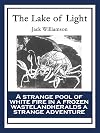
“The roar of the motor rang loud in the frosty air above a desert of ice. The sky above us was a deep purple-blue; the red sun hung like a crimson eye low in the north.” - The Lake of Light
For almost twenty years, Jack Williamson was the Dean of Science Fiction, and it’s a shame he isn’t more read in our day. I suppose the knock on him, despite late 1940s seminal Science Fiction masterworks like And Searching Mind, and With Folded Hands, which were eventually combined and retitled show more The Humanoids, is that Williamson never really lost that sense of fun and wonder so endemic to the pulps, nor did he ever discard movement within a narrative, making his stories practically read themselves. I personally find that a plus. Man, could Williamson write! His career spanned several decades, from his first published story in the late 1920s to his final novel in 2005. Through it all, Williamson never forgot that a story was supposed to entertain the reader, and he never failed to do so, even in deeper works such as the aforementioned Humanoids.
First published in 1931, in the same Astounding issue which began Ray Cummings' 4-part novel, The Exile of Time, The Lake of Light is one of Jack Williamson's many pulp stories. Reading it now, with a little perspective, it is great fun for fans of early Science Fiction pulp. While flying above Antarctica in the Enderby quadrant with his friend Ray, the narrator describes a bright white fire emanating from a cone-shaped rise similar to a volcano. It is unlike anything either man has ever seen on Earth, but their propeller shatters and they go down before they can get closer. Stranded and with no hope of rescue, and little provisions, they head out on foot toward the only thing in sight — the shiny mountain of light. The narrator is more sensitive to the freezing conditions, but his friend Ray refuses to leave him behind, using morphine to counter the pain of frostbite.
Their first warning of danger comes when they discover an old Haley biplane which has been shot down. But shot down by what? What the two men discover when they enter the caverns beneath the light seeking warmth is a fantastical world man did not know existed. But can they escape, and will they be able to bring the beautiful Mildred Meriden, who has been trapped there for ages, with them? Williamson’s descriptive prose is wonderful, bringing everything to life for the reader as we suspend belief, and get lost in a short story that is more fun than most, and just as rewarding as more literary endeavors.
I absolutely loved this. What seems most remarkable, is how well written this is for a pulp story — something you’ll get used to with early greats like Williamson, Cummings, and Leinster, among others — and how well the writing holds up after all these decades. Yes, it’s pulp, early pulp at that, but you’d almost think it had been written as a homage to the Science Fiction pulps by an excellent wordsmith last week, rather than eighty-six years ago. If you just want to entertain yourself with a short pulp story of fantastic adventure, I highly recommend this. It’s great fun! show less
For almost twenty years, Jack Williamson was the Dean of Science Fiction, and it’s a shame he isn’t more read in our day. I suppose the knock on him, despite late 1940s seminal Science Fiction masterworks like And Searching Mind, and With Folded Hands, which were eventually combined and retitled show more The Humanoids, is that Williamson never really lost that sense of fun and wonder so endemic to the pulps, nor did he ever discard movement within a narrative, making his stories practically read themselves. I personally find that a plus. Man, could Williamson write! His career spanned several decades, from his first published story in the late 1920s to his final novel in 2005. Through it all, Williamson never forgot that a story was supposed to entertain the reader, and he never failed to do so, even in deeper works such as the aforementioned Humanoids.
First published in 1931, in the same Astounding issue which began Ray Cummings' 4-part novel, The Exile of Time, The Lake of Light is one of Jack Williamson's many pulp stories. Reading it now, with a little perspective, it is great fun for fans of early Science Fiction pulp. While flying above Antarctica in the Enderby quadrant with his friend Ray, the narrator describes a bright white fire emanating from a cone-shaped rise similar to a volcano. It is unlike anything either man has ever seen on Earth, but their propeller shatters and they go down before they can get closer. Stranded and with no hope of rescue, and little provisions, they head out on foot toward the only thing in sight — the shiny mountain of light. The narrator is more sensitive to the freezing conditions, but his friend Ray refuses to leave him behind, using morphine to counter the pain of frostbite.
Their first warning of danger comes when they discover an old Haley biplane which has been shot down. But shot down by what? What the two men discover when they enter the caverns beneath the light seeking warmth is a fantastical world man did not know existed. But can they escape, and will they be able to bring the beautiful Mildred Meriden, who has been trapped there for ages, with them? Williamson’s descriptive prose is wonderful, bringing everything to life for the reader as we suspend belief, and get lost in a short story that is more fun than most, and just as rewarding as more literary endeavors.
I absolutely loved this. What seems most remarkable, is how well written this is for a pulp story — something you’ll get used to with early greats like Williamson, Cummings, and Leinster, among others — and how well the writing holds up after all these decades. Yes, it’s pulp, early pulp at that, but you’d almost think it had been written as a homage to the Science Fiction pulps by an excellent wordsmith last week, rather than eighty-six years ago. If you just want to entertain yourself with a short pulp story of fantastic adventure, I highly recommend this. It’s great fun! show less

This novel is about a human learning that he is non-human. In a contemporary genre story, this would mean he or she would be a teenager discovering that he or she was a wizard or a shapeshifter or a vampire or whatever. This is not a contemporary genre story. This was published very shortly after World War II. And the hero - rather, anti-hero - isn't a pretty young geek, he is a thirty-year-old loser and a drunk who prefers to believe for most of the novel that he is either dreaming or going show more mad - better than the reality.
Biggest surprise, this is an early example of a genre-blender. Williamson uses monster types out of the Universal Studios template but he re-invents them through hard SF ideas of his day. He powers his witch people not with occultism but with Heisenberg uncertainty. Their evil plan is based on Mendel. They cover their tracks with psychotherapy; nice touch, that. His would-be heroes find their would-be weapons by imitating Roy Chapman Andrews.
Williamson like other urban fantasists has to deal with reality and fantasy. He is very good with both. In the real world, you can almost smell the stink of the anti-hero's fear and the sour whiskey on his breath. In the world of dreams, he made me see the white wolf bitch entering through a door (literally) and the nude redhead riding on the sabre-toothed tiger. Great image, huh?
Williamson used a femme fatale, April Bell, a red-haired vixen whom I can imagine a young Gillian Anderson playing. She is also very necessary for someone has to do the explicating and someone has to energize the sodden hero into finding his destiny. Their relationship isn't explicit, at least by our standards, but it has more heat than Bella Swann's passion for her Edward. show less
Biggest surprise, this is an early example of a genre-blender. Williamson uses monster types out of the Universal Studios template but he re-invents them through hard SF ideas of his day. He powers his witch people not with occultism but with Heisenberg uncertainty. Their evil plan is based on Mendel. They cover their tracks with psychotherapy; nice touch, that. His would-be heroes find their would-be weapons by imitating Roy Chapman Andrews.
Williamson like other urban fantasists has to deal with reality and fantasy. He is very good with both. In the real world, you can almost smell the stink of the anti-hero's fear and the sour whiskey on his breath. In the world of dreams, he made me see the white wolf bitch entering through a door (literally) and the nude redhead riding on the sabre-toothed tiger. Great image, huh?
Williamson used a femme fatale, April Bell, a red-haired vixen whom I can imagine a young Gillian Anderson playing. She is also very necessary for someone has to do the explicating and someone has to energize the sodden hero into finding his destiny. Their relationship isn't explicit, at least by our standards, but it has more heat than Bella Swann's passion for her Edward. show less

I wrote a review for this book on my blog:
The Real World According To Sam
I came across this book at my university's library. It was for sale and as a fan of science fiction I decided to pick it up. I'd never heard of this book, nor its author, before.
The book's main character and narrator is Kim Hodian, a Jewish man with a brother he doesn't really get along with, who gets roped into the lives of the moon children, seemingly by accident. He is called in by his brother, who is in a pretty show more high position, and ends up doing publicity jobs (writing press releases and the like). He is with the moon children over the course of their lives as presented within the book, and he often ends up becoming witness to the things they accomplish. As a main character, I can't say I much like him. He's of good moral character and is a good enough guy, but he has very little agency. His whole role is to relate his complacence within the story so that we understand what major things occurred in the world within the book.
The moon children were rather fascinating characters. I would have preferred to have the story told from one of their perspectives, but at the same time, considering how different they are from humans, I can understand how impossible a task it may be to have them tell their own story in a way that can be "understood to humans". As a result, we get a very laid back, generally inactive main character.
The story is very intriguing and it goes by rather quick. The pace sometimes rocks off kilter a little, but overall things are pretty seamless until near the end. Some parts felt a bit rushed, but that may be as a result of the story being published as a serialized version in a magazine (although it is labeled as being slightly different from that version). This still feels a bit like a serialized story, than a full novel to a certain degree. The ending of the book feels strongly like a 1970s sci-fi ending based on the little bit of sci-fi I know from the time in film/novels.
This novel also mixes some science with a lot of fiction, as can be expected. I mention this because I found many instances in which scientific information was presented and then largely left off to the side for a predominant amount of the novel. One major component is mentioned again towards the end, but overall there isn't a lot of science going on, and there is a lot more geometry, to a certain degree. I liked this about the book, but I also didn't, in a simultaneously, bizarre and paradoxical manner. I like when science is presented, but not left as largely moot to most of the book's happenings, although I see where it may be necessary considering that the narrator is not scientifically inclined. Kim is an average, and somewhat self-unappreciative person, with very little higher scientific knowledge. In some regards he is a bit of a simpleton, particularly when compared to the moon children and the astronauts or other space personnel at the beginning of the novel. He is more of an emotional, feeling person, than a contemplative one. I thought that was an interesting choice considering the patterns I've known science fiction to follow in what I've read up to this point. I'm used to characters having a bit more agency, so a narrator of this type is very different. I like how much it gives me to contemplate about the story and the kind of story we can get, but I think I still prefer my narrators and characters to have some more agency to them.
Overall, this was a very intriguing read and I'm glad that I picked it up. I'll definitely be contemplating this one for a while. Not because of the events of the story, but because of the elements used to TELL the story...the writing aspects and decisions made for it. show less
The Real World According To Sam
I came across this book at my university's library. It was for sale and as a fan of science fiction I decided to pick it up. I'd never heard of this book, nor its author, before.
The book's main character and narrator is Kim Hodian, a Jewish man with a brother he doesn't really get along with, who gets roped into the lives of the moon children, seemingly by accident. He is called in by his brother, who is in a pretty show more high position, and ends up doing publicity jobs (writing press releases and the like). He is with the moon children over the course of their lives as presented within the book, and he often ends up becoming witness to the things they accomplish. As a main character, I can't say I much like him. He's of good moral character and is a good enough guy, but he has very little agency. His whole role is to relate his complacence within the story so that we understand what major things occurred in the world within the book.
The moon children were rather fascinating characters. I would have preferred to have the story told from one of their perspectives, but at the same time, considering how different they are from humans, I can understand how impossible a task it may be to have them tell their own story in a way that can be "understood to humans". As a result, we get a very laid back, generally inactive main character.
The story is very intriguing and it goes by rather quick. The pace sometimes rocks off kilter a little, but overall things are pretty seamless until near the end. Some parts felt a bit rushed, but that may be as a result of the story being published as a serialized version in a magazine (although it is labeled as being slightly different from that version). This still feels a bit like a serialized story, than a full novel to a certain degree. The ending of the book feels strongly like a 1970s sci-fi ending based on the little bit of sci-fi I know from the time in film/novels.
This novel also mixes some science with a lot of fiction, as can be expected. I mention this because I found many instances in which scientific information was presented and then largely left off to the side for a predominant amount of the novel. One major component is mentioned again towards the end, but overall there isn't a lot of science going on, and there is a lot more geometry, to a certain degree. I liked this about the book, but I also didn't, in a simultaneously, bizarre and paradoxical manner. I like when science is presented, but not left as largely moot to most of the book's happenings, although I see where it may be necessary considering that the narrator is not scientifically inclined. Kim is an average, and somewhat self-unappreciative person, with very little higher scientific knowledge. In some regards he is a bit of a simpleton, particularly when compared to the moon children and the astronauts or other space personnel at the beginning of the novel. He is more of an emotional, feeling person, than a contemplative one. I thought that was an interesting choice considering the patterns I've known science fiction to follow in what I've read up to this point. I'm used to characters having a bit more agency, so a narrator of this type is very different. I like how much it gives me to contemplate about the story and the kind of story we can get, but I think I still prefer my narrators and characters to have some more agency to them.
Overall, this was a very intriguing read and I'm glad that I picked it up. I'll definitely be contemplating this one for a while. Not because of the events of the story, but because of the elements used to TELL the story...the writing aspects and decisions made for it. show less

Upon visiting my hometown a few years ago I spotted this book in a supermarket's makeshift charity book shop stall. It was only 30p, and looked like solid science-fiction fun, so I bought it.
I could have paid some needy ragamuffin 20p to kick me in the balls, and I would have derived approximately the same amount of pleasure from the experience and saved myself 10p.
The book is easy to read, about the only good thing about it, so it didn't take me long to get through almost all of its three show more hundred and four pages. And yet as the pages passed nothing was really happening, and nothing kept happening. Finally, with about a page and a half to go, the plot appeared from nowhere and rapidly resolved itself. This really could have been a five page short story and still featured just as much character and plot development. Instead it's a drawn out drudgery of a novel which went straight back to a charity shop. show less
I could have paid some needy ragamuffin 20p to kick me in the balls, and I would have derived approximately the same amount of pleasure from the experience and saved myself 10p.
The book is easy to read, about the only good thing about it, so it didn't take me long to get through almost all of its three show more hundred and four pages. And yet as the pages passed nothing was really happening, and nothing kept happening. Finally, with about a page and a half to go, the plot appeared from nowhere and rapidly resolved itself. This really could have been a five page short story and still featured just as much character and plot development. Instead it's a drawn out drudgery of a novel which went straight back to a charity shop. show less
Lists
Witchy Fiction (1)
Awards


You May Also Like


Associated Authors
Statistics
- Works
- 215
- Also by
- 136
- Members
- 10,168
- Popularity
- #2,334
- Rating
- 3.5
- Reviews
- 166
- ISBNs
- 354
- Languages
- 12
- Favorited
- 5

