

Dan Abrams
Author of Lincoln's Last Trial: The Murder Case That Propelled Him to the Presidency
About the Author
Dan Abrams is an American author, entrepreneur, news anchor, born in New York City in 1966. He earned his law degree at Columbia Law School. He is the chief legal affairs anchor of ABC News. At A&E network, he is the host of Live PD. His first book was published in 2011, Man Down: Proof Beyond a show more Reasonable Doubt That Women Are Better Cops, Drivers, Gamblers, Spies, World Leaders, Beer Tasters, Hedge Fund Managers and Just About Everything Else (2011). His second book was published in June 2018, Lincoln's Last Trial: The Murder Case That Propelled Him to the Presidency. (Bowker Author Biography) show less
Works by Dan Abrams
Lincoln's Last Trial: The Murder Case That Propelled Him to the Presidency (2018) 423 copies, 9 reviews
John Adams Under Fire: The Founding Father's Fight for Justice in the Boston Massacre Murder Trial (2020) — Author; Narrator, some editions — 196 copies, 9 reviews
Kennedy's Avenger: Assassination, Conspiracy, and the Forgotten Trial of Jack Ruby (2021) 125 copies, 2 reviews
Man Down: Proof Beyond a Reasonable Doubt That Women Are Better Cops, Drivers, Gamblers, Spies, World Leaders, Beer Tasters, Hedge Fund Managers, and Just About Everything Else (2011) 56 copies, 2 reviews
Alabama v. King: Martin Luther King, Jr. and the Criminal Trial that Launched the Civil Rights Movement (2022) 46 copies
Lincoln's Last Trial Young Readers' Edition: The Murder Case That Propelled Him to the Presidency (2019) 9 copies, 1 review
Tagged
Common Knowledge
- Birthdate
- 1966-05-20
- Gender
- male
- Education
- BA Political Science, Duke
JD COlumbia University law School - Occupations
- lawyer
Legal Analyst
tv anchor - Relationships
- Father is Floyd Abrams
Everett Floyd Abrams (son)
Ronnie Abrams (brother) - Nationality
- USA
- Birthplace
- Manhattan, New York, USA
- Associated Place (for map)
- New York, USA
Members
Reviews
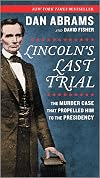
It would seem that at this late date there would be nothing new to say about the life of Abraham Lincoln, but of course that is not true as new information is discovered all the time which shines light on a heretofore unexplored aspect of this greatest, and most consequential, of Americans lives. That is why LINCOLN’S LAST TRIAL, by Dan Abrams and David Fisher, is so interesting, especially for those who can’t get enough of Lincoln. Based upon a firsthand meticulous record by show more professional stenographer Robert Roberts Hitt, the book is an account of an 1859 murder trial in Springfield, Illinois, which puts the spotlight on Lincoln the defense lawyer as few books ever have.
The defendant in the trial was a young man named Peachy Quinn Harrison, the grandson of a revivalist preacher who had been a staunch political opponent of Lincoln’s, while the victim, Greek Grafton, studied law in Lincoln’s office. There had been something of a feud going between the families of the victim and the accused, and youthful passions, seem to have gotten the better of Greek, who made public threats against Peachy. A fateful encounter in a local store left Greek mortally wounded by Peachy’s knife. The latter, who was physically smaller than Greek, claimed self defense, but the law, at the very least, said it was manslaughter. It became a question for a jury to decide. Much of the drama came from the fact that everyone involved – the defense lawyers, the prosecutor, the judge, the members of the jury, the witnesses, the families of the victim and the accused – had all known each other for years, as Springfield was still very much a small town at the end of the 1850s.
Though there is no Perry Mason moment, Abrams and Fisher weave a good tight courtroom drama thanks to the transcript Hitt left behind, which wasn’t discovered until 1989. The authors give us look at what life was like in America just before the Civil War, a time when the country was still dominated by small towns and farms, where communities were close knit, with strong ties to the land. The book is also short history lesson in American justice, and how our legal system developed. The other characters beside Lincoln are well rendered inside the pages, and we all but feel the heat of the late summer of 1859. The best thing the book does is give us a fuller picture of Lincoln the lawyer, and his talent as a communicator, which served him very well when summing up the case before the jury, just as it would serve him very well in the political arena.
LINCOLN’S LAST CASE flows like a novel; that is because Abrams and Fisher fill in between the lines of Hitt’s transcript by giving us “deductions” as to what certain characters are doing or thinking at any given time. It’s a liberty the authors are entitled to take, but they do blur the line between fiction and non-fiction for many readers. They also claim that the trial is the case “that propelled” Lincoln to the Presidency. But they don’t back that up and it feels like hyperbole. Lincoln was fresh off his race for the Senate in Illinois the year before, where his debates with Stephen Douglas had already brought him national fame and attention. Lincoln was very much a dark horse candidate for the Republican Presidential nomination by the time the trial commenced. But those are trivial faults, as it is, Dan Abrams and David Fisher’s book is a must read for any Lincoln fan and American history buff. show less
The defendant in the trial was a young man named Peachy Quinn Harrison, the grandson of a revivalist preacher who had been a staunch political opponent of Lincoln’s, while the victim, Greek Grafton, studied law in Lincoln’s office. There had been something of a feud going between the families of the victim and the accused, and youthful passions, seem to have gotten the better of Greek, who made public threats against Peachy. A fateful encounter in a local store left Greek mortally wounded by Peachy’s knife. The latter, who was physically smaller than Greek, claimed self defense, but the law, at the very least, said it was manslaughter. It became a question for a jury to decide. Much of the drama came from the fact that everyone involved – the defense lawyers, the prosecutor, the judge, the members of the jury, the witnesses, the families of the victim and the accused – had all known each other for years, as Springfield was still very much a small town at the end of the 1850s.
Though there is no Perry Mason moment, Abrams and Fisher weave a good tight courtroom drama thanks to the transcript Hitt left behind, which wasn’t discovered until 1989. The authors give us look at what life was like in America just before the Civil War, a time when the country was still dominated by small towns and farms, where communities were close knit, with strong ties to the land. The book is also short history lesson in American justice, and how our legal system developed. The other characters beside Lincoln are well rendered inside the pages, and we all but feel the heat of the late summer of 1859. The best thing the book does is give us a fuller picture of Lincoln the lawyer, and his talent as a communicator, which served him very well when summing up the case before the jury, just as it would serve him very well in the political arena.
LINCOLN’S LAST CASE flows like a novel; that is because Abrams and Fisher fill in between the lines of Hitt’s transcript by giving us “deductions” as to what certain characters are doing or thinking at any given time. It’s a liberty the authors are entitled to take, but they do blur the line between fiction and non-fiction for many readers. They also claim that the trial is the case “that propelled” Lincoln to the Presidency. But they don’t back that up and it feels like hyperbole. Lincoln was fresh off his race for the Senate in Illinois the year before, where his debates with Stephen Douglas had already brought him national fame and attention. Lincoln was very much a dark horse candidate for the Republican Presidential nomination by the time the trial commenced. But those are trivial faults, as it is, Dan Abrams and David Fisher’s book is a must read for any Lincoln fan and American history buff. show less
John Adams Under Fire: The Founding Father's Fight for Justice in the Boston Massacre Murder Trial by David Fisher
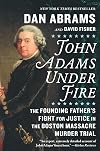
Just finished: John Adams Under Fire: The Founding Father's Fight for Justice in the Boston Massacre Murder Trial by Dan Abrams and David Fisher. Here’s a synopsis
In 1770, tensions over British taxes and troops boiled over in Boston. On March 5, eight soldiers commanded by Captain Preston fired their guns on the mob, killing five and wounding six.
Self-defense or murder? Did Preston order the soldiers to shoot or did they act spontaneously?
Preston was tried first; then the soldiers. John show more Adams defended the soldiers in court, ensuring a fair trial despite patriot outrage. “Always an honest man, often a great man but sometimes absolutely mad.” Ben Franklin describing Adams
Adams championed an independent, impartial legal system to protect against tyranny. The law must serve justice, with counsel as a last resort for the accused, to protect liberty and oppose oppressive governance like absolute monarchy.
For the trials, Adams cited Blackstone's newly published self-defense principle, allowing individuals to repel force with force when they or their kin are attacked, with legal blame on the aggressor.
The American legal system evolved from British roots, but it diverged by adopting the presumption of innocence, established in colonial Massachusetts, ensuring that a defendant is considered innocent until proven guilty by sufficient evidence before a jury.
Adams championed an impartial legal system and trial by jury, ensuring justice is administered fairly based on truth, not political motives, despite pressures from revolutionary patriots led by Samuel Adams and the Sons of Liberty.
Adams wrote: “Representative government and trial by jury are the heart and lungs of liberty. Without them we have no other fortification against being ridden like horses, fleeced like sheep, worked like cattle, and fed and clothed like swine and hounds.”
In the defense, Adams referred to John Locke: Every person has a natural right to defend their life, liberty, or property; if attacked with unlawful force, they enter a state of war with the aggressor, justifying lethal self-defense if necessary.
“I am for the prisoners at the bar and shall apologize for it only in the words of the Marquis Beccaria, ‘If I can but be the instrument of preserving one life, his blessing and tears of transport, shall be a sufficient consolation to me, for the contempt of all mankind.’”
What were the outcomes of the trials? I recommend reading this well-researched book to find out. The lessons on the foundations of American law are worth reviewing in these turbulent times.
BTW: As the second U.S. President and leader of the Federalists, John Adams signed the Alien Enemies Act into law in 1798, one of the Alien and Sedition Acts passed by a Federalist-controlled Congress during the Quasi-War with France. show less
In 1770, tensions over British taxes and troops boiled over in Boston. On March 5, eight soldiers commanded by Captain Preston fired their guns on the mob, killing five and wounding six.
Self-defense or murder? Did Preston order the soldiers to shoot or did they act spontaneously?
Preston was tried first; then the soldiers. John show more Adams defended the soldiers in court, ensuring a fair trial despite patriot outrage. “Always an honest man, often a great man but sometimes absolutely mad.” Ben Franklin describing Adams
Adams championed an independent, impartial legal system to protect against tyranny. The law must serve justice, with counsel as a last resort for the accused, to protect liberty and oppose oppressive governance like absolute monarchy.
For the trials, Adams cited Blackstone's newly published self-defense principle, allowing individuals to repel force with force when they or their kin are attacked, with legal blame on the aggressor.
The American legal system evolved from British roots, but it diverged by adopting the presumption of innocence, established in colonial Massachusetts, ensuring that a defendant is considered innocent until proven guilty by sufficient evidence before a jury.
Adams championed an impartial legal system and trial by jury, ensuring justice is administered fairly based on truth, not political motives, despite pressures from revolutionary patriots led by Samuel Adams and the Sons of Liberty.
Adams wrote: “Representative government and trial by jury are the heart and lungs of liberty. Without them we have no other fortification against being ridden like horses, fleeced like sheep, worked like cattle, and fed and clothed like swine and hounds.”
In the defense, Adams referred to John Locke: Every person has a natural right to defend their life, liberty, or property; if attacked with unlawful force, they enter a state of war with the aggressor, justifying lethal self-defense if necessary.
“I am for the prisoners at the bar and shall apologize for it only in the words of the Marquis Beccaria, ‘If I can but be the instrument of preserving one life, his blessing and tears of transport, shall be a sufficient consolation to me, for the contempt of all mankind.’”
What were the outcomes of the trials? I recommend reading this well-researched book to find out. The lessons on the foundations of American law are worth reviewing in these turbulent times.
BTW: As the second U.S. President and leader of the Federalists, John Adams signed the Alien Enemies Act into law in 1798, one of the Alien and Sedition Acts passed by a Federalist-controlled Congress during the Quasi-War with France. show less
Lincoln’s Last Trial, The Murder Case That Propelled Him to the Presidency, by Dan Abrams and David Fisher (pp 287). Notwithstanding the exaggeration of the book’s title, this is a fascinating look at Lincoln, with a focus on his trial work. Despite an imminent run for the presidency, Mr. Lincoln took on a murder trial that, if it had gone badly, might (!) have tarnished his reputation. He knew virtually everybody involved in the trial, including victim and perpetrator, the judge, show more opposing counsel, and witnesses. The author reports much of the trial from the perspective of the court stenographer, Mr. Robert Hitt. Hitt was a bit of personality himself, having gained a degree of fame for his transcriptions of some of the Lincoln - Douglas debates, and be snd a friend and colleague of Lincoln. His accurate transcript of the trial helped make the trial especially noteworthy and provided the detail that brings the back and forth of sometimes dry court procedure to life. Lincoln’s defense of Peachy Quinn Harrison against a charge of murder was successful, and the credit for victory lay more in Lincoln’s rhetorical skill than in the cases’s facts or the law. The author included some elements of the evolution of evidentiary procedure in a way that, surprisingly, was both enlightening and insightful. This book provides a peek at Lincoln as an attorney, more nuanced and detailed than many others that are written in broad strokes and which focus more on his manner and personality than his understanding of the law and an ability to argue the law in ways that made sense to often unsophisticated juries. show less
John Adams Under Fire: The Founding Father's Fight for Justice in the Boston Massacre Murder Trial by David Fisher
250 years ago the Boston Massacre marked the beginning of the American Revolution. The mythos handed down tells how British Redcoats fired into a crowd of Americans, resulting in the death of freeman Crispus Attucks and other men.
The soldiers and their superior were put on trial separately. Samuel Adams wanted to capitalize on the incident to inflame anti-British sentiment and support the Sons of Liberty.
John Adams was part of the team to defend the Redcoats. He wanted to keep politics out show more of it and to prove the fairness and impartiality of American justice.
I knew it was a pivotal trial in American judicial history and I thought it would be interesting to learn more.
Dan Abrams' book John Adams Under Fire follows the incident and the testimonies at the trials in meticulous detail. The trials set new precedents in the length of the trials, extending over days, and the judge's warning of 'reasonable' doubt' tending toward a verdict of not guilty.
I have to admit that with pages and pages of testimony reproduced in the book I scanned over many pages without a through reading. It was...frankly, boring...
But I am not a scholar or a lawyer.
I appreciated many aspects of the book including a deeper understanding of the roots of the riot.
British soldiers stationed were in Boston, one lobsterback to every three citizens. Bostonians resented their presence and their conduct toward. Some soldier took jobs to supplement their meager income, and some courted young women, but they also pushed their weight around and raped young women.
Young Bostonian men decided to give the sentries a hard time, taunting them to lash back by firing their guns. The youth threw ice balls and carried clubs and struck the guns. They knew the soldiers could not fire in anger.
Until they did.
Since Americans did in the end sent the Brits back across the pond, our history is biased. Paul Revere's picture of soldiers firing and citizens dying shows Americans as victims. Crispus has become a hero, even if he was likely one of the men out to stir up trouble in the first place.
A book not for the reader who prefers narrative nonfiction that reads like a novel, I am still pleased to have increases my understanding of this pivotal moment in America history.
I was given access to a free ebook by the publisher through NetGalley in exchange for a fair and unbiased review. show less
The soldiers and their superior were put on trial separately. Samuel Adams wanted to capitalize on the incident to inflame anti-British sentiment and support the Sons of Liberty.
John Adams was part of the team to defend the Redcoats. He wanted to keep politics out show more of it and to prove the fairness and impartiality of American justice.
I knew it was a pivotal trial in American judicial history and I thought it would be interesting to learn more.
Dan Abrams' book John Adams Under Fire follows the incident and the testimonies at the trials in meticulous detail. The trials set new precedents in the length of the trials, extending over days, and the judge's warning of 'reasonable' doubt' tending toward a verdict of not guilty.
I have to admit that with pages and pages of testimony reproduced in the book I scanned over many pages without a through reading. It was...frankly, boring...
But I am not a scholar or a lawyer.
I appreciated many aspects of the book including a deeper understanding of the roots of the riot.
British soldiers stationed were in Boston, one lobsterback to every three citizens. Bostonians resented their presence and their conduct toward. Some soldier took jobs to supplement their meager income, and some courted young women, but they also pushed their weight around and raped young women.
Young Bostonian men decided to give the sentries a hard time, taunting them to lash back by firing their guns. The youth threw ice balls and carried clubs and struck the guns. They knew the soldiers could not fire in anger.
Until they did.
Since Americans did in the end sent the Brits back across the pond, our history is biased. Paul Revere's picture of soldiers firing and citizens dying shows Americans as victims. Crispus has become a hero, even if he was likely one of the men out to stir up trouble in the first place.
A book not for the reader who prefers narrative nonfiction that reads like a novel, I am still pleased to have increases my understanding of this pivotal moment in America history.
I was given access to a free ebook by the publisher through NetGalley in exchange for a fair and unbiased review. show less
Lists
Awards


You May Also Like


Associated Authors
Statistics
- Works
- 7
- Members
- 1,036
- Popularity
- #24,854
- Rating
- 3.6
- Reviews
- 25
- ISBNs
- 63
- Languages
- 1
- Favorited
- 1