
Brian Kilmeade
Author of George Washington's Secret Six: The Spy Ring That Saved the American Revolution
About the Author
Brian Kilmeade was born on May 7, 1964. He graduated from C. W. Post in Long Island, New York in 1986. He started his career in journalism as a freelance sports anchor and covered the NewYork/New Jersey Metro-Stars soccer team. He is the author of The Games Do Count: America's Best and Brightest on show more the Power of Sports, It's How You Play the Game, George Washington's Secret Six: The Spy Ring That Saved the American Revolution and Thomas Jefferson and the Tripoli Pirates: The Forgotten War That Changed American History, and Andrew Jackson and the Miracle of New Orleans: The Battle that Shaped America's Destiny. He is currently a co-host of Fox's morning show, Fox and Friends. (Bowker Author Biography) show less
Image credit: reading at the National Book Festival, Washington, D.C. By slowking4 - Own work, GFDL 1.2, https://commons.wikimedia.org/w/index.php?curid=72267132
Works by Brian Kilmeade
George Washington's Secret Six: The Spy Ring That Saved the American Revolution (2013) — Author — 2,049 copies, 49 reviews
Andrew Jackson and the Miracle of New Orleans: The Battle That Shaped America's Destiny (2017) — Author — 761 copies, 17 reviews
Sam Houston and the Alamo Avengers: The Texas Victory That Changed American History (2019) 501 copies, 9 reviews
The President and the Freedom Fighter: Abraham Lincoln, Frederick Douglass, and Their Battle to Save America's Soul (2021) 419 copies, 3 reviews
The Games Do Count: America's Best and Brightest on the Power of Sports (2004) — Editor — 204 copies, 4 reviews
Teddy and Booker T.: How Two American Icons Blazed a Path for Racial Equality (2023) 164 copies, 5 reviews
It's How You Play the Game: The Powerful Sports Moments That Taught Lasting Values to America's Finest (2007) 80 copies
Associated Works
Tagged
Common Knowledge
- Birthdate
- 1964-05-07
- Gender
- male
- Education
- C.W. Post (BA|1986)
- Occupations
- television host
radio host
journalist
anchor
reporter
novelist - Organizations
- Fox News
Fox News Radio - Nationality
- USA
- Places of residence
- Massapequa, New York, USA
- Associated Place (for map)
- New York, USA
Members
Reviews
Thomas Jefferson and the Tripoli Pirates: The Forgotten War That Changed American History by Brian Kilmeade
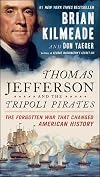
About 3 pages into Thomas Jefferson and the Tripoli Pirates by Brian Kilmeade I felt that the author had a real issue with Muslims and he wrote this book to denounce them through a historical lens. As he drew parallels to the Barbary Wars (what's detailed in this book) and present day conflicts, he made the claim that slavery was a unique and barbarous practice only perpetrated by Muslims against whites. (Duh that's not the case.) By the time I had finished the book my overwhelming show more impression was that this book was not only Islamophobic but a major piece of revisionist history. (I even checked other reader's reviews to make sure that I wasn't completely off the mark here and they back up my feelings pretty much across the board.) He makes a strong argument for a show of military strength over diplomacy. In fact, the Barbary Wars were what precipitated the formation of the Navy and Marines (the 'shores of Tripoli' ring any bells?). I couldn't even tell you if what he says happened really happened when such a large focus was on ideas other than the historical events of the moment. 0/10
And then to discover that this book which was recommended to me by a coworker was in fact written by a co-host of Fox & Friends made total sense after the fact. ¯_(ツ)_/¯ show less
And then to discover that this book which was recommended to me by a coworker was in fact written by a co-host of Fox & Friends made total sense after the fact. ¯_(ツ)_/¯ show less
Andrew Jackson and the Miracle of New Orleans: The Battle That Shaped America's Destiny by Brian Kilmeade
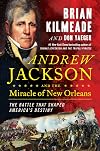
This reads more like a thriller novel that will keep you up half the night than the history it actually is. Because it was so different from the nonfiction history books I usually read, I was initially unsure whether I would like it when I started reading, but once I got into it I couldn't stop reading. And because it is about the defense of New Orleans during the War of 1812, I already knew how it ended!
One thing I've noticed about the War of 1812 in general is that most of the accounts show more seem to be somewhat biased, although I suppose that comes with the territory - an inconclusive war in which no territory changed hands and the treaty ended it was basically an agreement to end hostilities and did not even address the casus belli (and British and American historians even disagree on whether the fact that the British rules about impressment were technically rescinded before the start of hostilities meant the whole war had no real basis). And "The Great Compromiser" Henry Clay, who helped negotiate the treaty didn't approve of it either. From what I could see this tended toward the American point of view, although the British point of view was not completely ignored. Most interestingly, the book pointed out that to Great Britain and most of the rest of Europe, the Louisiana Purchase was not seen as a legitimate acquisition of territory by the United States - to most of Europe, Napoleon had stolen the land from Spain and had no right to sell it.
Another interesting tidbit: Thomas ap Catesby Jones, the US Navy commander who worked with Jackson to defend New Orleans, was the inspiration for Commodore J- in Moby Dick. show less
One thing I've noticed about the War of 1812 in general is that most of the accounts show more seem to be somewhat biased, although I suppose that comes with the territory - an inconclusive war in which no territory changed hands and the treaty ended it was basically an agreement to end hostilities and did not even address the casus belli (and British and American historians even disagree on whether the fact that the British rules about impressment were technically rescinded before the start of hostilities meant the whole war had no real basis). And "The Great Compromiser" Henry Clay, who helped negotiate the treaty didn't approve of it either. From what I could see this tended toward the American point of view, although the British point of view was not completely ignored. Most interestingly, the book pointed out that to Great Britain and most of the rest of Europe, the Louisiana Purchase was not seen as a legitimate acquisition of territory by the United States - to most of Europe, Napoleon had stolen the land from Spain and had no right to sell it.
Another interesting tidbit: Thomas ap Catesby Jones, the US Navy commander who worked with Jackson to defend New Orleans, was the inspiration for Commodore J- in Moby Dick. show less
Thomas Jefferson and the Tripoli Pirates: The Forgotten War That Changed American History by Brian Kilmeade
This is a joint review of two books, Thomas Jefferson and the Tripoli Pirates: The Forgotten War That Changed American History by Brian Kilmeade and The Barbary Wars: American Independence in the Atlantic World by Frank Lambert.
The Lambert book is definitely much better than the Kilmeade book, but it's really a good idea to read the two of them together and to read Kilmeade first. Kilmeade will give you a better overview of the cast of players; but note that Kilmeade concludes with the end show more of the First Barbary (Tripolitan) War in the Jefferson presidency while Lambert also includes the shorter Second Barbary (Algerine) War in the Madison presidency.
Lambert provides much more background and analysis. One of the reasons for the ultimate American success in the Algerine campaign was because it came with the conclusion of the US/British War of 1812 and the conclusion of the Napoleonic Wars. With the ending of these "major" wars, the Atlantic became a theater of trade rather than a theater of war, and this very substantially improved the American position since some of the European powers had actually been encouraging the Barbary pirates to prey on American merchant shipping. This was particularly true of the British, who wished to suppress American carrier trade after the recognition of American independence and, even more so, actually saw the Barbary pirates as allies during the US/British War of 1812. (The pirates had the good sense not to prey on British shipping and confront the Royal navy.) With post-Napoleonic peace combined with a new-found respect for the U.S. navy after its success in the Algerine campaign as well as the growing U.S. population, the British decided that trade with the U.S. would prove more economically advantageous than a mercantilist exclusion of the U.S. from carrier commerce in the Atlantic.
Kilmeade (3½***) is a quick read. Lambert (4****) is a more thorough analysis. show less
The Lambert book is definitely much better than the Kilmeade book, but it's really a good idea to read the two of them together and to read Kilmeade first. Kilmeade will give you a better overview of the cast of players; but note that Kilmeade concludes with the end show more of the First Barbary (Tripolitan) War in the Jefferson presidency while Lambert also includes the shorter Second Barbary (Algerine) War in the Madison presidency.
Lambert provides much more background and analysis. One of the reasons for the ultimate American success in the Algerine campaign was because it came with the conclusion of the US/British War of 1812 and the conclusion of the Napoleonic Wars. With the ending of these "major" wars, the Atlantic became a theater of trade rather than a theater of war, and this very substantially improved the American position since some of the European powers had actually been encouraging the Barbary pirates to prey on American merchant shipping. This was particularly true of the British, who wished to suppress American carrier trade after the recognition of American independence and, even more so, actually saw the Barbary pirates as allies during the US/British War of 1812. (The pirates had the good sense not to prey on British shipping and confront the Royal navy.) With post-Napoleonic peace combined with a new-found respect for the U.S. navy after its success in the Algerine campaign as well as the growing U.S. population, the British decided that trade with the U.S. would prove more economically advantageous than a mercantilist exclusion of the U.S. from carrier commerce in the Atlantic.
Kilmeade (3½***) is a quick read. Lambert (4****) is a more thorough analysis. show less
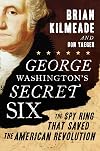
Quite a maverick take on the Culper ring which brought about the British downfall during the war of American Independence. Why I mention maverick is because Kilmeade takes the liberty of fictionalizing the (presumable) dialogue which transpired at the time with relevant (presumably) colloquialism inserted into the right places. Overall though I found this book to be lucid and thoroughly entertaining. 101% amazing. It kept me sane during the lockdown.
Lists
Awards


You May Also Like


Associated Authors
Statistics
- Works
- 12
- Also by
- 2
- Members
- 5,885
- Popularity
- #4,191
- Rating
- 3.7
- Reviews
- 127
- ISBNs
- 93
- Languages
- 1
- Favorited
- 2
