
Thomas Jefferson and the Tripoli Pirates
by Brian Kilmeade (Author), Don Yaeger (Author)
On This Page
Description
“Another blockbuster! Thomas Jefferson and the Tripoli Pirates reads like an edge-of-your-seat, page-turning thriller. You will love this book and also wonder why so few people know this story. No one captures the danger, intrigue, and drama of the American Revolution and its aftermath like Brian Kilmeade and Don Yaeger.” —Brad ThorThis is the little-known story of how a newly independent nation was challenged by four Muslim powers and what happened when America’s third president show more decided to stand up to intimidation.
When Thomas Jefferson became president in 1801, America faced a crisis. The new nation was deeply in debt and needed its economy to grow quickly, but its merchant ships were under attack. Pirates from North Africa’s Barbary coast routinely captured American sailors and held them as slaves, demanding ransom and tribute payments far beyond what the new country could afford.
Over the previous fifteen years, as a diplomat and then as secretary of state, Jefferson had tried to work with the Barbary states (Tripoli, Tunis, Algiers, and Morocco). Unfortunately, he found it impossible to negotiate with people who believed their religion justified the plunder and enslavement of non-Muslims. These rogue states would show no mercy—at least not while easy money could be made by extorting the Western powers. So President Jefferson decided to move beyond diplomacy. He sent the U.S. Navy’s new warships and a detachment of Marines to blockade Tripoli—launching the Barbary Wars and beginning America’s journey toward future superpower status.
As they did in their previous bestseller, George Washington’s Secret Six, Kilmeade and Yaeger have transformed a nearly forgotten slice of history into a dramatic story that will keep you turning the pages to find out what happens next. Among the many suspenseful episodes:
·Lieutenant Andrew Sterett’s ferocious cannon battle on the high seas against the treacherous pirate ship Tripoli.
·Lieutenant Stephen Decatur’s daring night raid of an enemy harbor, with the aim of destroying an American ship that had fallen into the pirates’ hands.
·General William Eaton’s unprecedented five-hundred-mile land march from Egypt to the port of Derne, where the Marines launched a surprise attack and an American flag was raised in victory on foreign soil for the first time.
Few today remember these men and other heroes who inspired the Marine Corps hymn: “From the Halls of Montezuma to the Shores of Tripoli, we fight our country’s battles in the air, on land and sea.” Thomas Jefferson and the Tripoli Pirates recaptures this forgotten war that changed American history with a real-life drama of intrigue, bravery, and battle on the high seas. show less
Tags
Recommendations






Member Recommendations
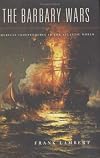
CurrerBell The Kilmeade book is a quick read while the Lambert book gives a better analysis of the background of the Barbary Wars.
Member Reviews
About 3 pages into Thomas Jefferson and the Tripoli Pirates by Brian Kilmeade I felt that the author had a real issue with Muslims and he wrote this book to denounce them through a historical lens. As he drew parallels to the Barbary Wars (what's detailed in this book) and present day conflicts, he made the claim that slavery was a unique and barbarous practice only perpetrated by Muslims against whites. (Duh that's not the case.) By the time I had finished the book my overwhelming impression was that this book was not only Islamophobic but a major piece of revisionist history. (I even checked other reader's reviews to make sure that I wasn't completely off the mark here and they back up my feelings pretty much across the board.) He show more makes a strong argument for a show of military strength over diplomacy. In fact, the Barbary Wars were what precipitated the formation of the Navy and Marines (the 'shores of Tripoli' ring any bells?). I couldn't even tell you if what he says happened really happened when such a large focus was on ideas other than the historical events of the moment. 0/10
And then to discover that this book which was recommended to me by a coworker was in fact written by a co-host of Fox & Friends made total sense after the fact. ¯_(ツ)_/¯ show less
And then to discover that this book which was recommended to me by a coworker was in fact written by a co-host of Fox & Friends made total sense after the fact. ¯_(ツ)_/¯ show less
This is a joint review of two books, Thomas Jefferson and the Tripoli Pirates: The Forgotten War That Changed American History by Brian Kilmeade and The Barbary Wars: American Independence in the Atlantic World by Frank Lambert.
The Lambert book is definitely much better than the Kilmeade book, but it's really a good idea to read the two of them together and to read Kilmeade first. Kilmeade will give you a better overview of the cast of players; but note that Kilmeade concludes with the end of the First Barbary (Tripolitan) War in the Jefferson presidency while Lambert also includes the shorter Second Barbary (Algerine) War in the Madison presidency.
Lambert provides much more background and analysis. One of the reasons for the ultimate show more American success in the Algerine campaign was because it came with the conclusion of the US/British War of 1812 and the conclusion of the Napoleonic Wars. With the ending of these "major" wars, the Atlantic became a theater of trade rather than a theater of war, and this very substantially improved the American position since some of the European powers had actually been encouraging the Barbary pirates to prey on American merchant shipping. This was particularly true of the British, who wished to suppress American carrier trade after the recognition of American independence and, even more so, actually saw the Barbary pirates as allies during the US/British War of 1812. (The pirates had the good sense not to prey on British shipping and confront the Royal navy.) With post-Napoleonic peace combined with a new-found respect for the U.S. navy after its success in the Algerine campaign as well as the growing U.S. population, the British decided that trade with the U.S. would prove more economically advantageous than a mercantilist exclusion of the U.S. from carrier commerce in the Atlantic.
Kilmeade (3½***) is a quick read. Lambert (4****) is a more thorough analysis. show less
The Lambert book is definitely much better than the Kilmeade book, but it's really a good idea to read the two of them together and to read Kilmeade first. Kilmeade will give you a better overview of the cast of players; but note that Kilmeade concludes with the end of the First Barbary (Tripolitan) War in the Jefferson presidency while Lambert also includes the shorter Second Barbary (Algerine) War in the Madison presidency.
Lambert provides much more background and analysis. One of the reasons for the ultimate show more American success in the Algerine campaign was because it came with the conclusion of the US/British War of 1812 and the conclusion of the Napoleonic Wars. With the ending of these "major" wars, the Atlantic became a theater of trade rather than a theater of war, and this very substantially improved the American position since some of the European powers had actually been encouraging the Barbary pirates to prey on American merchant shipping. This was particularly true of the British, who wished to suppress American carrier trade after the recognition of American independence and, even more so, actually saw the Barbary pirates as allies during the US/British War of 1812. (The pirates had the good sense not to prey on British shipping and confront the Royal navy.) With post-Napoleonic peace combined with a new-found respect for the U.S. navy after its success in the Algerine campaign as well as the growing U.S. population, the British decided that trade with the U.S. would prove more economically advantageous than a mercantilist exclusion of the U.S. from carrier commerce in the Atlantic.
Kilmeade (3½***) is a quick read. Lambert (4****) is a more thorough analysis. show less
It's funny how the basics in life never really change. This was a simple and quick read. Very enjoyable. It is a very basic recounting of facts from the American POV.
I'm laughing at the other reviewers who clearly haven't read the book but are criticizing it because it's written by someone who appears on FOX News.
Some criticisms are based around the words of one person, Abdrahaman, who takes his cue from the Koran, which is clearly supported—Read it in context, it makes sense. Later, other figures from various countries come to the aid of the US and are also supported by words from the same holy book. Same verses. It's all in the interpretation.
The author did not pretend that Jefferson put the Bible in higher regard than the Koran. show more People around him did, including the ambassadors and military men he sent to the region. He's also quick to point out that there were honest rulers in the region, and then there was Tripoli, which was ruled by the corrupt and cruel Yusuf Karamanli and his pirates. They engaged in thievery. They also engaged in slavery. (It's remarkable that people are quick to demonize Jefferson for engaging in slavery but are quick to give Karamanli a pass for engaging in it.)
The book clearly shows the political battles between Madison and Jefferson. It also states that Jefferson admits he is wrong about a standing military force when it becomes clear that the US will be unable to conduct trade in the Mediterranean without one to battle the pirates. It also highlights the bitter rivalry between Adams and Jefferson.
I'm pretty sure that some reviewers (who bothered to read it) entered this book with a bias and were determined to find any fault that they could. The Islamophobia charge is ridiculous. I'm not going to apologize for not caring about views of the despotic rulers, pirates, and kidnappers. Their religion is beside the point. They were just horrible people engaging in horrible activities. show less
I'm laughing at the other reviewers who clearly haven't read the book but are criticizing it because it's written by someone who appears on FOX News.
The author did not pretend that Jefferson put the Bible in higher regard than the Koran.
The book clearly shows the political battles between Madison and Jefferson. It also states that Jefferson admits he is wrong about a standing military force when it becomes clear that the US will be unable to conduct trade in the Mediterranean without one to battle the pirates. It also highlights the bitter rivalry between Adams and Jefferson.
I'm pretty sure that some reviewers (who bothered to read it) entered this book with a bias and were determined to find any fault that they could. The Islamophobia charge is ridiculous. I'm not going to apologize for not caring about views of the despotic rulers, pirates, and kidnappers. Their religion is beside the point. They were just horrible people engaging in horrible activities. show less
An excellent and exciting telling of America's first foreign war. While well-researched, the book's non-academic tone is welcomed; it reads like a thriller.
For years, European powers succumbed to paying "tributes" (bribes) to the Muslim rulers of north Africa to keep their ships and countrymen from being attacked while plying the trade routes along the Mediterranean Sea. Initially, the new United States tried to play that game, but since we were short on funds, our merchant men were being held prisoner and used as slaves. This is the story of Thomas Jefferson saying "enough." He got Congress to agree to build many ships and finally took the fight to the African rulers.
For years, European powers succumbed to paying "tributes" (bribes) to the Muslim rulers of north Africa to keep their ships and countrymen from being attacked while plying the trade routes along the Mediterranean Sea. Initially, the new United States tried to play that game, but since we were short on funds, our merchant men were being held prisoner and used as slaves. This is the story of Thomas Jefferson saying "enough." He got Congress to agree to build many ships and finally took the fight to the African rulers.
Narrative non-fiction that provides a partial history of the early US Navy and its confrontations with the Barbary pirates in the Mediterranean in the late 1700s and early 1800s. The book is a quick and easy read about a lesser known part of US history. It covers successes and failures in military and diplomatic encounters with four northern African countries, Tripoli, Algiers, Tunis, and Morocco, collectively known and as Barbary Coast. It highlights the efforts of a number of little-known Naval officers.
The book starts with the capture of a US merchant ship by Barbary pirates, and enslavement of its crew. The leaders of the North African nations demanded tribute in cash and goods as a fee for protection against further attacks. One show more of the highlights is the detailed description of the Battle of Derna in 1805, the first combined land and sea battle of US forces on non-American soil (the land group included hundreds of mercenaries).
The primary downside is an undercurrent of political slant, emphasizing a preference for the use of military force. It skims the surface of topics that warrant a deeper dive. For example, it points out the suffering of Americans enslaved by the Barbary states, but there is no mention that slavery is ongoing in the US at the same time (or of the fact that Jefferson himself owned slaves). One wonders what else has been glossed over or omitted. It has spurred my curiosity, and I plan to seek out more in-depth and impartial sources. show less
The book starts with the capture of a US merchant ship by Barbary pirates, and enslavement of its crew. The leaders of the North African nations demanded tribute in cash and goods as a fee for protection against further attacks. One show more of the highlights is the detailed description of the Battle of Derna in 1805, the first combined land and sea battle of US forces on non-American soil (the land group included hundreds of mercenaries).
The primary downside is an undercurrent of political slant, emphasizing a preference for the use of military force. It skims the surface of topics that warrant a deeper dive. For example, it points out the suffering of Americans enslaved by the Barbary states, but there is no mention that slavery is ongoing in the US at the same time (or of the fact that Jefferson himself owned slaves). One wonders what else has been glossed over or omitted. It has spurred my curiosity, and I plan to seek out more in-depth and impartial sources. show less
A tight, well researched history of the past that has many parallels with today. Unfortunately, when the authors reflect on the psychological state of Jefferson during his time as a widower, they forget to mention the comfort he enjoyed with his "slave", Sally Hemmings, who was in fact his wife's half sister and mother of several of his children. Another instance where the therapeutic perspective does not effectively count.
This was a very fun read. I really enjoyed this, and it is aptly titled. The war between the US (via Thomas Jefferson) and the Tripoli pirates is forgotten. It’s not a glowing war that US citizens tend to want to remember. Kilmead and Yaeger do a fantastic job writing the book, and they keep it short, simple, and understandable.
Members
- Recently Added By
Lists

Top Five Books of 2015
811 works; 240 members

Thomas Jefferson Books
43 works; 1 member
Author Information

Brian Kilmeade was born on May 7, 1964. He graduated from C. W. Post in Long Island, New York in 1986. He started his career in journalism as a freelance sports anchor and covered the NewYork/New Jersey Metro-Stars soccer team. He is the author of The Games Do Count: America's Best and Brightest on the Power of Sports, It's How You Play the Game, show more George Washington's Secret Six: The Spy Ring That Saved the American Revolution and Thomas Jefferson and the Tripoli Pirates: The Forgotten War That Changed American History, and Andrew Jackson and the Miracle of New Orleans: The Battle that Shaped America's Destiny. He is currently a co-host of Fox's morning show, Fox and Friends. (Bowker Author Biography) show less

Don Yaeger was an Associate Editor at Sports Illustrated magazine. He is the co-author of Under the Tarnished Dome: How Notre Dame Betrayed Its Ideals for Football Glory, Pros and Cons: The Criminals Who Play in the NFL, and George Washington's Secret Six: The Spy Ring That Saved the American Revolution, Thomas Jefferson and the Tripoli Pirates: show more The Forgotten War That Changed American History, and Andrew Jackson and the Miracle of New Orleans: The Battle that shaped America's destiny. (Bowker Author Biography) show less
Common Knowledge
- Canonical title
- Thomas Jefferson and the Tripoli Pirates
- Original publication date
- 2015-11-03
- People/Characters
- Thomas Jefferson; John Adams; Commodore William Bainbridge; Commodore Stephen Decatur; Captain William Eaton; Richard O'Brien (show all 7); Commodore Edward Preble
- Important places
- Tripoli, Libya
- Important events
- Barbary Wars; Battle of Derne (1805-04-27)
- First words
- As a fast-moving ship approached the Dauphin off the coast of Portugal, Captain Richard O'Brien saw no cause for alarm.
- Last words
- (Click to show. Warning: May contain spoilers.)The young nation gained from this chapter the courage to exercise its strength in the world, and it would remember the lesson in the future when other innocent lives were at stake.
- Original language
- English US
Classifications
- Genres
- History, Nonfiction, General Nonfiction
- DDC/MDS
- 973.4 — History & geography History of North America United States Constitutional period (1789-1809)
- LCC
- E335 .K55 — History of the United States United States Revolution to the Civil War, 1775/1783-1861 By period 1789-1809. Constitutional period Jefferson's administrations, 1801-1809 War with Tripoli, 1801-1805
- BISAC
Statistics
- Members
- 1,693
- Popularity
- 13,181
- Reviews
- 40
- Rating
- (3.42)
- Languages
- English, Korean
- Media
- Paper, Audiobook, Ebook
- ISBNs
- 19
- ASINs
- 5