

Robert J. Allison
Author of The Interesting Narrative of the Life of Olaudah Equiano: Written by Himself
About the Author
Robert J. Allison is professor of history at Suffolk University
Works by Robert J. Allison
The Interesting Narrative of the Life of Olaudah Equiano: Written by Himself (1789) — Editor — 401 copies, 7 reviews
The Essential Debate on the Constitution: Federalist and Antifederalist Speeches and Writings (2018) — Editor — 67 copies
History in Dispute, Vol. 3 - American Social and Political Movements, 1900-1945: Pursuit of Progress (1999) 10 copies
The Great Awakening 1 copy
The Great War for Empire 1 copy
Independence and Beyond 1 copy
The Crescent Obscured: The United States and the Muslim World, 1776–1815 (The Legacy of the Barbary Wars) (2014) 1 copy
Spain’s New World Empire 1 copy
The Pilgrims and Plymouth 1 copy
The Indians’ New World 1 copy
Witchcraft in New England 1 copy
Associated Works
Reporting the Revolutionary War: Before It Was History, It Was News (2012) — Contributor — 158 copies, 4 reviews
Tagged
Common Knowledge
- Other names
- Alison, R. J.
- Birthdate
- 1957-04-21
- Gender
- male
- Education
- Harvard University (PhD)
- Occupations
- historian
university professor - Organizations
- Suffolk University
Harvard University - Nationality
- USA
- Places of residence
- Boston, Massachusetts, USA
- Map Location
- USA
Members
Reviews
The Interesting Narrative of the Life of Olaudah Equiano: Written by Himself (The Bedford Series in History and Culture) by Olaudah Equiano
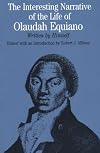
Okay... This was brilliant. Equiano (Vassa?) is an utterly fascinating historical figure and man, and his story is thrilling. Sold into slavery as a child, Equiano, by the providence of God, was spared the brutality of North American farm labor and consequential obscurity. Bought by a smattering of high-ranking British captains, Equiano was taught to read, allowed to practice Christianity, and generally live a very free life (not counting some particularly bad owners), eventually buying his show more freedom and continuing his journey around the world. He charts his adventures traveling the world, the many injustices he must encounter, and the Christianity that was his bedrock. You just feel with him.
There is a lot of heartbreak in this account. How could there not? One thing I will recognize informs my high esteem of this story is the religious tone it uses. Equiano was what we'd call a true believer, and it's one more layer of interesting given the broader imperialism of Christianity. I implore the less religiously inclined to not fault him; I think it is incredibly dehumanizing to question this too much. His Christianity gave him strength, gave him a strong moral compass to battle for the abolition of the slave trade, and allowed him many great connections in a world where being black could be so tenuous. His Christianity was truly beautiful and made me yearn for church once more—Crazy how good, upstanding people can convert, no?
On a side note, the more I read 18th-century writing, the more I really think the period of the 1770s-1790s was the pinnacle of the written English word. The command of language Equiano employs is exquisite and commanding, and really quite arresting when relaying his life. It's a bit similar to how Du Bois' utilizes language a century later—both men show the "mental faculties" so many suppose they can't have on account of their skin.
Anyway, I can't recommend this enough. It's just... amazing. Equiano is a fascinating man caught between two worlds, and while his 18th-century Britishness can raise an eyebrow sometimes, it illustrates the breadth of thought of the period. I just spent an hour on York University's webpage about him, and I can't get enough. Ah! show less
There is a lot of heartbreak in this account. How could there not? One thing I will recognize informs my high esteem of this story is the religious tone it uses. Equiano was what we'd call a true believer, and it's one more layer of interesting given the broader imperialism of Christianity. I implore the less religiously inclined to not fault him; I think it is incredibly dehumanizing to question this too much. His Christianity gave him strength, gave him a strong moral compass to battle for the abolition of the slave trade, and allowed him many great connections in a world where being black could be so tenuous. His Christianity was truly beautiful and made me yearn for church once more—Crazy how good, upstanding people can convert, no?
On a side note, the more I read 18th-century writing, the more I really think the period of the 1770s-1790s was the pinnacle of the written English word. The command of language Equiano employs is exquisite and commanding, and really quite arresting when relaying his life. It's a bit similar to how Du Bois' utilizes language a century later—both men show the "mental faculties" so many suppose they can't have on account of their skin.
Anyway, I can't recommend this enough. It's just... amazing. Equiano is a fascinating man caught between two worlds, and while his 18th-century Britishness can raise an eyebrow sometimes, it illustrates the breadth of thought of the period. I just spent an hour on York University's webpage about him, and I can't get enough. Ah! show less
Since this is a primary source narrative, I won't be "rating" it like my other reads. First, while I'm glad I read The Pirate Coast before this, that one only covered the Jefferson administration. This one neatly provides further context in the introduction and provides plenty of illustrations throughout.
At this time, France was still at war with Britain, and both were using the Barbary Coast to drive up costs. Jefferson, as Secretary of State, tried to enlist Naples, Venice, Portugal, show more Sweden and Russia to tackle the problem. By 1800, Algiers allied with the French while the Ottomans were fighting against Napoleon. Jefferson, now president, presented evidence to Congress to blockade Tripoli with Sweden. Congress then declared war in 1802!
James Leander Cathcart - ALGIERS
- The longest one of the three. By 18, he was a POW twice! The other by the British in 1779. He is witness to the plague of 1786. Knew Spanish - "which they all spoke" - and literate, he was appointed Hassan Dey's chief Christian secretary. Lingua Franca was spoken due to European renegades. He considers farmwork "humiliating" aka black slave work. Comes off as self-serving. He never names them, but often references his "American comrades." Released in 1796, he continued to serve as a minor diplomat.
Dr. Jonathan Cowdery - TRIPOLI
- Was 32 when he entered the navy as a surgeon's assistant. He wraps up the surrender of the Philadelphia quickly, and with sarcastic humor. His narrative is structured much more like a diary and tonally, he seems practical. Mentions a renegade Scotsman turned Tripolitan admiral named Lysle. He is allowed to make rounds and even treats the ambassador from Constantinople. He witnesses the destruction of the Philadelphia so the pirates cannot use it. He was freed in 1805.
William Ray - TRIPOLI
- Same age as Cowdery when he joined the Philadelphia out of necessity. Only one to cover events leading up to his capture. Not a fan of Capt. Bainbridge and does not have the privileges of the others. He speaks bitterly of Cowdery's "whining tale" and of the officers. But his narrative offers a different perspective of the same situation. All told and if true, suffered the most of the three. show less
At this time, France was still at war with Britain, and both were using the Barbary Coast to drive up costs. Jefferson, as Secretary of State, tried to enlist Naples, Venice, Portugal, show more Sweden and Russia to tackle the problem. By 1800, Algiers allied with the French while the Ottomans were fighting against Napoleon. Jefferson, now president, presented evidence to Congress to blockade Tripoli with Sweden. Congress then declared war in 1802!
James Leander Cathcart - ALGIERS
- The longest one of the three. By 18, he was a POW twice! The other by the British in 1779. He is witness to the plague of 1786. Knew Spanish - "which they all spoke" - and literate, he was appointed Hassan Dey's chief Christian secretary. Lingua Franca was spoken due to European renegades. He considers farmwork "humiliating" aka black slave work. Comes off as self-serving. He never names them, but often references his "American comrades." Released in 1796, he continued to serve as a minor diplomat.
Dr. Jonathan Cowdery - TRIPOLI
- Was 32 when he entered the navy as a surgeon's assistant. He wraps up the surrender of the Philadelphia quickly, and with sarcastic humor. His narrative is structured much more like a diary and tonally, he seems practical. Mentions a renegade Scotsman turned Tripolitan admiral named Lysle. He is allowed to make rounds and even treats the ambassador from Constantinople. He witnesses the destruction of the Philadelphia so the pirates cannot use it. He was freed in 1805.
William Ray - TRIPOLI
- Same age as Cowdery when he joined the Philadelphia out of necessity. Only one to cover events leading up to his capture. Not a fan of Capt. Bainbridge and does not have the privileges of the others. He speaks bitterly of Cowdery's "whining tale" and of the officers. But his narrative offers a different perspective of the same situation. All told and if true, suffered the most of the three. show less
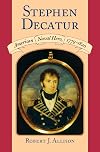
In Stephen Decatur: American Naval Hero, 1779-1820, (UMass Press, 2007), Robert Allison (history professor at Suffolk University in Boston) provides an excellent updated biography of one of America's first great naval champions. Decatur, who holds the distinctions of being the youngest man ever to serve as captain in the Navy and the last captain killed in a duel, managed to have an almost unbelievably successful naval career back when the American navy barely existed at all.
From the Barbary show more Wars (during which Decatur led a swashbuckling raid on Tripoli harbor to destroy the captured American ship Philadelphia) to the War of 1812 (when he defeated the British frigate Macedonian and hauled it back to the U.S. as his prize) and the Algerian wars in the aftermath of the Treaty of Ghent, Decatur sailed his way into the great esteem of his fellow citizens. Even when defeated in the closing days of the War of 1812, he was honored by his victorious opponent, who refused to take "the sword of an officer, who had defended his ship so nobly."
Allison's biography draws on vast contemporary sources (well noted, although a full bibliography would have been a good addition) to provide additional and very useful context to Decatur's life and the times in which he and the country lived and labored. His battle accounts are excellent, and he's captured well the naval culture as it began to form during the period. The opening and closing vignettes of the duel which killed Decatur are also marvelous; it surprised me that even more than fifteen years after Hamilton's death at Weehawken duels were still so common.
A balanced, well-written and attention-holding treatment of Decatur and the early republic. Highly recommended.
http://philobiblos.blogspot.com/2007/05/book-review-stephen-decatur.html show less
From the Barbary show more Wars (during which Decatur led a swashbuckling raid on Tripoli harbor to destroy the captured American ship Philadelphia) to the War of 1812 (when he defeated the British frigate Macedonian and hauled it back to the U.S. as his prize) and the Algerian wars in the aftermath of the Treaty of Ghent, Decatur sailed his way into the great esteem of his fellow citizens. Even when defeated in the closing days of the War of 1812, he was honored by his victorious opponent, who refused to take "the sword of an officer, who had defended his ship so nobly."
Allison's biography draws on vast contemporary sources (well noted, although a full bibliography would have been a good addition) to provide additional and very useful context to Decatur's life and the times in which he and the country lived and labored. His battle accounts are excellent, and he's captured well the naval culture as it began to form during the period. The opening and closing vignettes of the duel which killed Decatur are also marvelous; it surprised me that even more than fifteen years after Hamilton's death at Weehawken duels were still so common.
A balanced, well-written and attention-holding treatment of Decatur and the early republic. Highly recommended.
http://philobiblos.blogspot.com/2007/05/book-review-stephen-decatur.html show less
The Interesting Narrative of the Life of Olaudah Equiano, or Gustavus Vassa: The African by Olaudah Equiano
A moving slave narrative, a heartfelt confession of faith, a thought-provoking historical record, and a seafaring adventure story all in one. It gets a little slow at times due to the period language, but it's a thoroughly absorbing read.
Lists
You May Also Like


Associated Authors
Statistics
- Works
- 66
- Also by
- 2
- Members
- 1,124
- Popularity
- #22,856
- Rating
- 3.6
- Reviews
- 11
- ISBNs
- 65
- Languages
- 1