
Beth Bernobich
Author of A Study in Honor
About the Author
Image credit: Photo: Rob Bernobich
Series
Works by Beth Bernobich
The Edge of the Empire 3 copies
The Ghost Dragon's Daughter 2 copies
A Study in Honor 1 copy
Untitled 1 copy
Associated Works
Sex in the System: Stories of Erotic Futures, Technological Stimulation, and the Sensual Life of Machines (2006) — Contributor — 27 copies, 1 review
Postscripts Magazine, Issue 15: Worldcon 2008 Special (2008) — Contributor, some editions — 15 copies
The Best of Strange Horizons: Year One : September 2000-August 2001 (2003) — Contributor — 12 copies, 1 review
Tagged
Common Knowledge
- Other names
- O'Dell, Claire
- Birthdate
- 1959-12
- Gender
- female
- Education
- Randolph-Macon College (Ashland ∙ VA)
- Organizations
- Science Fiction and Fantasy Writers of America
- Agent
- Vaughne Hansen (Virginia Kidd Agency)
- Nationality
- USA
- Birthplace
- Lansdowne, Pennsylvania, USA
- Places of residence
- Washington, D.C., USA
Connecticut, USA - Associated Place (for map)
- USA
Members
Reviews
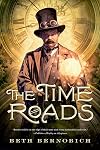
Do you ever find yourself treating a book like it is a container of your favorite ice cream? Savoring it, and only allowing yourself a small amount each time so you can spread the joy out over days if not weeks? That sums up my adventure reading Beth Bernobich's most recent work, The Time Roads. I dove right in, stayed up way past my bedtime getting to midway through the four stories that make up this set of linked tales, and then began to ration myself to only so many pages per day.
This show more newest offering from a consummate artist is set in a 19th century that is familiar, but not really that much like our own. The most powerful empire on Earth is Éire, Anglia is on the decline, its colonies are filled with resentful settlers who cannot settle on a plan of action, and the rest of Europe is a mess. The world looks to Éire, with its new queen, Áine Lasairíona Devereaux, as a hope for peaceful stability. And Áine wants peace, too, as well as scientific advancement for her country, a difficult dream at best. This becomes even more difficult when Áine, and those around her, learn that time is a series of roads that can be traveled. One cannot always tell where a particular road will lead, but as long as the route is remembered, it is possible to return to just where you left from. With the help of brother and sister mathematician-scientists, Áine and some of her cohorts use this knowledge to alter the future of their world. But, it comes with a price, as it brings death and madness to those around them. And they do not actually change anything, they simply select to travel a different road; the old one is still there, but it is no longer the dominant route. Who is really where, and when, and which memory is the "true" one are all questions that must be answered by the characters in these 4 linked stories.
I confess that by the time I reached the last handful of pages, I gave into the magic of the story and sped to the end. Now, I would like, more than almost anything, to be able to voyage on the Time Roads and go back to before I read the whole book so I could read it fresh once more. Or, even better, emerge into a future just as Ms. Bernobich's next book has become available. show less
This show more newest offering from a consummate artist is set in a 19th century that is familiar, but not really that much like our own. The most powerful empire on Earth is Éire, Anglia is on the decline, its colonies are filled with resentful settlers who cannot settle on a plan of action, and the rest of Europe is a mess. The world looks to Éire, with its new queen, Áine Lasairíona Devereaux, as a hope for peaceful stability. And Áine wants peace, too, as well as scientific advancement for her country, a difficult dream at best. This becomes even more difficult when Áine, and those around her, learn that time is a series of roads that can be traveled. One cannot always tell where a particular road will lead, but as long as the route is remembered, it is possible to return to just where you left from. With the help of brother and sister mathematician-scientists, Áine and some of her cohorts use this knowledge to alter the future of their world. But, it comes with a price, as it brings death and madness to those around them. And they do not actually change anything, they simply select to travel a different road; the old one is still there, but it is no longer the dominant route. Who is really where, and when, and which memory is the "true" one are all questions that must be answered by the characters in these 4 linked stories.
I confess that by the time I reached the last handful of pages, I gave into the magic of the story and sped to the end. Now, I would like, more than almost anything, to be able to voyage on the Time Roads and go back to before I read the whole book so I could read it fresh once more. Or, even better, emerge into a future just as Ms. Bernobich's next book has become available. show less
I went into this book intrigued for three reasons:
- Claire O'Dell is the (open) pseudonym for fantasy author [a:Beth Bernobich|1394555|Beth Bernobich|https://images.gr-assets.com/authors/1270570844p2/1394555.jpg], who's works I adore
- Female Sherlock Holmes and Watson!
- Near Future/quasi-scifi leanings!
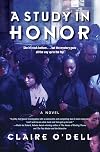
The fact both of them were black and queer didn't even register with me - I saw the cover (which of course features two Black women - also I love this cover), but I hadn't read the backcover show more before I was requesting the book.
This is a compelling read. Yes, I used the word compelling and yes I meant it. While the bare bones of the well trod Sherlock mythos are here, O'Dell gives us a new take that grounds the story in a very real sense of the world. We're not given the exact year this is set, but its after the current presidency and its explicitly stated that the war Watson fought in is a result of the world this presidency encourages.but I won't get into my own politics - cause I agree with a lot of the conclusions drawn and implied here as well as can easily see this sort of thing occurring in the real world It gives this an undercut of tension while I was reading, a sort of fear that "holy shit this is all too true" feeling.
It made it hard at times to read as fast as I wanted. Emotionally I got overwhelmed; with how Watson felt, with how she reacted, with how the world was. But I needed to know what was going to happen. I needed to know how the puzzle pieces fit together, why it all mattered. So many things that on the surface amounted to very little - the death of a veteran who was obviously haunted by the demons from the War, a military Doctor who disappeared, a squadron who disobeyed orders - these are all so mundane, so common, but Watson felt it was imperative to dig deeper. And that urgency, that drive, made me feel it too.
Holmes, Sara Holmes, is both every frustrating characteristic of Sherlock Holmes and all the best parts amplified. She is not written more "feminine" or in any fashion that would pigeon hole her as "oh she's just a female Holmes" and easily dismissed. She's fascinating because honestly her behavior is so gender non-specific. She's not warmer because she's female nor did it seem to give her any special insight. Her calculations and intelligence are genderless; her motivations and her actions equally so. If Watson didn't remind us that Holmes was female, I'd be hard pressed to find any where in the narrative (that isn't a physical description of her) that points to that conclusion.
In the end, like most Holmes' tales, the mystery has a very common place motivation. And for me, this book became way less about the mystery then it did about who Watson would be at the end. Would she still be the bitter, veteran who just wanted a device that would allow her to reclaim a part of herself she considered essential? Would she recapture any of the idealism she had before she joined the War effort 3 years prior?
Or would she, like so many of her comrades in arms, succumb to the misery the world was forcing onto the broken and discarded in the name of progress? show less
- Claire O'Dell is the (open) pseudonym for fantasy author [a:Beth Bernobich|1394555|Beth Bernobich|https://images.gr-assets.com/authors/1270570844p2/1394555.jpg], who's works I adore
- Female Sherlock Holmes and Watson!
- Near Future/quasi-scifi leanings!
The fact both of them were black and queer didn't even register with me - I saw the cover (which of course features two Black women - also I love this cover), but I hadn't read the backcover show more before I was requesting the book.
This is a compelling read. Yes, I used the word compelling and yes I meant it. While the bare bones of the well trod Sherlock mythos are here, O'Dell gives us a new take that grounds the story in a very real sense of the world. We're not given the exact year this is set, but its after the current presidency and its explicitly stated that the war Watson fought in is a result of the world this presidency encourages.
It made it hard at times to read as fast as I wanted. Emotionally I got overwhelmed; with how Watson felt, with how she reacted, with how the world was. But I needed to know what was going to happen. I needed to know how the puzzle pieces fit together, why it all mattered. So many things that on the surface amounted to very little - the death of a veteran who was obviously haunted by the demons from the War, a military Doctor who disappeared, a squadron who disobeyed orders - these are all so mundane, so common, but Watson felt it was imperative to dig deeper. And that urgency, that drive, made me feel it too.
Holmes, Sara Holmes, is both every frustrating characteristic of Sherlock Holmes and all the best parts amplified. She is not written more "feminine" or in any fashion that would pigeon hole her as "oh she's just a female Holmes" and easily dismissed. She's fascinating because honestly her behavior is so gender non-specific. She's not warmer because she's female nor did it seem to give her any special insight. Her calculations and intelligence are genderless; her motivations and her actions equally so. If Watson didn't remind us that Holmes was female, I'd be hard pressed to find any where in the narrative (that isn't a physical description of her) that points to that conclusion.
In the end, like most Holmes' tales, the mystery has a very common place motivation. And for me, this book became way less about the mystery then it did about who Watson would be at the end. Would she still be the bitter, veteran who just wanted a device that would allow her to reclaim a part of herself she considered essential? Would she recapture any of the idealism she had before she joined the War effort 3 years prior?
Or would she, like so many of her comrades in arms, succumb to the misery the world was forcing onto the broken and discarded in the name of progress? show less

I found this book to be fascinating. Dr. Janet Watson is a veteran of the New Civil War in the United States. Yes, she was wounded and in a modern setting, has Post-Traumatic Stress Disorder. Sara Holmes has all the brilliance of Sherlock Holmes, but is, shall we say, less constrained by societal mores. Both characters are black and queer -- and yes, it plays into the story being told of a dystopian future.
Usually I love Sherlock Holmes, but in this case I fell in love with Dr. Watson. I show more wanted her to succeed in her quest. The mystery was quite good and I thoroughly enjoyed finding out what happened.
Sara Holmes seems to be a cross between Sherlock Holmes and James Bond. A bit ruthless in her quest for truth, she could be off-putting at times. I suspect that many people who see their way clearly and go after their goal directly could be that way.
Suffice it to say, I liked the story enough that I immediately bought the sequel.
Recommended for people who like alternate history and mystery, with a dose of Holmes. show less
Usually I love Sherlock Holmes, but in this case I fell in love with Dr. Watson. I show more wanted her to succeed in her quest. The mystery was quite good and I thoroughly enjoyed finding out what happened.
Sara Holmes seems to be a cross between Sherlock Holmes and James Bond. A bit ruthless in her quest for truth, she could be off-putting at times. I suspect that many people who see their way clearly and go after their goal directly could be that way.
Suffice it to say, I liked the story enough that I immediately bought the sequel.
Recommended for people who like alternate history and mystery, with a dose of Holmes. show less
What? Doth my brain deceive me? Steampunk that is actually *well-written*? Oh my. I can see that having access to publisher's advance reading copies is going to be a dangerous business. I started reading at work around 5:00pm, expecting to try a few pages and then on to the next thing. But the first line of the acknowledgments immediately made me perk up - "Twelve years ago, I sat down to write a story about mathematics and murder and time"; and then I could not put the damn thing down until show more I finished at 12:45am, with only a short break to be sociable to my roommate over dinner. I was expecting the usual kitchen-sink sort of thing, probably with a cringe-inducing love triangle thrown in because no one can seem to resist that these days. What I got was, in fact, mathematics, and murder, and fractured time, and a beautifully understated bittersweet love story, and politics and spy intrigue in a fascinating alternate history. _The Time Roads_ takes place over the period of 1900-1914 (with a time reboot in there too: oh be still my heart!) in a world where Ireland (Éire) is one of the most powerful nations in the world. The story consists of four parts: the first and fourth narrated by the Queen of Éire; the second following a mathematician whose life is...more complex than it first appears; and the third part following the Queen's right-hand-man as he does some spying on the Continent. The writing is elegant, the pacing just right, and when I reached the last page I found myself very sad that it was *not* a series, because I loved the characters so much. If you want everything handed to you on a platter, you will probably find the plot confusing. I know I didn't follow all of the political intrigue, and the time fractures certainly didn't simplify things. I didn't care. In fact, it made me want to know more about European history in that time period in *our* universe, so I can re-read _The Time Roads and get all of the allusions_. Terrible cover, terrible title, brilliant book. Highly recommended.
SAMPLE PARAGRAPH
If he doubted my father's ability to understand the answer, he made no sign of it. But one question led to a barrage of others from the Court scientists. Those batteries, what were they, and what charge did they produce? Was it purely electricity his device used? If so, what role did those glass tubes perform? A modified Leclanché cell, Ó Cuilinn replied. Ammonium chloride mixed with plaster of Paris, sealed in a zinc shell, each of which produced 1.5 volts. He was corresponding with a collective of scientists from Sweden and the Dietsch Empire, concerning a rechargeable battery with nickel and cadmium electrodes in a potassium-hydroxide solution. Yes, the results would certainly prove more reliable. Also, more expensive. (Here the councilors muttered something about how these research men always demanded more money.) As for the role of the batteries, they were purely to start the necessary reactions. He would rather not discuss the further details until His Majesty and the gentlemen had observed the machine's performance.
***
This review originally appeared on my blog, This Space Intentionally Left Blank.
I received this book free from NetGalley in exchange for my honest review. The quoted section HAS NOT been checked against the final print edition because as of this writing the final print edition is not yet available. show less
SAMPLE PARAGRAPH
If he doubted my father's ability to understand the answer, he made no sign of it. But one question led to a barrage of others from the Court scientists. Those batteries, what were they, and what charge did they produce? Was it purely electricity his device used? If so, what role did those glass tubes perform? A modified Leclanché cell, Ó Cuilinn replied. Ammonium chloride mixed with plaster of Paris, sealed in a zinc shell, each of which produced 1.5 volts. He was corresponding with a collective of scientists from Sweden and the Dietsch Empire, concerning a rechargeable battery with nickel and cadmium electrodes in a potassium-hydroxide solution. Yes, the results would certainly prove more reliable. Also, more expensive. (Here the councilors muttered something about how these research men always demanded more money.) As for the role of the batteries, they were purely to start the necessary reactions. He would rather not discuss the further details until His Majesty and the gentlemen had observed the machine's performance.
***
This review originally appeared on my blog, This Space Intentionally Left Blank.
I received this book free from NetGalley in exchange for my honest review. The quoted section HAS NOT been checked against the final print edition because as of this writing the final print edition is not yet available. show less
Lists
Awards


You May Also Like


Associated Authors
Statistics
- Works
- 32
- Also by
- 13
- Members
- 927
- Popularity
- #27,686
- Rating
- 3.5
- Reviews
- 52
- ISBNs
- 42