
Basil Copper (1924–2013)
Author of The Great White Space
About the Author
Basil Frederick Albert Copper (born February 5, 1924 and died on April 3, 2013) was an English writer and former journalist and newspaper editor. He became a full-time writer in 1970. In addition to horror and detective fiction, Copper was perhaps best known for his series of Solar Pons stories show more continuing the character created as a tribute to Sherlock Holmes by August Derleth. Copper also wrote the long-running novel series featuring hard-boiled Los Angeles private detective "Mike Faraday" (58 novels from 1966 to 1988). Copper's work has been translated into many languages, reprinted in leading anthologies and filmed for television by Universal Pictures.[5] The TV adaptation was of his well-known macabre story "Camera Obscura", filmed as an episode of Rod Serling's Night Gallery in 1971. Copper received many honors in recent years. In 1979, the Mark Twain Society of America elected him a Knight of Mark Twain for his outstanding "contribution to modern fiction", while the Praed Street Irregulars have twice honoured him for his work on the Solar Pons series. He has been a member of the Crime Writer's Association for over thirty years, serving as chairman in 1981-82 and on its committee for a total of seven years. At the 2010 World Horror Convention in Brighton, he was awarded the first WHC Lifetime Achievement Award. He died in April, 2013. (Bowker Author Biography) show less
Series
Works by Basil Copper
Ill Met By Daylight 3 copies
The Knocker At The Portico 3 copies
Cry Wolf 3 copies
The Spider [short fiction] 2 copies
Bright Blades Gleaming 2 copies
The Recompensing Of Albano Pizar 2 copies
The Grey House 2 copies
Shaft Number 247 2 copies
La soffiata 1 copy
Maffians guld 1 copy
Knife In The Back 1 copy
The Trodes 1 copy
Inga brev från graven 1 copy
Better Dead 1 copy
Doctor Porthos 1 copy
Reader I Buried Him 1 copy
The Flabby Men 1 copy
Camera Obscura (short story) 1 copy
A Life in Books 1 copy
Associated Works
The Vampire Archives: The Most Complete Volume of Vampire Tales Ever Published (2007) — Contributor — 218 copies, 5 reviews
Dark Detectives: An Anthology of Supernatural Mysteries (1999) — Contributor — 103 copies, 2 reviews
In the Shadow of Frankenstein: Tales of the Modern Prometheus (2016) — Contributor — 58 copies, 1 review
The Mammoth Book of Nightmare Stories: Twisted Tales Not to Be Read at Night! (2019) — Contributor — 54 copies
Die Hexen-Esche: 10 ernsthafte Gruselgeschichten, zum Schmökern und Vorlesen (1975) — Contributor — 3 copies
Tagged
Common Knowledge
- Legal name
- Copper, Basil Frederick Albert
- Birthdate
- 1924-02-05
- Date of death
- 2013-04-03
- Gender
- male
- Occupations
- news editor
novelist
short story writer - Organizations
- Crime Writers Association
- Awards and honors
- Knight of Mark Twain (Mark Twain Society of America, 1979)
- Nationality
- UK
- Birthplace
- London, England, UK
- Places of residence
- London, England, UK
- Map Location
- England, UK
Members
Reviews
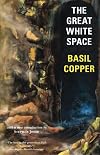
On initial pick up I didn't think there could be a more perfect book for me. 1930's Lovecraftian vibes, lost city, exploration of unknown lands - it has everything that appeals to me. In fact is has a very strong vibe of Journey to the Centre of the Earth meeting At the Madness of Madness. The problem is that it not only takes the best of those books, but the worst of them too.
The book can be divided into three unofficial "acts". The first act covers the preparation work for the expedition show more to discover a mysterious cosmic gateway; here the formal style works well with lightness of tone, the mystery and the comaraderie between characters. The second act is the journey itself; starting out across mysterious desert lands, it eventually find itself deep within colossal tunnels hewn into a distant mountain range. The final act is the horror fuelled finale of action, madness and 'things from beyond'.
Acts one and three are the strongest parts of the book and achieve everything they set out to accomplish - especially in the final quarter. The book falls down in the second act which slows to a plodding pace through mostly pitch dark, featureless tunnels - occasionally enlivened by a waterway or curious object. Expedition routines are mundane and repetitive and the looming dread isn't as oppressive as it could be. It reminded me of the interminable trek through the bowels of the Earth in Jules Verne's more well known work before getting to the good bits. In keeping with such muted atmosphere, even the lost city itself somehow feels more like a less impressive version of the eldritch city of the Elder Things in Lovecraft's seminal novel, despite some crossover in architectural descriptions. There are some notable events which I wont spoil here, but they feel a bit smothered and too few in number to ratchett up the tension against the tedium of the journey, which is too often described in cyclical detail.
When it gets to the good bits later though, it doesn't disappoint, nor does the climax cop out as so many other pretenders do. As a lover of Lovecraftian fiction, this was an enjoyable homage to the mythos era and a decent addition to my library. As a recommendation, it'll appeal to anyone who loved stories like the aforementioned At the Mountains of Madness and Clark Ashton Smith's much shorter Vaults of Yoh-Vombis. For everyone else, just read those instead. show less
The book can be divided into three unofficial "acts". The first act covers the preparation work for the expedition show more to discover a mysterious cosmic gateway; here the formal style works well with lightness of tone, the mystery and the comaraderie between characters. The second act is the journey itself; starting out across mysterious desert lands, it eventually find itself deep within colossal tunnels hewn into a distant mountain range. The final act is the horror fuelled finale of action, madness and 'things from beyond'.
Acts one and three are the strongest parts of the book and achieve everything they set out to accomplish - especially in the final quarter. The book falls down in the second act which slows to a plodding pace through mostly pitch dark, featureless tunnels - occasionally enlivened by a waterway or curious object. Expedition routines are mundane and repetitive and the looming dread isn't as oppressive as it could be. It reminded me of the interminable trek through the bowels of the Earth in Jules Verne's more well known work before getting to the good bits. In keeping with such muted atmosphere, even the lost city itself somehow feels more like a less impressive version of the eldritch city of the Elder Things in Lovecraft's seminal novel, despite some crossover in architectural descriptions. There are some notable events which I wont spoil here, but they feel a bit smothered and too few in number to ratchett up the tension against the tedium of the journey, which is too often described in cyclical detail.
When it gets to the good bits later though, it doesn't disappoint, nor does the climax cop out as so many other pretenders do. As a lover of Lovecraftian fiction, this was an enjoyable homage to the mythos era and a decent addition to my library. As a recommendation, it'll appeal to anyone who loved stories like the aforementioned At the Mountains of Madness and Clark Ashton Smith's much shorter Vaults of Yoh-Vombis. For everyone else, just read those instead. show less

Basil Copper published 52 Mike Faraday PI novels, basing his detective in Los Angeles. This book takes Faraday away from the gritty city and neon avenues to a vacation in the Bahamas - a vacation with his secretary, Stella. Amidst the sun and the surf, Faraday isn't bored. How could he be when the femme fatales are blondes in polka dot bikinis? And dead men start turning up on beaches?
This is a terrific, fast reading adventure that starts out languid like a Caribbean afternoon but really show more picks up in intensity through the the book with plenty of intrigue, adventure, fights, hoods, mysterious strangers, and even buried treasure. show less
This is a terrific, fast reading adventure that starts out languid like a Caribbean afternoon but really show more picks up in intensity through the the book with plenty of intrigue, adventure, fights, hoods, mysterious strangers, and even buried treasure. show less

Throughout pulp novels of the forties and fifties, which Copper deliberately emulates in this series, rich girls and starlets being blackmailed with pornographic movies or photos was a familiar plot. By 1967, when this novel was published, such things were not quite as shocking. Here, Copper solidly plants his Hardboiled PI Mike Faraday in Hollywood and, more specifically, on the sets of the big name Tinseltown studios. Investigating the disappearance of a movie star rumored to be not only show more promiscuous but actually sex crazy, Faraday stumbles into a world of murder and greed and blackmail.
This book is solidly cynical and hardboiled and has some rather amusing descriptions of the kinds of characters inhabiting Hollywood and Hollywood parties. Some of the characters include the blonde receptionist with pale pink fingernails and a figure not too hard on the eyeballs who types with two fingers and the old, washed up film editor/ artist with saliva dripping down his chin whose walls were covered with paintings of such vivid color that made you think someone's intestines had been spilled in a car accident. How about a plump blonde dressed as Louis B Mayer's idea of a saloon girl of the 1870s was like, but twenty years too old for the part. There is a real cynicism about movie stars and their sleazy managers and hangers on that just drips from the pages.
This is another fun, fast read in the Faraday series that does a good job of paying homage to the PI stories of an earlier era. It even has a scene where all the suspects are gathered in a room while Faraday expounds on his theories of the case. All in all, a good, solid read. show less
This book is solidly cynical and hardboiled and has some rather amusing descriptions of the kinds of characters inhabiting Hollywood and Hollywood parties. Some of the characters include the blonde receptionist with pale pink fingernails and a figure not too hard on the eyeballs who types with two fingers and the old, washed up film editor/ artist with saliva dripping down his chin whose walls were covered with paintings of such vivid color that made you think someone's intestines had been spilled in a car accident. How about a plump blonde dressed as Louis B Mayer's idea of a saloon girl of the 1870s was like, but twenty years too old for the part. There is a real cynicism about movie stars and their sleazy managers and hangers on that just drips from the pages.
This is another fun, fast read in the Faraday series that does a good job of paying homage to the PI stories of an earlier era. It even has a scene where all the suspects are gathered in a room while Faraday expounds on his theories of the case. All in all, a good, solid read. show less

Despite the title, this hasn't a hint of horror in it. There are some Gothic nods with graveyards and a lot of fog but Copper never intended this to be horror. This is a straight-up mystery.
Lazy reviewers will probably call this a Holmes pastiche, but its not. It seems that anyone who sets a detective novel in the gaslight era is bound to be accused of imitating Doyle. Its as if any detective novel set in the 1940's must be a Marlowe pastiche. You see what I mean. Despite borrowing the show more period and a few characters to provide unnecessary Holmesian consistency, Clyde Beatty and Dotterell are no Holmes/Watson clones.
The mystery and the story are fairly entertaining but the plot drags a little once you figure out the gist of the whole thing. There is a clumsy romance involved that I think WAS meant to distinguish Beatty from Holmes but it is unnecessary. There is an almost inexplicable suicide in the middle that must have been because Copper didn't know what to do with the character anymore, or maybe a red herring to throw the reader off. Since the body was never found I kept expecting him to reappear somewhere.
Copper's writing is lively but not particularly evocative. I think he could have done more with the eerie settings even within the mystery genre. show less
Lazy reviewers will probably call this a Holmes pastiche, but its not. It seems that anyone who sets a detective novel in the gaslight era is bound to be accused of imitating Doyle. Its as if any detective novel set in the 1940's must be a Marlowe pastiche. You see what I mean. Despite borrowing the show more period and a few characters to provide unnecessary Holmesian consistency, Clyde Beatty and Dotterell are no Holmes/Watson clones.
The mystery and the story are fairly entertaining but the plot drags a little once you figure out the gist of the whole thing. There is a clumsy romance involved that I think WAS meant to distinguish Beatty from Holmes but it is unnecessary. There is an almost inexplicable suicide in the middle that must have been because Copper didn't know what to do with the character anymore, or maybe a red herring to throw the reader off. Since the body was never found I kept expecting him to reappear somewhere.
Copper's writing is lively but not particularly evocative. I think he could have done more with the eerie settings even within the mystery genre. show less
Lists
Awards

You May Also Like


Associated Authors
Statistics
- Works
- 90
- Also by
- 54
- Members
- 1,115
- Popularity
- #23,040
- Rating
- 3.7
- Reviews
- 22
- ISBNs
- 175
- Languages
- 3
- Favorited
- 1