
Deborah Cavendish (1920–2014)
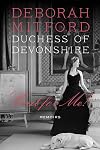
Author of Wait for Me!: Memoirs
About the Author
Disambiguation Notice:
Not to be confused with her husband's famous ancestor, Georgiana Duchess of Devonshire.
Image credit: Deborah Mitford Cavendish, Duchess of Devonshire
Works by Deborah Cavendish
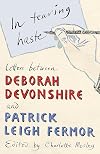
In Tearing Haste: Letters Between Deborah Devonshire and Patrick Leigh Fermor (2008) — Author — 364 copies, 10 reviews
Associated Works
Tagged
Common Knowledge
- Canonical name
- Cavendish, Deborah
- Legal name
- Cavendish, Deborah Vivien
- Other names
- Mitford, Deborah
Cavendish, Deborah
Freeman-Mitford, Deborah (birth)
Devonshire, Deborah
Cavendish, Deborah Vivien Freeman-Mitford, Duchess of Devonshire - Birthdate
- 1920-03-31
- Date of death
- 2014-09-24
- Gender
- female
- Education
- governesses
- Occupations
- aristocrat
writer
memoirist
socialite - Organizations
- Royal Agricultural Society of England
Royal Smithfield Club
Derbyshire Historic Buildings Trust
Royal Collections Trust - Awards and honors
- Dame Commander of the Royal Victorian Order (1999)
- Relationships
- Mitford, Nancy (sister)
Mitford, Jessica (sister)
Mitford, Diana (sister)
Mitford, Algernon B. (grandfather)
Mosley, Oswald (brother-in-law)
Guinness, Desmond (nephew) (show all 13)
Guinness, Jonathan (nephew)
Murphy, Sophia (daughter)
Churchill, Randolph S. (2nd cousin)
Soames, Mary (2nd cousin)
Devonshire, Andrew (husband)
Mitford, Unity (sister)
Mitford, Pamela (sister) - Short biography
- Deborah Cavendish, née Freeman-Mitford, was born at Asthall Manor, the estate in Oxfordshire, England, of her parents Sydney and David Freeman-Mitford, 2nd Baron Redesdale. She was the youngest of six sisters and a brother in this eccentric family. They were made famous by the writings of her older sister Nancy and the political activities of Diana, Unity, and Jessica. She grew up with governesses but had no formal education as her parents thought it was wasted on girls, who were expected to marry. Deborah astonished them at age 21 by marrying Andrew Cavendish, the surviving second son of the 10th Duke of Devonshire. When Andrew's father died in 1950, he became the 11th Duke, inheriting vast wealth, including a castle in Ireland and Chatsworth, the legendary 35,000-acre estate in Derbyshire that had been in his family since the mid-16th century. However, it came with inheritance taxes of nearly $20 million and enormous maintenance costs. And like many of Britain's grand country houses, Chatsworth House was outmoded and rundown. The Duchess made it her life's work to transform the estate into a self-sustaining family business. She extensively renovated and modernized Chatsworth House, created a market to sell meat, produce, and other comestibles made on the estate, and opened gift shops, restaurants, boutiques, and two hotels nearby. She lectured on farming, drawing thousands of people a year. Chatsworth finally became self-sufficient for the first time in 2002, covering its annual $6.5 costs with income from the Chatsworth House Trust and proceeds from visitors and the businesses she had started. Beginning with Chatsworth: The House in 1980, the Duchess wrote more than a dozen books, including more on Chatsworth and volumes of essays, reminiscences, cookbooks, and letters exchanged with her friend Patrick Leigh Fermor. Her memoir Wait for Me! was published in 2010. She and her husband had seven children, four of whom died shortly after birth. In 1999, she was named a Dame Commander of the Royal Victorian Order (DCVO) by Queen Elizabeth II.
- Cause of death
- complications of dementia
- Nationality
- UK
- Birthplace
- London, England, UK
- Places of residence
- Chatsworth House, Derbyshire, England, UK
Old Vicarage, Edensor, Derbyshire, England, UK
Lismore Castle, County Waterford, Ireland - Place of death
- Edensor, Derbyshire, England, UK
- Burial location
- Edensor, Derbyshire, England, UK
- Disambiguation notice
- Not to be confused with her husband's famous ancestor, Georgiana Duchess of Devonshire.
- Associated Place (for map)
- Derbyshire, England, UK
Members
Reviews

This is an entertaining exchange of correspondence, in many ways, because Paddy Leigh Fermor loved books but obviously hated sitting down to write them, whilst Deborah, youngest Mitford sister and Duchess of Devonshire in her day job, always professed to loath books(*) but rather enjoyed writing them. He knew as little about death-watch beetles, the National Trust and diseases of sheep as she did about literature and Byzantine art, so their letters, which span five decades, never get bogged show more down in professional gossip, but range freely over the oddness of the world, the strange ways their respective lives have panned out, and the many interesting people they both know.
Being who they were, between the two of them they mixed with just about everybody who was anybody in the mid-20th century (not just in England and Greece, either: Deborah was sister-in-law to the Kennedys, and Paddy knew most of the ex-aristocrats of Central and Eastern Europe). Royalty, landowners, politicians, spies, travel writers and SOE types, artists and sculptors, Hollywood, the queerocracy, the Bloomsburies, and all the rest. So the names do tend to drop thick and fast, but of course they aren't trying to impress each other, it's more like an amused fascination with the way all these connections drop into place.
Often, too, they seem to use their letters as a safe space to try out material for articles or speeches they are working on: it's quite odd sometimes to read Paddy's long and detailed accounts to Deborah of trips to remote places he's been on with her husband.
Charlotte Mosley (daughter-in-law of Deborah's sister Diana) had the great advantage when she was editing this book that both participants were still around to answer questions, and she has included their comments in the footnotes where something is obscure from the letters. Other than that, her own notes are brief, unintrusive and usually enough to help you to keep up with all the idiosyncratic nicknames.
As with almost all letter collections, the main drawback is that the last part of the book leaves you on a depressing note of old age, illness, and a steady stream of funerals. Maybe the trick would be to start at the end and work backwards in time?
---
(*) This was so notorious that when Evelyn Waugh sent her a presentation copy of his latest book in 1959, he arranged for it to be bound with all the pages blank to see if she would notice. show less
Being who they were, between the two of them they mixed with just about everybody who was anybody in the mid-20th century (not just in England and Greece, either: Deborah was sister-in-law to the Kennedys, and Paddy knew most of the ex-aristocrats of Central and Eastern Europe). Royalty, landowners, politicians, spies, travel writers and SOE types, artists and sculptors, Hollywood, the queerocracy, the Bloomsburies, and all the rest. So the names do tend to drop thick and fast, but of course they aren't trying to impress each other, it's more like an amused fascination with the way all these connections drop into place.
Often, too, they seem to use their letters as a safe space to try out material for articles or speeches they are working on: it's quite odd sometimes to read Paddy's long and detailed accounts to Deborah of trips to remote places he's been on with her husband.
Charlotte Mosley (daughter-in-law of Deborah's sister Diana) had the great advantage when she was editing this book that both participants were still around to answer questions, and she has included their comments in the footnotes where something is obscure from the letters. Other than that, her own notes are brief, unintrusive and usually enough to help you to keep up with all the idiosyncratic nicknames.
As with almost all letter collections, the main drawback is that the last part of the book leaves you on a depressing note of old age, illness, and a steady stream of funerals. Maybe the trick would be to start at the end and work backwards in time?
---
(*) This was so notorious that when Evelyn Waugh sent her a presentation copy of his latest book in 1959, he arranged for it to be bound with all the pages blank to see if she would notice. show less
A wonderful window on a friendship that has stood the test of time. Reading these letters makes me want to give up email and go back to writing physical notes! PLF's travel writing is exactly what I like to read - descriptions of the flora and fauna, logistics of how one gets to various places (I hate it when people "magically" whisk from one continent to another and never mention HOW they travelled!), people, architecture, history etc, all with self-deprecating humor. Just reading about all show more his mountain hiking made me exhausted! And Debo's charming stories about estate matters, livestock, books, people and doings are warm and gossipy and interesting.
These two lived through an amazing amount of history - and continue to do so today. Their take on it all is another side of conflicts and personalities one might not have heard or known about before.
I've put on hold at my library all their books that are available, I do hope their other writing is as good as their letters! show less
These two lived through an amazing amount of history - and continue to do so today. Their take on it all is another side of conflicts and personalities one might not have heard or known about before.
I've put on hold at my library all their books that are available, I do hope their other writing is as good as their letters! show less
Deborah Cavendish, better known as the Dowager Duchess of Devonshire and the last remaining Mitford sister, has lived a life so eventful that it almost seems mythical. From her oft-discussed childhood with her five sisters to tea with Hitler and helping to revive the ailing fortunes of the famed Cavendish estate, there is much in Debo’s life that has yet to be covered by the numerous biographies, memoirs of her sisters and collections of letters that have packed the shelves. Unfortunately, show more “Wait For Me!” manages to achieve the impossible by being insufferably dull. Cavendish’s writing lacks the wit and skill that her sisters Nancy and Jessica seemed to pull off with ease, with random vignettes of plodding prose in place of a sturdier narrative. While there are moments of genuine wit, Cavendish’s storytelling priorities seem questionable. More time and attention is given to recounting her days of fox hunting and debutante balls than to tea with Hitler and attending John F. Kennedy’s inauguration (an event which shockingly made her miss the beginning of hunting season). An unashamedly conservative figure, the reader’s mileage may vary when it comes to Cavendish’s outrage over having to sell a few Rembrandts to pay inheritance tax, as well as her uncomfortable defence of her Nazi sympathising sisters Diana and Unity’s politics. The book earns some points with Debo’s stoic but heart-breaking account of becoming the last remaining Mitford, but “Wait For Me!” is oddly lacking in insight and one for hard core Mitford devotees only. show less
Born in 1920, Deborah Mitford has lived across a span of years which has seen enormous changes in virtually every aspect of life. She captures this in “Wait for Me!”, beginning with her idyllic childhood filled with the joys of country life and ending with the surprisingly busy years of a still active Dowager Duchess in her nineties.
The youngest of the famous Mitford sisters, with their wit, intelligence and beauty, Debo had her turn at the pre-war social scene of coming out, being a show more debutante and all those required convolutions of the upper crust of English society. But her marriage to Andrew Cavendish led her in a direction which was quite different from her sisters’ lives of extreme politics, failed marriages, lives lived away from England. When Andrew unexpectedly became the Duke of Devonshire, Deborah and he threw themselves into the restoration and preservation of the ancient Cavendish home, Chatsworth. Debo became, somewhat unexpectedly, a farmer on a grand scale.
The book does not shy away from the more well-known aspects of her life, such as her sister Nancy’s books using the personalities (embellished) of their parents or her sister Diana’s infamous affair with the fascist Mosley (and subsequent marriage and imprisonment during the war), but it is Deborah’s passion for the land and what Chatsworth represents which gives the book its special worth for me.
She is also excellent at conveying the period before the Second World War, ithe effect of the war on life in England, and its devastating loss of life, including the loss of her own brother, Tom. In essence, the war also took the life of her sister Unity , who had formed a tremendous schwarm for Hitler and attempted suicide by shooting herself in the head when England declared war on Germany. Unity lived but much diminished and brain damaged. Their remarkable mother, Lady Redesdale, cared for Unity to the end of her days some eight years later.
Although we occasionally didn’t share the same perspective on things (the beautiful shire horses being killed for dogfood when they were no longer needed, for one), she is a product of her culture and privileged upbringing, and yet she isn't trapped by those facts in her outlook. I liked the “voice” of this book very much indeed. In fact, I couldn’t put it down but read steadily until it was finished because I liked its author so very much. There is something rock solid about Deborah Mitford/Cavendish, something true and honest, as though someone with as profound a regard for every aspect of agriculture, horticulture, animals and the land she lives on couldn’t be any other way. But there is also a dry and quite delicious sense of humour, tremendous energy and no little courage. Rich, famous and privileged, yes, but also disarmingly humble. I came away from her book feeling that if I ever had the good fortune to meet her, I would enjoy the experience very much indeed. show less
The youngest of the famous Mitford sisters, with their wit, intelligence and beauty, Debo had her turn at the pre-war social scene of coming out, being a show more debutante and all those required convolutions of the upper crust of English society. But her marriage to Andrew Cavendish led her in a direction which was quite different from her sisters’ lives of extreme politics, failed marriages, lives lived away from England. When Andrew unexpectedly became the Duke of Devonshire, Deborah and he threw themselves into the restoration and preservation of the ancient Cavendish home, Chatsworth. Debo became, somewhat unexpectedly, a farmer on a grand scale.
The book does not shy away from the more well-known aspects of her life, such as her sister Nancy’s books using the personalities (embellished) of their parents or her sister Diana’s infamous affair with the fascist Mosley (and subsequent marriage and imprisonment during the war), but it is Deborah’s passion for the land and what Chatsworth represents which gives the book its special worth for me.
She is also excellent at conveying the period before the Second World War, ithe effect of the war on life in England, and its devastating loss of life, including the loss of her own brother, Tom. In essence, the war also took the life of her sister Unity , who had formed a tremendous schwarm for Hitler and attempted suicide by shooting herself in the head when England declared war on Germany. Unity lived but much diminished and brain damaged. Their remarkable mother, Lady Redesdale, cared for Unity to the end of her days some eight years later.
Although we occasionally didn’t share the same perspective on things (the beautiful shire horses being killed for dogfood when they were no longer needed, for one), she is a product of her culture and privileged upbringing, and yet she isn't trapped by those facts in her outlook. I liked the “voice” of this book very much indeed. In fact, I couldn’t put it down but read steadily until it was finished because I liked its author so very much. There is something rock solid about Deborah Mitford/Cavendish, something true and honest, as though someone with as profound a regard for every aspect of agriculture, horticulture, animals and the land she lives on couldn’t be any other way. But there is also a dry and quite delicious sense of humour, tremendous energy and no little courage. Rich, famous and privileged, yes, but also disarmingly humble. I came away from her book feeling that if I ever had the good fortune to meet her, I would enjoy the experience very much indeed. show less
Lists
Awards

You May Also Like


Associated Authors
Statistics
- Works
- 17
- Also by
- 1
- Members
- 1,910
- Popularity
- #13,472
- Rating
- 3.9
- Reviews
- 50
- ISBNs
- 80
- Languages
- 5
- Favorited
- 2

