
Adrian Tinniswood
Author of By Permission of Heaven: The True Story of the Great Fire of London
About the Author
Adrian Tinniswood has worked for Britain's leading heritage organization., the National Trust, as an author, editor, and educational consultant for 15 years. He lives in Bath, England.
Image credit: Adrian Tinniswood
Works by Adrian Tinniswood
Pirates of Barbary: Corsairs, Conquests and Captivity in the 17th Century Mediterranean (2010) 304 copies, 3 reviews
The Verneys: A True Story of Love, War, and Madness in Seventeenth-Century England (2007) 269 copies, 6 reviews
Noble Ambitions: The Fall and Rise of the English Country House After World War II (2021) 118 copies
The Power and the Glory: Life in the English Country House Before the Great War (2024) 49 copies, 1 review
The Priory, Lavenham 1 copy
Tagged
Common Knowledge
- Canonical name
- Tinniswood, Adrian
- Legal name
- Tinniswood, Adrian John
- Birthdate
- 1954
- Gender
- male
- Education
- University of Southampton (BA)
University of Leicester (M.Phil) - Occupations
- consultant
professor
writer
historian - Organizations
- University of Buckingham
- Awards and honors
- Order of the British Empire (Officer, 2013)
Society of Antiquaries of London (Fellow) - Agent
- Sally Holloway (Felicity Bryan Associates)
- Nationality
- UK
- Birthplace
- Derby, Derbyshire, England, UK
- Places of residence
- Southhampton, Hampshire, England, UK
Leicester, Leicestershire, England, UK
Bath, Somerset, England, UK - Associated Place (for map)
- England, UK
Members
Reviews
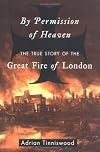
On September 1, 1666, the center of London caught fire (apparently due to an improperly banked bakery oven fire) and, over the next five days, burned down. Figures are not exact, but somewhere around 13000 buildings were lost.
Much of this book describes events before and after The Fire. London had something of a bad streak of luck in the 1660s. There were various riots and upheavals by Republicans (no, not that kind; people who were opposed to the Restoration of Charles II); then the Great show more Plague of 1665 (20% of Londoners died), and finally, the City burned down. Fire was always a part of urban life - there’s a Middle Kingdom Egyptian proverb that goes something like “Never despise a small soldier, a small document, or a small fire” - and various laws and regulations had been enacted in England to suppress fires or limit damages. The upper stories of houses were not supposed to overlap streets, every parish was supposed to have fire-fighting equipment, and “fire engines” were stationed at strategic places around the city. Unfortunately, none of these things worked very well in 1666. The building laws were unenforced and ignored. The “fire fighting” equipment was hooks (worked by a team of men to pull down buildings and create a firebreak) and “squirts” (basically large brass syringes which held about a pint of water); the hooks were not used until it was too late because the Lord Mayor was reluctant to damage private property and the squirts might have been adequate for a small fire inside a house but were ludicrous against what happened. The “fire engines” were skid-mounted pumps, worked by teams of men on alternating handles. They could put out a decent stream of water, for the time, but while the “fire engine” had been invented, the “fire hose” hadn’t. Thus the engine had to be pushed close enough to the fire so that a direct stream from the output nozzle could reach it, and when the internal reservoir was exhausted it had to be pushed back to a water source to be refilled. Few got into action at all (because the streets we clogged with people fleeing the flames) and those that did were usually quickly abandoned by their crews and overwhelmed by fire themselves.
Author Adrian Tinniswood leans heavily on the diary of Samuel Pepys for actual accounts of The Fire. I read an abridged and censored version of The Diary years ago, but Tinniswood quotes extensively from the unexpurgated version, which reveals Pepys as fascinating if despicable. As an example, Pepys attempts to attend a solemn church service of thanksgiving and repentance after The Fire, but the church is so crowded he can’t get in. He therefore adjourns to a nearby tavern for lunch and a whore instead (perhaps it was Happy Hour?). You have to have a certain admiration for someone who could so adroitly juxtapose the needs of the spirit and the flesh.
One of the interesting things about The Fire was that while the damage to property was immense, very few lives were lost. Of course there were probably fatalities that went unrecorded, but the best estimates of the time put the death toll at less than 10. It’s hard to account for this; contemporary records describe The Fire a pushed along by “gale force” winds, but the actual advance of the flame front seems to have been slow enough that not only could people escape, they could usually haul off a lot of their movable property.
The Fire was finally contained when the wind died down and by the actions of Charles II and his younger brother the Duke of York (later James II), who ignored concerns about property rights and began pulling down and blowing up buildings. While preparing to blow up a building at The Temple, which the flames were rapidly approaching, York was confronted by a lawyer who informed him that it was strictly forbidden to damage a building of the Temple. York turned to an equerry, who promptly knocked the lawyer unconscious with a stick, and the demolition proceeded.
With The Fire out, people promptly began looking for someone to blame. The clergy, of course, saw the Hand of God punishing London for its sins (one of the sins mentioned is “speculative uncleanness”. I’m puzzled as to what exactly that might be; it doesn’t sound nearly as much fun as the other sins). The laity were much more inclined to blame Papists, Jesuits, the French, the Dutch, and foreigners in general (oddly, nobody seems to have blamed the Jews). Even while the flames were still burning, impromptu roadblocks were set up by the populace, who beat up anybody who couldn’t speak good English. They went so far as to hang a member of the Swedish embassy, who had ignored instructions by the Ambassador not to go out (he wanted to visit a woman of his acquaintance). Fortunately he was rescued by the Horse Guards while still kicking. It didn’t help that sometime after The Fire a Frenchman, Robert Hubert, turned up and confessed. Hubert’s statements were generally believed to be false by all the officials that interviewed him. This had considerable legal importance, since property law of the time held that tenants were responsible for any repairs to buildings they leased, and most property destroyed by the fire was leaseholds. There was an exception; if the damage had been caused by an act of war, the landlord was responsible. The city’s landlords may have put the fix in, since Hubert was exonerated as a madman who had falsely confessed (which didn’t do him much good, since he had been hanged some months previously).
The last third of the book is devoted to various plans to rebuild the city. Many of these were ambitious and would have been early examples of urban planning; unfortunately they all foundered on the reality of property law and the need to get the city up and running again. Most of rebuilt London owes its basic design to the plans of Robert Hooke and Christopher Wren, but vistas were eliminated, planned wide streets were narrowed, and crooked streets were left crooked. At least Wren got to rebuild St. Pauls and many of the other churches.
There’s some interesting pseudoscience here. Restoration London was overrun with astrologers, prophets and prognosticators, who had failed to a man or woman to predict The Fire. Their explanations were exactly what we see nowadays; some simply brazened it out and didn’t even mention The Fire; others claimed that they had been given faulty information - told that a comet had first appeared in Taurus when it had in fact been in Gemini, for example. A few claimed that they had predicted The Fire, albeit cryptically; one astrologer pointed to his comment (in 1652) that the malign influences of a comet seen that year might linger for some time. Apparently 14 years gave those influences enough time to work their malignity.
Entertaining and interesting. I’d read a previous book on The Fire by W. G. Bell and thought about doing parallel reviews, but I’ve loaned Bell’s book out to somebody and Tinniswood’s is better written anyway. I want to read Tinniswood’s biography of Wren and a complete Diary of Samuel Pepys now. show less
Much of this book describes events before and after The Fire. London had something of a bad streak of luck in the 1660s. There were various riots and upheavals by Republicans (no, not that kind; people who were opposed to the Restoration of Charles II); then the Great show more Plague of 1665 (20% of Londoners died), and finally, the City burned down. Fire was always a part of urban life - there’s a Middle Kingdom Egyptian proverb that goes something like “Never despise a small soldier, a small document, or a small fire” - and various laws and regulations had been enacted in England to suppress fires or limit damages. The upper stories of houses were not supposed to overlap streets, every parish was supposed to have fire-fighting equipment, and “fire engines” were stationed at strategic places around the city. Unfortunately, none of these things worked very well in 1666. The building laws were unenforced and ignored. The “fire fighting” equipment was hooks (worked by a team of men to pull down buildings and create a firebreak) and “squirts” (basically large brass syringes which held about a pint of water); the hooks were not used until it was too late because the Lord Mayor was reluctant to damage private property and the squirts might have been adequate for a small fire inside a house but were ludicrous against what happened. The “fire engines” were skid-mounted pumps, worked by teams of men on alternating handles. They could put out a decent stream of water, for the time, but while the “fire engine” had been invented, the “fire hose” hadn’t. Thus the engine had to be pushed close enough to the fire so that a direct stream from the output nozzle could reach it, and when the internal reservoir was exhausted it had to be pushed back to a water source to be refilled. Few got into action at all (because the streets we clogged with people fleeing the flames) and those that did were usually quickly abandoned by their crews and overwhelmed by fire themselves.
Author Adrian Tinniswood leans heavily on the diary of Samuel Pepys for actual accounts of The Fire. I read an abridged and censored version of The Diary years ago, but Tinniswood quotes extensively from the unexpurgated version, which reveals Pepys as fascinating if despicable. As an example, Pepys attempts to attend a solemn church service of thanksgiving and repentance after The Fire, but the church is so crowded he can’t get in. He therefore adjourns to a nearby tavern for lunch and a whore instead (perhaps it was Happy Hour?). You have to have a certain admiration for someone who could so adroitly juxtapose the needs of the spirit and the flesh.
One of the interesting things about The Fire was that while the damage to property was immense, very few lives were lost. Of course there were probably fatalities that went unrecorded, but the best estimates of the time put the death toll at less than 10. It’s hard to account for this; contemporary records describe The Fire a pushed along by “gale force” winds, but the actual advance of the flame front seems to have been slow enough that not only could people escape, they could usually haul off a lot of their movable property.
The Fire was finally contained when the wind died down and by the actions of Charles II and his younger brother the Duke of York (later James II), who ignored concerns about property rights and began pulling down and blowing up buildings. While preparing to blow up a building at The Temple, which the flames were rapidly approaching, York was confronted by a lawyer who informed him that it was strictly forbidden to damage a building of the Temple. York turned to an equerry, who promptly knocked the lawyer unconscious with a stick, and the demolition proceeded.
With The Fire out, people promptly began looking for someone to blame. The clergy, of course, saw the Hand of God punishing London for its sins (one of the sins mentioned is “speculative uncleanness”. I’m puzzled as to what exactly that might be; it doesn’t sound nearly as much fun as the other sins). The laity were much more inclined to blame Papists, Jesuits, the French, the Dutch, and foreigners in general (oddly, nobody seems to have blamed the Jews). Even while the flames were still burning, impromptu roadblocks were set up by the populace, who beat up anybody who couldn’t speak good English. They went so far as to hang a member of the Swedish embassy, who had ignored instructions by the Ambassador not to go out (he wanted to visit a woman of his acquaintance). Fortunately he was rescued by the Horse Guards while still kicking. It didn’t help that sometime after The Fire a Frenchman, Robert Hubert, turned up and confessed. Hubert’s statements were generally believed to be false by all the officials that interviewed him. This had considerable legal importance, since property law of the time held that tenants were responsible for any repairs to buildings they leased, and most property destroyed by the fire was leaseholds. There was an exception; if the damage had been caused by an act of war, the landlord was responsible. The city’s landlords may have put the fix in, since Hubert was exonerated as a madman who had falsely confessed (which didn’t do him much good, since he had been hanged some months previously).
The last third of the book is devoted to various plans to rebuild the city. Many of these were ambitious and would have been early examples of urban planning; unfortunately they all foundered on the reality of property law and the need to get the city up and running again. Most of rebuilt London owes its basic design to the plans of Robert Hooke and Christopher Wren, but vistas were eliminated, planned wide streets were narrowed, and crooked streets were left crooked. At least Wren got to rebuild St. Pauls and many of the other churches.
There’s some interesting pseudoscience here. Restoration London was overrun with astrologers, prophets and prognosticators, who had failed to a man or woman to predict The Fire. Their explanations were exactly what we see nowadays; some simply brazened it out and didn’t even mention The Fire; others claimed that they had been given faulty information - told that a comet had first appeared in Taurus when it had in fact been in Gemini, for example. A few claimed that they had predicted The Fire, albeit cryptically; one astrologer pointed to his comment (in 1652) that the malign influences of a comet seen that year might linger for some time. Apparently 14 years gave those influences enough time to work their malignity.
Entertaining and interesting. I’d read a previous book on The Fire by W. G. Bell and thought about doing parallel reviews, but I’ve loaned Bell’s book out to somebody and Tinniswood’s is better written anyway. I want to read Tinniswood’s biography of Wren and a complete Diary of Samuel Pepys now. show less
A rattling good read. This is the story of the period leading up to London's Great Fire, the terrifying and confused days of the fire itself, and then the aftermath. Tinniswood has pieced together the human, political and economic consequences of this cataclysm in a measured, yet gripping fashion, recreating the period in telling detail. Who knew, for instance, that the clothworkers of Coventry would suffer so from the consequences of the fire? They'd just send down a £2000 consignment of show more cloth to London for export .... and it was consumed by the flames. Or that foreigners would come under the kind of suspicion and mistrust that asylum seekers here can feel in our own times? This is an evocative, gripping account. show less
This was a very readable and multi-faceted examination of this famous event, with a particular focus on the aftermath of the event (the conflagration is extinguished less than half way through the book). This deals extensively with the commendably rapid restoration of the city which got underway very quickly afterwards; the differing plans for reconstruction of the streets (some of which are so soulessly geometric one is grateful they were not taken forward); and, of course, though show more surprisingly briefly, with Wren's new St Paul's. On the positive side, many other communities in England raised considerable sums of money for stricken and homeless Londoners. On the other hand, another factor extensively covered is the widespread but erroneous view that the fire was deliberately started by Dutch or Catholic plotters, with indiscriminate attacks on foreigners during the events and "Papists" even officially blamed on the inscription near the Monument in Pudding Lane for a century and a half afterwards. It was clearly an emotionally shattering and destabilising event for contemporaries, especially after the Great Plague the year before. Excellent read, and quotes from Pepys always add colour. show less
Adrian Tinniswood's Behind the Throne: A Domestic History of the British Royal Household is more a collection of interesting anecdotes than a work of history, and more about the royals themselves than it is about their household, and certainly than about the below-the-stairs staff who make up the vast majority of those who keep the palaces running. So much for the promise of the title, then. I think Tinniswood missed a trick by not doing more independent research and drawing on things like show more archaeology or census information (bound to be available for rank-and-file servants by at least the later 19th century) and so on, rather than drawing largely on well-worn memoirs by high-ranking courtiers and so on. Like, I wanted to know more about the housemaids who made the incredibly lavish and pointless lifestyles of these people possible, and less about George V's stamp collection. I'm not mad I read it, but I know that in a month or so I will have forgotten that I ever picked this up. show less
Lists
Awards


You May Also Like


Statistics
- Works
- 29
- Members
- 2,327
- Popularity
- #11,021
- Rating
- 3.7
- Reviews
- 33
- ISBNs
- 100
- Languages
- 3