John Martin Robinson
Author of Windsor Castle: Official Souvenir Guidebook
About the Author
Image credit: Photo by Philip Allfrey June 2006 (Wikimedia Commons)
Works by John Martin Robinson
Wilton House: The Art, Architecture and Interiors of One of Britains Great Stately Homes (2021) 22 copies
Stowe Landscape Gardens 3 copies
Georgian Model Farms: A Study of Decorative and Model Farm Buildings in the Age of Improvement, 1700-1846 (1984) 2 copies
Arundel Castle Guidebook 1 copy
Belmont 1 copy
Heraldry at Coughton Court 1 copy
Associated Works
Remembrances of things worth seeing in Italy : given to John Evelyn 25 April 1646 — Editor, some editions — 2 copies
Tagged
Common Knowledge
- Legal name
- Robinson, John Martin
- Birthdate
- 1948
- Gender
- male
- Education
- University of St Andrews (MA|D.Litt|2002)
Oriel College, University of Oxford (D.Phil|1974) - Occupations
- architectural historian
Officer of Arms - Organizations
- The Georgian Group
Country Life - Awards and honors
- Fellow, Society of Antiquaries of London
Knight of Magistral Grace of the Sovereign Military Order of Malta - Nationality
- UK
- Birthplace
- Preston, Lancashire, England, UK
- Places of residence
- Beckside House, Barbon, Cumbria, England, UK
- Associated Place (for map)
- England, UK
Members
Reviews
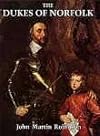
We bought this well illustrated book on the history of the Dukes of Norfolk, the leading Catholic aristocratic family in England, on our Easter Saturday visit to their ancestral seat, Arundel Castle. It follows the history from: the 1st Duke, who fought at Bosworth on Richard III's side; through the most famous scions of the House in the Tudor period: the 3rd Duke who was one of Henry VIII's chief counsellors, implacable opponent of Thomas Cromwell, and uncle to the two most unfortunate show more Queens Anne Boleyn and Catherine Howard, both of whom he abandoned to their fates; his son, the poet Earl of Surrey, executed just before Henry VIII's death on trivial charges of misusing his heraldic arms; the 4th Duke who naively plotted to marry Mary Queen of Scots behind Queen Elizabeth's back and was executed for alleged involvement in the Ridolfi plot; and his son St Philip Howard, a Catholic martyr under Queen Elizabeth. The later ducal line (the title itself was in abeyance for nearly a century) was less influential in national affairs, as Catholicism was increasingly pushed underground thereafter, though still it contained some interesting characters, including one or two more tragic or disreputable figures. The last Duke covered in detail here is the 15th Duke, who died in 1917, and the 20th century family is covered very skeletally. A good guide to the history of this influential family and with a fairly detailed family tree at the end to which I had regular recourse. show less
Facsimile Edition of the 1844-5 Handbook to Chatsworth published by Frederic Shoberl Jr., “the most delightful and informative historic description of an English country house”.
William Cavendish, the charming and extravagant 6th Duke of Devonshire (1790-1858), was greatly interested in the history of his family and of Chatsworth, and in 1844 he privately printed a delightful Handbook of his home intended primarily for family and friends. It was written in the first person and addressed show more to the Duke’s sister Harriet, Countess Granville. He opens 'Dearest Harriet…my plan is to suppose that you are just arrived, and that I show you every room and corner of the house' – a house they had both known and loved since infancy.
Stoker Devonshire, the current Duke, has recently published a facsimile edition of the Handbook to mark his membership of the Roxburghe Club, edited by John Martin Robinson, the acclaimed architectural historian.
“The [original] book is extremely rare. The [Sixth] Duke referred to the small number of copies in a postscript. He intended them as gifts to his near relations. Only twelve octavo copies are thought to have been produced originally and some of these have disappeared. The Duke also commissioned two large-paper copies for himself which are now in the Library at Chatsworth”.
This finely produced facsimile has been taken from the copy formerly at Castle Howard and now at Chatsworth. The 6th Duke’s additions and changes recorded in manuscript in his personal working copy have been included in the wide margins of this edition together with notes explaining the well-known people and places mentioned. These are augmented by the Duke’s notes and brief additional biographical sketches at the end; watercolour illustrations from the large-paper Chatsworth copy of the Handbook and the Devonshire Collections are included.
250 x 265mm. full grey leather based on a binding design on a copy at Chatsworth known as the Duchess’s Copy. The endpapers’ design taken from a detail of the curtains in the library at Chatsworth.
“The production of this volume – which has been entirely the work of John Martin Robinson, our esteemed Secretary, and Robert Dalrymple, the designer, with help from Fran Baker, our Archivist and Librarian – has given me as an idle spectator enormous pleasure. I am delighted that this intimate description of Chatsworth by this charming man will now reach a much wider audience. It stands in its plain-speaking glory fulfilling the 6th Duke’s idea of producing an illustrated larger paper volume of the Handbook” (Foreword by the Duke of Devonshire) show less
William Cavendish, the charming and extravagant 6th Duke of Devonshire (1790-1858), was greatly interested in the history of his family and of Chatsworth, and in 1844 he privately printed a delightful Handbook of his home intended primarily for family and friends. It was written in the first person and addressed show more to the Duke’s sister Harriet, Countess Granville. He opens 'Dearest Harriet…my plan is to suppose that you are just arrived, and that I show you every room and corner of the house' – a house they had both known and loved since infancy.
Stoker Devonshire, the current Duke, has recently published a facsimile edition of the Handbook to mark his membership of the Roxburghe Club, edited by John Martin Robinson, the acclaimed architectural historian.
“The [original] book is extremely rare. The [Sixth] Duke referred to the small number of copies in a postscript. He intended them as gifts to his near relations. Only twelve octavo copies are thought to have been produced originally and some of these have disappeared. The Duke also commissioned two large-paper copies for himself which are now in the Library at Chatsworth”.
This finely produced facsimile has been taken from the copy formerly at Castle Howard and now at Chatsworth. The 6th Duke’s additions and changes recorded in manuscript in his personal working copy have been included in the wide margins of this edition together with notes explaining the well-known people and places mentioned. These are augmented by the Duke’s notes and brief additional biographical sketches at the end; watercolour illustrations from the large-paper Chatsworth copy of the Handbook and the Devonshire Collections are included.
250 x 265mm. full grey leather based on a binding design on a copy at Chatsworth known as the Duchess’s Copy. The endpapers’ design taken from a detail of the curtains in the library at Chatsworth.
“The production of this volume – which has been entirely the work of John Martin Robinson, our esteemed Secretary, and Robert Dalrymple, the designer, with help from Fran Baker, our Archivist and Librarian – has given me as an idle spectator enormous pleasure. I am delighted that this intimate description of Chatsworth by this charming man will now reach a much wider audience. It stands in its plain-speaking glory fulfilling the 6th Duke’s idea of producing an illustrated larger paper volume of the Handbook” (Foreword by the Duke of Devonshire) show less
After visiting Windsor Castle this June, I was delighted that the Queen was in residence. I purchased this book at their souvenir shop as a remembrance.
The current edition of the guide includes a photograph of the wedding of The Prince of Wales and the Duchess of Cornwall.
From the building of the castle to the restoration of the 1992 fire, you are taken through the time of the Norman period, the Medieval expansion, the Tudor Windsor era, and then to the present House of Windsor.
With many show more drawings and photographs, you are shown public rooms, state apartments, semi-state apartments, gardens, and many paintings.
The guide was very helpful in labelling my own photographs from the visit.
If you are going to visit Windsor Castle or want to see how the other half lives, by all means purchase this delightful guide. show less
The current edition of the guide includes a photograph of the wedding of The Prince of Wales and the Duchess of Cornwall.
From the building of the castle to the restoration of the 1992 fire, you are taken through the time of the Norman period, the Medieval expansion, the Tudor Windsor era, and then to the present House of Windsor.
With many show more drawings and photographs, you are shown public rooms, state apartments, semi-state apartments, gardens, and many paintings.
The guide was very helpful in labelling my own photographs from the visit.
If you are going to visit Windsor Castle or want to see how the other half lives, by all means purchase this delightful guide. show less
Heartbreaking story about 20 huge estates in the UK that were demolished. Explains the grand history of each structure, all architectural wonders, and the sad tale about how they were mainly sold in piecemeal, with the properties often turned into motorways or housing estates.
You May Also Like
Associated Authors
Statistics
- Works
- 44
- Also by
- 1
- Members
- 1,405
- Popularity
- #18,284
- Rating
- 3.7
- Reviews
- 15
- ISBNs
- 63