
Clive Aslet
Author of Villages of Britain: The Five Hundred Villages That Made the Countryside
About the Author
Clive Aslet is the editor of Country Life and the author of several books, including The American Country House.
Works by Clive Aslet
Villages of Britain: The Five Hundred Villages That Made the Countryside (2010) 109 copies, 1 review
An Exuberant Catalogue of Dreams: The Americans Who Revived the Country House in Britain (2013) 31 copies, 1 review
Associated Works
Tagged
Common Knowledge
Members
Reviews
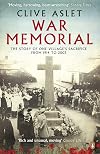
This is such a simple idea that you struggle to believe it hasn't been done before. The UK is covered in war memorials, one was erected in pretty much every village after the first world war and recorded the names of the people from the village that had fought & died in the war. They were erected by schools, railway companies, businesses, you name it. They are everywhere and the focus of the Remembrance day ceremony that takes place very November. And yet how may times do we stop and read show more them? We may scan names, possibly looking for a familiar surname, but who are those people? This book takes one village and puts flesh on the bare bones of the initials and surnames of one village's war memorial. The memorial also lists names from post WW1. I seem to remember that post WW1 there was only 1 year in which a British serviceman was not killed on active duty. IN not all villages have these later deaths been added, the village chosen for this book has 2 post WW2 deaths, and I think that is am important selection to have made. The original war memorials were erected, in part, to ensure that we remembered what had happened and never let it happen again. In which we have failed badly.
The author does a good job of finding out who the names were, where they worked (if known) their relationship with the village whose memorial they are remembered on, where they served and how they died. It is in many fields of operations, in the trenches, in the Dardanelles, in Italy, in the air, as a nurse, all over. In 2 cases, it wasn't even in war, but as a result of it.
The only point I found slightly annoying was the occasional attempt to add feelings to the individuals. I accept that his is trying to turn them from names into flesh & blood human beings, and feelings are an integral part of being human,. However, to give them feelings (rather than to imagine how they must have felt) is going a bit too far and annoyed me on the occasional times that it happened.
Overall a very good idea, neatly executed. show less
The author does a good job of finding out who the names were, where they worked (if known) their relationship with the village whose memorial they are remembered on, where they served and how they died. It is in many fields of operations, in the trenches, in the Dardanelles, in Italy, in the air, as a nurse, all over. In 2 cases, it wasn't even in war, but as a result of it.
The only point I found slightly annoying was the occasional attempt to add feelings to the individuals. I accept that his is trying to turn them from names into flesh & blood human beings, and feelings are an integral part of being human,. However, to give them feelings (rather than to imagine how they must have felt) is going a bit too far and annoyed me on the occasional times that it happened.
Overall a very good idea, neatly executed. show less
It was a decade ago that Neil MacGregor’s A History of the World in 100 Objects launched a publishing trend of books that sought to recount the past through a selection of material objects. In many ways Clive Aslet’s delightful study is a precursor to these works. Though a selection of twenty-one domestic structures that still stand today – from the Norman-era Boothby Pagnell Manor House to a postwar kit house reconstructed to fit 21st century needs – Aslet recounts the evolution of show more housing in the country and what it reveals about the changes it experienced.
While Aslet’s focus is primarily architectural, he expands his coverage beyond the structures themselves to consider what the form reveals about function. This allows him to present the buildings not just as a reflection of changing needs and tastes, but of what those changes reveal about larger developments taking place in the English society and culture of their times. It’s material and architectural history in its most valuable form, showing how these structures can tell us about the lives people lived and, though them, the broader history of England. As a longtime writer of architectural history Aslet is well-suited to write such a book, yet he wears his knowledge lightly in a work that is never less than enjoyable. While the absence of photographs and floor plans of the houses he profiles is regrettable, supplementing his book with internet searches addresses their absence nicely. Anyone seeking an entertaining overview of English history or to understand how they lived will find Aslet’s book a highly satisfying read, one that demonstrates the value of using English homes as a prism into their past. show less
While Aslet’s focus is primarily architectural, he expands his coverage beyond the structures themselves to consider what the form reveals about function. This allows him to present the buildings not just as a reflection of changing needs and tastes, but of what those changes reveal about larger developments taking place in the English society and culture of their times. It’s material and architectural history in its most valuable form, showing how these structures can tell us about the lives people lived and, though them, the broader history of England. As a longtime writer of architectural history Aslet is well-suited to write such a book, yet he wears his knowledge lightly in a work that is never less than enjoyable. While the absence of photographs and floor plans of the houses he profiles is regrettable, supplementing his book with internet searches addresses their absence nicely. Anyone seeking an entertaining overview of English history or to understand how they lived will find Aslet’s book a highly satisfying read, one that demonstrates the value of using English homes as a prism into their past. show less
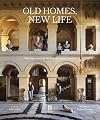
In this book, Clive Aslet presents twelve country houses to us. In each house section, we meet the family that calls the place home, their story, and their vision for the future. Afterwards, we are treated to rich photographs of these estates, along with a brief history of each profiled house.
It's a lovely book to have on your coffee table, especially if you enjoy British country houses. Well done.
It's a lovely book to have on your coffee table, especially if you enjoy British country houses. Well done.
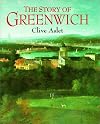
I visited Greenwich a few years back, walking under the Thames from the City, and saw the Cutty Sark, the Royal Observatory, the Meridian (the line to stand on the Meridian line was about an hour long so I dodged that) and the National Maritime Museum. That so much happened in this little area is amazing but then I'm not a Londoner, where so much has happened to almost every square kilometre of that city.
"The Story of Greenwich" covers the history of Greenwich from its establishment through show more the years when it was so far away from the City as to be another world, through the middle ages to the present, explaining how such a supposedly unprepossessing place is now how we determine the time in outer Mongolia or Tristan da Cunha. show less
"The Story of Greenwich" covers the history of Greenwich from its establishment through show more the years when it was so far away from the City as to be another world, through the middle ages to the present, explaining how such a supposedly unprepossessing place is now how we determine the time in outer Mongolia or Tristan da Cunha. show less
Awards


You May Also Like


Associated Authors
Statistics
- Works
- 38
- Also by
- 1
- Members
- 963
- Popularity
- #26,728
- Rating
- 3.5
- Reviews
- 9
- ISBNs
- 60
- Languages
- 1