
John Dewey (1859–1952)
Author of Art as Experience
About the Author
John Dewey was born in 1859 in Burlington, Vermont. He founded the Laboratory School at the University of Chicago in 1896 to apply his original theories of learning based on pragmatism and "directed living." This combination of learning with concrete activities and practical experience helped earn show more him the title, "father of progressive education." After leaving Chicago he went to Columbia University as a professor of philosophy from 1904 to 1930, bringing his educational philosophy to the Teachers College there. Dewey was known and consulted internationally for his opinions on a wide variety of social, educational and political issues. His many books on these topics began with Psychology (1887), and include The School and Society (1899), Experience and Nature (1925), and Freedom and Culture (1939).Dewey died of pneumonia in 1952. (Bowker Author Biography) show less
Series
Works by John Dewey
Democracy and Education: An Introduction to the Philosophy of Education (1916) 1,067 copies, 5 reviews
How We Think: A Restatement of the Relation of Reflective Thinking to the Educative Process (1910) 680 copies, 6 reviews
The School and Society and The Child and the Curriculum (Centennial Publications of The University of Chicago Press) (1956) 389 copies
The Quest for Certainty: A Study of the Relation of Knowledge And Action (1929) 312 copies, 1 review
Intelligence In The Modern World: John Dewey's Philosophy (Modern Library Giant, 43.1) (1939) 184 copies, 1 review
The Early Works of John Dewey, Volume 2, 1882 - 1898: Psychology, 1887 (Collected Works of John Dewey) (1967) 43 copies, 1 review
The Early Works of John Dewey, Volume 1, 1882 - 1898: Early Essays and Leibniz's New Essays, 1882-1888 (Collected Works of John Dewey) (1969) 36 copies
The Middle Works of John Dewey, Volume 12, 1899 - 1924: 1920, Reconstruction in Philosophy and Essays (Collected Works of John Dewey) (1976) 34 copies
The Early Works of John Dewey, Volume 5, 1882 - 1898: Early Essays, 1895-1898 (Collected Works of John Dewey) (1972) 29 copies
The Early Works of John Dewey, Volume 4, 1882 - 1898: Early Essays and The Study of Ethics, A Syllabus, 1893-1894 (Collected Works of John Dewey) (1971) 27 copies
The Later Works of John Dewey, Volume 7, 1925 - 1953: 1932, Ethics (Volume 7) (Collected Works of John Dewey) (1985) 24 copies
The Middle Works of John Dewey, Volume 4, 1899 - 1924: Essays on Pragmatism and Truth, 1907-1909 (Collected Works of John Dewey) (1977) 21 copies
The Early Works of John Dewey, Volume 3, 1882 - 1898: Essays and Outlines of a Critical Theory of Ethics, 1889-1892 (Collected Works of John Dewey) (1969) 20 copies
The Later Works of John Dewey, Volume 8, 1925 - 1953: 1933, Essays and How We Think, Revised Edition (Volume 8) (Collected Works of John Dewey) (1986) 17 copies
John Dewey: The Later Works, 1925-1953: 1935-1937/Essays and Liberalism and Social Action, Vol. 11 (1987) 17 copies
The Middle Works of John Dewey, Volume 6: How We Think and Selected Essays (Middleworks of John Dewey 1899-1924, Volume 6) (1978) 15 copies
The Middle Works of John Dewey, Volume 3, 1899 - 1924: Essays on the New Empiricism 1903-1906 (Collected Works of John Dewey) (1977) 11 copies
America's Public Philosopher: Essays on Social Justice, Economics, Education, and the Future of Democracy (2021) 11 copies
The Middle Works of John Dewey, Volume 7, 1899 - 1924: Essays on Philosophy and Psychology, 1912-1914 (Collected Works of John Dewey) (1979) 10 copies
John Dewey: The Essential Writings (The Essential Writings of the Great Philosophers) (1977) 10 copies
The Collected Works of John Dewey, Index: 1882 - 1953 (Dewey, John//Later Works, 1925-1953) (1991) 9 copies
The Collected Works of John Dewey: The Complete Works PergamonMedia (Highlights of World Literature) (2015) 9 copies
The Later Works of John Dewey, Volume 6, 1925 - 1953: 1931-1932, Essays, Reviews, and Miscellany (Collected Works of John Dewey) (1985) 6 copies
Impressions of Soviet Russia and the revolutionary world, Mexico, China, Turkey, 1929 (1964) 5 copies
The Educational Situation 4 copies
Not guilty; : report of the Commission of Inquiry into the Charges Made Against Leon Trotsky in the Moscow Trials (2005) 4 copies
The school and the child: Being selections from the educational essays of John Dewey (1906) 3 copies
The Later Works of John Dewey, Volume 9, 1925 - 1953: 1933-1934, Essays, Reviews, Miscellany, and A Common Faith (Collected Works of John Dewey) (2008) 3 copies
China, Japan and the U.S.A. Present-Day Conditions in the Far East and Their Bearing on the Washington Conference (2011) 3 copies
Principles of Instrumental Logic: John Dewey's Lectures in Ethics and Political Ethics, 1895-1896 (1998) 3 copies
Essays in honor of John Dewey, on the occasion of his seventieth birthday, October 20, 1929 3 copies
Como pensamos: como se relaciona o pensamento reflexivo com o processo educativo: uma reexposiçâo 3 copies
Not Guilty Report of the Commission of Inquiry into the Charges Made Against Leon Trotsky in the Moscow Trials (2008) 3 copies
Özgürlük ve Kültür 2 copies
Lógica. Teoría de la investigación 2 copies
The ethics of democracy 2 copies
Study of Ethics, a Syllabus 2 copies
La scuola e il fanciullo 2 copies
John Dewey's Philosophy 1 copy
La experiencia interior 1 copy
Arte, educazione, creatività 1 copy
China, Japan, and the U.S.A.: Present-Day Conditions in the Far East and Their Bearing on the Washington Conference. (2009) 1 copy
The wit and wisdom 1 copy
Shikshha Aur Loktantra 1 copy
Jefferson 1 copy
Liberalismo E Azione Sociale 1 copy
Democracy ando Education 1 copy
The Case of Leon Trotsky. Report of Hearings on the Charges Made Against Him in the Moscow Trials (1937) 1 copy
John Dewey, The Man And His Philosophy: Addresses Delivered In New York In Celebration Of His Seventieth Birthday (2011) 1 copy
Art as Expierence 1 copy
Démocratie et éducation - Suivi de Expérience et Éducation: Suivi de Expérience et Éducation (2022) 1 copy
My pedagogic creed, by Prof. John Dewey; also, The demands of sociology upon pedagogy, by Prof. Albion W. Small. (2011) 1 copy
Steps to economic recovery: an address delivered over radio station WEVD, New York City, 1932 1 copy
John Dewey on Henry George 1 copy
THE PANTHEISM OF SPINOZA 1 copy
Some questions about value 1 copy
The Problem of Truth 1 copy
L'educazione di oggi 1 copy
Democracia Cooperativa. Escritos Politicos Escolhidos De John Dewey (Em Portuguese do Brasil) (2008) 1 copy
Virtues 1 copy
Habits and Will 1 copy
John Dewey's Impressions of Soviet Russia and the revolutionary world Mexico-China-Turkey 1929 (1964) 1 copy
Esperienza e natura di Dewey e il problema di una nuova teoria del vero nel pragmatismo (1995) 1 copy
Saggi pedagogici 1 copy
Pedagogía y filosofa 1 copy
El hombre y sus problemas 1 copy
Vita, pensiero, opere scelte 1 copy
SHKOLLA DHE SHOQËRIA 1 copy
Associated Works
Philosophies of Art and Beauty: Selected Readings in Aesthetics from Plato to Heidegger (1976) — Contributor — 398 copies, 2 reviews
Social and Political Philosophy: Readings From Plato to Gandhi (1963) — Contributor — 273 copies, 1 review
The Philosopher's Handbook: Essential Readings from Plato to Kant (2000) — Contributor — 234 copies, 1 review
The Glorious American Essay: One Hundred Essays from Colonial Times to the Present (2020) — Contributor — 116 copies
Great companions : critical memoirs of some famous friends (2007) — Contributor — 25 copies, 1 review
The Scared Generation: Two Novels (Glas New Russian Writing) (2005) — Translator, some editions — 7 copies
Tagged
Common Knowledge
- Canonical name
- Dewey, John
- Birthdate
- 1859-10-20
- Date of death
- 1952-06-01
- Gender
- male
- Education
- University of Vermont (BA | 1879)
Johns Hopkins University (Ph.D | 1884) - Occupations
- philosopher
educational reformer
psychologist
university professor - Organizations
- University of Michigan
University of Chicago
Columbia University
Columbia University Teachers College
New School for Social Research (co-founder)
American Psychological Association (show all 8)
American Philosophical Association
American Federation of Teachers - Awards and honors
- Copernican Citation (1943)
- Relationships
- Mead, George Herbert (friend)
Adlerblum, Nima (colleague)
Marcy, Mary (student) - Cause of death
- pneumonia
- Nationality
- USA
- Birthplace
- Burlington, Vermont, USA
- Places of residence
- Oil City, Pennsylvania, USA
Baltimore, Maryland, USA
Ann Arbor, Michigan, USA
New York, New York, USA
Chicago, Illinois, USA - Place of death
- New York, New York, USA
- Burial location
- Ira Allen Chapel, Burlington, Vermont, USA
- Associated Place (for map)
- USA
Members
Reviews
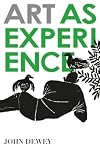
Are there times in your life that are dull and dreary, a mechanical, mindless shuffling from one tedious task to another? According to American philosopher John Dewey (1859-1952), such moments in anybody’s life lack aesthetic quality. He writes in Art as Experience, “The enemies of the aesthetic are neither the practical nor the intellectual. They are the humdrum; slackness of loose ends; submission to convention in practice and intellectual procedure.” We may ask, by Dewey’s show more reckoning, what will be needed to have an aesthetic experience? And when will an aesthetic experience be deemed artistic? As a way of answering these questions, we can take a look at the following example:
A woman is sitting on a bench in a city park. She listens to the children playing on a nearby playground, she feels the sun on her skin, she watches attentively as people walk to and fro. She feels connected to everyone and everything; life has such fullness and she will remember this afternoon in the park for a long time. Then, after about an hour of this very rich experience, she takes out her flute and starts playing. Since she is a world-class flutist, her wonderful music attracts a number of people who stand around and listen to her play. After playing several pieces, she nods her head and puts away her flute. The small crowd applauds and walks off.
Dewey would say the woman’s first experience of sitting in silence, fully present and awake to the richness of what life offers, has a certain completeness and aesthetic quality. Her second experience of playing the flute and sharing her music is an extension and intensification of the first experience. And because her playing incorporates a mastery and control of a particular technique (flute playing) and expression of emotions and feelings with others, it is a powerful artistic form of human communication.
Expanding on this example, a key concept for Dewey is ‘continuity’, that is, how all of life within the universe is part of a dynamic rhythm, forever alternating between disequilibrium and equilibrium, tension and resolution. And our human experience, including human making and crafting, is an outgrowth and amplification of these patterns of nature. Thus, for Dewey, viewing art and aesthetic experience as something set apart, restricted to museums, galleries, theaters and concert halls is a modern distortion.
Also, along the same lines, Dewey asks, “Why is there repulsion when the high achievements of fine art are brought into connection with common life, the life that we share with all living creatures? Why is life thought of as an affair of low appetite, or at its best a thing of gross sensation, and ready to sink from its best to the level of lust and harsh cruelty?” With such questions, we see how Dewey values continuity and integration of all aspects of our very human nature – mental, emotional, sensual, bodily, perceptive. He rebels against rigid dualism, setting spirit against flesh, mind against body. Applying this line of thinking to art and aesthetics, Dewey urges us to view human creativity as, ideally, involving the whole person. Unfortunately, he notes, such a holistic approach goes against the grain of our modern-day, highly-specialized, compartmentalized culture.
Yet again another aspect of continuity is linking an artist’s creation with the artist’s life as a whole. I recall reading about a court case where the judge asked great 19th century American painter James Abbott Whistler how he could charge so much for a painting since it took less than an hour to paint. Whistler replied, “Yes, but it also took a lifetime of experience.” It is this ‘lifetime of experience’ Dewey recognizes as being so important to artistic creation.
One area I find particularly fascinating is how Dewey defends abstract art against those thinkers and art critics who view abstract art as devoid of expression or overly intellectual. Dewey counters by citing how all art abstracts, for example, a painting portrays a three dimensional landscape in two dimensions. He also likens abstract art to a chemist’s abstraction of the material, visible elements of earth, water, fire and air into molecules and atoms. Another thought-provoking insight is when Dewey notes how many people in our modern world are tormented since they lack the control and technical skill to transform their powerful emotions and life experiences into a work of art in any form.
On the universality of art and aesthetic experience, we read, “In the end, works of art are the only media of complete and unhindered communication that can occur in a world full of gulfs and walls that limit community of experience.” So, for Dewey, unlike politics and religion, subjects that have a tendency to cut people off from one another, painting and sculpture, music and dance, theater and literature and other forms of art provide us with a great opportunity to connect with other people and share our common humanity. Certainly, what we have going on with Goodreads is an excellent example of Dewey’s philosophy. show less
One of my committee members suggested I re-read John Dewey's The Public and Its Problems because my dissertation is dealing with issues of privacy, publicity, and the social. It was a delight to return to early 20th century pragmatism, since I haven't read much (except for Josiah Royce) since my master's program. Here's a few (disjointed) notes and quotations from Dewey.
Dewey argues that the public/private distinction is not simply an individual/social distinction, because private acts can show more be social: "their consequences contribute to the welfare of the community or affect its status and prospects" (13). For Dewey, "any transaction deliberatively carried on between two or more persons is social in quality. It is a form of associated behavior and its consequences may influence further associations" (13). Thus, private acts between individuals can be social. Dewey seems to define social as something that is largely good for society, and thus some public acts are not "socially useful" (14).
Dewey's ontology of humanity is one of becoming: unlike other things that associate, a human "becomes a social animal in the make-up of his ideas, sentiments and deliberate behavior" (25). Becoming human: "To learn to be human is to develop through the give-and-take of communication an effective sense of being an individually distinctive member of a community; one who understands and appreciates its beliefs, desires and methods, and who contributes to a further conversion of organic powers into human resources and values. But this translation is never finished" (154).
The same is true for democracy: it is an ideal, a becoming, rather than a fact: "the tendency and movement of some thing which exists carried to its final limit, viewed as completed, perfected. Since things do not attain such fulfillment but are in actuality distracted and interfered with, democracy in this sense is not a fact and never will be" (148).
The Public occurs when "association adds to itself political organization" (35). For Dewey, the Public is intricately tied to the state, involving organization and representation (35). The problem of the Public is that it cannot recognize itself. Dewey writes that "'The new age of human relationships' has no political agencies worthy of it. The democratic public is still largely inchoate and unorganized" (109).
Method: He is also less interested in causes of events and phenomenon, which can lead to wild "interpretation" (19) and tautological arguments (I'm reminded here a bit of Eve Sedgwick's critique of hermeneutics of suspicion). Instead, he is more interested in an "empirical and historical treatment of the changes in political forms and arrangements, free from any overriding domination such as is inevitable when a 'true' state is postulated" (46). Thus, Dewey proposes that in order to create a more vital democratic public, we need to turn to a scientific method, one that attends to consequences and criteria. "Intelligence" itself is not enough, for we are stuck in habits that are conservative (157-159). His proposal is ultimately a "logic of method" like the experimentation in laboratories (202).
On technology: "Industry and inventions in technology, for example, create means which alter the modes of associated behavior and which radically change the quantity, character and place of impact of their indirect consequences" (30). Technology create means that affect how we associate.
Finally, "the first and last problem" that we must address "is the relation of the individual to the social" (186). "The individual" is hard to define because it is a matter of perspective: something can appear to be individual, until you either break it up more or look at the connections that it depends upon (187). Dewey defines individual as "A distinctive way of behaving in conjunction and connection with other distinctive ways of acting, not as self-enclosed way of acting, independent of everything else" (188). For individuals to be "social" together, instead of just "associative" there must be common interest and joint action (188). Dewey is suspicious of "evolutionary" claims about sociality (that we are moving to or from collectivism) because there is a "continuous re-distribution of social integrations on the one hand and of capacities and energies of individuals on the other" (193).
Reading this was useful in getting a discussion of the social, public, and individual/collectivism. I was mostly familiar with some of Dewey's arguments already, but it was nice returning to him. A few concerns: Dewey privileges the local community as necessary for improved democracy (216). What to do with this in today's social climate, where local communities seem fragmented and associations seem to be transnational or distributed over space and time? He also privileges face-to-face over print (218), which is understandable, but also limiting. show less
Dewey argues that the public/private distinction is not simply an individual/social distinction, because private acts can show more be social: "their consequences contribute to the welfare of the community or affect its status and prospects" (13). For Dewey, "any transaction deliberatively carried on between two or more persons is social in quality. It is a form of associated behavior and its consequences may influence further associations" (13). Thus, private acts between individuals can be social. Dewey seems to define social as something that is largely good for society, and thus some public acts are not "socially useful" (14).
Dewey's ontology of humanity is one of becoming: unlike other things that associate, a human "becomes a social animal in the make-up of his ideas, sentiments and deliberate behavior" (25). Becoming human: "To learn to be human is to develop through the give-and-take of communication an effective sense of being an individually distinctive member of a community; one who understands and appreciates its beliefs, desires and methods, and who contributes to a further conversion of organic powers into human resources and values. But this translation is never finished" (154).
The same is true for democracy: it is an ideal, a becoming, rather than a fact: "the tendency and movement of some thing which exists carried to its final limit, viewed as completed, perfected. Since things do not attain such fulfillment but are in actuality distracted and interfered with, democracy in this sense is not a fact and never will be" (148).
The Public occurs when "association adds to itself political organization" (35). For Dewey, the Public is intricately tied to the state, involving organization and representation (35). The problem of the Public is that it cannot recognize itself. Dewey writes that "'The new age of human relationships' has no political agencies worthy of it. The democratic public is still largely inchoate and unorganized" (109).
Method: He is also less interested in causes of events and phenomenon, which can lead to wild "interpretation" (19) and tautological arguments (I'm reminded here a bit of Eve Sedgwick's critique of hermeneutics of suspicion). Instead, he is more interested in an "empirical and historical treatment of the changes in political forms and arrangements, free from any overriding domination such as is inevitable when a 'true' state is postulated" (46). Thus, Dewey proposes that in order to create a more vital democratic public, we need to turn to a scientific method, one that attends to consequences and criteria. "Intelligence" itself is not enough, for we are stuck in habits that are conservative (157-159). His proposal is ultimately a "logic of method" like the experimentation in laboratories (202).
On technology: "Industry and inventions in technology, for example, create means which alter the modes of associated behavior and which radically change the quantity, character and place of impact of their indirect consequences" (30). Technology create means that affect how we associate.
Finally, "the first and last problem" that we must address "is the relation of the individual to the social" (186). "The individual" is hard to define because it is a matter of perspective: something can appear to be individual, until you either break it up more or look at the connections that it depends upon (187). Dewey defines individual as "A distinctive way of behaving in conjunction and connection with other distinctive ways of acting, not as self-enclosed way of acting, independent of everything else" (188). For individuals to be "social" together, instead of just "associative" there must be common interest and joint action (188). Dewey is suspicious of "evolutionary" claims about sociality (that we are moving to or from collectivism) because there is a "continuous re-distribution of social integrations on the one hand and of capacities and energies of individuals on the other" (193).
Reading this was useful in getting a discussion of the social, public, and individual/collectivism. I was mostly familiar with some of Dewey's arguments already, but it was nice returning to him. A few concerns: Dewey privileges the local community as necessary for improved democracy (216). What to do with this in today's social climate, where local communities seem fragmented and associations seem to be transnational or distributed over space and time? He also privileges face-to-face over print (218), which is understandable, but also limiting. show less
The popularity of John Dewey, American pragmatist philosopher and education reformer, has largely waned. But during his 90+ years of life, he was one of the most famous public intellectuals alive, teaching at Columbia University. But now he is mostly cited in education circles, perhaps more than he is read, and apart from the Center for Dewey Studies at Southern Illinois University, is largely ignored by the academic philosophy establishment. You won’t find his books at Barnes and Noble show more very often.
What happened?
I first encountered Dewey after William James, that other famous American pragmatist. Dewey’s book [The Quest for Certainty], his review of the history of philosophy, was not the most lively book but it made good points. Pragmatism, the only truly Yankee school of philosophy, stresses the import of thought for action, the practical consequences of philosophical concepts. Rather than the abstract debates over a priori knowledge of metaphysical entities that characterizes Western philosophy, pragmatists called for philosophy to be more like science: more oriented on process, on action. Dewey, who began his career as a Hegelian, extended Peirce’s and James’ thought further. For Dewey, there is no such thing as certainty about entities that exist prior to all experience. Concepts arise from experience and are meaningless unless they bear fruit for experience. This radically recasts or destroys traditional philosophical debates such as free will, the existence of God, and the mind-body problem.
Which brings me to this book. I really enjoyed this book, because Dewey’s points about education are so applicable to my life. Dewey contrasts two modes of education. One, the traditional mode, is based on transmitting static cultural knowledge to largely passive pupils. The “progressive” mode instead seeks to teach not content, but critical thinking; not the knowledge of the past, but the ability to think critically on experiences in the present and future; not information in books but information gained from communities of inquiry and practice. One mode pictures the teacher as a godlike authority, leading the ignorant students to truth, while the other sees the teacher as more of a facilitator. Dewey does not provide examples, but one from my experience will suffice. I spent one year in a high school where science was taught in this “progressive” way. We did lots of fun experiments, but I still can’t tell you some of the basic scientific facts I should have learned, and my preparation for later science courses was subpar.
What’s the rub? Despite his identification with the progressive school of thought, Dewey argues that some moderation is needed. For him, the goal of education is “self-control,” which requires a certain amount of external (teacher) control to inculcate the ability to discipline one’s thoughts and think critically. One of education’s other main goals, the ability to think critically about experience, requires that we at least learn something about the wisdom of the past, insofar as it applies to experiences we will have in the future. So history is not entirely out the window. So education needs to find a middle way between student caprice and teacher control, with a teacher who is not given strict templates of what to teach (standardized testing!) but an ability to adapt content and methods to the students at hand.
One of Dewey’s other main points is that knowledge is not really book-learning, confined to the domain of school then forgotten once the student has moved on from that domain. Knowledge takes place in communities of inquiry. For example, rather than read about archaeological artifacts from the past, students should see the digs, go to the museums, see archaeology at work rather than fossilizing learning. In education systems where learning is done via books and exams – solitary activities – the learning becomes fossilized. One wonders whether online education has made this better or worse.
Dewey died in the 1940s, but his urge to rethink education in a rapidly changing world is more true than ever. For example, he makes the point that those who teach children are older. The knowledge they have needed to make sense of experience may not apply to their students. At my university, the computer science majors aren’t taught Fortran and Pascal; hell, they aren’t taught many software programs at all. Instead they learn theoretical computer science, the principles behind software problem-solving and program design. This ensures that their degree will still be useful in decades to come when even C++ and Java are no longer in vogue.
So I would read this short book. It may be somewhat dated on the debates, but it’s written by a master, the man whom the New York Times deemed “America’s philosopher” on his 90th birthday. It lays out some commonsense but often unrealized or polarized terms for analyzing one’s own schooling. Although philosophy of education gets little attention in philosophy departments now, it is a problem that concerned Plato himself.
(Note: I listened to the audio version on audible. I enjoyed this book, but it was very dense for an audiobook, perhaps too much so. show less
What happened?
I first encountered Dewey after William James, that other famous American pragmatist. Dewey’s book [The Quest for Certainty], his review of the history of philosophy, was not the most lively book but it made good points. Pragmatism, the only truly Yankee school of philosophy, stresses the import of thought for action, the practical consequences of philosophical concepts. Rather than the abstract debates over a priori knowledge of metaphysical entities that characterizes Western philosophy, pragmatists called for philosophy to be more like science: more oriented on process, on action. Dewey, who began his career as a Hegelian, extended Peirce’s and James’ thought further. For Dewey, there is no such thing as certainty about entities that exist prior to all experience. Concepts arise from experience and are meaningless unless they bear fruit for experience. This radically recasts or destroys traditional philosophical debates such as free will, the existence of God, and the mind-body problem.
Which brings me to this book. I really enjoyed this book, because Dewey’s points about education are so applicable to my life. Dewey contrasts two modes of education. One, the traditional mode, is based on transmitting static cultural knowledge to largely passive pupils. The “progressive” mode instead seeks to teach not content, but critical thinking; not the knowledge of the past, but the ability to think critically on experiences in the present and future; not information in books but information gained from communities of inquiry and practice. One mode pictures the teacher as a godlike authority, leading the ignorant students to truth, while the other sees the teacher as more of a facilitator. Dewey does not provide examples, but one from my experience will suffice. I spent one year in a high school where science was taught in this “progressive” way. We did lots of fun experiments, but I still can’t tell you some of the basic scientific facts I should have learned, and my preparation for later science courses was subpar.
What’s the rub? Despite his identification with the progressive school of thought, Dewey argues that some moderation is needed. For him, the goal of education is “self-control,” which requires a certain amount of external (teacher) control to inculcate the ability to discipline one’s thoughts and think critically. One of education’s other main goals, the ability to think critically about experience, requires that we at least learn something about the wisdom of the past, insofar as it applies to experiences we will have in the future. So history is not entirely out the window. So education needs to find a middle way between student caprice and teacher control, with a teacher who is not given strict templates of what to teach (standardized testing!) but an ability to adapt content and methods to the students at hand.
One of Dewey’s other main points is that knowledge is not really book-learning, confined to the domain of school then forgotten once the student has moved on from that domain. Knowledge takes place in communities of inquiry. For example, rather than read about archaeological artifacts from the past, students should see the digs, go to the museums, see archaeology at work rather than fossilizing learning. In education systems where learning is done via books and exams – solitary activities – the learning becomes fossilized. One wonders whether online education has made this better or worse.
Dewey died in the 1940s, but his urge to rethink education in a rapidly changing world is more true than ever. For example, he makes the point that those who teach children are older. The knowledge they have needed to make sense of experience may not apply to their students. At my university, the computer science majors aren’t taught Fortran and Pascal; hell, they aren’t taught many software programs at all. Instead they learn theoretical computer science, the principles behind software problem-solving and program design. This ensures that their degree will still be useful in decades to come when even C++ and Java are no longer in vogue.
So I would read this short book. It may be somewhat dated on the debates, but it’s written by a master, the man whom the New York Times deemed “America’s philosopher” on his 90th birthday. It lays out some commonsense but often unrealized or polarized terms for analyzing one’s own schooling. Although philosophy of education gets little attention in philosophy departments now, it is a problem that concerned Plato himself.
(Note: I listened to the audio version on audible. I enjoyed this book, but it was very dense for an audiobook, perhaps too much so. show less
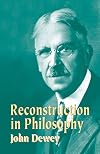
John Dewey ranks as one of the three or four important developers of American Pragmatism.
'Reconstruction of Philosophy' explains his thinking, as of 1920, in fairly simple terms, and in about 130 pages.
The book uses terms from academic language of the early 20th century, ones that may not be so familiar now.
It's written in the formal way people wrote in that time.
Nevertheless, Dewey has a clarity only found in writing by a few philosophers from any time period.
'Reconstruction of Philosophy' explains his thinking, as of 1920, in fairly simple terms, and in about 130 pages.
The book uses terms from academic language of the early 20th century, ones that may not be so familiar now.
It's written in the formal way people wrote in that time.
Nevertheless, Dewey has a clarity only found in writing by a few philosophers from any time period.
Lists
Awards


You May Also Like


Associated Authors
Statistics
- Works
- 243
- Also by
- 20
- Members
- 9,929
- Popularity
- #2,395
- Rating
- 3.8
- Reviews
- 64
- ISBNs
- 805
- Languages
- 22
- Favorited
- 18


