
Dave DeWitt
Author of The Whole Chile Pepper Book
About the Author
Dave DeWitt is a food historian and one of the foremost authorities on chile peppers, spice, and spicy foods. Named the "Pope of Peppers" by New York Times. DeWitt has written or coauthored more than 30 books on hot peppers and spicy foods and edited two different magazines devoted to those show more subjects. He lives in Albuquerque, New Mexico. show less
Works by Dave DeWitt
Founding Foodies: How Washington, Jefferson, and Franklin Revolutionized American Cuisine (2010) 112 copies, 2 reviews
The Complete Chile Pepper Book: A Gardener's Guide to Choosing, Growing, Preserving, and Cooking (2009) 106 copies, 12 reviews
The Spicy Food Lover's Bible: The Ultimate Guide to Buying, Growing, Storing, and Using the Key Ingredients That Give Food Spice with More Than 250 Recipes from Around the World (2005) 55 copies, 1 review
The Chile Pepper Encyclopedia: Everything You'll Ever Need To Know About Hot Peppers, With More Than 100 Recipes (1999) 54 copies
A World of Curries: From Bombay to Bangkok, Java to Jamaica, Exciting Cookery Featuring Fresh and Exotic Spices (1994) 42 copies
Heat Wave!: The Best of Chile Pepper Magazine : 200 Great Recipes from Hot & Spicy World Cuisines (1995) 21 copies
Flavors of Africa Cookbook : Spicy African Cooking - From Indigenous Recipes to Those Influenced by Asian and European Settlers (1998) 18 copies
Too Many Chiles!: From Sowing to Savoring : More Than 75 Recipes for Preparing and Preserving Your Pepper Harvest (Cookbooks and Restaurant Guides) (2003) 12 copies
Hot & Spicy Chili: A Collection of 150 of the Very Best Chili Recipes from the Chili Capitals of Am erica (1994) 11 copies
The Healing Powers of Peppers: With Chile Pepper Recipes and Folk Remedies for Better Health and Living (1998) 5 copies
Cuisines of the Southwest: An Illustrated Food History with More Than 160 Regional Recipes (2008) 4 copies
The mute strategy 2 copies
The Chilehead Collection: Fascinating Stories About the Love of Chile Peppers, with Recipes (2002) 1 copy
Tagged
Common Knowledge
- Legal name
- DeWitt, David Austin
- Other names
- DeWitt, David A.
- Birthdate
- 1944
- Gender
- male
- Education
- University of Virginia (BA | Literature | 1966)
University of Richmond (MA | Literature | 1967) - Occupations
- editor-in-chief (Chile Pepper Magazine | ended 1996)
co- producer (Heat Up Your Life!)
host (Heat Up Your Life!)
publisher (Fiery Foods & BBQ Magazine) - Organizations
- Sunbelt Shows (president)
The Chile Pepper Institute (board member)
New Mexico Farm and Ranch Heritage Museum (board member) - Short biography
- Dave DeWitt is a food historian and one of the foremost authorities in the world on chile peppers, spices, and spicy foods. He has more than forty-five published books to his credit. Dave is also the producer of the National Fiery Foods & Barbecue Show, the trade/consumer show for the multi-billion dollar Fiery Foods and Barbecue industries, now in its twenty-fifth year.
Current Responsibilities:
--Producer, National Fiery Foods & Barbecue Show, now in its 25th year
--Producer, Scovie Awards Competition, a contest for hot & spicy and BBQ products
--Publisher and editor, the Fiery Foods & BBQ SuperSite at www.fiery-foods.com
--Publisher, Burn! Blog
Museum Projects:
Curator, "Edward S. Curtis in New Mexico," Albuquerque Museum, 1984
Media Appearances:
Dave has appeared on a number of national TV shows, including "American Journal," CNN, "The Today Show," "Home with Gary Collins," "Scientific American Frontiers," "Smart Solutions," "CBS Sunday Morning," "Mythbusters," "Extreme Conventions" (Travel Channel), the Martha Stewart Show and many appearances on The Food Network. He has also been featured in The New Yorker, The New York Times, Los Angeles Times, USA Today, American Way, Smithsonian, and in more than two hundred newspapers across the country. A summary DVD of the appearances is available.
[adapted from Amazon.com author page, retrieved 5/4/2014] - Nationality
- USA
- Places of residence
- Albuquerque, New Mexico, USA
- Associated Place (for map)
- New Mexico, USA
Members
Reviews
The Complete Chile Pepper Book: A guide to identifying, growing, preserving, and cooking by Dave DeWitt

The Complete Chile Pepper Book is likely to remain the definitive work on chile peppers for a long time to come. The book is divided into three sections: an introduction and description of various types of chiles, a detailed guide to growing chiles, and a section on preserving and cooking with chiles. The entire book is beautifully produced and clearly written and will be a useful reference for anyone interested in these wonderful vegetables.
The first section classifies chiles by species; show more after an initial introduction to each of the five species of peppers, some of the more popular or common varieties of each are discussed. Appropriately, the bulk of this section is devoted to the most widespread species (C. annum) but the more unfamiliar species are not neglected; any chilehead should find new varieties to grow or seek out at the market from this section. I was pleased to see the Oaxacan manzano peppers that I get at the local Mexican market, and have never seen anywhere else, discussed here.
I personally found the second section on growing chiles to be the most useful; it assumes some basic gardening experience, and does not discuss which varieties are well-suited for different climates, but after an initial discussion of different gardening strategies for peppers and general advice on soil composition and watering strategies it provides a comprehensive guide to potential problems with peppers and their remedies. While this guide is suitable for casual gardeners it does not stop there, including suggestions for creating new hybrid strains of peppers through hand-pollination! I will certainly refer to this section of the book on a regular basis in my continuing attempts to grow more peppers.
The first part of the final section of the book discusses preserving peppers, ranging from methods as simple as drying or freezing to elaborate canning (requiring a pressure canner, as peppers are low-acid) and candying recipes. I now have a jar of my own Thai hot peppers pickling in the back of my cupboard, waiting to be ready to use. Finally, the recipes making up the last third of the book were a bit of a disappointment for me; someone coming to this book from a gardening rather than a culinary perspective would certainly find much to like here, but considered purely as a cookbook there are better options. Each recipe is illustrated, and they are clearly-written; they just aren't very exciting. (However, I've spent long enough in the Southwest that the idea of chiles in chocolate-based desserts is no longer new, or even novel enough to be noticeable, so my calibrations on this front may differ from that of the average reader.) While there are some potential gems that I have bookmarked to try, there was less attention paid to recipes to showcase a particular variety of pepper than I would have hoped, and most of the foods were those that, even if they were influenced by cuisines traditionally heavy on spices, would appeal to a fairly conventional "American" palate -- tandoori chicken, fish tacos, and the like. This section is not a net negative, but it's not reason enough to buy the book on its own.
Overall I recommend this book very highly. show less
The first section classifies chiles by species; show more after an initial introduction to each of the five species of peppers, some of the more popular or common varieties of each are discussed. Appropriately, the bulk of this section is devoted to the most widespread species (C. annum) but the more unfamiliar species are not neglected; any chilehead should find new varieties to grow or seek out at the market from this section. I was pleased to see the Oaxacan manzano peppers that I get at the local Mexican market, and have never seen anywhere else, discussed here.
I personally found the second section on growing chiles to be the most useful; it assumes some basic gardening experience, and does not discuss which varieties are well-suited for different climates, but after an initial discussion of different gardening strategies for peppers and general advice on soil composition and watering strategies it provides a comprehensive guide to potential problems with peppers and their remedies. While this guide is suitable for casual gardeners it does not stop there, including suggestions for creating new hybrid strains of peppers through hand-pollination! I will certainly refer to this section of the book on a regular basis in my continuing attempts to grow more peppers.
The first part of the final section of the book discusses preserving peppers, ranging from methods as simple as drying or freezing to elaborate canning (requiring a pressure canner, as peppers are low-acid) and candying recipes. I now have a jar of my own Thai hot peppers pickling in the back of my cupboard, waiting to be ready to use. Finally, the recipes making up the last third of the book were a bit of a disappointment for me; someone coming to this book from a gardening rather than a culinary perspective would certainly find much to like here, but considered purely as a cookbook there are better options. Each recipe is illustrated, and they are clearly-written; they just aren't very exciting. (However, I've spent long enough in the Southwest that the idea of chiles in chocolate-based desserts is no longer new, or even novel enough to be noticeable, so my calibrations on this front may differ from that of the average reader.) While there are some potential gems that I have bookmarked to try, there was less attention paid to recipes to showcase a particular variety of pepper than I would have hoped, and most of the foods were those that, even if they were influenced by cuisines traditionally heavy on spices, would appeal to a fairly conventional "American" palate -- tandoori chicken, fish tacos, and the like. This section is not a net negative, but it's not reason enough to buy the book on its own.
Overall I recommend this book very highly. show less
 This review was written for LibraryThing Early Reviewers.
The Founding Foodies: How Washington, Jefferson, and Franklin Revolutionized American Cuisine by Dave DeWitt
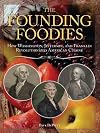
This incredibly interesting and fun book combines three of my favorite subjects: American History, food, and trivia. The author tells the story of how Thomas Jefferson, George Washington, and Benjamin Franklin, among others, influenced the course of American food. In the process, the reader learns fascinating information about how the colonists learned to produce their sustenance. A large number of recipes are included as well.
Just to share but a few of the many absorbing bits of history: In show more the Founding Fathers’ time, meats were roasted using spits turned over the fire by dogs in circular cages. The “turnspit” dogs were specially bred with short legs and a long body to run in the dog wheel. These dogs were also known as “kitchen dogs.”
Thomas Jefferson was always touting the virtues of living like the “common man,” but he had no desire to include himself in that category. While in France living the good life, he wrote back home to a friend in America, “I had rather be shut up in a very modest cottage, with my books, my family, and a few old friends, dining on simple bacon, and letting the world roll on as it liked.” In fact, this demonstrates the historian’s problem of taking the letters of famous men at their words. In 1789, on his way back to his “modest cottage” at Monticello, Jefferson took back to America eighty-six crates of European art, silver, porcelain, cookware, exotic food items not available in America, and 680 bottles of wine. What’s more, he thought he would only be gone from France for six months, so these were just sort of “emergency” supplies.
The colonists drank huge amounts of alcohol. As one historian noted: "…most colonists avoided water, which could be fatal…as a result, most drinks were alcoholic, because no bacteria known to be harmful to man can survive in them.”
And in fact, colonists regarded water as “better suited to barnyard animals than humans.” Rum, wine, hard cider and brandy were consumed in great quantities. Drunkenness was frowned upon. Yet if you read about the amounts of alcohol the colonists had each day, you have to marvel at the tolerance they developed, and wonder how much you actually had to have to become drunk! [Full disclosure: in the interest of research for this review, I procured some Madeira and tried a glass. Holy smokes! If I had had a bottle of wine, a bottle of ale or two, and then Madeira, as was common during a dinner with the Founders, I would have been way way under the table!] It is amazing to me all they managed to accomplish, given their "spirited" lives!
Evaluation: This is a tremendously entertaining book that combines history with food facts and quite a few recipes. The recipes look surprisingly good – or not so surprising, considering that colonists were big on adding butter and cream to almost everything. Highly recommended for enthusiasts of both food and American history! show less
Just to share but a few of the many absorbing bits of history: In show more the Founding Fathers’ time, meats were roasted using spits turned over the fire by dogs in circular cages. The “turnspit” dogs were specially bred with short legs and a long body to run in the dog wheel. These dogs were also known as “kitchen dogs.”
Thomas Jefferson was always touting the virtues of living like the “common man,” but he had no desire to include himself in that category. While in France living the good life, he wrote back home to a friend in America, “I had rather be shut up in a very modest cottage, with my books, my family, and a few old friends, dining on simple bacon, and letting the world roll on as it liked.” In fact, this demonstrates the historian’s problem of taking the letters of famous men at their words. In 1789, on his way back to his “modest cottage” at Monticello, Jefferson took back to America eighty-six crates of European art, silver, porcelain, cookware, exotic food items not available in America, and 680 bottles of wine. What’s more, he thought he would only be gone from France for six months, so these were just sort of “emergency” supplies.
The colonists drank huge amounts of alcohol. As one historian noted: "…most colonists avoided water, which could be fatal…as a result, most drinks were alcoholic, because no bacteria known to be harmful to man can survive in them.”
And in fact, colonists regarded water as “better suited to barnyard animals than humans.” Rum, wine, hard cider and brandy were consumed in great quantities. Drunkenness was frowned upon. Yet if you read about the amounts of alcohol the colonists had each day, you have to marvel at the tolerance they developed, and wonder how much you actually had to have to become drunk! [Full disclosure: in the interest of research for this review, I procured some Madeira and tried a glass. Holy smokes! If I had had a bottle of wine, a bottle of ale or two, and then Madeira, as was common during a dinner with the Founders, I would have been way way under the table!] It is amazing to me all they managed to accomplish, given their "spirited" lives!
Evaluation: This is a tremendously entertaining book that combines history with food facts and quite a few recipes. The recipes look surprisingly good – or not so surprising, considering that colonists were big on adding butter and cream to almost everything. Highly recommended for enthusiasts of both food and American history! show less
The Complete Chile Pepper Book: A Gardener's Guide to Choosing, Growing, Preserving, and Cooking by Dave DeWitt
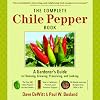
This book is not for the dabbler. It is not for the light-hearted or those intolerant of spicy food. Unfortunately, it is also not for those who wish to peruse a quick read with easy-to-find information, organized in a user-friendly manner.
It is clear from even a page or two of reading that the authors are incredibly well-informed about their chosen topics. From the background sections on history and cultivation of chile peppers, to the in-depth scientific analysis of "the quest for the show more world's hottest pepper," the depth of knowledge here is immediately obvious. However, it is not particularly well-organized or easy to find a specific piece of information.
As a book for those who are already well-informed about chile peppers in general, and who seek to take their knowledge to the next level, this book is the place to go. However, if you are seeking a place to start from without immediately delving into chemistry, cultivation science, and the precise botanical classification of every species of Chile Pepper known to humanity, I would start elsewhere.
-Review written by Dan, to whom I gave this book as a birthday present show less
It is clear from even a page or two of reading that the authors are incredibly well-informed about their chosen topics. From the background sections on history and cultivation of chile peppers, to the in-depth scientific analysis of "the quest for the show more world's hottest pepper," the depth of knowledge here is immediately obvious. However, it is not particularly well-organized or easy to find a specific piece of information.
As a book for those who are already well-informed about chile peppers in general, and who seek to take their knowledge to the next level, this book is the place to go. However, if you are seeking a place to start from without immediately delving into chemistry, cultivation science, and the precise botanical classification of every species of Chile Pepper known to humanity, I would start elsewhere.
-Review written by Dan, to whom I gave this book as a birthday present show less
This review was written for LibraryThing Early Reviewers.The Complete Chile Pepper Book: A Gardener's Guide to Choosing, Growing, Preserving, and Cooking by Dave DeWitt
As an amateur gardener, avid cook and, most importantly, a spicy food aficionado, this book really has it all for me. Reading this late in November made me ready to pull out the seed catalogues and start preparing for spring. The authors provide a wealth of information on the subject of chili peppers. The first portion of the book is devoted to gardening. Without turning into a general gardening book, enough basic information is covered to assist the new gardener. I especially appreciated show more the in-depth description of pepper varieties, both for spring gardening choices, but also for produce shopping.
In addition to a lot of great gardening information and inspirational photography, it provides botanical information, as well. The graphics and charts really contribute to the very readable quality of this book.
But, my favorite part of the book is the recipe section. A number of easy, unusual recipes are included. The pepper infused vodka is so superior to anything you can buy at the store and was a huge hit at Thanksgiving when I used it to make my marinated cherry tomato appetizer! I brought the Double Trouble chocolate truffles to a party and they were the focus of conversation while they lasted! My family’s favorites, so far, are Pasta with Green Chile Pesto and Thai Chile and Artichoke Pasta. But, I have a lot more on my list to try. In addition to recipes, a lot of good information is provided on preservation, including candied peppers, salt substitutes, pickling and canning.
A comprehensive glossary, bibliography and resource list provide even more information.
I appreciate having a book in my collection that covers all aspects of peppers. I know where to turn now for gardening questions, and, of course, really interesting recipes! show less
In addition to a lot of great gardening information and inspirational photography, it provides botanical information, as well. The graphics and charts really contribute to the very readable quality of this book.
But, my favorite part of the book is the recipe section. A number of easy, unusual recipes are included. The pepper infused vodka is so superior to anything you can buy at the store and was a huge hit at Thanksgiving when I used it to make my marinated cherry tomato appetizer! I brought the Double Trouble chocolate truffles to a party and they were the focus of conversation while they lasted! My family’s favorites, so far, are Pasta with Green Chile Pesto and Thai Chile and Artichoke Pasta. But, I have a lot more on my list to try. In addition to recipes, a lot of good information is provided on preservation, including candied peppers, salt substitutes, pickling and canning.
A comprehensive glossary, bibliography and resource list provide even more information.
I appreciate having a book in my collection that covers all aspects of peppers. I know where to turn now for gardening questions, and, of course, really interesting recipes! show less
This review was written for LibraryThing Early Reviewers.Lists
Awards


You May Also Like


Associated Authors
Statistics
- Works
- 68
- Members
- 1,388
- Popularity
- #18,518
- Rating
- 4.1
- Reviews
- 22
- ISBNs
- 107
- Languages
- 5
