
David Ely
Author of Seconds
Works by David Ely
The Sailing Club 2 copies
Manden med de to liv 1 copy
Poor Devils 1 copy
Gruweltrip Geheel verzorgd 1 copy
A Excursão 1 copy
The Academy [short fiction] 1 copy
Associated Works
The Best of Mystery: 63 Short Stories Chosen by the Master of Suspense (1982) — Contributor — 426 copies
The Edgar Winners: 33rd Annual Anthology of the Mystery Writers of America (1980) — Contributor — 47 copies, 1 review
Tagged
Common Knowledge
- Legal name
- Lilienthal, Jr., David Eli
- Birthdate
- 1927-11-19
- Gender
- male
- Nationality
- USA
- Birthplace
- Chicago, Illinois, USA
- Associated Place (for map)
- Illinois, USA
Members
Reviews

In 1964, David Ely produced a novel of existential despair that also manages to be a satire on the consumer-targeted managerial capitalism that was at the core of the American dream before the dissent of the mid-1960s took hold.
Almost ten years earlier (1955 (novel) and 1956 (film)), in 'The Man in the Gray Flannel Suit', the demands of corporate life were presented as sets of conflict between personal expression, family duty and corporate compliance and resolved in favour of the 'natural' show more confluence of the last two.
Critique was never far below the surface. J K Galbraith's 'The Affluent Society' did so in grand policy terms but many men chafed under obligations that seemed to be as collectively imposed as anything that the Soviets may have offered even if none dared say it in those terms.
It is quite important to the story in 'Seconds' that 'Wilson' (the protagonist) has raised a family and is alienated from it as it is alienated from him. The sacrifices of work and loss of free expression (there is to be irony in the new social role assigned to him by the corporation) have turned to dust.
'Wilson' thinks he wants freedom but he what he really wanted was the belonging and meaning promised at the beginning of his life. Family and corporate duty are no longer aligned - in fact, everything has turned to dust.
The novel is a morality tale. It is about what happens when a new capitalist enterprise offers the opportunity to escape obligation and how the 'contract' proves to be one with the devil as a new obligation emerges to a different 'Stepford' type of pseudo-individualist conformity.
It is quite slow-moving and Ely is not a lively writer. At first, this troubled me. I was going to mark it down but, as it progressed, I realised that the style fitted with an atmosphere of greyness and mounting despair as the protagonist gets sucked into this paranoid fantasy.
In 1966, it was made into a film (of course, this is no guarantee of literary quality, often the reverse) which tells us something about the mood of the time. Another capitalist enterprise (the cinema industry) was already feeling the shift of mood that was to become the 'sixties'.
This is certainly not a happy book. There is no visceral or cosmic horror. It is psychological horror, a fantasy at core (no such corporation as the one described could exist and survive in the real world) but it feels real at times. It is on the very edge of the territory staked out by Ligotti.
There is one note of realism, a core element in the story. The corporation is running to stand still and is in financial difficulty because it has sold something it cannot deliver. It is a peculiar form of Ponzi scheme. It is also consciously set up to be a fulfilment of uncertain wishes.
Capitalism is, in fact, depicted as rational in its determination to continue with its misjudgements. It is a machine that eats people. In opening up a market for a packaged 'freedom', the corporation enslaves and much much worse in order to meet its entrepreneurial mission and survive.
A very dark book - not perhaps a masterpiece of world literature but well worth reading (if you are not already depressed). It is an insight into the frustrations emerging in the early 1960s as post-war conformity started to move the war generation towards their inevitable mid-life crisis.
For those who want a solid and moving audio version of the book, I can recommend the reading of Edward French which starts (in six separate chapters) at https://youtu.be/Ymt3DDzgA10 His YouTube Channel, incidentally, is an excellent source for readings of weird and horror fiction. show less
Almost ten years earlier (1955 (novel) and 1956 (film)), in 'The Man in the Gray Flannel Suit', the demands of corporate life were presented as sets of conflict between personal expression, family duty and corporate compliance and resolved in favour of the 'natural' show more confluence of the last two.
Critique was never far below the surface. J K Galbraith's 'The Affluent Society' did so in grand policy terms but many men chafed under obligations that seemed to be as collectively imposed as anything that the Soviets may have offered even if none dared say it in those terms.
It is quite important to the story in 'Seconds' that 'Wilson' (the protagonist) has raised a family and is alienated from it as it is alienated from him. The sacrifices of work and loss of free expression (there is to be irony in the new social role assigned to him by the corporation) have turned to dust.
'Wilson' thinks he wants freedom but he what he really wanted was the belonging and meaning promised at the beginning of his life. Family and corporate duty are no longer aligned - in fact, everything has turned to dust.
The novel is a morality tale. It is about what happens when a new capitalist enterprise offers the opportunity to escape obligation and how the 'contract' proves to be one with the devil as a new obligation emerges to a different 'Stepford' type of pseudo-individualist conformity.
It is quite slow-moving and Ely is not a lively writer. At first, this troubled me. I was going to mark it down but, as it progressed, I realised that the style fitted with an atmosphere of greyness and mounting despair as the protagonist gets sucked into this paranoid fantasy.
In 1966, it was made into a film (of course, this is no guarantee of literary quality, often the reverse) which tells us something about the mood of the time. Another capitalist enterprise (the cinema industry) was already feeling the shift of mood that was to become the 'sixties'.
This is certainly not a happy book. There is no visceral or cosmic horror. It is psychological horror, a fantasy at core (no such corporation as the one described could exist and survive in the real world) but it feels real at times. It is on the very edge of the territory staked out by Ligotti.
There is one note of realism, a core element in the story. The corporation is running to stand still and is in financial difficulty because it has sold something it cannot deliver. It is a peculiar form of Ponzi scheme. It is also consciously set up to be a fulfilment of uncertain wishes.
Capitalism is, in fact, depicted as rational in its determination to continue with its misjudgements. It is a machine that eats people. In opening up a market for a packaged 'freedom', the corporation enslaves and much much worse in order to meet its entrepreneurial mission and survive.
A very dark book - not perhaps a masterpiece of world literature but well worth reading (if you are not already depressed). It is an insight into the frustrations emerging in the early 1960s as post-war conformity started to move the war generation towards their inevitable mid-life crisis.
For those who want a solid and moving audio version of the book, I can recommend the reading of Edward French which starts (in six separate chapters) at https://youtu.be/Ymt3DDzgA10 His YouTube Channel, incidentally, is an excellent source for readings of weird and horror fiction. show less
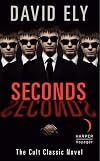
Interesting premise and worth reading, but I don't think it's something that you'd ready get sucked into. Better reading for its philosophy than the surface plot.
Chilling book that makes real the saying, "Be careful what you wish for ..."
It's short and to the point. Is also a great film.
It's short and to the point. Is also a great film.
Lists
You May Also Like


Associated Authors
Statistics
- Works
- 16
- Also by
- 15
- Members
- 182
- Popularity
- #118,784
- Rating
- 3.7
- Reviews
- 3
- ISBNs
- 21
- Languages
- 4