
Michael Ende (1929–1995)
Author of The Neverending Story
About the Author
Children's author Michael Andreas Helmuth Ende was born on November 12, 1929 in Garmisch-Partenkirchen, Germany. He worked as an actor, director, film critic and scriptwriter before turning to writing children's books. He was the only child of the surrealist painter Edgar Ende. His best known work show more is The Neverending Story (1979), which was adapted into a film and two sequels. Another book, Jim Knopf and Lukas the Engine, was made into both a television and radio series. Ende died in Germany on August 29, 1995. (Bowker Author Biography) show less
Series
Works by Michael Ende
El Goggolori : una leyenda bávara dramatizada en ocho escenas y un epílogo (1984) 11 copies, 1 review
Das große Jim Knopf und die Wilde 13 Liederbuch. Mit CD. Alle Lieder aus dem Musical. (2000) 7 copies
Jim Knopf: Jim Knopf findet's raus - Geschichten über Lokomotiven, Vulkane und Scheinriesen (2010) 4 copies
Die Jagd nach dem Schlarg. Variationen in Lewis Carrolls gleichnamigem Nonsensgedicht (1988) 4 copies
Von Schmetterlingen und weisen Elefanten: Die schönsten Bilderbücher von Michael Ende (2011) 2 copies
Der Spiegel im Spiegel. Der erste Buchstabe. Die erste Staffel: Inszenierte Lesung mit viel Musik und prominenten Sprechern. 2 CDs (2011) 2 copies
Kamelefant und Dromedackel: Sprachspielereien und fantasievolle Tierschöpfungen von Michael Ende (2024) 2 copies
Michael Ende - Der Geschichtenerzähler: Hörbuchedition. Gedichte, Erzählungen, Essays, Originaltöne: 9 CDs (2015) 2 copies
Die Archaologie der Dunkelheit: Gesprache uber Kunst und das Werk des Malers Edgar Ende (German Edition) (1985) 2 copies
Vězení svobody 1 copy
Der Wunschpunsch - CDs: Der satanarchäolügenialkohöllische Wunschpunsch, Audio-CDs, Tl.1, Der geheime Auftrag vom Hoh (1999) 1 copy
Der Wunschpunsch - CDs: Der satanarchäolügenialkohöllische Wunschpunsch, Audio-CDs, Tl.3, Der Glockenturm im Eiskrist (1999) 1 copy
Um Ursinho Bem Velhinho 1 copy
Приказка без край 1 copy
הסיפור שאינו נגמר 1 copy
Jim Nasturel 1 copy
OLÁ, OLÉ, BETO POR QUÊ 1 copy
Der Wunschpunsch - CDs: Der satanarchäolügenialkohöllische Wunschpunsch, Audio-CDs, Tl.2, Das Geheimnis der Pergament (1999) 1 copy
Păpușa de cârpă 1 copy
Augsburger Puppenkiste - Jim Knopf und Lukas, der Lokomotivführer 3. Von der Wüste in die [VHS] (1976) 1 copy
Folge 2-Englisch Lernen M 1 copy
Jim Knopf und Lukas der Lokomotivführer, Tl.3, Von Kummerland nach Lummerland, 2 Audio-CDs (2005) 1 copy
Jim Knopf Und Lukas 1 copy
Jim Knopf Und Lukas 1 copy
Jim Knopf und Lukas der Lokomotivführer, Videocassetten, Folge.1 : Von Lummerland nach China, 1 Videocassette [VHS] (1994) 1 copy
Jetzt lese ich! 1 copy
Jim Knopf und Lukas der Lokomotivführer, Videocassetten, Folge.4 : Von der Drachenstadt nach Lummerland, 1 Videocassette [VHS] (1994) 1 copy
Álomfaló Csodamanó 1 copy
Das Traumfresserchen / Das kleine Lumpenkasperle. CD: Original-Hörspiele zu den Büchern. Ab 3 Jahre (1999) 1 copy
Associated Works
The NeverEnding Story II: The Next Chapter [1990 film] (1990) — Original book — 170 copies, 3 reviews
The Graphic Canon of Children's Literature: The World's Greatest Kids' Lit as Comics and Visuals (2014) — Contributor — 101 copies, 1 review
Neues vom Rumpelstilzchen und andere Haus-Märchen von 43 Autoren (1981) — Contributor, some editions — 5 copies
Urlaubsträume. Geschichten für die schönste Zeit des Jahres — Author — 1 copy
Tagged
Common Knowledge
- Canonical name
- Ende, Michael
- Legal name
- Ende, Michael Andreas Helmuth
- Birthdate
- 1929-11-12
- Date of death
- 1995-08-28
- Gender
- male
- Education
- Otto-Falkenberg-Schauspielschule, Munich
- Occupations
- novelist
film critic - Organizations
- Fronte per la Baviera libera
Bayerischer Rundfunk - Awards and honors
- Literary Award of the City of Berlin (1960)
Deutscher Jugendbuchpreis (1961, 1974)
Hugo-Jacobi-Award (1967)
Nakamori-Award (1976
Buxtehuder Bulle (1979)
Preis der Leseratten des ZDF (1980) (show all 24)
Wilhelm-Hauff-Preis zur Förderung von Kinder- und Jugendliteratur (1980)
Großer Preis der Deutschen Akademie für Kinder- und Jugendliteratur (1980)
Europäischer Jugendbuchpreis (1981)
International Janusz-Korczak-Preis (1981)
Deutscher Kinder- und Jugendschallplattenpreis (1981)
Stiftung Buchkunst Die schönsten Bücher der Bundesrepublik (1981)
Japanese Book Award for the Best Translation of Contemporary Literature (1982)
Bronzi di Riace, Kiwanis Literature Award (1982)
Lorenzo il Magnifico-Award (1982)
Silver Pencil of Rotterdam (1983)
Spanish Ministry of Culture Children's book of the year (1983)
Sympathy Award of the City of Rome (1985)
Deutscher Fantasy-Preis (1987)
Kulturpreis der bayerischen Raiffeisen-Banken (1988)
Bundesverdienstkreuz am Bande (1989)
Zurich Children's Book Award La vache qui lit (1990)
Bad Wildbader Kinder- und Jugendbuchpreis (1996)
Kurd-Laßwitz-Award for the best short story of the year (1996) - Relationships
- Ende, Edgar (father)
Hoffman, Ingeborg (1st wife, until her death)
Sato, Mariko (2nd wife, until his death) - Cause of death
- stomach cancer
- Nationality
- Germany
- Birthplace
- Garmisch-Partenkirchen, Bavaria, Germany
- Places of residence
- Garmisch, Bavaria, Germany (Birth)
Stuttgart, Germany (Death)
Munich, Bavaria, Germany
Genzano, Lazio, Italy - Place of death
- Filderstadt, Baden-Württemberg, Germany
- Burial location
- Waldfriedhof München, Munich, Germany (Grab Nr. 212-W-3)
- Associated Place (for map)
- Germany
Members
Discussions
Marks in The Neverending Story in Folio Society Devotees (January 2024)
Folio 75: The Neverending Story - Then and Now in Folio Society Devotees (January 2024)
The Winner of Folio 75 is The Neverending Story in Folio Society Devotees (October 2022)
Reviews
Momo by Michael Ende
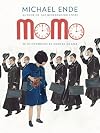
A lot of people are preoccupied with time: How it should be spent, how it can be saved, and how to make sure it isn't wasted. Have you ever accused someone of stealing your time? Momo is the only person who is able to resist the allure of the grey men who are time thieves. An already unique child, Momo, is abandoned by all of her friends who have fallen prey to these menaces (and they really do sound menacing + the illustrations are delightfully creepy). Much like The Neverending Story, the show more city that Michael Ende has created feels tangible and real...actually it sounds like Rome. The characters leap off of the page. Fantasy is done right when your imagination is allowed to run rampant and a talking turtle is as ordinary as a gorilla that learns sign language (I still think that's amazing). Momo is all about making the most of your time by spending it with those that you love. I think this is an especially poignant message for adults who are bombarded with deadlines and to-do lists and children who often feel neglected by those same adults. The message is clear but the delivery is what makes Ende's writing so special and why I believe he is an underrated children's author in our country (but not in his home country of Germany!). show less
I have actually never written a review for Michael Ende's utterly amazing [b:The Neverending Story|27712|The Neverending Story|Michael Ende|http://photo.goodreads.com/books/1327871159s/27712.jpg|1122661] (I have also never read it in English). I first read it in German in the early 80s, I believe, and I have reread it regularly over the years. [b:Die unendliche Geschichte|1124692|Die unendliche Geschichte|Michael Ende|http://photo.goodreads.com/books/1181189349s/1124692.jpg|1122661] is one show more of my all-time favourite German children's literature books; I simply adore it.
I love everything about this book, including the ingenious way the chapters are arranged, as well as the different colour fonts (red for reality, blue for Fantastica, or Phantásien in German). For me, the different fonts are not only an ingenious plot and narrative device, they also represent the separation of fantasy and reality. However, the fantastical first letters of each of the 26 chapters, representing the 26 letters of the alphabet, are all (at least in my own copy of the book) presented in the same reddish font as the parts of the story that take place in the real world (even for those chapters based wholly and entirely in Fantastica); this shows on a visual level that while fantasy and reality might be separate and different from one another, they are nevertheless linked.
I remember when we were reading [b:Neverending Story|1094741|Neverending Story|Michael Ende|http://photo.goodreads.com/books/1180927688s/1094741.jpg|1122661] in the Children's Literature Group, one of my GR friends (Kirei) asked if the story actually did end. I have to admit that when I first read the novel as a teenager, I kept looking for other novels by the Michael Ende about Fantastica, as he was always hinting at precisely that eventuality (but, that is another story ...), until I finally realised that this was a plot device. At first, this bothered me a bit (I felt a bit cheated). But then, I realised how ingenious this particular plot device was (and is). It solidifies Michael Ende's belief that every book is a neverending story, and that books engender other stories and so on and so on. Furthermore, for someone who easily becomes nervous when reading exciting or frightening tales, the fact that the author claims that there will be more (future) tales of Fantastica, gives a reassurance that Fantastica will survive, that the nothing (the emptiness) will not succeed in destroying fantasy and the realms of fantasy.
In the first part of the novel, the main emphasis seems to be on the importance of fantasy and how the lack thereof is detrimental to not only the realms of Fantastica, but to the real world as well. While the story is not openly didactic, it does possess an obvious message against pure materialism and the disallowance and discrediting of fantasy. The childlike empress will succumb to her illness and with her all of Fantastica, unless a human being can enter Fantastica and give the empress a new name (humans used to regularly find their way to the realm, but they are seemingly losing this ability, or are unwilling to make use of it). And while Bastian does, in fact, possess fantasy and imagination, he is at first too unsure of himself to give the empress the name he has created for her (moon child). Indeed, the empress must resort to tricks and subterfuge in order to persuade Bastian to finally utter her name, to stop the nothing and to become part of the world of Fantastica.
In the second part of the story, Bastian is then given the opportunity to use the power of his own imagination (his own wishes and desires) to reconstruct Fantastica. At first, it seems that there are no limits imposed. In fact, the empress tells Bastian that he should do what he wishes, what he wants. There are internal limits though, namely that Bastian's main responsibility, his main goal is to find the nature of his one true (his dearest) wish (which is something that Bastian only learns bit by bit). It becomes obvious that Bastian's desires to be strong and courageous, of wanting to change his outward appearance are not only not his actual, true wishes, they portray that Bastian, at this time, only uses his imagination and fantasy as an escape from a world that he does not like very much, a world where he can neither love nor be and feel loved. Bastian does not merely reconstruct Fantastica by creating new realms of fantasy, he uses these to escape from both reality and his own personality. In fact, Bastian becomes quite dictatorial, attempting to usurp power from the childlike empress. Luckily for him, this proves unsuccessful, and faced with the loss of his memories, Bastian finally realises that his dearest wish is to love himself, to be able to love, that without love, there is nothing.
[b:The Neverending Story|27712|The Neverending Story|Michael Ende|http://photo.goodreads.com/books/1327871159s/27712.jpg|1122661] demonstrates how the interaction and interplay of fantasy and reality, of Fantastica and humanity only succeeds if one strives to use fantasy and imagination to improve reality, and that because Bastian is unable to love either the world or himself, he uses fantasy not to improve reality, but to escape from it. This causes him to almost become permanently stranded in Fantastica, which might at first not seem such a bad possibility, except that, becoming stranded in Fantastica also means losing ones memories, losing ones soul and sanity. In the end, it is almost too late for Bastian, and basically, even though he has realised what his greatest wish is (love), it is only Atreju's friendship which allows Bastian to regain all of his memories and be allowed to return to the real world. Atreju takes over the responsibility of finishing all of the stories that had been started by Bastian, and it is this which frees Bastian, allowing his return. And with Bastian's return, we also notice that Bastian has not only learned how to love, and allowed his father to love again, he has also learned to take responsibility for his actions. He, himself, goes to Mr. Coreander to tell him about taking the book, he does not rely on his father to do this (although his father does offer). The main point of [b:The Neverending Story|27712|The Neverending Story|Michael Ende|http://photo.goodreads.com/books/1327871159s/27712.jpg|1122661], at least for me, is that imagination and fantasy are essential for life and happiness, but that they must also not be used to simply escape from reality, from the world. They are to be used as a tool, an enjoyable tool, but simply a tool nevertheless, as a method of allowing fantasy and reality to exist together in harmony. show less
I love everything about this book, including the ingenious way the chapters are arranged, as well as the different colour fonts (red for reality, blue for Fantastica, or Phantásien in German). For me, the different fonts are not only an ingenious plot and narrative device, they also represent the separation of fantasy and reality. However, the fantastical first letters of each of the 26 chapters, representing the 26 letters of the alphabet, are all (at least in my own copy of the book) presented in the same reddish font as the parts of the story that take place in the real world (even for those chapters based wholly and entirely in Fantastica); this shows on a visual level that while fantasy and reality might be separate and different from one another, they are nevertheless linked.
I remember when we were reading [b:Neverending Story|1094741|Neverending Story|Michael Ende|http://photo.goodreads.com/books/1180927688s/1094741.jpg|1122661] in the Children's Literature Group, one of my GR friends (Kirei) asked if the story actually did end. I have to admit that when I first read the novel as a teenager, I kept looking for other novels by the Michael Ende about Fantastica, as he was always hinting at precisely that eventuality (but, that is another story ...), until I finally realised that this was a plot device. At first, this bothered me a bit (I felt a bit cheated). But then, I realised how ingenious this particular plot device was (and is). It solidifies Michael Ende's belief that every book is a neverending story, and that books engender other stories and so on and so on. Furthermore, for someone who easily becomes nervous when reading exciting or frightening tales, the fact that the author claims that there will be more (future) tales of Fantastica, gives a reassurance that Fantastica will survive, that the nothing (the emptiness) will not succeed in destroying fantasy and the realms of fantasy.
In the first part of the novel, the main emphasis seems to be on the importance of fantasy and how the lack thereof is detrimental to not only the realms of Fantastica, but to the real world as well. While the story is not openly didactic, it does possess an obvious message against pure materialism and the disallowance and discrediting of fantasy. The childlike empress will succumb to her illness and with her all of Fantastica, unless a human being can enter Fantastica and give the empress a new name (humans used to regularly find their way to the realm, but they are seemingly losing this ability, or are unwilling to make use of it). And while Bastian does, in fact, possess fantasy and imagination, he is at first too unsure of himself to give the empress the name he has created for her (moon child). Indeed, the empress must resort to tricks and subterfuge in order to persuade Bastian to finally utter her name, to stop the nothing and to become part of the world of Fantastica.
In the second part of the story, Bastian is then given the opportunity to use the power of his own imagination (his own wishes and desires) to reconstruct Fantastica. At first, it seems that there are no limits imposed. In fact, the empress tells Bastian that he should do what he wishes, what he wants. There are internal limits though, namely that Bastian's main responsibility, his main goal is to find the nature of his one true (his dearest) wish (which is something that Bastian only learns bit by bit). It becomes obvious that Bastian's desires to be strong and courageous, of wanting to change his outward appearance are not only not his actual, true wishes, they portray that Bastian, at this time, only uses his imagination and fantasy as an escape from a world that he does not like very much, a world where he can neither love nor be and feel loved. Bastian does not merely reconstruct Fantastica by creating new realms of fantasy, he uses these to escape from both reality and his own personality. In fact, Bastian becomes quite dictatorial, attempting to usurp power from the childlike empress. Luckily for him, this proves unsuccessful, and faced with the loss of his memories, Bastian finally realises that his dearest wish is to love himself, to be able to love, that without love, there is nothing.
[b:The Neverending Story|27712|The Neverending Story|Michael Ende|http://photo.goodreads.com/books/1327871159s/27712.jpg|1122661] demonstrates how the interaction and interplay of fantasy and reality, of Fantastica and humanity only succeeds if one strives to use fantasy and imagination to improve reality, and that because Bastian is unable to love either the world or himself, he uses fantasy not to improve reality, but to escape from it. This causes him to almost become permanently stranded in Fantastica, which might at first not seem such a bad possibility, except that, becoming stranded in Fantastica also means losing ones memories, losing ones soul and sanity. In the end, it is almost too late for Bastian, and basically, even though he has realised what his greatest wish is (love), it is only Atreju's friendship which allows Bastian to regain all of his memories and be allowed to return to the real world. Atreju takes over the responsibility of finishing all of the stories that had been started by Bastian, and it is this which frees Bastian, allowing his return. And with Bastian's return, we also notice that Bastian has not only learned how to love, and allowed his father to love again, he has also learned to take responsibility for his actions. He, himself, goes to Mr. Coreander to tell him about taking the book, he does not rely on his father to do this (although his father does offer). The main point of [b:The Neverending Story|27712|The Neverending Story|Michael Ende|http://photo.goodreads.com/books/1327871159s/27712.jpg|1122661], at least for me, is that imagination and fantasy are essential for life and happiness, but that they must also not be used to simply escape from reality, from the world. They are to be used as a tool, an enjoyable tool, but simply a tool nevertheless, as a method of allowing fantasy and reality to exist together in harmony. show less
Momo by Michael Ende

Come along with Momo, her dear friends Beppo and Guido, the enigmatic Professor Hora, and his wise turtle companion Cassiopeia, as they join forces to face a menace that's difficult to see and even more difficult to stop.
One of the book's central themes is time. Or rather how we choose to spend the time we have. The character Momo is a humble orphan girl who has a rare talent for patience and listening, and the townsfolk soon learn that if they take the time to share their problems with her, show more they gain new insight as a result of her attentiveness. In contrast, her adversaries (and really, everyone's adversaries) are the men in gray who steal and thrive on the misspent time of daily living. If you find yourself too hurried to stop and smell the flowers, that's a sign these monochrome miscreants are at work.
This was my first look at the writing of the late German author Michael Ende, and now I intend to follow up with more of his books. Next up, The Neverending Story. show less
One of the book's central themes is time. Or rather how we choose to spend the time we have. The character Momo is a humble orphan girl who has a rare talent for patience and listening, and the townsfolk soon learn that if they take the time to share their problems with her, show more they gain new insight as a result of her attentiveness. In contrast, her adversaries (and really, everyone's adversaries) are the men in gray who steal and thrive on the misspent time of daily living. If you find yourself too hurried to stop and smell the flowers, that's a sign these monochrome miscreants are at work.
This was my first look at the writing of the late German author Michael Ende, and now I intend to follow up with more of his books. Next up, The Neverending Story. show less
Momo by Michael Ende

This is a special book. Momo is an orphan living in an ancient, abandoned amphitheatre. She has one special power. It's nothing you'd expect of a superhero, but in this story it makes all the difference. There is a strong dividing line between stories with events tossed in just to propel it forward, and stories built like carefully constructed edifices or arguments with nothing extraneous and an important meaning behind everything that occurs. This has the feeling of the latter. Even as Momo show more and her friends are engaged in the imaginative voyage of the Ajax, an entire chapter of make-believe, I did not doubt that Michael Ende included even that scene with a distinct purpose in mind. Comparisons with 'The Neverending Story' are inevitable. This is not as complex as the other but maybe just as challenging, and lessons abound.
Michael Ende is fearlessly subtle. He can say the deepest things in the simplest words, and not worry overmuch whether you're grasping their meaning. With lines like, "There are treasures capable of destroying those who have no one to share them with" scattered within a straightforward story for children, an adult also has something to chew on. It is a story at least partially about the importance of taking the time - stealing time, we sometimes say - to appreciate one another in a world that is always madly rushing forward. The grey men may not be real to us in a literal sense, but in the form of time-consuming, time-wasting things we do that make us wonder why there aren't enough hours in a day. The trick is not to confuse time-wasting with enjoyable time well spent. Like when someone my age sets aside studying the French Revolution to spend a few minutes with this. show less
Michael Ende is fearlessly subtle. He can say the deepest things in the simplest words, and not worry overmuch whether you're grasping their meaning. With lines like, "There are treasures capable of destroying those who have no one to share them with" scattered within a straightforward story for children, an adult also has something to chew on. It is a story at least partially about the importance of taking the time - stealing time, we sometimes say - to appreciate one another in a world that is always madly rushing forward. The grey men may not be real to us in a literal sense, but in the form of time-consuming, time-wasting things we do that make us wonder why there aren't enough hours in a day. The trick is not to confuse time-wasting with enjoyable time well spent. Like when someone my age sets aside studying the French Revolution to spend a few minutes with this. show less
Lists
1980s (1)
Book Hoppers (1)
2023 Reads (1)
Read in 2004 (1)
Best Young Adult (1)
Read in 2005 (1)
Read in 2007 (1)
Unread books (1)
Carole's List (1)
A Novel Cure (1)
Read These Too (1)
Comfort Reads (1)
Formative books (1)
1970s (2)
Elevenses (3)
The "A" List (1)
4th Grade Books (1)
Robin (1)
Awards


You May Also Like


Associated Authors
Statistics
- Works
- 168
- Also by
- 9
- Members
- 22,567
- Popularity
- #940
- Rating
- 4.2
- Reviews
- 429
- ISBNs
- 1,014
- Languages
- 42
- Favorited
- 83