

John Fea
Author of Was America Founded As a Christian Nation?: A Historical Introduction
About the Author
John Fea is professor of American history and chair of the history department at Messiah College, Mechanicsburg, Pennsylvania. His other books include Was America Founded as a Christian Nation? A Historical Introduction, and he blogs regularly at The Way of Improvement Leads Home.
Works by John Fea
The Way of Improvement Leads Home: Philip Vickers Fithian and the Rural Enlightenment in Early America (2008) 32 copies, 1 review
Associated Works
Tagged
Common Knowledge
- Birthdate
- 1966-02-16
- Gender
- male
- Education
- State University of New York at Stony Brook (PhD|American History)
- Nationality
- USA
- Birthplace
- Denville, New Jersey, USA
- Associated Place (for map)
- New Jersey, USA
Members
Reviews

There's actually nothing unpredictable in this book. It's basically an evangelical scholar outing his own community as political opportunists.
One of the more useful history lessons in Fea's primer on religious power in America is his focus on the phenomena of court evangelicals. A brilliant term for faith leaders attracted to wealth entrenching politicians.
One of the more useful history lessons in Fea's primer on religious power in America is his focus on the phenomena of court evangelicals. A brilliant term for faith leaders attracted to wealth entrenching politicians.
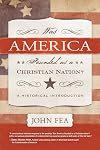
This book was a very even handed look at both sides of this question. It is very well documented with both source documents and related contextual information. The author does not attempt to answer the question. In fact, Fea suggests that the problem with this question is the question itself. He suggests that many who argue either side of the question are seeking to establish an agenda that requires a simple answer. The answers to the question are very complex. Fea does an outstanding job of show more research and documentation and explores the question from various perspectives, including, what was the purpose of the revolution, how is God included in early documentation and culture and finally exploring the faith beliefs of our founding fathers. Fea comes as close as any historian that I have read to exploring this question without bias and his book is very readable. show less
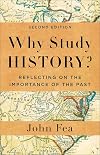
Summary: A Christian historian explains why the study of history is important to us, what historians do, and helpful and unhelpful ways to relate our faith to the study of history.
It seems to me a sad consequence of our “post-truth” age is our lack of trust in nearly everything. Sadly, this includes for many the study of history, which some will claim is just shaped by agendas across the political spectrum.
John Fea, in a book meant as an introductory text for students, as well as for show more more general audiences, both admits that history reflects a process of constant revision as new sources emerge and yet that because of the disciplined processes (including the 5 C’s of historical study) academic historians use, it is possible to attain approximations to the truth that give us reasonable confidence in what happened in the past and why. While we never attain to absolute certainty, this does not mean that we cannot learn from historians to our profit.
He contends that the study of the past may inspire us, sometimes offer an escape from modern life, and at other times help us understand who we are and how we got here. We are in constant dialogue with the past whether we admit it or not. At the same time historians teach us to use the past without misappropriating it. First, we must understand the past on its own terms, as an “other,” rather than through the eyes of our particular present. This involves empathy and humility, which he illustrates with the example of an evangelical scholar studying at a Latter Day Saints school, who only made progress in understanding their history when he recognized that whatever he thought, LDS adherents believed the teachings they received and acted in accord with them.
Fea tackles the question of providence as it relates to historical study. While he affirms providence, he contends that this is the province of theologians, and that historians are doing something besides history when they attempt to read God’s providence into historical events. He does not outright deny the possibility of writing providential history and notes examples of those who have attempted such writings. He believes this must be done with great humility, recognizing our inherent limitations in knowing the plans of God.
Fea does believe there are Christian resources we may bring to bear in the study of the past: our understanding of the imago dei, the reality of human sin, the relevance of the incarnation to the study of a physical past and the use of our minds, and the use of moral reflection upon both the good and the bad we encounter in our study, not to preach, but to see.
The study of history is important to cultivating a civil, democratic society. Careful work at understanding combined with humility and empathy are not only skills necessary in the study of history. They are the skills necessary for reaching across the divides in our national discourse. If there is any hope of healing our discords, these practices are crucial. History may also be transformative. It is a form of public engagement, of loving our neighbors in the past. For the Christian, it may be a spiritual discipline calling forth prayer, self-denial, hospitality, charity, and humility as we study the “other” in the past.
One of the objections to studying history is the problem of getting a job with that major. Fea admits the challenge but seeks to open our eyes to the range of occupations that draw upon the skills learned by those who study history. He describes a student who subsequently worked in a children’s hospital in Malawi. She learned to listen well, write well, and tell good stories. She learned empathy walking in the shoes of the dead, and learned how to step out of her own approach to the world. Fea goes on to list famous people who studied history and shares examples of some of the things he sees his former students and others doing: writing, marketing and digital analytics, business, sales, television sports, filmmaking, medicine, ministry, criminal justice, and real estate.
In an epilogue, Fea discusses the importance of doing good history for the church, and the public engagement of those who have studied history. He describes his own public engagements around his book Was America Founded as a Christian Nation? in which he challenges many aspects of this notion. Those engagements have led to fruitful conversations, stretched his own thinking, and made him reconsider how he pursues his calling as an academic theologian to not only advance knowledge in his discipline, but serve the wider Christian community.
This is such a good introduction that I would commend it not only for students but all thoughtful Christians. In helping us understand the work of historians, Fea gives us tools to evaluate historical claims and narratives rather than defaulting to pervasive skepticism or just accepting the opinions of our tribe. More than this, Fea show us what kind of person we must become to study history well and that these virtues equip us well for life in society. Finally, he gestures toward ways we bring our faith to bear in the study of history to elucidate rather than distort what we are seeing as we listen to the past through sifting various sources. All of this seems vital and useful as we seek to understand the times, both past and present, and live with wisdom in our time.
____________________
Disclosure of Material Connection: I received a complimentary copy of this book from the publisher for review. show less
It seems to me a sad consequence of our “post-truth” age is our lack of trust in nearly everything. Sadly, this includes for many the study of history, which some will claim is just shaped by agendas across the political spectrum.
John Fea, in a book meant as an introductory text for students, as well as for show more more general audiences, both admits that history reflects a process of constant revision as new sources emerge and yet that because of the disciplined processes (including the 5 C’s of historical study) academic historians use, it is possible to attain approximations to the truth that give us reasonable confidence in what happened in the past and why. While we never attain to absolute certainty, this does not mean that we cannot learn from historians to our profit.
He contends that the study of the past may inspire us, sometimes offer an escape from modern life, and at other times help us understand who we are and how we got here. We are in constant dialogue with the past whether we admit it or not. At the same time historians teach us to use the past without misappropriating it. First, we must understand the past on its own terms, as an “other,” rather than through the eyes of our particular present. This involves empathy and humility, which he illustrates with the example of an evangelical scholar studying at a Latter Day Saints school, who only made progress in understanding their history when he recognized that whatever he thought, LDS adherents believed the teachings they received and acted in accord with them.
Fea tackles the question of providence as it relates to historical study. While he affirms providence, he contends that this is the province of theologians, and that historians are doing something besides history when they attempt to read God’s providence into historical events. He does not outright deny the possibility of writing providential history and notes examples of those who have attempted such writings. He believes this must be done with great humility, recognizing our inherent limitations in knowing the plans of God.
Fea does believe there are Christian resources we may bring to bear in the study of the past: our understanding of the imago dei, the reality of human sin, the relevance of the incarnation to the study of a physical past and the use of our minds, and the use of moral reflection upon both the good and the bad we encounter in our study, not to preach, but to see.
The study of history is important to cultivating a civil, democratic society. Careful work at understanding combined with humility and empathy are not only skills necessary in the study of history. They are the skills necessary for reaching across the divides in our national discourse. If there is any hope of healing our discords, these practices are crucial. History may also be transformative. It is a form of public engagement, of loving our neighbors in the past. For the Christian, it may be a spiritual discipline calling forth prayer, self-denial, hospitality, charity, and humility as we study the “other” in the past.
One of the objections to studying history is the problem of getting a job with that major. Fea admits the challenge but seeks to open our eyes to the range of occupations that draw upon the skills learned by those who study history. He describes a student who subsequently worked in a children’s hospital in Malawi. She learned to listen well, write well, and tell good stories. She learned empathy walking in the shoes of the dead, and learned how to step out of her own approach to the world. Fea goes on to list famous people who studied history and shares examples of some of the things he sees his former students and others doing: writing, marketing and digital analytics, business, sales, television sports, filmmaking, medicine, ministry, criminal justice, and real estate.
In an epilogue, Fea discusses the importance of doing good history for the church, and the public engagement of those who have studied history. He describes his own public engagements around his book Was America Founded as a Christian Nation? in which he challenges many aspects of this notion. Those engagements have led to fruitful conversations, stretched his own thinking, and made him reconsider how he pursues his calling as an academic theologian to not only advance knowledge in his discipline, but serve the wider Christian community.
This is such a good introduction that I would commend it not only for students but all thoughtful Christians. In helping us understand the work of historians, Fea gives us tools to evaluate historical claims and narratives rather than defaulting to pervasive skepticism or just accepting the opinions of our tribe. More than this, Fea show us what kind of person we must become to study history well and that these virtues equip us well for life in society. Finally, he gestures toward ways we bring our faith to bear in the study of history to elucidate rather than distort what we are seeing as we listen to the past through sifting various sources. All of this seems vital and useful as we seek to understand the times, both past and present, and live with wisdom in our time.
____________________
Disclosure of Material Connection: I received a complimentary copy of this book from the publisher for review. show less
Whether or not America was founded as a "Christian nation" is a touchy political topic right now, and figures in other touchy political topics as well. John Fea gives us a very thorough and thoughtful discussion of the matter, and arrives at the conclusion most historians not involved in the political world would give: It's Complicated.
In the first part of the book, Fea looks at the substantial body of evidence, going back to the early 19th century, that the idea of America as a Christian show more nation is not a new idea of the political far right. It didn't start in the 80s with Ronald Reagan any more than it started in the Noughties with George W. Bush. It is an idea that has been prominently presented by politicians of the right and, maybe surprising to many not old enough to remember the 60s, of the left, as well, persistently throughout our history. Fea presents examples from politicians, ministers, and activists of all stripes in demonstrating this.
But that doesn't address the question of whether America was founded as a Christian nation, and Mr. Fea proceeds to address that question in the subsequent sections. The complications begin with the question itself. What do we mean by "founded"? What do we mean by "Christian nation"? What, even, do we mean by "America"? As John Fea explains and demonstrates quite clearly, these are all multiple choice questions. Was America "founded" in 1776, with the Declaration of Independence? In 1787, with the Constitutional Convention? In 1789, when the Constitution went into effect? Or are all those dates too late, and America was "founded" when the first colonies were founded?
Even more complex is "Christian nation." Much of the history, with quotes and examples, offered by those who are deeply invested in the "Christian nation" idea are in fact deeply ahistorical -- taking quotes out of context, ignoring other statements by the same people, ignoring or not understanding what certain words, phrases, and expressions meant in the 18th century to the people who said and wrote them. In other cases, eloquent expressions of the Christian importance of the Revolution are clearly polemical in intent, and interpret the Biblical passages in question in ways directly opposite of how they had been used throughout Christian history and the history of the American colonies to that point, claiming them as support for Revolution when they had for nearly two millennia been understood as support for obeying lawfully constituted government even when its actions were deeply unjust. There are also determined efforts to ignore, deny, or argue away the fact that a number of critical figures in the the Revolution and the writing and adoption of the Constitution either weren't Christians at all, or were lukewarm, not at all devout Christians. Those who were, were nevertheless strongly influenced by Enlightenment thought and ideals that many who espouse the "Christian nation" position find reprehensible.
It means ignoring the fact that the Declaration of Independence mentions God only a few times, in conventional and unspecific ways. It means ignoring the more important fact that the Declaration as conceived by its writers and signers was not intended as a founding document or a statement of core American beliefs at all, but as a foreign policy document, "a decent respect for the opinions of Mankind," aimed at justifying the Revolution to foreign governments in the hope of getting recognition and support.
It means ignoring the fact that the Constitution doesn't mention God at all, and mentions religion only to exclude it as a test for office, and the First Amendment adds to that only the exclusion of any possibility of a national established church, and protection of the right of free expression of religion, with no qualifications on those rights at all.
Does this mean John Fea is a firm adherent of the idea that America was not founded as a Christian nation? No.
Those who categorically reject the idea that America was founded as a Christian nation are making their own historical errors and misrepresentations. Most of the Founders were Christians, and the overwhelming majority of the population of the American colonies were Christians. The Founders who were not Christians nevertheless believed that religion in some form was a necessary part of peaceful and orderly society, and had no quarrel with the fact that most of their compatriots were Christians. None of the Founders understood the Constitutional ban on religious tests for office, or the First Amendment ban on established churches, as applying to the states, most of which had both until well into the first half of the 19th century. It was important to many of the founding generation to justify the Revolution in Christian terms because Christianity was a basic, guiding moral framework for them.
As I said at the beginning of this review, It's Complicated. This excellent book will allow no thoughtful reader the comfort of their own unexamined certainties.
Highly recommended.
I received a free electronic galley of this book from the publisher via NetGalley. show less
In the first part of the book, Fea looks at the substantial body of evidence, going back to the early 19th century, that the idea of America as a Christian show more nation is not a new idea of the political far right. It didn't start in the 80s with Ronald Reagan any more than it started in the Noughties with George W. Bush. It is an idea that has been prominently presented by politicians of the right and, maybe surprising to many not old enough to remember the 60s, of the left, as well, persistently throughout our history. Fea presents examples from politicians, ministers, and activists of all stripes in demonstrating this.
But that doesn't address the question of whether America was founded as a Christian nation, and Mr. Fea proceeds to address that question in the subsequent sections. The complications begin with the question itself. What do we mean by "founded"? What do we mean by "Christian nation"? What, even, do we mean by "America"? As John Fea explains and demonstrates quite clearly, these are all multiple choice questions. Was America "founded" in 1776, with the Declaration of Independence? In 1787, with the Constitutional Convention? In 1789, when the Constitution went into effect? Or are all those dates too late, and America was "founded" when the first colonies were founded?
Even more complex is "Christian nation." Much of the history, with quotes and examples, offered by those who are deeply invested in the "Christian nation" idea are in fact deeply ahistorical -- taking quotes out of context, ignoring other statements by the same people, ignoring or not understanding what certain words, phrases, and expressions meant in the 18th century to the people who said and wrote them. In other cases, eloquent expressions of the Christian importance of the Revolution are clearly polemical in intent, and interpret the Biblical passages in question in ways directly opposite of how they had been used throughout Christian history and the history of the American colonies to that point, claiming them as support for Revolution when they had for nearly two millennia been understood as support for obeying lawfully constituted government even when its actions were deeply unjust. There are also determined efforts to ignore, deny, or argue away the fact that a number of critical figures in the the Revolution and the writing and adoption of the Constitution either weren't Christians at all, or were lukewarm, not at all devout Christians. Those who were, were nevertheless strongly influenced by Enlightenment thought and ideals that many who espouse the "Christian nation" position find reprehensible.
It means ignoring the fact that the Declaration of Independence mentions God only a few times, in conventional and unspecific ways. It means ignoring the more important fact that the Declaration as conceived by its writers and signers was not intended as a founding document or a statement of core American beliefs at all, but as a foreign policy document, "a decent respect for the opinions of Mankind," aimed at justifying the Revolution to foreign governments in the hope of getting recognition and support.
It means ignoring the fact that the Constitution doesn't mention God at all, and mentions religion only to exclude it as a test for office, and the First Amendment adds to that only the exclusion of any possibility of a national established church, and protection of the right of free expression of religion, with no qualifications on those rights at all.
Does this mean John Fea is a firm adherent of the idea that America was not founded as a Christian nation? No.
Those who categorically reject the idea that America was founded as a Christian nation are making their own historical errors and misrepresentations. Most of the Founders were Christians, and the overwhelming majority of the population of the American colonies were Christians. The Founders who were not Christians nevertheless believed that religion in some form was a necessary part of peaceful and orderly society, and had no quarrel with the fact that most of their compatriots were Christians. None of the Founders understood the Constitutional ban on religious tests for office, or the First Amendment ban on established churches, as applying to the states, most of which had both until well into the first half of the 19th century. It was important to many of the founding generation to justify the Revolution in Christian terms because Christianity was a basic, guiding moral framework for them.
As I said at the beginning of this review, It's Complicated. This excellent book will allow no thoughtful reader the comfort of their own unexamined certainties.
Highly recommended.
I received a free electronic galley of this book from the publisher via NetGalley. show less
Lists
Awards


You May Also Like


Statistics
- Works
- 7
- Also by
- 1
- Members
- 554
- Popularity
- #45,049
- Rating
- 4.0
- Reviews
- 15
- ISBNs
- 26